Showing posts with label Nancy Allen. Show all posts

Monday, 15 October 2018

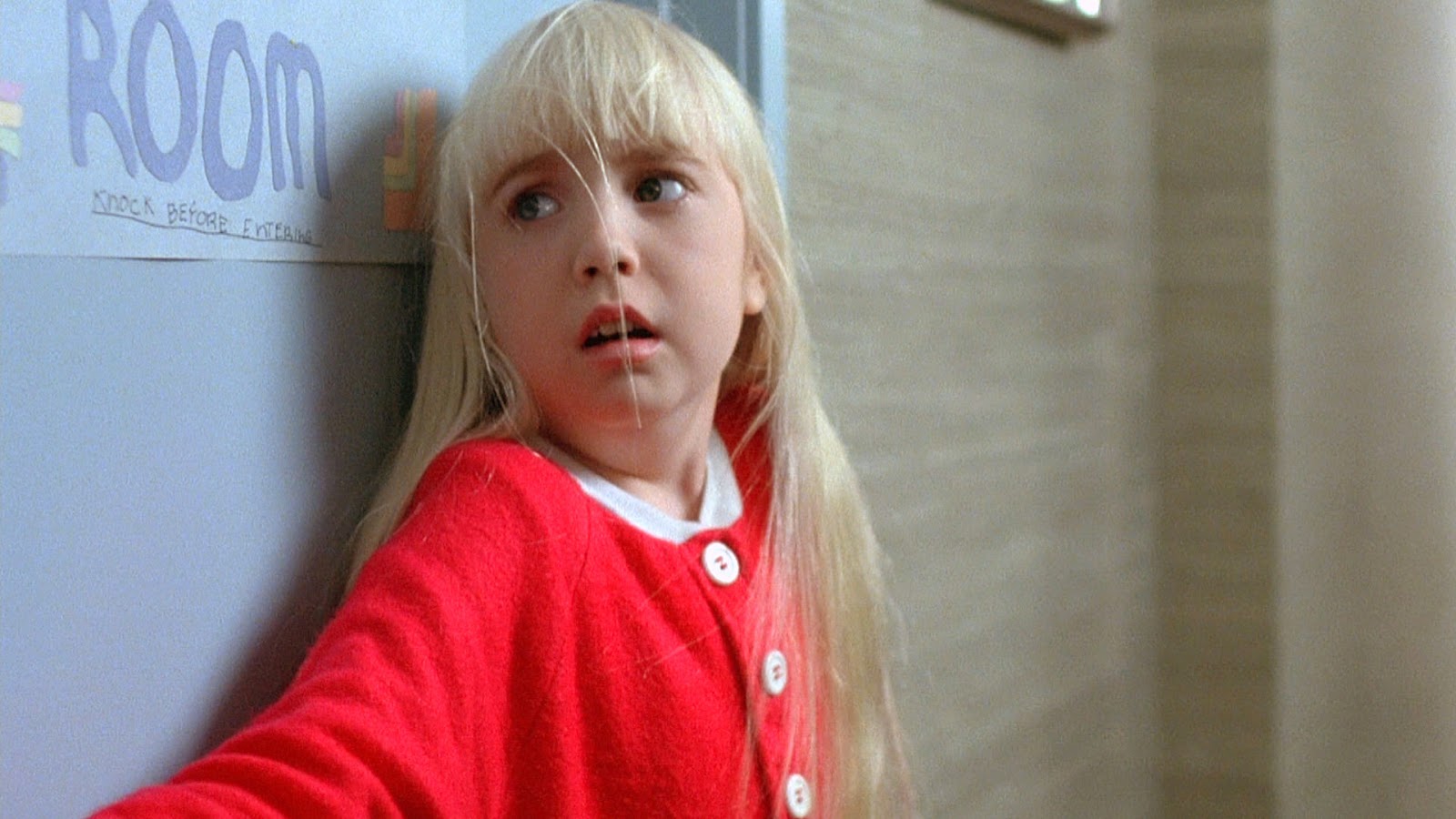
Review #1,407: 'Poltergeist III' (1988)

The promotion and subsequent release of Poltergeist III was overshadowed by the death of 12 year-old star and face of the franchise Heather O'Rourke, from cardiac arrest and septic shock brought on by a misdiagnosed intestinal stenosis. The studio, who understandably wanted to avoid any claims that they may be looking to take advantage of such a devastating tragedy, kept advertising to a minimum, although they had previously pressured director Gary Sherman into completing the film against his wishes. Poltergeist III was a critical and commercial flop, putting an end to the franchise that should have really stopped with Tobe Hooper's original. A lack of promotion cannot be blamed entirely though, as the rushed final edit is an incoherent mess with precious few links to the mythology established in the first two entries. They should have known they were in trouble when original stars JoBeth Williams and Craig T. Nelson turned down the chance to return.

In an attempt to freshen up the series, the action is moved from a suburban home to a luxury skyscraper: A 100-story colossus complete with its own mall and art gallery. In charge of the tower is Bruce Gardner (Tom Skerritt), the new husband of Patricia (Nancy Allen) - the sister of JoBeth William's character. As well as having to adapt to newly married life, Pat is also having to deal with her daughter from a previous marriage, Donna (Lara Flynn Boyle), so the last thing she needs is the arrival of spooky Carol Anne (O'Rourke), who seems to bring trouble with her wherever she goes. I don't recall an explanation given for why the Freeling family would suddenly send the daughter they almost lost twice to an auntie they've never mentioned, but the script by Sherman and Brian Taggert isn't concerned with making too much sense. It's happy to simply drag out the franchise as far as it will go and ignore what made the previous films so popular with audiences. The Freelings always fought off the supernatural forces at play with their unbreakable family bond, but Poltergeist III sidesteps establishing this newly family unit in favour of lazy jump shocks.

The Gardner's don't seem particularly adept at taking care of a traumatised 12 year-old either, happily leaving her in the care of their irresponsible teenage daughter and enlisting her in a special school, where sceptical psychiatrist Dr. Seaton (Richard Fire) believes the spooky events experienced by Carol Anne and the people around her are brought on by some kind of mass hypnosis. This leaves plenty of time for Carol Anne to be harassed by Reverend Kane (Nathan Davis, replacing the late Julian Beck), who still wants her to lead them all into the light. The film quickly dissolves away into a series of set-pieces plucked at random from Cinema's Big Book of Characters in Peril, involving falling through ice and killer cars revving in the underground car park. Without the family bond so purposefully developed over the course of the last two films, these moments lack any dramatic weight. Sherman would prefer to have the characters yell each other's names repeatedly at the expense of actual dialogue, and in one case is happy to toss away one supporting character without any explanation at all. On the positive side, there are some fantastic 'in camera' effects deployed as the spirits use mirrors to communicate with the living world, and the presence of Zelda Rubinstein and Tom Skerritt's moustache is always a pleasure.


Directed by: Gary Sherman
Starring: Tom Skerritt, Nancy Allen, Heather O'Rourke, Zelda Rubinstein, Lara Flynn Boyle
Country: USA

Rating: **

Tom Gillespie


Poltergeist III (1988) on IMDb

Saturday, 7 January 2012

Review #300: 'Robocop' (1987)

In theory, and from it's ridiculous title, Robocop is an incredibly silly film. The crime ridden streets of Detroit in the not-too-distant future, get a futuristic superhero, a knight in shining armour, from an omnipotent corporation OPC, to protect them from the criminals. However, what we actually get is a very emotional human story, along with some incredibly sharp satire.

Murphy (Peter Weller), a police officer, is killed whilst on a mission with his new partner, Lewis (Nancy Allen). OCP (after a failed attempt at a robot-police programme) commissioned the Robocop program, and Murphy becomes the candidate. His memory is supposed to have been erased by the corporation however, he is reminded by Lewis of his identity. He pieces together the criminals that gunned him down after an incident with Emil (Paul McCrane), and uncovers the criminal machinations of corrupt, corporate business.

As all good science fiction should, Robocop is partially allegorical of the times it was made in. In business, greed, power and wealth dominated (as highlighted in more explicit terms in another film of the same year, Oliver Stones Wall Street, where "greed is good"). Here, violence and deceit are the tactics used to make it in the cut-throat business world. Miguel Ferrer's young, ambitious Bob Morton, and the older rival, Ronny Cox's Dick Jones, battle with each other to get their individual police-robot project's into production. Corruption was also an all pervading element of '80's business (something that was not new of course, we can go back in American history and find many corrupt governments and institutions, Tammany in New York is one example), and we see here the corporate elite working with the criminal underworld.

The excesses of the 1980's greed is permeated within the excesses on screen. Violence is strong, yet comical at times. but it is always over the top. In an early scene, Dick Jones presents his product robot police officer, ED-209, a hulking, malevolent monster. In demonstration, ED-209 malfunctions and shoots an executive hundreds of times, to the point of joke. When Murphy is gunned down, we see his hand explode. Of course this reveals a corporate paranoia underneath some of the movies of the 80's. Each decades science fiction needs paranoia: In the 1950's and 60's it was communism and the nuclear bomb: in the 1970's and 80's it was political and corporate.

The film is injected with some spot-on satirical humour. Adverts are seen throughout, further exacerbating the excesses of American culture at the time. We see commercials selling over-sized, gas guzzling automobiles (6000 SUX), replacement hearts (this clearly to alleviate the excesses on the body caused in the 80's), and a board game of the Battleship-kind (Nuke-Em). These along with the narrative create an almost perfect package. Directed by European Paul Verhoeven who epitomises the concept that the best way for America to hold a mirror up to itself, is to get outsiders to produce something that reflects the madness that was 1980's, Reagan-era, excess and greed. Not only does it offer a commentary, the humanistic, philosophical nature of the soul, is a strong (if often used) theme.

Quite horrifically however, the film manifested into something terrible. I'm not talking about the sequels. The film was to be marketed for children, in the form of a cartoon series, and the inevitable action figures et al. So, like Gremlins (1984), this more "adult" fantasy, marketeers still had the moral sense (sic) to market violence to children - how lovely!


Directed by: Paul Verhoeven
Starring: Peter Weller, Nancy Allen, Dan O'Herlihy, Ronny Cox, Kurtwood Smith
Country: USA

Rating: ****

Marc Ivamy


RoboCop (1987) on IMDb


LinkWithin

Related Posts Plugin for WordPress, Blogger...