Showing posts with label 2006. Show all posts

Monday, 6 August 2018

Review #1,373: 'Mission: Impossible III' (2006)

The third instalment of the Mission: Impossible franchise took a while to get off the ground. Originally trusted to director David Fincher (which would have been fascinating to see), the Fight Club director opted out when another project caught his eye, so the reigns were passed to Joe Carnaghan, who had his supporting cast ready to go before a dispute with the studio resulted in his departure also. In stepped J.J. Abrams, who faced the difficult task of reviewing the previous movies' vastly different tones in order to settle on which Ethan Hunt he wanted to bring to the screen. Quite wisely, he went for a bit of both. This was the intuitive, opportunistic Hunt from Brian De Palma's well-staged original, rather than the trigger-happy super-agent from John Woo's effort. Yet he still retains an edge, and Abrams sets out his movie's darker tone from the get-go, as we start during the third act with Hunt in precarious situation with Philip Seymour Hoffman's big bad.

Hunt (Tom Cruise) has left the IMF in favour of a normal life with his bride-to-be Julia (Michelle Monaghan). He has kept the extent of his work for the government quiet and seems to be enjoying being a regular Joe, but his head is soon turned when fellow IMF agent John Musgrave (Billy Crudup) contacts him regarding his former protegee, Lindsay Farris (Keri Russell), who has gone missing in the field while investigating an arms dealer named Owen Davian (Hoffman). Hunt accepts the job and assembles a team (consisting of the returning Ving Rhames, as well as Jonathan Rhys Meyers and Maggie Q) to track her down, but when the mission goes spectacularly wrong, the group are left to track down an item known as the 'Rabbit's Foot', a device capable of global catastrophe. With the head of the IMF (Laurence Fishburne) breathing down his neck and Davian proving himself to be a ruthless and cunning foe, Hunt and the rest of his troupe face their most difficult task yet.

He may have been third choice (although he was cherry-picked by Cruise himself), but the then up-and-coming Abrams proved to be the perfect director to steer the series back on course without upsetting the tone. He finds a perfect balance, delivering spectacular set-pieces that Cruise is, as always, keen to sink his teeth into, as well as re-establishing the team element and tasking them with missions that require a combined effort, and not just Cruise blowing away bad guys in slow-motion. De Palma's original may have been spectacular on occasion, but this third instalment is probably the best of this opening trilogy. There is also an uncomfortable atmosphere throughout, and this is mainly down to Hoffman's spectacular turn as Davian. He is a one-note big bad, and hardly physically intimidating, yet Hoffman's dead-eyed delivery oozes menace, and when he threatens the lives of those closest to our hero, we completely accept that he's capable of butchering the innocent in his pursuit for riches and power. It's hardly new territory for the action genre, but Abrams should be credited with reinvigorating a franchise still going strong 22 years after it introduced itself.


Directed by: J.J. Abrams
Starring: Tom Cruise, Philip Seymour Hoffman, Ving Rhames, Billy Crudup, Michelle Monaghan, Jonathan Rhys Meyers, Keri Russell, Maggie Q, Simon Pegg
Country: USA/Germany/China/Italy

Rating: ***

Tom Gillespie


Mission: Impossible III (2006) on IMDb

Thursday, 2 November 2017

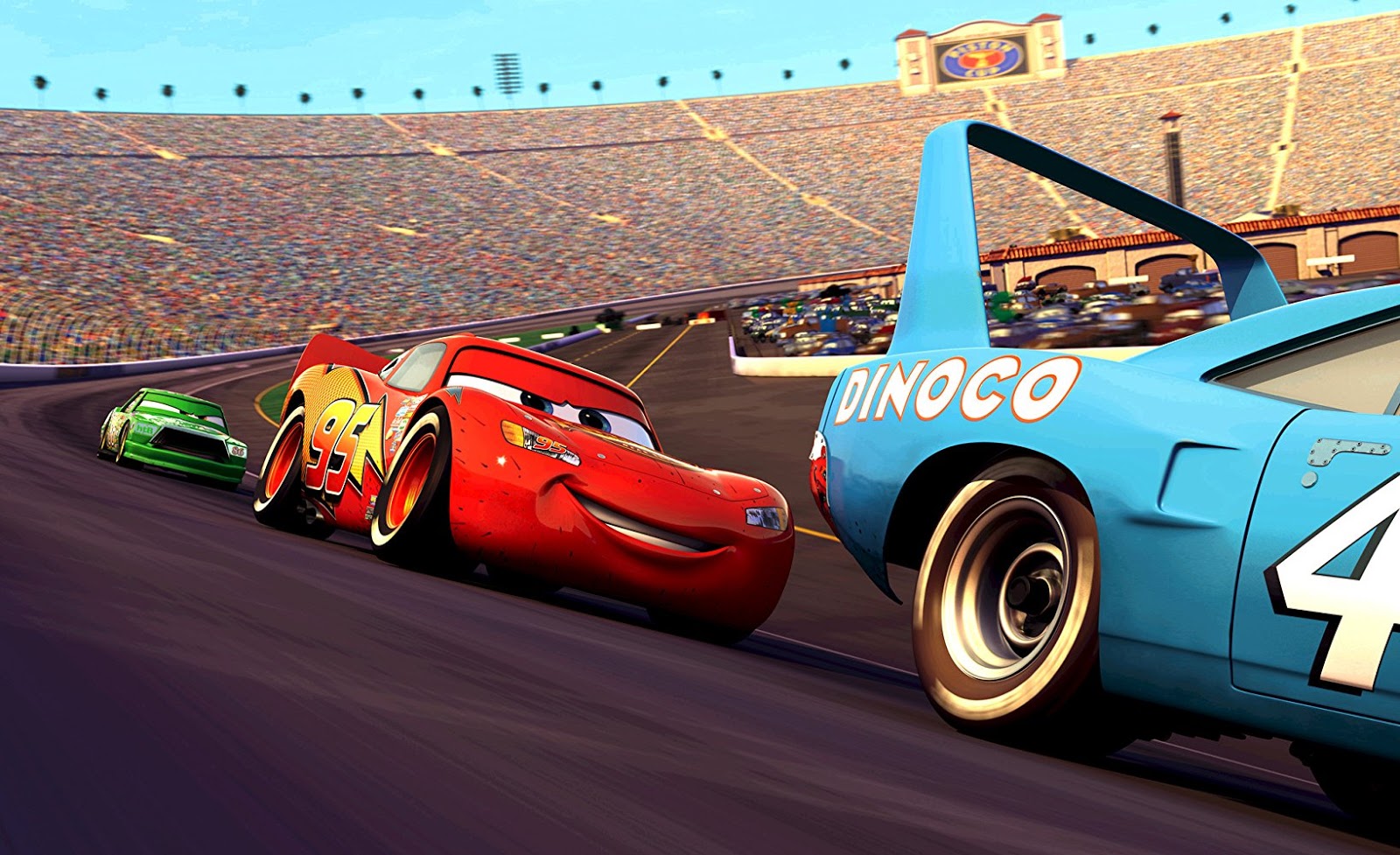
Review #1,266: 'Cars' (2006)

Ever since Pixar first wowed cinema-going audiences across the globe with their feature-length debut Toy Story, the company has become the standard for cinematic excellence. Not only for their constantly groundbreaking animation and ability to entertain both children and adults alike, but for the quality of their scripts and the amount of genuine heart that pours out of them. Yet for every WALL-E, The Incredibles or Inside Out there's always a Monsters University, A Bug's Life or Brave. These films still get a pass because, after all, "it's only a kid's movie," but the disappointment is all the more crushing with the knowledge of Pixar's capabilities. Cars is firmly in the latter category, falling into the traps of a familiar plot and a script that isn't quite up to scratch.

Cars' reputation has been damaged ever further in the decade since its release, and this is no doubt thanks to the lazy and bitter-tasting sequels and spin-offs, something the company has churned out at an increasing rate ever since Disney took over. I must admit that I didn't think much of Cars back in 2005. It lacked excitement and a character to really root for, and the story of a cocky upstart learning learning a valuable lesson to change their outlook on the world can be seen in countless other children's movies. However, on my second viewing I found moments of tenderness between the cracks, an old-fashioned romanticism to really warm the heart. The movie is about more than a young race car named Lightning McQueen (voiced by Owen Wilson) and his quest to escape the forgotten town of Radiator Spings to reach the Piston Cup. It's also about the changing face of America and the way its capitalist nature is leaving the little guys behind.

One aspect of Cars that was never criticised was its cutting-edge animation, and the way it brought the loud, dangerous world of racing and the country's glorious landscapes to beautiful life. It is still utterly glorious to look at, whether it be a wide shot of a darkening horizon or a close-up of buck-toothed tow truck Mater (Larry the Cable Guy). The small town off Route 66 is full of other colourful archetypes, voiced by the likes of Paul Newman, Bonnie Hunt, Tony Shalhoub, Cheech Marin and George Carlin. The problems I had with the film the first time around are still present - the climax should be a lump-in-the-throat moment but is oddly devoid of emotion, and the film offers no surprises at all - but they just didn't seem to bother me as much. The hefty running-time (just shy of 2 hours) also whizzed by, despite the lack of genuine laugh-out-loud moments. So forget Cars 2, Planes and those awful-looking straight-to-DVD spin-offs you ignore in Tesco, and give Cars another chance.


Directed by: John Lasseter
Voices: Owen Wilson, Paul Newman, Bonnie Hunt, Larry the Cable Guy, Cheech Marin, Tony Shalhoub, George Carlin, Michael Keaton
Country: USA

Rating: ****

Tom Gillespie


Cars (2006) on IMDb

Friday, 12 May 2017

Review #1,196: 'The Prestige' (2006)

Easily taking the crown of best magician-based movie of 2006 - swamping the distinctly wonder-less and barely remembered The Illusionist - Christopher Nolan's The Prestige is a cinematic sleight-of-hand; an enigma of a movie that is both a puzzle-box of misdirection and an engrossing tale of two warring magicians. When I first saw Nolan's fifth feature (and his second working with his brother and occasional writing partner Jonathan), its 'big reveal' seemed obvious to me early on in the third act, so when the grand revelations came at the climax, I was left feeling somewhat underwhelmed. In the years since, The Prestige has emerged as a firm favourite amongst Nolanites, so I was eager to re-visit it without the added pressure of trying to navigate through the film's many smokes and mirrors. Without this on my back, I could only sit back and admire a true craftsman at work, even though the narrative pushes the boundaries of credibility.

In 1890s London, two apprentice magicians from two vastly different backgrounds work for Milton (real-life magician Ricky Jay), assisting in a nightly trick involving a glamorous assistant and a tank of water. Hugh Jackman is Robert Angier, a handsome, charismatic American from a privileged background. Christian Bale plays Alfred Borden, a rough Cockney and magic purist. While Angier knows how to get an audience excited and keep them entertained, Borden is a sullen stage presence, choosing to challenge his audience rather than dazzle them. The real brains behind it all is Cutter (Michael Caine), the craftsman and adviser who builds all the apparatus and devices required for the increasingly elaborate tricks. After a Milton performance goes fatally wrong, Angier and Borden begin a personal and professional rivalry that will play out over the years. They sabotage each other's shows, steal secrets, and try to perfect the ultimate magic trick: The Transported Man.

Cutter explains the three-step theory on what makes a great illusion. There's the pledge (the set-up), the turn (the moment that grabs the audience's attention), and the prestige (the pay-off, when whatever has been disappeared is brought back again). It's what separates a jaw-dropping, head-scratching moment from a cheap card trick, and is precisely what separates the The Prestige from The Illusionist. Nolan truly understands the mechanics behind the prestige, after all, he toyed with our expectations and our perception of time with Memento. He wraps The Prestige up in a cloak of mystery, employing time-jumps and subtle camera tricks to keep the audience constantly engaged in trying to piece everything together. Nearly everything is key to unlocking the film's secrets, even the seemingly routine sub-plots involving Borden's wife (played by Rebecca Hall) and glamorous new assistant Olivia (Scarlett Johansson struggling with an English accent).

The inclusion of David Bowie's Nikola Tesla and Angier's quest to convince the engineer and physicist to build him a machine required to pull off the ultimate trick may be a step too far for some viewers. Tesla's involvement stretches science into the supernatural, and clashes with the grounded world built up until this point. But Bowie is terrific, and the frequent presence of Thomas Edison's goons offers some historical context, as well as an allegory for the obsessive rivalry between the two central characters. Jackman is very good at switching between hero and anti-hero, his hands increasingly dirtied trying to outmanoeuvre his rival, and while Bale can add Borden to his list of grating accents, he wins our sympathies despite the coldest of demeanours. Caine, Nolan's go-to exposition tool, also provides reliable support as the fatherly voice of reason, However, the real stars are the brothers Nolan, who arguably lay all their cards on the table in the opening scenes, for anybody paying close attention. But pay attention or not, you'll be swept up either way.


Directed by: Christopher Nolan
Starring: Hugh Jackman, Christian Bale, Michael Caine, Scarlett Johansson, Rebecca Hall, David Bowie, Andy Serkis, Piper Perabo
Country: USA/UK

Rating: ****

Tom Gillespie


The Prestige (2006) on IMDb

Thursday, 20 April 2017

Review #1,185: 'Cocaine Cowboys' (2006)

Anyone familiar with the story of Pablo Escobar and the Medellin Cartel will know how the mass manufacturing and distribution of cocaine turned Colombia into a war zone, with top politicians and judges routinely assassinated, and gang wars spilling violence onto the streets on a daily basis. Billy Corben's documentary Cocaine Cowboys focuses on the effect the most fashionable drug of the 80s had on Miami, which was the main entry point for masses of imported cocaine. Soon enough, the city once seen as the holiday spot for retired old folks was turned into the richest place in the world, with luxury car dealerships and expensive jewellery shops popping up all over, and of course, lots and lots of banks. The sudden boom was all down to cocaine consumption, and this came with a heavy price.

Corben tells the story using a variety of interviews, news reports, archive footage and photographs, lending a voice to everyone from smugglers, enforcers, politicians and law enforcement. The most fascinating insight is given by pilots Jon Roberts and Mickey Munday, who decided to get into the drug trade early on, making an unfathomable fortune in the process. They offer entertaining anecdotes about their experiences, and were making so much money that they lived in little fear of getting caught, even buying their own airports to import the goods in complete secrecy. Roberts and Munday were just regular guys who never dreamed that they could ever become so wealthy, and made sure to enjoy the high-life while it lasted. The main threat came from the cartel itself, which was so powerful and far-reaching that one foot out of line and you were dead, often by way of horrific torture.

The film's final third focuses heavily on the 'Cocaine Wars' that became so out-of-hand and brazen that it led to military intervention. This segment is told through the recollections of the deceptively charming inmate Jorge 'Rivi' Ayala, a former hitman for crime family matriarch Griselda Blanco - known as the 'Godmother' - a woman capable of unspeakable cruelty and brutality. If she didn't like your face, you were a goner, and often entire families, including young children, were wiped out in order to leave no witnesses. It's a mind-blowing tale of how one drug can have such a devastating effect on a country, and it's told in a fast-paced, almost coked-up fashion, with the clever use of subtle animation to make stills feel alive, and a wealth of shocking and revealing archive footage to paint a clear picture of a city in crisis. A 'Reloaded' edition was released in 2014, which adds over 30 minutes of footage and provides updates on some of the subjects. I've seen both, and the original, shorter version tells a much tighter story.


Directed by: Billy Corben
Starring: Jon Roberts, Mickey Munday, Jorge Ayala
Country: USA

Rating: ****

Tom Gillespie


Cocaine Cowboys (2006) on IMDb

Saturday, 5 November 2016

Review #1,108: 'Black Book' (2006)

Before he dazzled Hollywood with his blood-soaked satires Robocop (1987) and Starship Troopers (1997) - and made us cringe with Basic Instinct (1992) and Showgirls (1995) - director Paul Verhoeven made Soldier of Orange (1977) in his native Netherlands, a film about the Dutch resistance movement during World War II which starred Rutgher Hauer. Almost thirty years later, and only six years since Hollow Man (2000) seemed to drain him of his creativity, Verhoeven returned to his homeland to make Zwartboek (Black Book), and to again highlight his country's heroic struggle during the Nazi occupation.

In 1944, Dutch Jew Rachel Stein (Carice van Houten), a singer living in Berlin before the war, hides from the Nazi regime in the war-torn Netherlands. When the farmhouse she was hiding in is destroyed by the Americans, she is forced to flee, reuniting with her family before setting off by boat to the safer south. However, the boat is ambushed by the Nazis and Rachel narrowly escapes with her life, watching her entire family murdered in the process. Lost and alone, she decides to join the resistance in The Hague, where her many talents are put to good use. A chance meeting on a train leads her to charming the socks off high-ranking Nazi officer Ludwig Muntze (Sebastian Koch), so Rachel, under the guise of Ellis de Vries, is given the task of seducing him.

World War II movies seem to be made with one of two intentions. One is to delve into the human soul and explore the horrors of battle, and the other is to simply entertain. Verhoeven's movie seems to lie somewhere in between, and the results are intriguing to say the least. Too often does the drama get interrupted by an unnecessary gun battle or explosion for the film to be taken too seriously, but, even at 145 minutes, Black Book is never in danger of dragging. It also never misses an opportunity to get van Houten in the nude, but to anyone familiar with the work of Paul Verhoeven, this will come as no surprise. While the actress now most famous as Melisandre the Red Priestess in Game of Thrones is staggeringly beautiful, her constant clothes-shedding hardly serves the plot or her character.

In fact, Black Book asks a hell of a lot of van Houten, who is forced to don a number of faces and personalities as her character digs herself deeper into the role of secret agent and uncovers betrayals and secret plots at every turn. She handles it exceptionally well, and van Houten really should have gone on to be a A-lister after this. She has a sparkling chemistry with Koch, who is also very good as the man on the side facing defeat, hoping to agree a truce with the resistance to avoid more bloodshed. It's a handsomely shot film all round, made all the more staggering that this was conceived on such a modest budget, and it's clear that Verhoeven was out to make a movie he could be proud of. While his familiar exploitative approach prevents it from being great, Black Book is never boring and is peppered with enough grey characters (Verhoeven certainly doesn't white-wash the portrayal of his fellow Dutch) to keep the twists and turns coming until the very end.


Directed by: Paul Verhoeven
Starring: Carice Van Houten, Sebastian Koch, Thom Hoffman, Halina Reijn, Waldemar Kobus
Country: Netherlands/Germany/UK/Belgium

Rating: ***

Tom Gillespie


Black Book (2006) on IMDb

Wednesday, 21 September 2016

Review #1,088: 'Destricted' (2006)

Destricted - an experimental collection of shorts by artists and film-makers exploring the subjects of sex, sexuality and pornography - didn't cause as much of a fuss as the creatives behind it were probably hoping for upon its release in 2006. While this is one of the most extreme films ever to be passed by the BBFC, it had to resort to an exploitative tactic when released on DVD by wrapping the box in a black seal as if what was inside was too explicit to be seen by anyone passing the arthouse section of their local HMV. Truth be told, Destricted is no more shocking than late-night Babestation, and probably has just as much to say on our attitudes to sex.

The UK release featured a different line-up of films to the one released in the US, so I'll point out that I'm reviewing the UK version, which consists of seven shorts, the longest being 38 minutes and the shortest just over 2. I started with Larry Clark's Impaled, possible the most interesting film of the bunch. Clark interviews a roster of 18-23 year old males for a porn movie, and asks them about their sexual preferences. In an age where porn is readily available to anybody, it comes as no surprise that the interviewees prefer rough sex and ejaculating onto their partner's face. Shrewdly, Clark chooses the most softly-spoken and sweetest of the bunch, Daniel, who chooses older porn star Nancy to be his on-screen partner. Watching Nancy eat him alive has a strange poignancy to it.

Next up I saw Marina Abramovic's Balkan Erotic Epic, a strange and genuinely funny tale of pagan rituals told by the stern-looking Abramovic who struggles to speak English. The sight of naked men humping the ground and a group of women dancing and occasionally exposing their genitalia in the rain is bizarre and almost Pythonesque, and certainly raised my mood despite how cheap it looked. Richard Prince's House Call is a 13 minute re-contextualisation of an old porn scene, in which a busty young woman is visited by a well-hung doctor, who proceed to have ugly, hairy sex in a pleasantly aggression-free manner. Prince adds an eerie soundtrack and distorts the colour so much that the sexual organs on show looks like disgusting, slug-like creatures.

Marco Brambilla's Sync is a relief at just over 2 minutes, rapidly editing together hundreds of porn scenes to a drum-solo score. It's an interesting experiment, reminding us of the repetitive and formulaic nature of porn. Strangest of all the films on show is Matthew Barney's Hoist, which places a black actor with a gourd up his arse underneath a five-ton struck, who proceeds to rub his erect penis on the lubricated drive-shaft of the vehicle. It is supposed to be a commentary on primitive man's relationship with machinery, but at almost 15 minutes long, it long outstays its welcome. By this point, I had seen enough flatulent and erect penises to last me a lifetime, which made the next film all the more painful. Sam Taylor-Wood's (now Taylor-Johnson) Death Valley has a man masturbate alone in the desert. For eight incredibly long minutes.

While I thought I was saving the best for last, I was actually saving the worst. Gaspar Noe's We Fuck Alone feels like the cinematic equivalent of the director telling us that he's had a shitty day. Shot Irreversible-style and complete with constant strobe effects, the film has a man and a woman masturbate to same porn movie in two separate rooms. One enjoys a oversized teddy bear while the other face-fucks a blow-up doll with a gun. It's a terrible, hateful, and utterly pointless exercise, which, much like Destricted as a whole, has nothing interesting to say about sex and pornography. Porn can be formulaic, seedy, expressive and shamefully titillating. But anybody who has ever masturbated before will surely know this already, and won't have to put themselves through almost two hours of arty nonsense to come to this realisation.


Directed by: Marina Abramovic, Matthew Barney, Marco Brambilla, Larry Clark, Gaspar Noé, Richard Prince, Sam Taylor-Johnson
Country: UK/USA

Rating: **

Tom Gillespie


Destricted (2006) on IMDb

Friday, 29 July 2016

Review #1,057: 'Deliver Us from Evil' (2006)

When I first saw Amy Berg's powerful documentary Delivery Us From Evil back in 2006, the film's revelations shocked, angered and utterly appalled me. Ten years later, the film still packs an emotional punch, despite the quite unbelievable extent of child abuse throughout the Catholic Church now being common knowledge. The Boston Globe's 2001 investigations into the systemic abuse in Boston alone led to widespread news coverage, and, of course, Tom McCarthy's film Spotlight which dramatised these events won the Best Picture Oscar just earlier this year.

The power of Berg's film lies within the raw emotion laid out on screen. Interviewing both Father Oliver O'Grady, an Irish priest who raped an estimated 25 children in California between the 1970's and 1990's, and some of his victims, the film reveals the rippling affects the abuse has had on the individuals themselves as well as their families. The most powerful scene is the moment where Bob Jyono, the father of one of the victims, breaks down with anger and guilt, explaining how he invited O'Grady into his home only for the priest he trusted to repeatedly rape his daughter. O'Grady not only destroyed his family, but broke his faith in the church.

O'Grady himself speaks openly about his experiences. He apologises and expresses his regret over his actions, but there is a startling disconnect in his confessions. However, O'Grady is not the only one on trial here, as Berg expands the focus to the Church itself, and especially Cardinal Mahony, the man who knew about O'Grady exploits and did nothing to stop it. Rather than expelling the priest for his actions, the Church simply shifted him around the California area. The Church's cover-up is perhaps the most sickening thing of all, and the revelation that an estimated 10% of Catholic priests were known to be abusers is simply unforgivable. This is an agonising, yet necessary watch.


Directed by: Amy Berg
Starring: Oliver O'Grady
Country: USA

Rating: ****

Tom Gillespie


Deliver Us from Evil (2006) on IMDb

Sunday, 1 May 2016

Review #1,013: 'Children of Men' (2006)

When I first saw Alfonso Cuaron's Children of Men 10 years ago, I loved it for its kinetic action and terrifying vision of a world devoid of newborns, made to feel closer to home by the fact that it was set in England. The grim near-future it depicted (set in 2027) felt authentic, with the lack of flying cars, fancy gadgets and futuristic fashion sense making for a more grounded experience. But it felt a world away. Ten years on, the film's unglamorous and sobering scenes of terrorism and refugee overcrowding takes on a whole new level of prescience. Switch on the news now and chances are you'll see footage similar to the grey landscape of Children of Men.

Activist turned paper-pusher Theo (Clive Owen) cynically drinks away his days, with the United Kingdom now one of the few safe havens left in the world, albeit a police state struggling to cope with the influx of migrants. He is kidnapped by militant group the Fishes, led by Theo's former lover Julian (Julianne Moore), and is forced to use his influence within the government to acquire transit papers for a young immigrant named Kee (Clare-Hope Ashitey). With the Fishes' motivations somewhat unclear and divided, Theo flees with Kee and nurse Miriam (Pam Ferris) through hostile terrain in the hope of delivering her to a group dedicated to curing infertility.

Politics and social awareness aside, the action more than holds up to today's standards, with three-Oscars-in-a-row cinematographer Emmanuel Lubezki's long takes and swirling camera still managing to take the breath away. In the films best sequence, Theo, Julian, Kee and Fishes muscle Luke (Chiwetel Ejiofor) are subject to a surprise attack by an armed gang. Action nowadays tends to be edit-heavy with a hand-held camera blurring the proceedings, but Lubezki's fluid camerawork captures the immediacy of the situation while maintaining clarity. Mixing special effects and breathtaking choreography, it's a moment that terrifies, excites and shocks all at once. It is a technique that innovates without feeling gimmicky.

On a deeper note, Children of Men is not just a tale of caution, but also a study of what humanity desires of their children. Here, without children there is no hope. The youngest boy in the world has been stabbed to death, and the world has fallen into complete chaos with the sudden emergence of infertility. While some parents may view their children as an extension of their bloodline and a way to live on after death, some see them as the next generation with an opportunity to affect the world they will inherit. This sentiment is etched on Theo's face when Kee reveals her secret and his task becomes clear. As Theo, Owen proves why he was such a solid leading man for a brief time before retreating from the spotlight, and is backed by an subtly intimidating Ejiofor and a comic-relief Michael Caine as political cartoonist turned pot-grower Jasper.  The real stars, however, are Cuaron and Lubezki, who have crafted a nightmarish vision that is both terrifyingly plausible and uncomfortably gripping.


Directed by: Alfonso Cuarón
Starring: Clive Owen, Clare-Hope Ashitey, Julianne Moore, Chiwetel Ejiofor, Michael Caine, Pam Ferris, Charlie Hunnam
Country: USA/UK

Rating: ****

Tom Gillespie


Children of Men (2006) on IMDb

Sunday, 29 March 2015

Review #850: 'The Trials of Darryl Hunt' (2006)

In 1984, Winston-Salem, North Carolina, young white newspaper editor Deborah Sykes is brutally raped and murdered. A man with a history of violence and crime, claiming to be somebody else, phones the police to report that he has seen a young woman killed. A name given during the phone call leads the police to question young black male Darryl Hunt and his friend, and later take them in for further questioning. With a media shit-storm generated by the slaying of a white woman in a black neighbourhood in a Southern state, what transpired next was one of the most shockingly vindictive miscarriages of justice in recent American history.

Documentaries surrounding wrongful imprisonments and the many failings of the American judicial system are extremely common, but The Trials of Darryl Hunt is particularly infuriating due to the involvement of Hunt himself; a humble, intelligent man who maintains his innocence and dignity throughout his many trials without a hint of hatefulness towards his accusers. He spent 19 years in prison for his imagined crime, his release only being granted after the exhaustive efforts of his legal team and dedicated community following. Ten years into his term, DNA evidence is presented that clears Hunt, but the judge rules that this only proves he didn't do the deed, not that he wasn't present.

The film never tries to be anything other than informative, and directors Ricki Stern and Anne Sundberg detail every movement in the case rather than getting over-stuffed with style. It's often an incredibly frustrating watch, made slightly more bearable by the sight of Hunt,older and heavier, being granted his freedom in the opening moments. It shows us a city divided by skin colour, where tension is still high in a country that believes it has moved on from its dark history, and where a black man can be proven guilty by an all-white jury for a crime he didn't do, the only evidence being broken testimony from a known liar, an ex-convict and a man who looks like he's stepped out of the Jim Crow South.


Directed by: Ricki Stern, Anne Sundberg
Starring: Darryl Hunt
Country: USA

Rating: ****

Tom Gillespie


The Trials of Darryl Hunt (2006) on IMDb

Sunday, 11 January 2015

Review #821: 'The Fast and the Furious: Tokyo Drift' (2006)

The Fast and Furious franchise somewhat stalled with this third entry, which re-locates to the neon eye-candy of Japan in a desperate bid to avoid the tedium of the rest of the movie. The first sequel at least managed to keep hold of Paul Walker, who while wasn't the most gifted of actors in his tragically short career, he still had that Keanu Reeves-esque, beach-bum charm. Tokyo Drift stars Lucas Black, that rough-looking kid who was extremely impressive in Sling Blade (1996). His thick Southern drawl - rarely heard outside of an episode of The Simpsons - and goofy demeanour may make him a refreshingly different character to the meat-heads normally seen in this series, but he's just too damn convincing as a complete knuckle-head.

After he lands himself in trouble totalling a car and demolishing a housing development in the process, Sean (Black) relocates to Tokyo to avoid a prison sentence, joining up with his military father. With the help of new high school friend Twinkie (Shad Moss, formerly known as Bow Wow), he finds the city's underground racing scene and quickly creates an enemy in yakuza D.K. (Brian Tee). D.K. challenges Sean to a race that involves 'drifting' - driving sideways at high speed around difficult corners. Sean is beaten, but fellow yakuza Han (Sung Kang) says he has character (thank God he told us) and invites him to join his gang to become a drift racer.

It becomes a running (and unintentional) joke throughout the movie just how bad Sean is at everything he does. Han somehow sees a good driver in there, but all he seems to do is write off cars and wreak havoc. The complete charisma-void that is the film's hero is not helped by the film's awful script, and who knew there was so many Japanese men that speak English in an American accent? Nevertheless, it's a step up from 2 Fast 2 Furious (2003), and director Justin Lin infuses the action scenes with a bigger sense of reality, dragging the franchise back from the video game it was becoming. No one really gets hurt, but at least the cars get wrecked. Still, this is extremely dull stuff.


Directed by: Justin Lin
Starring: Lucas Black, Sung Kang, Shad Moss, Nathalie Kelley, Brian Tee
Country: USA/Germany

Rating: **

Tom Gillespie


The Fast and the Furious: Tokyo Drift (2006) on IMDb

Wednesday, 9 July 2014

Review #761: 'This Is England' (2006)

Shane Meadows' This is England, like the title suggests, is a bare-knuckled, fearlessly honest depiction of England. This isn't any old England, but Thatcher's angry, graffiti-ridden, skinheaded England, a time of needless war, poverty, and, key to the film, racial intolerance. Meadows' loosely autobiographical film lays it's anger out for all to see from the off, as the camera lingers on a council-estate wall scrawled with 'Maggie is a twat'. But there's humour here also, and heart.

We witness the majority of the film through the eyes of Shaun Fields (Thomas Turgoose - his character's name a thinly-disguised spin on that of the director's), a ragged, bullied loner, who lives alone with his mother after his father is killed in the Falklands. Walking home one evening from school, he is pitied by Woody (Joseph Gilgun), a Dr. Martens-wearing skinhead who, along with his friends, enjoys some harmless vandalism taken out on derelict properties. Woody takes him under his wing, even buying him a Ben Sherman and braces, and shaving his head. His mum doesn't approve, but at least he's being looked after. All is rosy until Woody's old friend Combo (Stephen Graham) is released from prison.

His time in prison taught Combo that England is no longer what it once was, and is now overrun by immigrants taking away jobs from honest folk like himself and his bare-chested, meat-head friend Banjo (George Newton). He draws a line for Woody's gang - those who want to join him on his crusade to help restore England to it's glory days, and those who don't. Woody quickly points out that Combo is out of line, especially in the presence of his Jamaican friend Milky (Andrew Shim). But when Woody leaves, Shaun stays, and is sucked in by Combo's charisma, attending right-wing rallies in countryside pubs and smashing up the local shop owned by a Pakistani man.

Like Elem Klimov's Come and See (1985), the child protagonist does the remarkable thing of ageing throughout. Not a physical transformation like Florya, but in presence. He evolves effortlessly from a boy whining at his mum in a shoe shop for not buying him a pair of Dr. Martens, to a foul-mouthed, brainless thug gobbling up everything that is fed to him by those around him. Meadows makes it clear that there are two types of skin-heads - those who embrace the style and image influenced by black music such as ska, and those bigoted, entitled types, channelling anger simply because it's there. Combo is obviously the second kind, but he has own dimensions too.

Stephen Graham's performance is spectacular and genuinely terrifying. Anyone who has grown up in England will know the type; the type thankfully I've only ever come across when they get on a train and quickly draw attention to themselves. His words fly like scouse venom, his every line punctured by a swear word. But his protection of Shaun and his occasional child-like vulnerability means that there's sympathy to be given somewhere. Like all great child performances, Turgoose remains a child throughout, avoiding precociousness even in his most emotional scenes. And it's 12 year-old Shaun that remains the film's anchor, our wide-eyed window into innocence manipulated.


Directed by: Shane Meadows
Starring: Thomas Turgoose, Stephen Graham, Jo Hartley, Andrew Shim, Joseph Gilgun, Vicky McClure
Country: UK

Rating: ****

Tom Gillespie


This Is England (2006) on IMDb

Tuesday, 27 May 2014

Review #746: 'X-Men: The Last Stand' (2006)

Back in 2006, it seemed like Brett Ratner's third instalment of the X-Men saga was a textbook way to kill a lucrative franchise. The Last Stand kept the satirical undertones of the previous two, and even introduced some new, interesting ones. It also had the biggest set-pieces yet, climaxing in a mutant brawl on Alcatraz that pits the saga's big bad Magneto (Ian McKellen) and his army of cronies against an earnest and inexperienced X-Men led by Wolverine (Hugh Jackman) and Storm (Halle Berry). However, gone was the love injected into the franchise by Bryan Singer, and gone was any form of coherency and care. But it seems that The Last Stand was not the franchise-killer many envisioned, and, now that Days of Future Past (2014) has apparently eradicated it from the time-line, it is little but a dark blip in an overall successful series of movies.

Horrified by the announcement of a new mutant 'cure', developed from a power-draining mutant child named Jimmy (Cameron Bright), Magneto reforms his Brotherhood of Mutants and sets out kill the boy. Sensing trouble brewing, Professor Charles Xavier (Patrick Stewart) enlists the help of former student and current Secretary of Mutant Affairs for the U.S. Cabinet Dr. Hank McCoy (Kelsey Grammer), also known as Beast. After disappearing at the end of the previous film, Jean Grey (Famke Janssen) resurfaces but re-born as the Phoenix, a mutant fuelled by rage and unbelievable power. When Xavier fails to subdue her mind, Jean allies herself with Magneto, whose army is growing steadily stronger.

The X-Men movies have always succeeded in channelling larger issues such as segregation and racism through the eternal battle between mutants and humans, and if The Last Stand is successful at anything at all, it's in bringing to mind the many differences people are born with, and how these 'afflictions' damage their ability to fit into regular society. Naturally, the issue will divide those affected into those who have fully accepted and embrace how they were born, and those who are eager to slot nicely into the mainstream. The cure offered in the movie also comes with a choice. Magneto sees this as an affront to mutants, who he feels are the next natural step in evolution. Yet Rogue (Anna Paquin), cursed with being unable to come into human contact with anyone, sees it as a way to finally end her pain.

But this is not enough to save The Last Stand from being a complete mess. The two previous movies managed to keep enough of a hold on it's massive ensemble to still tell a decent story. The Last Stand introduces a ridiculous amount of new mutants, from the impressive but little-seen Angel (Ben Foster), whose screen-time betrays his position on the poster, to the ridiculous abomination that is Juggernaut (Vinnie Jones), a wafer-thin villain whose induces cringing every time he opens his mouth. The plot is little more than a way to get the goodies fighting the baddies, and lazy plot-holes and inexplicable tactics on both sides riddle what is an incredibly dull and simplistic climax.

The development of Jean Grey into Phoenix, one of the key X-Men plot threads beloved to fans, admittedly allows for the odd visually spectacular set-piece, but on the whole is a massive let-down. Janssen is perfectly fine in the role, convincing as a seductive yet extremely dangerous mutant capable of God-like powers, but is seriously underwritten. And it's this aspect that really sums up The Last Stand - careless, scattershot, and insulting to its loyal fans. It seems to care far more about how much money the movie can put into it's wallet than creating anything of artistic merit. As said before, the film is such a mess that Bryan Singer had to find a way to quite rightly delete it from the X-Men timeline, and that sums up this pap better than I could ever dream of.


Directed by: Brett Ratner
Starring: Hugh Jackman, Halle Berry, Ian McKellen, Patrick Stewart, Famke Janssen, Kelsey Grammer, James Marsden, Rebecca Romijn, Anna Paquin
Country: Canada/USA/UK

Rating: **

Tom Gillespie


X-Men: The Last Stand (2006) on IMDb

Sunday, 22 December 2013

Review #691: 'Jonestown: The Life and Death of Peoples Temple' (2006)

The greatest documentaries will keep you fascinated throughout, regardless of whether you know the outcome or not. The focus of Jonestown: The Life and Death of Peoples Temple is the mysterious and disturbing mass-suicide of 909 people in the jungles of Guyana, in a new settlement they dubbed 'Jonestown' after their fanatical leader Jim Jones. This was a well publicised event, but has only really been tagged as a simple 'cult ritual', with all the finer details frustratingly spared. Jonestown delves deeper into this still-shocking event, and exposes not a small army of brainwashed fanatics, but a community terrified by a maniacal control-freak with a God complex.

Jim Jones was a lonely child in a household dominated by an unloving, alcoholic father. He sought refuge in the church where he found a family he belonged to, and eventually became a preacher. While preaching for civil rights and racial equality, he began to amass a large following, and soon his small community was too large for Indiana, and they all relocated to California where they became known as the Peoples Temple. Followers had there medical bills, travel expenses, clothes and near everything else paid for them, as to be a member you were expected to work and earn your place. Soon though, members began defecting, and Jones and Peoples Temple fled to Guyana after a magazine article was due to be published, exposing sexual abuse, physical humiliation and staged healings at the hands of Jones.

Sadly, this documentary leaves many questions unanswered, namely surrounding Jones himself, who remains a - strangely uncharismatic - mystery. Yet through interviews with survivors and Jones's adopted son, we learn that political power gained through the growth of Peoples Temple and his abuse of drugs and alcohol, soon led to his psychological demise. His preachings of racial equality helped him earn the backing of elderly black women, and soon enough liberal white youngsters, and his old-world gospel style quickly earned him the adoration of these social outcasts. But we hear him preach about how there is no heaven above, and if these people want him to be their God, then he will play that role. This would be blasphemy in most people's eyes, yet these people on the crust of society were just looking for some kind of stability and sense of belonging.

Of the actual massacre itself, there is a surprisingly large amount of video and audio recordings. The camp has an atmosphere of hushed fear, that everyone is thinking the same thing but no-one dare say it. Jones's voice blasted out his gibberish, alcohol-fuelled rants almost non-stop while the followers did their jobs. The murder of Congressman Leo Ryan sets in motion a terrifying sequence of events, all caught mainly on audio, as Jones tells his members that it's time to die. His voice urging the children to "hurry, hurry," is particularly chilling. It's still difficult to believe how this happened. A man who could have had all the power he craved, both politically and financially, but seemed to be driven more by the need to control and dominate his loyal followers. Like I said before, Jim Jones still remains a mystery, but the movie does shed some light on the man, and paints a clearer picture of what happened that day on November 18th, 1978.


Directed by: Stanley Nelson
Starring: Jim Jones
Country: USA

Rating: ****

Tom Gillespie


Jonestown: The Life and Death of Peoples Temple (2006) on IMDb

Saturday, 12 October 2013

Review #662: 'The Departed' (2006)

I saw Hong Kong crime thriller Infernal Affairs (2002) a couple of years before Martin Scorsese's Hollywood remake The Departed. I remember little of it now, but I do remember finding it to be an ingenious idea and a gripping little movie, albeit a little overrated. Scorsese obviously saw potential in the idea, as The Departed is admittedly bloated, but packed-to-the-gills with eccentric criminals, sweary 'cwops', and CGI blood, expanding the story and characters and executed in that uber-stylish way that the director is so well known for. I'll avoid comparisons to Infernal Affairs as the two share very little in common apart from basic story, and Scorsese makes this film very much his own.

Colin Sullivan (Matt Damon) is enlisted into mob boss Frank Costello's (Jack Nicholson) crime-ring at a young age, and is raised to be an informant in the Massachusetts State Police. New police academy graduate William Costigan (Leonardo DiCaprio), a rough-and-ready type from a colourful family, is forced into going undercover in Costello's gang by Captain Queenan (Martin Sheen) and Sergeant Dignam (Mark Wahlberg). When a rat is exposed on both sides, the two must search desperately for the other before they are unwillingly revealed. Unbeknownst to the both of them, they also share a girl in psychiatrist Madolyn (Vera Farmiga). 

If you go into this film expecting a gritty and realistic urban crime thriller, you will be disappointed. Although the subject matter is grim and it certainly doesn't pull its punches when it comes to violence, this is a shiny movie with explosions of bloodshed akin to the comic-book aesthetic of manga, and asks you to suspend your beliefs for the duration. I mean, Costello is a known maniac with no fear of dispatching his own, yet Costigan becomes his right-hand man within months even though he is known to be ex-police? There are plenty of plot-holes that I could mention but won't bother, as they are there for the purpose of telling an entertaining story.

This is Scorsese as unhinged as he's been in years, letting the story just unravel regardless of just how mental it becomes. Nicholson, an actor I cannot believe had never worked with Scorsese before, gets frequently mentioned as stealing the show. He certainly steals his scenes, and grabs the opportunity to improvise with both hands, waving a severed hand in a bag around in one scene, and inexplicably covered with blood in another. Costello wouldn't last a minute in real-life, he's just too obvious and psychopathic, but in this world he thrives, and is a memorable Nicholson creation. But it's actually Wahlberg that steals the show, getting lines such as "if you had an idea of what we do, we would not be good at what we do now would we? We would be cunts. Are you calling us cunts?". It's a testament to his performance that he has probably 10 minutes of screen time and received an Oscar nomination.

DiCaprio and Damon fill their roles admirably, the former being the incarnation of anxiety and the latter proving surprisingly slimy given his history of generally wholesome characters. But its the ensemble that really shines in this array of ridiculous and cartoon characters. By the end, questions of identity and who is really important to the story get blurred with a climax of endless bloodshed. The prize of Best Picture and Best Director now seem somewhat silly, and surely a sympathy vote for Martin Scorsese who has made at least ten other movies more deserving of rewarding his talent. But this is a crazy ride, and one that remains gripping and surprising throughout, bolstered by a smart script and a hell of a cast.


Directed by: Martin Scorsese
Country: USA/Hong Kong

Rating: ****

Tom Gillespie


The Departed (2006) on IMDb

Wednesday, 22 August 2012

Review #453: 'The Girl Who Leapt Through Time' (2006)

Based on Yasutaka Tsutsui's 1967 novel, - which has been adapted several times over the years, including 1983's The Little Girl Who Conquered Time - The Girl Who Leapt Through Time is a charming mix of drama and romantic comedy, with a slight infusion of science fiction ideas. Makoto (Riisa Naka) is a high school girl who, through serendipity, gains the ability to leap back in time (but she only manages moments or hours back). She has platonic relationships with two high school boys, Chiaki (Takuya Ishida) and Kousuke (Mitsutaka Itakura), and they spend their time playing baseball.

With her new-found abilities, she does nothing spectacularly profound, and the films intentions aren't to comment on paradoxes or to shift the space-time continuum as is usually the case with time travel narratives. Makoto uses her abilities to repeat events that pleasure her, to ace a school test, and also to avoid certain embarrassing situations with her friends. But as her relationships with, particularly, Chiaki and Kousuke, her leaps become more personally profound, as she attempts to possibly save the people she cares for (within the context of small human moments of danger, and not the usual global/country catastrophes.

I love the fact that in Japan, they do not distinguish between live-action cinema and animated (anime if you like) films, they are all simply movies. Now I'm going to contradict this with a Western perspective: This beautifully animated film is a delight to view, with its traditional two-dimensions, it is evidence to the west that 3D, computer generated animation is not the overbearing format, and 2D is still a genuinely viable medium. The film is filled with charming human moments, both touching and thoughtful. Teenage comedies rarely have this level of tenderness of character, that also explores concepts of fate, the passage of time and the intricacies of small human moments, and the delicate nature of human relationships.


Directed by: Mamoru Hosoda
Voices: Riisa Naka, Takuya Ishida, Mitsutaka Itakura
Country: Japan

Rating: ***

Marc Ivamy


The Girl Who Leapt Through Time (2006) on IMDb

Friday, 27 July 2012

Review #419: 'Ice Age: The Meltdown' (2006)

With the Ice Age coming to an end, Manny (Ray Romano), Sid (John Leguizamo) and Diego (Denis Leary) learn that the valley they are living in will collapse and ultimately flood. They set off on a journey to reach higher ground, with Manny depressed at the fact that he may be the last mammoth alive. They come across two mischievous opossums Crash (Seann William Scott) and Eddie (Josh Peck), who are travelling with their 'sister' Ellie (Queen Latifah), a mammoth who believes that she is an opossum. Facing some hungry sea creatures, an army of mini-sloths who wants to sacrifice Sid (who they believe to be a fire God), and a temperamental volcano, the group must face physical perils, as well as their own company.

Following the mega-success of the first film, the first sequel (there are now four films all together) arrives with an increased budget and some much improved animation, and was naturally a huge success. It is a damning indictment of audience's thirst for originality, as The Meltdown is nothing more than a less-funny re-hash of the first film. The wafer-thin plot of the first is given a slight twist with the fact that they are escaping a massive world event, rather than returning a baby to some humans, but it is the same basic, threadbare story. Only this time, the ever-annoying Queen Latifah is on hand to give her trademark sass, and make me want to throw things at the screen.

That said, the film is as mindlessly entertaining as it predecessor, with Sid providing the majority of the laughs within the central plot, even though the focus seems to have moved to the less interesting Manny and his relationship with Ellie. But Scrat, the sabre-toothed squirrel that was highlight of the first film, is on hand again to provide some inspired animated physical comedy, as his endless quest to retrieve his acorn carries on,  inadvertently getting caught up with the events around him. Overall, a bit of a disappointment given the fact that the first film wasn't bad at all, but is still able to provide enough laughs to make it worthy of 90 minutes of your time.


Directed by: Carlos Saldanha
Voices: Ray Romano, John Leguizamo, Denis Leary, Queen Latifah, Seann William Scott, Josh Peck
Country: USA

Rating: ***

Tom Gillespie


Ice Age: The Meltdown (2006) on IMDb

Thursday, 5 January 2012

Review #295: 'Superman Returns' (2006)

Wisely ignoring the two farcical sequels (Superman III (1983) and Superman IV: The Quest for Peace (1987)), Superman Returns uses the original two - which were both originally to be directed by Richard Donner but was fired during the filming of the back-to-back shoot - as a starting point for the narrative of this first "super" film for 20 years. Many attempts had been made over the years to get a new Superman film greenlit. Bryan Singer had previously rejuvenated the superhero film with his two X-Men movies, so this (along with the death of Marlon Brando) made this particular story possible.

Superman (Brandon Routh - who has an uncanny resemblance to '70's/'80's Superman incarnation, Chrisopher Reeve) has been away from Earth for 5 years, due to astronomers discovering what may have been Kryptonite (Superman's home planet). Returning, he assimilates himself back into his role as Clark Kent at the Daily Planet newspaper, where he discovers that Lois Lane (Kate Bosworth) has had a little boy, and is in a relationship with Richard White (James Marsden), son of newspaper editor, Perry White (Frank Langella).

Meanwhile, the uber-criminal Lex Luthor (brilliantly played by Kevin Spacey) , has discovered Superman's hidden fortress of solitude. Luthor discovers all of Superman's secrets through the crystals of Jor-el (the aforementioned Marlon Brando - who would have requested an immense sum of money had he still been alive), and finds that one of these crystals can create land. Obviously, Luthor's main criminal activity throughout the Superman world, is the accumulation of land and property.

I first saw this film at the cinema in 2006, and have to say that I was very disappointed with the result - although I have to confess that at the start (when the familiar John Williams theme tune, and the swooshing titles), I was excited. Perhaps my expectations were a little too high, and the expectation of "super" action was palpable. However, this film offers very little in action, and focuses mainly on the relationship between Supes and Lane.

Moving forward, the film was shown on television, and it seemed like a perfect time to revisit the film. Thankfully, the film holds up very well, and I enjoyed the experience so much more than at first. Singer and writers, Michael Dougherty and Dan Harris have conjured up an almost perfect follow up to Richard Donner's originals, keeping thoroughly in line with his philosophy of verisimilitude. The emotional arc of Superman is very well handled and the film feels more like a drama at times. I stated previously that there is little action, but the two action set-pieces here are effective, and work very well in the context of the narrative. Here's hoping that next years Superman film has as much to offer (hopefully more) than this subdued delve into the Superman universe.


Directed by: Bryan Singer
Starring: Brandon Routh, Kate Bosworth, Kevin Spacey, James Marsden, Parker Posey, Frank Langella
Country: USA

Rating: ****

Marc Ivamy


Superman Returns (2006) on IMDb

LinkWithin

Related Posts Plugin for WordPress, Blogger...