Sunday, 6 May 2012

Review #392: 'Shame' (2011)

The idea of sexual addiction has, at least up to now, been viewed by most as a pathetic way for celebrities to justify their debauchery and sleazy activities. It has never been given a serious portrayal in film (not that I can remember), but this has not stopped director Steve McQueen tackling the subject in his second feature, after 2008's quite sensational Hunger. He approaches the subject head-on, and rather than trying to investigate what causes the problem, he instead shows it for what it is, personified in Michael Fassbender's emotionally damaged Brandon.

Unknown to the people who claim to know him, Brandon has a seemingly high-paid office job and an ocean-view apartment. This life of emotional distance helps him to indulge in his sexual addiction, where prostitutes, online porn, bar pick-ups, and daytime wanks-at-work provide temporary relief for his ever-growing sexual urges. His life of routine is rudely interrupted with the arrival of his equally damaged sister Sissy (Carey Mulligan), who throws Brandon's life upside down. At first the two seem to get on, but after Sissy sleeps with Brandon's boss David (James Badge Dale), and then catches Brandon masturbating, his once-private affliction is revealed.

Similar to Hunger, Steve McQueen takes a very artistic approach, breaking the film up with long moments of silence and panning shots, and in one bravura sequence, the camera follows a raging Brandon as he jogs through the New York night, as the neon-lit city opens up before him. Yet it's the character development and the truly exceptional lead performance by Fassbender that makes the film, as given that Brandon is really quite an unlikeable character, in Fassbender's hands he is sympathetic and tragic, and McQueen's and Abi Morgan's script make him a fully-realised, and utterly fascinating character.

It would be easy to make Brandon one-dimensional, but as the film goes on, we learn more about him. He fantasises about office colleague Marianne (Nicole Beharie) and the two go out on a dinner date. Brandon talks about his inability to understand or maintain a relationship, which perplexes Marianne, yet the two still seem to hit if off. Later, on a second date, the two are tearing each others clothes off, when Brandon seems to look her meaningfully in the eyes, but he is unable to sustain an erection. He tells her to leave, then in the next scene, and not long after his encounter with Marianne, he is having hard sex with a prostitute up against the window. It is clear that any idea of anything remotely meaningful terrifies Brandon, and therefore turns him off.

Sissy is equally as intriguing, but is given much less screen time. Her encounter with the truly loathsome David reveals that something happened in the past, possibly involving both siblings, yet like Brandon, Sissy reveals nothing. Mulligan has already established herself as an effective actress, but her character serves more as a way to develop Brandon, who is in every scene. The two siblings' backgrounds are not revealed so we are left to guess how to the two have become so damaged, but the film is much more effective this way. It can be a hard watch at times, but Shame is a fascinating exploration of a relatively unexplored subject matter.


Directed by: Steve McQueen
Starring: Michael Fassbender, Carey Mulligan, James Badge Dale, Nicole Beharie
Country: UK

Rating: ****

Tom Gillespie


Shame (2011) on IMDb

Saturday, 5 May 2012

Review #391: 'Cave of Forgotten Dreams' (2010)

In 1994, three speleologists discovered a cave in Vallon-Pont-d'Arc which is now considered one of the most important archaeological and artistic discoveries in history. Inside the cave, the walls were covered with the earliest known cave paintings yet to be discovered. Pictures of animals and one of a woman date back as far as 30,000-32,000 years ago, and due to a landslide that sealed the cave, has remained untouched until its re-discovery. Naturally, the cave intrigued film-maker and pioneer of the eccentric Werner Herzog, who was given special permission to explore and film inside the cave. He and two assistants take us throughout the cave and show us the beautiful art, as well as some preserved child footprints and skulls of now-extinct cave bears.

Herzog has made many fine features in his time (his most notable work involves Klaus Kinski), yet it is always his documentaries that get me excited, as no-one seems to be able to tackle a subject matter with the same kind of fascination and unorthodox approach as the great German. He does not disappoint here, as Cave of Forgotten Dreams contains his trademark unusual narration, as well as interviews with some eccentrics. The first section of the film focuses mainly on Herzog's visit of the cave, as we are shown the strict rules the visitors must abide by such as not touching anything and staying on the 2-foot wide walkway that has been created through the cave. Considering he didn't have the space for a large camera, Herzog and his crew do magnificently in capturing the beauty and mysticism of the cave. He also filmed in 3-D, which I would imagine would be quite exceptional, but unfortunately I only saw it in 2-D.

Herzog tries to paint a larger picture (no pun intended) than just the cave itself, interviewing scientists, art historians, archaeologists, and even a master perfumer, who tries to sniff out other collapsed caves in the surrounding areas. Whether Herzog brings it out in them, or he simply bends the truth for artistic purposes, a lot of the people in the film seem just as strange as Herzog himself. This is common in his films, notably Grizzly Man (2005) and Little Dieter Needs to Fly (1998), but he is not fooling the audience, he is simply allowing them to share his vision. The film does go off focus a little at the end, as it seems to jump to different subjects in a haphazard manner, but this is fascinating and beautiful nonetheless. Not quite as moving and tragic as Grizzly Man, or as visually poetic as Encounters At the End of the World (2007), but this is essential viewing for fans of Herzog, history and art alike.


Directed by: Werner Herzog
Country: Canada/USA/France/Germany/UK

Rating: ****

Tom Gillespie


Cave of Forgotten Dreams (2010) on IMDb

Review #390: 'Humanity and Paper Balloons' (1937)

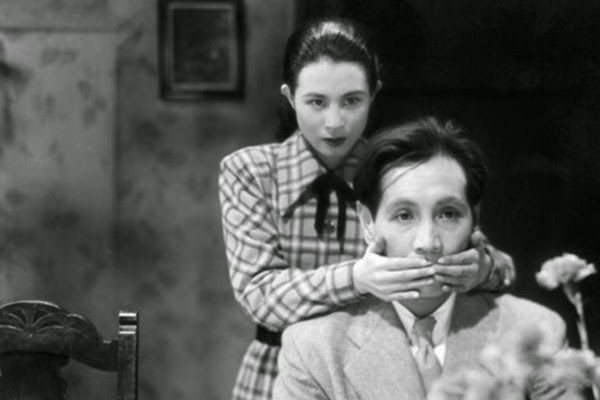
Japanese director Sadao Yamanaka made 24 films in his short seven year career. He was a key figure in establishing Japanese period films, along with fellow cinema giants Ozu, Mizoguchi and Naruse. When World War II came, he was drafted into the Imperial Army, and tragically lost his life in 1938 at the age of 28. After the war ravaged key cities in Japan, most of his films were destroyed or lost, and now only three survive (in near-complete forms). God bless Masters of Cinema, the UK's answer to America's Criterion Collection, for remastering and re-introducing this forgotten gem to the world and giving it a DVD release, following years of obscurity.

The film focuses on a poor area of Tokyo in the late 18th century, where the penniless ronin Unno (Chojuro Kawarasaki) lives amongst the lower classes, struggling to find work. He is desperate to hand a letter written by his late father to the local gang boss, who repeatedly snubs and undermines him. The town is already in shock and mourning following the third suicide in recent weeks, so hairdresser Shinza (Kan'emon Nakamura) throws a party to boost the spirits of the local samurai, yet finds himself falling foul of the local gang for holding an unauthorised gambling party in their territory.

For all the usual gentle beauty of Japanese cinema of the period that is so prominent here, Humanity and Paper Balloons is shockingly pessimistic. The film begins and ends with suicide, and that feeling of unavoidable tragedy prevails throughout the film, as we see samurai reduced to desperate and begging hangers-on. Yamanaka makes clear his opinion of society in feudal Japan, portraying it as a rather savage and hopeless place to exist for the lower classes. Perhaps Yamanaka foresaw Japan's ill-fated siding with the Nazi's which saw Japanese society obliterated by fire-bombings and nuclear weapons. Yet it still manages to be humorous in that typical kooky Japanese way, in the same vein of some of Kurosawa's lighter films. Given this was Yamanake's final film before he went off to fight the war, it seems a fitting exit to a short career, yet tragic given that (judging from this) Yamanaka could have gone on to become a giant in his field. A slight, yet powerful film.


Directed by: Sadao Yamanaka
Starring: Chôjûrô Kawarasaki, Kan'emon Nakamura, Tsuruzo Nakamura
Country: Japan

Rating: *****

Tom Gillespie


Humanity and Paper Balloons (1937) on IMDb

Wednesday, 2 May 2012

Review #389: 'Goodbye, 20th Century!' (1998)

We are only able to interpret from a piece of art what we bring to it. Our own personal knowledge is all we have to unravel, or judge information, when confronted with something that requires diagnosis. Whilst there is limited writing on this obscure Macedonian film, what is written I have found not to be what I considered whilst viewing it. The film's intention I gleaned, began with it's own remission, with a reference to the old testament. This is followed with a scene apparently set in 2019, where Kuzman (Nikola Ristanovski), is gunned down in a post apocalyptic desert, only to survive these apparently severe wounds.  Kuzman then has to battle with heavy weaponry with the "Man With Green Hair" (Toni Mihajlovski), and ends the first sequence bathing with a naked woman who has just dropped a basket of apples into the water (is this a reference to the garden of Eden?).

Before the second half appears, we are shown a wedding in 1900 that results in the killing of the groom. After this we are introduced to a man dressed as Santa Claus (Lazar Ristovski) who travels back to his apartment on the 31st of December 1999. At his apartment he finds that a wake for what appears to be a military official is underway and the members of the party are dismayed to see his entry. This is the extent of my formal explanation of "what happens on the screen". I spent the majority of the film in confusion. I perhaps need to research the history of Macedonia (war has always been prevalent in the Balkans - but that is all I know). And this is why I am standing by my opening sentence, and therefore will state what I took from this bizarre but interesting film, is what very limited knowledge I had to begin with.

I personally felt that this often violent piece of cinema was attempting to break down, and possibly eliminate icons that should have dissipated before the 20th century even began. The first half I felt was Jesus - his body is unbreakable, despite being shot on many occasions, he simply rises from this - but, like Adam in the garden of Eden, he is tempted by the body of woman. In the last sequence, Santa occupies his apartment, which is completely white - perhaps a signal to a waiting room of death - where the occupants degenerate into madness and violence, and death to the real is the only outcome. This brings me to the interpretation that I have of this apparently confusing and a seeming clash of disparate ideologies, comes into effect. I see this as an analysis of the need for a destruction of false idols, icons, or illusions.

Unfortunately, it is the illusory - i.e. the image of Santa Claus - that will prevail at the end of the 20th century. We are left with the concept that the fantasy of the man in red, will always prevail over what is real will always take precedent over the realities of our constantly complex world. But again, in conclusion, I probably have this completely wrong, and can only speculate over the historical aspects that I have no knowledge of. In terms of the films overall result, it is certainly interesting, and absolutely different. It is also wonderful to look at - it's aesthetic seeped in often clinical beauty.


Directed by: Darko Mitrevski, Aleksandar Popovski
Starring: Lazar Ristovski, Nikola Ristanovski, Vlado Jovanovski
Country: Republic Of Macedonia

Rating: ***

Marc Ivamy


Goodbye, 20th Century (1998) on IMDb

Monday, 30 April 2012

Review #388: 'Let Me Die a Woman' (1977)

An extension of the Mondo-style documentary, with their "mission" to illustrate, and exploit unknown or forgotten cultural practises and habits, Doris Wishman's (see Review #298: 'Deadly Weapons' (1974)) Let Me Die a Woman follows the work of sex reassignment surgeon Dr Leo Wollman (who also acted as the films adviser), and his work with both post- and pre-op transsexuals. The film has interviews with the aforementioned doctor, along with several transsexuals in various stages of transformation, and also throws in some re-enactments and dramatisations of some of their experiences.

Whilst this is billed under the exploitation banner, and would have been shown in these types of cinema, the film is not overly exploitative, and presents the stories and their participants in quite a sympathetic manner. However, the film does explore, in a very graphically visual manner the operations required to alter the genitalia. Of course with this being made in the 1970's means that the screen is filled with incredibly hairy, militant-looking pubic areas, whilst these men with tits flash their flaccid cocks for the camera. In one scene the doctor probes a post-op vagina with his fingers - a sexual orifice so hideous that I simply had to avert my eyes.

Aside from the Mondo movies (and of course Faces of Death (1978) et al), I am not really aware of any other exploitation film that used this documentary style to expose new, sometimes weird phenomenon - except for Being Different (1981) that focused on exploiting circus sideshow acts, and included a modern day Elephant Man - so I am unqualified to state whether this film is emblematic of it's kind. What does strike me is the fact that this type of documentary was so new, and also that it was marginalised to the exploitation/grindhouse circuits. The subject matter, and the gratuitousness of the film highlights to me how this kind of "exploitation" is in fact now a fundamental part of prime-time television, with shows such as Embarrassing Bodies or any others of the many, many similar formats that infest our screens, in our homes, whilst we fucking eat our dinner! Given this parallel, and shift in the ways in which the participants are exploited in the modern-day TV show and the cinematic format, the film is pretty naive.


Directed by: Doris Wishman
Country: USA

Rating: **

Marc Ivamy


Let Me Die a Woman (1977) on IMDb


Sunday, 29 April 2012

Review #387: 'Suburban Commando' (1991)

During the early 1990's (when I was just a young 'un), I grew up amidst the colossal popularity of the WWF and its host of superstars. The likes of Hulk Hogan, The Undertaker, Bret 'The Hitman' Hart and Ultimate Warrior were household names amongst snotty nosed kids such as myself. The idea of burly men dressing up in spandex pretending to hit each other never really appealed to me (I was too busy mentally scarring my young brain watching the likes of Watership Down (1978) for all that), yet I still found myself buying the action figures and playing the computer games. Naturally, the success of wrestling during that era led to many of its stars taking the next step into movies, rather than playing to a live crowd in a ring. Unfortunately, due to the obvious limitations of their acting abilities, they found themselves primarily in kids' movies, and this monstrosity is probably, and tragically, one of the best remembered.

Space warrior Shep Ramsey (Hulk Hogan) escapes from an enemy ship after seeing his commander killed at the hands of intergalactic villain General Suitor (William Ball). Due to his failure on the mission, he is sent on vacation to rest and re-charge, and he is forced to crash-land on Earth after destroying his controls. Shep ends up staying with strapped-for-cash Charlie Wilcox (Christopher Lloyd) and his family, and naturally, the two learn many life lessons from each other. Only two bounty hunters (one played by fellow WWF star The Undertaker) are in pursuit of Shep, and Charlie unwittingly finds himself caught up in an intergalactic battle. 

Even as a kid I found this film to be a steaming pile of turd, but still found myself drawn to it for some reason. Upon re-watching it, my memories were confirmed, and discovered that this is indeed awful, and would attract flies if left out in the open. The opening 45 minutes are so are just a bunch of small-scale set-pieces that highlight Shep's physical superiority over the Earthlings, that are neither funny, sweet or original. The main problem with the film is that it simply defies logic and thought, I mean, how would a space warrior who deals with hi-tech gadgetry and space-ships on a daily basis be so confused into thinking a video game he's playing is really happening? "I hate Earthlings!", Shep repeatedly tells us. Strange that, given that he looks and acts like one, speaks English, and even has an American name. Bull-shit on a large scale, only slightly redeeming itself with the presence of Christopher Lloyd. People will say that maybe I should just take the film what it is, but I will argue and say that I am - a fucking catastrophe. 


Directed by: Burt Kennedy
Country: USA

Rating: *

Tom Gillespie


Suburban Commando (1991) on IMDb


Monday, 23 April 2012

Review #386: 'Frozen Scream' (1975)

I was under the impression that the medical toxin Botox was a modern phenomenon in terms of its use on vacuous, rich, stupid peoples faces. However, watching this 1975 movie actually proved me completely wrong. The "actors" in this film seem to use the substance on a meteoric scale, and its as though the late '60's concept of drug sharing is taken to another level, like 'Fraternity of Men', "Don't bogart botox my friend, pass it over to me", seems to be what was happening between scenes. The faces of all involved here barely move. Their expressionless, vapid, and monotone deliveries are almost laughable; they simply have no emotions - even when delivering some (incredibly pedestrian admittedly) dialogue that simply drips from their chins, and is hardly audible.

Well, the film does also kind of have a story. It's about scientists who are experimenting on what appear to be implants that can extend life - becoming the epitome of love and immortality. Basically, they have discovered a way to revive the dead, bringing them life as cold, zombie-like creatures of control (like H. P. Lovecraft, but without any outrageous fun - of even simply fun for that matter). There are some strange figures in black robes who seem to kill those who find out. It's pretty hard to work out what is going on at times, it is a rather convoluted narrative. So it is yet again another pathetic, and preposterous entry into the video nasties list. All I can say here is simply that I curse the stupid choices that the director of public prosecutions made in the early 1980's, and also I want to extend my fist towards the man who's idea it was to review all these fucking films - cheers Tom, you knob.


Directed by: Frank Roach
Starring: Renee Harmon, Lynne Kocol, Wolf Muser
Country: USA

Rating: *

Marc Ivamy


Frozen Scream (1975) on IMDb


Friday, 20 April 2012

Review #385: 'Warriors of the Year 2072' (1984)

The work of prolific Italian director Lucio Fulci is most notable for his output in the horror genre, where he made some genuinely good films, such as The Beyond and The House by the Cemetery (both 1981), and some not-so-good, yet still fondly remembered, such as Zombie Flesh Eaters (1979). His entries into sci-fi are somewhat less well-remembered, which is almost a shame, as this, Warriors of the Years 2072 (also known as New Gladiators) is at least an intriguing idea. Set in a future where TV corporations seem to rule, airing gladiatorial battles in order to boost ratings, popular champion of the intelligently named Kill Bike, Drake (Jared Martin), has been framed for murder in order to lure him into a new to-the-death game show. Sensing the audience are desperate for blood and death, the ruthless TV network plan to set a band of Death Row prisoners against each other in a motorbike battle, complete with nasty weapons.

It plays like an earlier cheap version of The Running Man (1987), but with cardboard sets, dodgy costumes, and the guy that played Black Caesar. This is a pretty terrible film. The obvious budgetary constraints lead to a very slow build up that sees Drake planning and training with his new Death Row colleagues for a long time before we get to the climax. That said, when the finale does finally arrive, it's actually pretty exciting given the actors are clearly waving plastic weapons and merely karate chopping each other on the back of the head (which seems to be the standard exploitation fight move). Fulci seems unable to resist throwing in a splash of gore any chance he gets, which makes it obvious as to where his heart really lies. Sci-fi is not his forte, and it's clear that this was a quickie. But there are a few things to enjoy here, namely the basic idea which is, as I said earlier, although badly executed, is certainly quite interesting.


Directed by: Lucio Fulci
Starring: Jared Martin, Fred Williamson, Howard Ross
Country: Italy

Rating: **

Tom Gillespie


I guerrieri dell'anno 2072 (1984) on IMDb

Sunday, 15 April 2012

Review #384: 'Minnie and Moskowitz' (1971)

Not known for his ability for comedy, pioneer of American Independent Cinema, John Cassavetes, is on romantic comedy grounds here, taking the traditional movie love-story and turning it very much on its head. Eccentric parking-lot attendant Seymour Moskowitz (Seymour Cassel) re-locates to California, working the same job and living in a small rented room. Museum curator Minnie Moore (Gena Rowlands) is an emotionally damaged yet extremely attractive 40-something woman who is in an abusive relationship with her secretive partner Jim (Cassavetes himself). A chance encounter puts Minnie and Moskowitz together, and two fume at each other for the duration. Only Seymour falls in love with Minnie, who he feels looks down on people, and Minnie becomes reluctantly curious about this strange man.

While following the long tradition of the romantic comedy, anyone expecting a squeaky-clean Rock Hudson/Doris Day Technicolor screwball comedy will be sorely disappointed. Cassavetes sticks to his game using extreme close-ups, a hand-held camera, and semi-improvised performances to tell a story that feels real, but maintains the warmness and the satisfaction that the best of the genre have provided in the past. The film is very much about how movies mid-lead you, and as Minnie states 'they set you up for disappointment'. Minnie and her friend watch Casablanca (1942), and discuss how there are no Humphrey Bogart's or Clark Cable's out there, because they don't exist. Who does exist, however, is Seymour Moskowitz.

Cassel is absolutely exceptional in the role, playing his long-moustached, pony-tailed character as quirky and warm, as well as aggressive and often plain insane. He seems to win Minnie over by yelling at her, explaining how it isn't fair how a less-attractive and relatively poor man can't be with Minnie simply because she's richer and physically desirable, but Minnie finds his frankness fresh. With show-stealing cameos by Val Avery and Timothy Carey, as two strange men who the two leads meet over the course of the film, Minnie and Moskowitz is a strange and interesting look at love through the eyes of two sometimes unlikeable, yet utterly compelling people.


Directed by: John Cassavetes
Starring: Gena Rowlands, Seymour Cassel, Val Avery, Timothy Carey, John Cassavetes
Country: USA

Rating: ****

Tom Gillespie


Minnie and Moskowitz (1971) on IMDb

Wednesday, 11 April 2012

Review #383: 'Whoever Slew Auntie Roo?' (1972)

Shelley Winters stars in this combination of modern, macabre film making, along with fairytale interpretation, Whoever Slew Auntie Roo? focuses on the seemingly giving widow, Mrs Forrest (Winters), who offers food, shelter and presents to local orphans at Christmas time. The film wastes no time in showing the darkness, and weird psychosis of this lonely woman. In the opening scene she takes the decaying body of a child (later shown to be her dead daughter), out of a cot in a secret room in the house. This instantly gives the film it's post-Psycho familial tragedy. This is often more disturbing as we never really know exactly what happened to the child. It is seen briefly in a scene involving a fall from a bannister, but there always seems to be the spectre of something more sinister.

After siblings, Christopher and Katy Coombs (Mark Lester - you know, that posh titular "orphan" of the Oliver! (1969) musical - and Chloe Franks), secretly enter the mansion, and a relationship between the girl and Mrs Forrest ensues that develops into a strange obsession, that leads to Winters connecting Katy with her dead daughter. This is where the film falls into fairytale territory, using the Hansel and Gretel narrative, the children are trapped in the house and either she is, or the children believe that she will cook them.

It's certainly not the best of it's kind, but then again, it's not the worst. Winters does however, have some of the best/worst "crazy-eyes" in cinema history. In one scene she violently takes a bite of an apple, her eyes rolling around, wild, frantically. The film does also boast some good, but small performances from the great Ralph Richardson and Lionel Jeffries, but as with Oliver!, I still have great inability to believe that Mark Lester would ever have been orphaned or poor - he is just too well-spoken.


Directed by: Curtis Harrington
Starring: Shelley Winters, Mark Lester, Chloe Franks
Country: UK

Rating: ***

Marc Ivamy


Whoever Slew Auntie Roo? (1972) on IMDb

Monday, 9 April 2012

Review #382: 'The Idiot' (1951)

It's pretty difficult to judge this film fully. The first half is erratic, and filled with jolting edits, characters that appear and disappear without any introduction. It's a damn shame. The scatological nature of this epic project, adapted from the Russian classic by Fyodor Dostoyevsky, was due to it being horrendously cut down by the studio that funded it. Originally, Akira Kurosawa had created a 266 minute cut of the - incredibly faithful to the source novel - was shortened by 100 minutes. Unfortunately, it would seem that the world may never see the original version, as even when Kurosawa hunted for the missing scenes in the vaults several decades later, he was unable to locate them.

As it is in its now 166 minute format (the longest version available), it is still an incredibly important piece of melodrama. After the devastation of the war, Kinji Kameda (Masayuki Mori) and Denkichi Akama (Toshiro Mifune), travel back to a remote island. Kameda claims that he suffers from an illness, cause by the suffering of war, and simply referred to as idiocy - when expressed on film, this idiocy seems simply to be an innocent, and fundamentally naive view of people. He simply only sees good in people, even if this is not the case. On arriving they both seem to fall for a disgraced woman, Taeko Nasu (Setsuko Hara), who was someones concubine since the age of fourteen, and is being offered for marriage at a price.

What ensues is a strange love triangle that divides not only the two male protagonists, but the community. The film is beautifully shot in black and white by Toshio Ubukata, who had worked with Kurosawa on his previous film, Scandal (1950). It is unfortunate that the films first half suffers so evidently due to extensive cutting. However, it is the relationship between Kameda and Akama that provides the climax (which is seemingly more intact) that provides the films central theme, and its most poignant elements.


Directed by: Akira Kurosawa
Starring: Setsuko Hara, Masayuki Mori, Toshirô Mifune, Yoshiko Kuga
Country: Japan

Rating: ****

Marc Ivamy


The Idiot (1951) on IMDb

Review #381: 'The Exterminating Angel' (1962)

'L'enfer c'est les autres' (Hell is other people), wrote the French existentialist philosopher, Jean-Paul Sartre, in his play, 'No Exit' (sometimes referred to - and has been performed - as 'In Camera'), that surmised the narrative of three deceased individuals locked in a room, one that they eventually realise they will be spending eternity together in. Luis Bunuel used this simple meta-narrative concept of people trapped, to create one of his finest satires, and his first explicitly surrealist film since L'Age D'Or (1930). After Bunuel's previous film, Viridiana (1961), was condemned by the Vatican and banned in his native country of Spain (and where it was made), he moved back to Mexico where he had been making films throughout the 1940's and 50's, and produced a scabrous attack on General Francisco Franco's Spanish fascist dictatorship, and the institutions, and bourgeois facets of the country that were founded on the destruction of the poor and the proletariat, during the civil war that ended in 1939.

Whilst the film works as political allegory, on a base narrative level, it functions as an irrational comedy; or farce. The guests arrive for a lavish dinner, but as they arrive, the maids leave, and progressively all the hired help leave them. Once dinner is complete, the guests congregate in the living room, but they all begin to realise that they are unable to leave the room at all. When this is discovered we observe that they attempt to go, but are either distracted or simply stop or break down at the boundary of the room. This continues through days, possibly months - the characters concept of time completely obliterated. The group falls into decay, primitive urges overwhelm them, and as this representation of Western Civilisation breaks down, the group become brutally savage, turning on the host of the dinner, demanding sacrifice. The group slaughter the lambs that were originally to be used in a dinner prank.

At first the guests seem to simply ignore what is happening to them, and continue with inane chat. Exterior to the "party", the grounds are surrounded, but not even the police are able to enter, given the same mysterious barrier that prevents entry. It's almost a perfect parable, illustrating the ignorance of the Spanish bourgeoisie, as they strip the rights and dignity of the proletariat (here the maids leave on their arrival), whilst divorcing their minds from the violence and corruption of a dictatorship. But with this, it also shows how even the "civilised" sections of society, once they are stripped of their social status, their inherited manners of "education", and their ability to use wealth, the fall into absolute decay, probably falling apart greater than the lower classes, with their lessened moral outlook, and an almost infantile inability to deal with regular obstacles.

Winner of the 1962 Palme d'Or at the Cannes film festival, this was to begin what become (rather belatedly for the 62 year old) his most productive, celebrated and interesting period of his career, based in Paris, beginning with Belle de Jour (1967) and ending with That Obscure Object of Desire (1977). This is the period that he developed and expanded his own style, and his unique vision on film. The Exterminating Angel has also given inspiration for others. It is a clear influence on Jean-Luc Godard's wonderfully bleak and satiric depiction of the bourgeoisie and the end of Western Civilisation, Week End (1967). The idea was also utilised in one sketch from Monty Python's Meaning of Life (1983), that saw the guests leaving as ghosts. This is by far, one of his greatest achievements, beautifully realised, with comic touches, and moments of surrealism that both bemuse and amuse.


Directed by: Luis Buñuel
Starring: Silvia Pinal, Enrique Rambal, Claudio Brook, José Baviera
Country: Mexico

Rating: *****

Marc Ivamy


The Exterminating Angel (1962) on IMDb

Sunday, 8 April 2012

Review #380: 'Bukowski: Born Into This' (2003)

Genius, alcoholic, misogynist, poet, borderline psychopath. These are some of the words and labels branded on 'Beat' poet and author Henry Charles Bukowski Jr. during this extremely detailed and informative account of his life and work. For those unacquainted with his blue-collar genius, Bukowski started out drifting through meaningless jobs across America in the 1940's, drinking and writing all he could in his spare time. It wasn't until the 1960's when a collector of 1st editions and manager of a printing company offered to publish a collection of his works, when his career took off. He wrote possibly thousands of poems and was asked to write a novel. This work was Post Office, an deadpan account of his 16 years working for the U.S. Post Office.

Although he was, and still is, recognised as a 'Beat' writer (alongside the likes of Jack Kerouac and Alan Ginsberg), he was very much a man of his own style. Where Kerouac wrote about his personal journeys in a structured, detailed way, Bukowski wrote about mundane things in a straightforward way. It was very much poetry for the blue collar workers. In this documentary, John Dullaghan pieces together interview footage shot by the likes of Taylor Hackford and Barbet Schroeder, as well as pieces conducted by Italian and Belgian TV, to create a portrayal of a very complex and misunderstood man (there are also interviews with the likes of Sean Penn, Bono, Tom Waits and Harry Dean Stanton).

Like A Man Within (2010), which focused on fellow beat writer William S. Burroughs, Born Into This tries to tackle the various attributes that made the man. While telling a relatively chronological story of Bukowski, it covers the subjects of his childhood abuse at the hands of his father, his alcohol abuse, his treatment of women, his reaction to fame, and how this led to an influx of women begging for his 'purple onion' (as he called it). Running at 130 minutes, this is an incredibly (and necessarily) detailed documentary that really gets to the heart of the man who created some incredibly pieces of literature. I remember reading Post Office and Factotum when I was younger, and being blown away by its simplistic beauty and honesty. A must-see for any fans.


Directed by: John Dullaghan
Starring: Charles Bukowski
Country: USA

Rating: ****

Tom Gillespie


Bukowski: Born into This (2003) on IMDb

Review #379: 'Baby Face' (1933)

A film that could easily be a how-to guide, 'How to Destroy Lives and Topple Corporations', sees Barbara Stanwyk's Lily Powers move from the drab surroundings of rural Eerie, to the bustling city of New York, Baby Face is a film about the power of sexuality, and it's inherent dangers. A local friend in Eerie, Professor Adolf Cragg (Alphonse Ethier), reads sections of Nietzsche's 'Will to Power', and asserts that she should move to the big city and exploit her sexuality to manipulate men to get what she wants. Powers proceeds to gain power and position in a bank, using men with sexual favours to climb the ladder, and fundamentally gain material wealth.

This was quite a common theme in Hollywood cinema of the 1930's, with the depression well under way, things were scarce. Jean Harlow had played a similar role in Jack Conway's Red-Headed Woman (1932). Of course this was exactly the kind of amoral characterisations that the Production code, often known as the Hays Code (after it's head Will Hays), was targeting as subversive and depraved for cinema audiences. The morality of the 1920's lingered for a short period into the Great Depression, which was seen by conservatives such as Hays, as a contributing part of the Wall Street crash.

With the progression of Powers through a succession of men within the bank, she inevitably leaves a line of men besotted with her. She becomes a kept woman by the head of the bank, and the confused and simple minds of the men are led to deceit. It's a terrifically twisted plot, but also it does not necessarily give the femme fatale her deserved conclusion. But she does learn the importance of people over the accumulation of material wealth - perhaps the perfect end to decadence in poverty stricken '30's America.


Directed by: Alfred E. Green
Starring: Barbara Stanwyck, George Brent, Donald Cook, Alphonse Ethier
Country: USA

Rating: ****

Marc Ivamy


Baby Face (1933) on IMDb

Review #378: 'Zombi Holocaust' (1980)

A common occurrence with film titles, particularly in the international horror genre, is that many territories have different names - this film is on our grindhouse project list as Doctor Butcher M.D., but is also (exhaustively) known as: Island of the Last Zombie; Medical Deviate; Queen of the Cannibals; and even Zombie 3. The version of this film had the original Italian title. And boy is it a standard, generic cannibal/zombie film. After a series of strange mutilations and amputations in hospitals, a team make an expedition to the East Indies, in search of the answers to the strange ritualistic symbol left at each "murder".

The film is essentially two previous Italian schlock movies, Slave of the Cannibal God (1976) and Zombie Flesh Eaters (1979), combined. The team encounter what turns out to be a "crazy" doctor who has been experimenting on the dead local cannibals, manipulating them to his power. It's not a particularly memorable inclusion into a very crowded market. There are some effective gore sequences, but it doesn't at all save a very tired, predictable, and often clumsy narrative. There is one piece of dialogue that amused me, that occurred towards the beginning of the film, after a hand has been severed and stolen from a body used for medical education. A conversation between two medical students goes as follows: Student 1: "I bet it was you who chopped that hand off". Student 2: "Why would you say that?" Student 1: "Well, didn't you say you needed a hand to help you study?"


Directed by: Marino Girolami
Starring: Ian McCulloch, Alexandra Delli Colli, Sherry Buchanan
Country: Italy

Rating: **

Marc Ivamy


Zombie Holocaust (1980) on IMDb


LinkWithin

Related Posts Plugin for WordPress, Blogger...