Showing posts with label 1968. Show all posts

Monday, 13 May 2019

Review #1,479: 'Planet of the Apes' (1968)

"You maniacs! You blew it all up! God damn you all to hell!" The image of the sweaty, bare-chested Charlton Heston beating the floor as the truth finally hits home at the climax of Planet of the Apes is now one of the most iconic moments in cinema history. If you saw the film as a kid, chances are this will be the scene you'll remember, or the famous "Take your stinking paws off me you damn dirty ape!" line, as Heston's fallen astronaut George Taylor reveals himself as an intelligent being to his simian captors. It's been lovingly parodied through the subsequent decades, and its memory somewhat tarnished by Tim Burton's abysmal 2001 remake, so it's easy to forget just how revolutionary Franklin J. Schaffner's film was for mainstream science-fiction cinema, and just how much it has inspired the genre with its legacy ever since.

Astronauts Taylor, Landon (Robert Gunner) and Dodge (Jeff Burton) rest in deep hibernation as their spaceship speeds through the galaxy at light-speed. While the crew have aged just over a year, by the time the craft crashes down on a strange, but seemingly habitable, planet, two thousand years have gone by back on Earth. With no hope in sight, the three space travellers decide to trudge through the deserts of this unknown rock and eventually come across fresh water, stopping for a well-earned bathe despite the ominous presence of crude scarecrows looming over them. When their clothes are stolen, they encounter what appears to be a community of humans, only these are dressed in rags and don't communicate verbally. Out of nowhere, they are raided by figures on horseback, who hunt the fleeing humans to either kill or capture them. The aggressors are rifle-wielding gorillas wearing armour, and Taylor and Landon are ensnared and carried off to Ape City to be studied and experimented on by an intelligent ape society.

While it's easy to get caught up in all the action and adventure, it's the social, political and religious observations that will stay with you long after the credits have rolled. Planet of the Apes is the stuff of truly great science-fiction, a genre that allows us to be whisked off to a different time or space that feels oddly close to home. Schaffner's film paints a pretty pessimistic picture of humanity, as Taylor, prior to hibernation, ponders the planet he thinks he'll eventually return to, and whether humanity will have moved on from the conflict-ridden world he was eager to leave behind. The world he is eventually plunged into is much like our own, or is certainly heading that way. Taylor is viewed as a threat, foretold in ancient religious texts that sound suspiciously like our own, while blinkered scientist Dr. Zaius (Maurice Evans) dismisses the idea of evolution despite the pleas of psychologist Zira (Kim Hunter) and her fiance Cornelius (Roddy McDowall). The Oscar-winning make-up is also staggering, standing shoulder to shoulder with anything from the modern era. More than fifty years after its release, Planet of the Apes is better, and sadly more relevant, than ever. There's a reason this story is still being told.


Directed by: Franklin J. Schaffner
Starring: Charlton Heston, Roddy McDowall, Kim Hunter, Maurice Evans, James Whitmore, Linda Harrison
Country: USA

Rating: *****

Tom Gillespie


Planet of the Apes (1968) on IMDb

Tuesday, 4 July 2017

Review #1,218: 'The Thomas Crown Affair' (1968)

Some movies rely on the chemistry of their lead co-stars in order to engage their audience, hoping that the thrill of watching two sexy movie-stars romancing and eventually getting it on with each other will provide sufficient escapism to make the reality lurking outside seem a world away. It's difficult to think of a film as reliant on the raw sex appeal of its superstars than Norman Jewison's 1968 heist thriller The Thomas Crown Affair, and Steve McQueen, as the titular millionaire playboy, and Faye Dunaway, as the sultry insurance investigator hot on his tail, positively sizzle with chemistry. In fact, they are so gorgeous that they manage to turn a game of chess into a playful game of seduction. The duo have certainly given much better performances during their careers, but they have never looked so good.

This pretty much sums up The Thomas Crown Affair: a polished, colourful star vehicle with an unashamedly glossy veneer. At the very centre of the story is a bank heist gone right, masterminded by the rather smug Thomas Crown (McQueen) after he handpicks his crew without ever letting them see his face. The thieves escape with over 2 million dollars, and nobody, including the rather clueless Detective Eddy Malone (Paul Burke), has any idea who it was. Enter Vicki Anderson (Dunaway), a no-nonsense independent woman with a love of the finer things in life. She quickly figures out that Crown was behind it all, but remains puzzled at why a man with everything would want to steal money he doesn't need. Of course, it's all a game, and the couple start their own game of cat-and-mouse as they embark on a steam affair.

Taking inspiration from the Expo 67 film A Place to Stand, which greatly impressed McQueen, Jewison employs 'multi-dynamic image technique', splitting the screen into sections with each part showing a different viewpoint. It gives the film a unique style, especially during the opening heist, and when combined with 60s kitsch, everything is wonderful to look at. While the visuals still impress, the characters are somewhat dated. He's the rich, philandering charmer, and she is bowled over by his fast-living and expensive possessions. It makes it all the more difficult to warm to a character I would detest in real life, but McQueen has more than enough charisma to pull through. There are never any real stakes, but it's pretty fun while it lasts, just a little hollow at its centre. The Pierce Brosnan/Rene Russo remake from 1999 makes for a more satisfying ride.


Directed by: Norman Jewison
Starring: Steve McQueen, Faye Dunaway, Paul Burke, Jack Weston, Yaphet Kotto
Country: USA

Rating: ***

Tom Gillespie


The Thomas Crown Affair (1968) on IMDb

Tuesday, 10 November 2015

Review #941: 'Theorem' (1968)

The bourgeoisie have long been a target for many of the great European film-makers. They were an object of fascination and humour for Luis Bunuel and were often portrayed as outwardly repulsive by Rainer Werner Fassbinder and Jean-Luc Godard. In Theorem, Pier Paolo Pasolini ponders whether they are beyond hope and redemption, so far removed from our society that they are now of a different species altogether. The film begins outside of a factory, where the workers gather outside trying to understand why the owner has fled, leaving the entire company in the hands of its employees. They seem angry while a news reporter tries to comprehend the situation.

In an upper-class Milan suburb, a wealthy family are informed of the imminent arrival of a stranger by a enthusiastic postman. The man, known only as the Visitor (Terence Stamp), suddenly appears at their home seemingly without reason, and immediately begins to affect the family and their maid. He stops the maid (Laura Betti) from committing suicide, soothes the son (Andres Jose Cruz Soblette) of his anxieties, eases the fears of the opposite sex of the daughter (Anne Wiazemsky), seduces the sexually repressed mother (Silvana Mangano), and nurses the seriously ill father (Massimo Girotti) back to health. He vanishes as quickly as he appeared, leaving his subjects in various states of bewilderment and enlightenment.

Is the man God, the devil, or both? Ultimately, this question doesn't really matter. It's clear that the Stranger is a divine presence, but it's the effect he has on the unwitting family that is the most fascinating. The maid, a humble woman of low birth, returns to her village and is worshipped as a saint, and even appears to levitate at one point. The bourgeoisie family, however, start to slowly implode, climaxing with the father stripping himself naked and wandering into a desolate land. The Visitor seems to unlock their potential, only they - the maid aside - are unable to handle such divinity brought to them on a human level. The final scene includes a scream that may be ecstasy or pure terror, but Theorem doesn't make it that easy to unravel. This is a complex and fascinating work by one of the Italian masters, and one that will have you trying to pull apart its themes days after you have watched it.


Directed by: Pier Paolo Pasolini
Starring: Silvana Mangano, Terence Stamp, Massimo Girotti, Anne Wiazemsky
Country: Italy

Rating: ****

Tom Gillespie


Teorema (1968) on IMDb

Sunday, 16 November 2014

Review #804: 'Chitty Chitty Bang Bang' (1968)

To audiences young and old who grew up watching it, Chitty Chitty Bang Bang surely holds a warm, nostalgic place in their hearts. At the age of 29, this was my first viewing. I somehow knew all of the songs, knew everything that happens in the plot, and was certainly familiar with the notoriously creepy Child Catcher (Robert Helpmann). For me, watching the film was like eating a huge slice of cake. The first few bites are delicious and barely touch the sides, mid-way through you start to waver but you just can't seem to stop, but by the end your stomach is turning and you wish you'd never eaten the damn thing.

The brain-child of James Bond creator Ian Fleming, the movie was only loosely adapted from his novel by children's author Roald Dahl and director Ken Hughes. Chocked full of sweets and machinery, most of the film will have children eating out of it's sugar-coated palm. When skipping school one day, two mop-headed children come across Truly Scrumptious (Sally Ann Howes), a pretty but strict lady who takes the children straight to their father to report their truancy. The father, eccentric inventor Caractacus Potts (Dick van Dyke), supports their free-spiritedness, much to the horror of Truly.

While observing Potts' warehouse of barmy inventions, Truly comes across a sweet that can play like a flute. They takes it to Truly's father, Lord Scrumptious (James Robertson Justice), a successful confectionery manufacturer, who eventually throws Potts out when the place is overrun by dogs responding to the flute sweet. Eventually he saves up enough money to buy an old banger loved by his children and manages to fix it up, dubbing it 'Chitty Chitty Bang Bang' due to the clunking noise it makes. While off on a picnic one day, Potts and Truly start to fall for each other, and Potts tells his children the story of an evil pirate baron (Gert Frobe) who wants to steal the car for himself.

Chitty Chitty Bang Bang is carried along by some gorgeous Technicolor cinematography by Christopher Challis and an energetic performance from van Dyke, who puts in a highly physical one-man show and remains effortlessly likeable throughout. At two and a half hours, the film far outstays it's welcome. The majority of the songs are wonderful, but the film is slowed by mushy scenes, drab love songs and unnecessary sub-plots. It struggles with settling on a tone and ends up becomes a bloated mash-up. The first half of the movie I enjoyed as much as I did with the great's of the genre, until Grandpa Potts (the magnificent Lionel Jeffries) is whisked off to Vulgaria and it all becomes increasingly sickly.


Directed by: Ken Hughes
Starring: Dick Van Dyke, Sally Ann Howes, Lionel Jeffries, Gert Fröbe, Anna Quayle, Benny Hill, James Robertson Justice, Robert Helpmann
Country: UK

Rating: ***

Tom Gillespie


Chitty Chitty Bang Bang (1968) on IMDb

Saturday, 14 September 2013

Review #654: 'The Astro-Zombies' (1968)

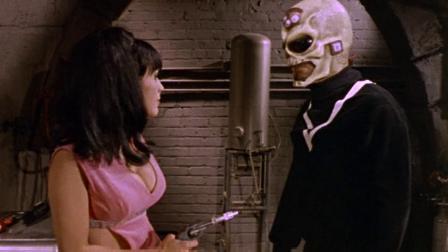
The Astro-Zombies is one of those Z-grade efforts where you can tell the producers had a bunch of props and sets left over from previous productions and wrote a script based around them. Therefore, the film makes absolutely no sense, and ends up throwing everything but the kitchen sink at the audience. We are left with a story involving mad scientist Dr. DeMarco (John Carradine) and his hunchback lab assistant who are attempting to create an army of 'astro zombies', superhuman beings whose actual purpose is sketchy. After one is loosed and goes on a killing spree, the CIA (led by a clearly sozzled Wendell Corey, who died due to his alcoholism shortly after filming) and a spy ring led by the great Tura Satana become interested.

It's easy to label a film 'the worst film ever!', but The Astro Zombies, directed by schlock favourite Ted V. Mikels, truly lives up to its reputation. Carradine, bless him, makes a valiant attempt to make some kind of sense of the plot with some muffled monologues, but I got completely lost in all the drivel. There is the odd moment of camp weirdness such as the wounded astro zombie fleeing with a torch pressed against his head to keep itself alive or a naked exotic dance that serves absolutely no purpose, but it constantly lingers on endless laboratory scenes where literally nothing happens. The zombies themselves are nothing more than a man in a kind of insect/skull/mutant mask, and there's only really one of them. It's a truly painful experience that lacks the amusing moments of Mikels' other 'works' such as The Corpse Grinders (1971) and The Doll Squad (1973), that at least made those films bearable. Truly painful stuff that could benefit from a good thirty minutes shaved off the running time.


Directed by: Ted V. Mikels
Starring: Wendell Corey, John Carradine, Tom Pace, Tura Satana
Country: USA

Rating: *

Tom Gillespie


The Astro-Zombies (1968) on IMDb

Sunday, 27 January 2013

Review #571: 'Head' (1968)

The most iconic and popular film that came out of the acid-fuelled 1960's was undoubtedly Easy Rider (1969), with the clip of Peter Fonda and Dennis Hopper riding their motorbikes to the sound of 'Born to be Wild' now embodying the very spirit of the hippy movement. Yet, as good as Easy Rider is, it followed very much in the same footsteps as Roger Corman's The Wild Angels, out four years before and following the same attitudes and ideas. A lot of the less successful independents from the 1960's have seemingly disappeared from popular culture - movies that deserve a lot more recognition and respect from more mainstream audiences. One of the finest examples, is Head, released the same year as The Beatles' Yellow Submarine, but sharing little of the Liverpudlian quartet's success, perhaps due to it being a vehicle for The Monkees, a band manufactured from actors for the purpose of a bubble-gum sitcom, and who received very little adoration from fans of 'real' music.

The Monkees TV series ran between 1966 and 1968, and was a massive success for the band and its co-creator Bob Rafelson, which makes it very strange given the direction Rafelson (directing here) and co-writer Jack Nicholson chose to take them. Head follows the Monkees - Micky Dolenz, Peter Tork, Michael Nesmith and David Jones - on a studio lot making a film. They wander aimlessly through different genres - war, horror, adventure, western - playing out surreal and comedic vignettes throughout. The Monkees are tired of their studio image, frequently attempting to disrupt the proceedings as they are followed by an ever-present camera, and repeatedly find themselves locked in a large black room, while a giant Victor Mature tries to squash them. Sound fucking strange? Well, it is.

I would imagine people either loving or hating this film, depending on their attitudes towards acid-trip art and the youth culture of the time. Head is complete with psychedelic negative imagery, screaming female fans and a dreamy, Pink Floyd-esque score, all the elements that can now be considered as clichés of the era. But where a lot of these types of surrealistic films were there to mean nothing, Head very much means something, and lays out its attitudes and aims at the beginning, as The Monkees sing a strange diddy about acknowledging their manufactured reputation and ponder their destiny. The film then switches to the opening of a bridge, where the announcer struggles to operate the microphone when the Monkees dash past him, desperately fleeing some unknown danger. They then jump off the bridge, killing themselves, and the titles play over images of their lifeless, floating bodies. These images would hardly endear them to their young, screaming fanbase, therefore finally breaking out of their squeaky-clean shackles.

The film has many satirical focuses - war, politics, America, the studio system, advertising, the World War II generation - employing everything from flashing images of napalm bombings and the famous execution of Nyugen Van Lem, to scenes of outright farce such as a foreign army surrendering to an unarmed and shirtless Micky Dolenz in the desert, no doubt signifying America's bullying attitudes to world politics. It's the sheer anger of the satire that makes Head so good, even though it's usually peppered between seemingly light-hearted, playful comedy. There's a few nice songs (although the soundtrack is nothing ground-breaking) and features a wonderful song-and-dance routine featuring David Jones and Toni Basil. I don't know why history has been cruel on Head, as it is as memorable and as outright bizarre as the better-remembered films from this period, but hopefully soon this film will find itself with the cult following it deserves.


Directed by: Bob Rafelson
Starring: Peter Tork, Davy Jones, Micky Dolenz, Michael Nesmith, Victor Mature, Timothy Carey
Country: USA

Rating: ****

Tom Gillespie


Head (1968) on IMDb

Wednesday, 10 October 2012

Review #507: 'Night of the Living Dead' (1968)

It's difficult to imagine a pre-zombie world nowadays, given that film, TV and computer games are now littered with the walking dead. The term 'zombie' had been coined many times before, possibly earlier than 1932's White Zombie, but was a label given to creatures and humans under voodoo spells in many different incarnations. In 1968, writers John Russo and George A. Romero took the term and applied it to the walking dead - brainless creatures who existed for nothing other than human flesh; a shuffling army that would stop only if their brain was destroyed, or their head removed from their body. The film was Night of the Living Dead, and although it was ridiculously criticised for its gory content (which was very extreme for its day), changed the face of horror forever, and would influence movies right up to the modern day.

The now-familiar story begins with siblings Barbra (Judith O'Dea) and Johnny (Russell Streiner) visiting the grave of their father. With Johnny teasing Barbra about monsters and ghoulies, a man attacks Johnny, causing him to hit his head on a gravestone while Barbra flees to a nearby house. Traumatised by what she has just witnessed, Barbra is joined at the house by Ben (Duane Jones), who quickly starts boarding up the house to halt the encroaching zombies. They watch the news reports on the television about this strange attack, while married couple Harry (Karl Hardman) and Helen (Marilyn Eastman) emerge from the cellar, claiming their daughter has been attacked and is lying unconscious. With the outside fires set by Ben only delaying the zombie onslaught, they must hatch a plan to escape.

It was alarming watching this film again after a number of years, after devouring many horror films in the past ten years or so. Living Dead's basic concept and plot devices have been used time and time again throughout the decades, and is a massive testament to the legacy of the film. It plays out like a guidebook on how to make a zombie film - the retreat, the do-good male lead, the annoying guy with a shirt and tie, the make-or-break run for the escape vehicle, the overwhelming final attack - are now so familiar. Yet after seeing this basic plot played out hundreds of times, Night of the Living Dead still seems fresh and ground-breaking, never coming across as clichéd or a tired idea.

Of course, most horror films lack the social bite or political commentary of Romero's zombie series. While its 'sequel' Dawn of the Dead (1978) used its shopping mall setting as an attack of America's consumerist obsession, Night uses its informative news reports as a damning indictment of the U.S.A.'s gun-ho attitude and ultra-violent tendencies towards infiltration, possibly a reaction to the country's ridiculous response to the emergence of communism. And although Romero's claims that Duane Jones was cast solely on his audition, rather than the fact that he was black, the now-legendary final scenes prove to be either a massive bit of luck, or a pre-meditated stroke of genius from the writer's as a metaphor for the racial tension that was so prevalent in 1960's America.

All that aside, this is simply great horror. Though (in my opinion) Romero's follow-up Dawn of the Dead is a better film, Night of the Living Dead is where it all began. It's grainy, hand-held, black-and-white cinematography not only adds a low-budget dirty quality to the film, but also proves what greatness can be done with an original idea, a lot of heart, and a heap of innovation, regardless of what your budget may be. Obviously, it's not scary anymore, and the gore levels are incredibly tame by today's standards, but the tension and claustrophobic atmosphere is still as effective as I would imagine it was back in 1968. And the final moments of pessimism that the film leaves you with does nothing but ensure the film is engraved into your memory. Romero may have lost in touch with his modern zombie films, but this is a staunch reminder of the horror auteur's genius.


Directed by: George A. Romero
Starring: Duane Jones, Judith O'Dea, Karl Hardman, Marilyn Eastman
Country: USA

Rating: *****

Tom Gillespie


Night of the Living Dead (1968) on IMDb

Wednesday, 3 October 2012

Review #501: 'Spider Baby or, the Maddest Story Ever Told' (1968)

Despite it's 1968 release date, Jack Hill's full directorial debut (he had uncredited directing duties on The Wasp Woman (1959) and The Terror (1963)) was shot in 1964, but was delayed due to the financiers bankruptcy. The film sits perfectly in the '60's macabre horror aesthetics of Psycho (1960) and Night of the Living Dead (1968), which gave a more cerebral, and arguably realistic approach to conventions of the uncanny. Within the context of this familial genre piece, there are many references to the "old" horror traits - not least the inclusion of horror icon Lon Chaney Jr. - and makes direct connections with the 1941 Wolfman (which incidentally was one of Chaney's key characters). And it is this reference to the inner beast of humanity that gives the film its horrific and pseudo-tragic narrative.

Bruno (Chaney), a janitor of the "old dark house" has stayed behind after the death of it's owner, to take care of the children. The Merrye family, however, have a dark and demented secret. A genetic abnormality handed down in the family due to decades of inbreeding, has left the children with a severely debilitating illness that sets in towards the end of the teenage years. The illness, referred by Bruno as simply rotting of the brain, leaves these family members with increasingly depraved mental states - and they apparently regress to catatonic states. The above-grounds inhabitants are made up of two sisters, Elizabeth (Beverly Washburn) and Virginia (Jill Banner - who was tragically killed in a car accident at the age of 35), along with there deeply "retarded" (to use the film's term - not mine) brother, Ralph (an early role for exploitation regular Sid Haig). When exterior family members (not subject to the "Merrye Syndrome"), Emily (Carol Ohmart) and Peter (Quinn Redeker) arrive to take possession of the property, a series of events unfold, revealing the true extent of the macabre "house of horrors".

The titular character is displayed in the first scene of this interesting film, when a mail man pokes his head into an open window. Virginia (the spider baby - as she loves insects and often crawls around the grounds in a peculiar manner) enters the room, a rope "web" in her hands, throws it over the postman and then approaches with two knives in her hands and moves in to sting the man, and eventually slicing off an ear. No doubt for budgetary reasons, the film was shot in black and white, and it's eccentric characters fill the screen with both horror and an awkwardly horrific humour. It could be argued that it bares similarities (if not genre specific) with Russ Meyer's idiosyncratic and oddball comedy, Mudhoney (1965) - despite them having no direct relation, and could also be seen as an influence on Tobe Hooper's seminal Texas Chain-Saw Massacre (1974) - particularly in its production design, and wildly gross-out family table dinner. It's well paced, and climaxes excellently, with a crescendo of absurdist terror. With a brilliant late role for Chaney, he also sings the opening credits song, which parodies the classic 'Monster Mash'.


Directed by: Jack Hill
Starring: Lon Chaney, Jr., Carol Ohmart, Quinn K. Redeker, Beverly Washburn, Jill Banner, Sid Haig
Country: USA

Rating: ***

Marc Ivamy


Spider Baby or, The Maddest Story Ever Told (1968) on IMDb

Thursday, 30 August 2012

Review #475: 'The Ghastly Ones' (1968)

Three sisters travel to their late father's mansion where they are to spend three nights together with their respective husbands, before they are eligible to hear the will (read to them by a man wearing make-up to rival Ramses' from Blood Feast (1963)). Also there are the two housekeepers, Martha (Veronica Radburn) and Ruth (Maggie Rogers), and Martha's deformed and dim-witted son Colin (Hal Borske), who we see murder two people at the beginning of the film. After a night of pompous partying, one of the couples, Veronica (Eileen Hayes) and Bill (Don Williams), find a dead rabbit in their bed (which was previously seen being eaten alive by Colin) with a note attached reading 'blessed are the meek, for they shall inherit."

Directed by exploitation and horror hack Andy Milligan, The Ghastly Ones (titled Blood Rites in the UK and placed on the Video Nasty list) is a fine example as to why he is considered one of the worst directors of all time, commonly placed in the same category of Edward D. Wood, Jr. and Herschell Gordon Lewis. He began his career in small-time off-Broadway production during the 1950's, and his experience in that medium is evident here as, unlike most trashy horror films, the film is almost unbearably wordy, as the main characters have their mundane conversations between the brief moments of gore. Saying that, I would much rather be listening to conversation than watching overlong stalking scenes or disco dancing which was so prevalent as running-time-filler in Grindhouse movies.

However, the movie is a massive bore, and even with the slender running-time of 70 minutes, I checked how long there was remaining at least three or four times. The awful, clunky camerawork, added to the fact that the film stock was so poor I could barely make out faces, gave me a headache. When the moments of inevitable gore come, the film is given a little relief, as the scenes of pitch-fork impaling and disembowelment are so bad it does give the film a little charm. It would work quite nice as a double-bill with the aforementioned Blood Feast, as they are both short, amateurish, and most notably, shit.


Directed by: Andy Milligan
Starring: Veronica Radburn, Maggie Rogers, Hal Borske
Country: USA

Rating: *

Tom Gillespie


The Ghastly Ones (1968) on IMDb


Sunday, 26 February 2012

Review #341: 'Signs of Life' (1968)

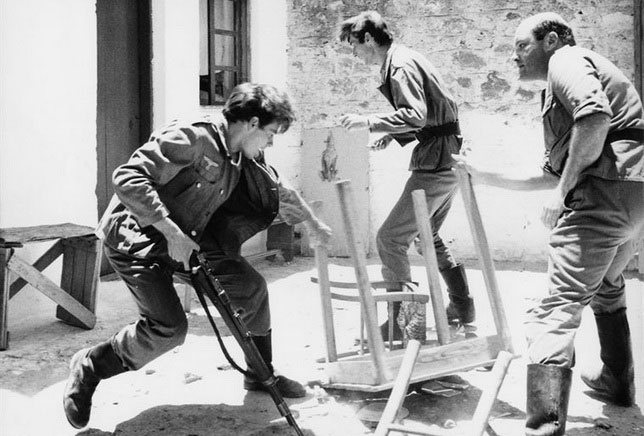
Werner Herzog's debut feature tells the story of a wounded German paratrooper Stroszek (Peter Brogle) who is transported to the Greek island of Kos to recover physically and mentally. Already there are fellow soldiers Meinhard (Wolfgang Reichmann) and Becker (Wolfgang Von Ungern-Sterngberg), who are taking life easy in the sun with little to nothing to do. Stroszek sets them to work, but soon, as the work begins to dry up, he becomes more and more unstable in the isolation and loneliness.

Nobody really knows what goes through Herzog's head, but it is clear he is a film-making genius and has one of the finest eyes for visuals in cinema. Signs of Life explores themes that Herzog would later become engrossed and almost obsessed with - isolation, obsession and madness. While he would later employ Klaus Kinski as the face of wide-eyed insanity, here the tone is quiet, contemplative and often very funny. The opening half of the film concentrates mainly on the three soldiers trying to find things to do. Meinhard becomes frustrated with the presence of cockroaches in their apartment and builds a trap to catch them. The feeling of being trapped appears throughout the film, usually using animals - the soldiers are given a strange toy that seems to move on its own, until they open it and find out that it's full of trapped flies; and we are shown how a hen is hypnotised.

But the comedy is soon put aside as Stroszek begins his descent into madness, holding himself up in the 14th century fortress where the soldiers are stationed with a horde of ammunition. It's in the second half that Herzog shows us the images he can conjure. It's breathtaking what he achieves with a stolen 35mm camera and a micro-budget. Amongst other things, we see a seemingly endless field of windmills, and fireworks set off into the night sky. The grainy black-and-white imagery gives the whole thing a fresh beauty. This is far from the greatest debut in cinema, but a very clear indication of a director's raw skill, and of course, Herzog would go on to make many fine films.


Directed by: Werner Herzog
Starring: Peter Brogle, Wolfgang Reichmann, Athina Zacharopoulou, Wolfgang Von Ungern-Sternberg
Country: West Germany

Rating: ****

Tom Gillespie


Signs of Life (1968) on IMDb

Sunday, 27 November 2011

Review #275: 'Targets' (1968)

Ageing horror actor Byron Orlock (Boris Karloff) has just finished what will be his final film. The campy nature of the horror films he stars in, and the decline in moral society leads him to believe that horror films are no longer scary, especially when compared with what is happening in the real world. Young director Sammy Michaels (Peter Bogdanovich) has just written a great script especially for Orlock, and tries to persuade him to re-think his retirement plans on the build-up to Orlock's final public appearance at a drive-in for his new movie The Terror. Meanwhile, suburban husband and gun-obsessive Bobby Thompson (Tim O'Kelly) is planning a massacre using his sniper rifle, starting with his wife and family.

As usual when it comes to Roger Corman productions, the story behind the film is just as interesting (often more so) as the film itself. Karloff apparently owed Corman a couple of days work, so he was handed to Corman protege Peter Bogdanovich, and told him to make whatever film he liked - as long as it was cheap, quick, included footage of his film The Terror (1963), and drew on the recent Charles Whitman killings. So, with the help of screenwriter Samuel Fuller, Bogdanovich crafted an intelligent, shocking, and extremely interesting film that what way ahead of its time.

Targets is many things. On one hand it is a warm love-letter to the legendary actors of old. In one scene, Michaels enters Orlock's hotel room, them both being drunk, and watch the end of Howard Hawks' The Criminal Code (1931), which starred a younger Boris Karloff. They briefly discuss the genius of Hawks and Michaels comments on what a fine screen presence Orlock (really Karloff) was, and still is. It is also a first-rate thriller. Tim O'Kelly is very effective as the clean-cut, all-American boy, who is becoming increasingly shaken about the person he finds himself becoming. In real-life, Whitman was found to have an aggressive brain tumour that was believed to be the cause of the sudden killing spree. The violence, though not gratuitous or exploitative, is shocking and nasty. The murder scenes are shot with a slow and detailed precision that are scary given the real-life occurrences.

Most interestingly, the film is a commentary on the generation gap, in both society and in cinema. Michaels states that "all the great films have already been made." Of course, this is not true - America was about to enter its true golden age, when the likes of Martin Scorsese, Steven Spielberg, George Lucas, Dennis Hopper, Francis Ford Coppola, Michael Cimino, and Bogdanovich himself shook Hollywood to its core. But Michaels is reflecting Orlock's fear of the new. Orlock is retiring because "it's a young person's world," and he feels he no longer has his place. The film builds up to the inevitable meeting of Orlock and Thompson - the old vs. the new, if you will.

Targets is quite hard to sum up. It is genuinely a hidden gem, and a true original that should be seen by anyone interested in cinema. Karloff would sadly pass away a year after this film was released, and he gives what is possibly his finest career performance. He has no scary make-up or sets to drown him out. He is simply an old man, walking stick and all. Although he made a couple more films after this, Targets seems his true and fitting exit from cinema. This is close to an 'A'-movie that I've seen a B-movie get, and again proves that Roger Corman was a true cinema genius.


Directed by: Peter Bogdanovich
Starring: Boris Karloff, Tim O'Kelly, Peter Bogdanovich
Country: USA

Rating: ****

Tom Gillespie


Targets (1968) on IMDb

Sunday, 18 September 2011

Review #219: 'Spirits of the Dead' (1968)

Also known as Histoires Extraordinaires, this film combines three short stories by Edgar Allen Poe, and has each segment directed by a different European director. The first, entitled Metzengerstein, is directed by the man that helmed Barbarella (1968), Roger Vadim. It tells the story of a beautiful yet debauched countess Federica (Jane Fonda) who falls in love with her family rival, Baron Wilhelm (Peter Fonda - bit weird, them being real-life brother and sister), who frees her leg from a trap in the woods. After he rejects her, she orders the burning of one of his villages, and the Baron is killed when attempting a rescue of one of his horses. The horse is taken in by Federica, who becomes obsessed with it once she notices its resemblance to the one painted on a damaged tapestry.

The second story, William Wilson, is directed by French film-maker Louis Malle. It tells a familiar doppelgänger story of the wicked William Wilson (Alain Delon) who is also interrupted by his 'better half' who shares his name and his appearance, but none of his evil ways. After winning a card game against Giuseppina (Brigitte Bardot) through repeatedly cheating, his other half exposes him, and the two face a duel. The third, directed by Federico Fellini and entitled Toby Dammit, follows alcoholic Shakesperean actor Toby Dammit (Terence Stamp) who is brought to Rome to star in an adaptation of the story of Christ, re-imagined as a western. Haunted by visions of a blonde girl who has lost her ball, he goes on a drunken ride through Rome in a Ferrari.

The biggest problem with this film is the variations of quality in the different episodes. Vadim's opener is a pretty poor effort, with a strange storyline focusing on a woman's obsession with a horse. It seems to be nothing more than an excuse to get Jane Fonda into some skimpy medieval outfits. That is all well and good (it was one of the key reasons why I loved Barbarella!) but it's a silly story and a waste of some beautiful cinematography. Malle's second story is a big improvement, but it is clear that his heart is not really in it. Apparently he agreed to take on the job in order to raise money for Murmur of the Heart (1971), and compromised to make the film more accessible to mainstream audiences. But the eroticism of the card game, and the strange atmosphere that is evident throughout make it an enjoyable 40 minutes.

Fellini's final segment is very much the director's own vision. It is so far gone from anything resembling Poe's original vision, it could be easily called Fellini's own. Thematically similar to most of his key works, Terence Stamp's crumbling lead character is the main focus, and his disintegrating sanity is laid out on the screen with a collection of flashing images, bizarre characters, and unconventional camerawork. It is also an attack on celebrity, as the characters that Dammit comes across don't react or flinch at his increasingly strange and unpredictable behaviour. It's a shame that Fellini is restricted to a 40 minute portion of a 2-hour film, as I would have quite happily watched Toby Dammit as a full-length feature. An enjoyable, if unspectacular overall film, with the stories getting notably better as the film goes on.


Directed by: Federico Fellini, Louis Malle, Roger Vadim
Starring: Jane Fonda, Alain Delon, Terence Stamp, Brigitte Bardot, Peter Fonda
Country: France/Italy

Rating: ***

Tom Gillespie


Spirits of the Dead (1968) on IMDb

Saturday, 3 September 2011

Review #207: 'Just for the Hell of It' (1968)

Herschell Gordon Lewis has made some memorable films in his time. 1963's Blood Feast introduced the film world to the wonders of gore and although it is an undeniably terrible and amateurish film, it certainly had it's charms. They came thick and fast after that, and his CV added the likes of 2000 Maniacs! (1964), Color Me Blood Red (1965), The Gruesome Twosome (1967), and The Gore Gore Girls (1972). Again, these are all terrible films, but his horror output is genuinely wildly entertaining due to their zero-budget sets, awful scripts, worse acting, and extremely ropy gore make-up. The other films he made in and around these did not share these charms - they were quickies made on a half-idea based around a specific exploitative subject - in this case, juvenile delinquents. They were even given their own sub-genre, known as 'J.D.' films.

Just For The Hell Of It is based around a gang of young men and women as they participate in a lot of anti-social behaviour, seemingly only for cheap kicks. Beginning at a party that soon deteriorates into the absolute destruction of the room, they abolish it with fists, feet, hammers, and whatever else they can get their hands on. Their acts become more outlandish, as they throw water over passers-by, set fire to things, throw a baby into a bin, beat an injured man with his own crutches, and hit a blind man with his cane. Innocent, bronze-skinned meat-head Doug (Rodney Bedell) seems to be caught up in it and frequently finds himself crossing paths with the gang, especially leader Dexter (Ray Sager).

What is basically an interesting idea is dealt with by H.G. Lewis' usual graceless and heavy-handed approach. The film is nothing more than one act of anti-social behaviour after the next, and it goes on for 90 long minutes. The most ridiculous thing is that the gang does all this in broad daylight, in front of lots of witnesses and bystanders, yet they seem to manage to evade the cops. Even when they attack a bunch of kids playing baseball, Doug runs over to help - yet an old woman passing by somehow manages to mistake the whole gang for Doug, who she ends up blaming. The laughable moral message at the end ('This is the end of the movie, but not of the violence') seems ridiculous coming from the man who directed Blood Feast. I really don't want to waste any more words on this film because it simply doesn't deserve it. Simply horrifying film-making at its very worse. But I somehow still love you, Herschell.


Directed by: Herschell Gordon Lewis
Starring: Ray Sager, Rodney Bedell, Agi Gyenes
Country: USA

Rating: *

Tom Gillespie


Just for the Hell of It (1968) on IMDb

Monday, 20 June 2011

Review #133: 'Faces' (1968)

John Cassavetes' drama shows the breaking point of a long-disintegrating marriage between Richard and Maria Forst (John Marley and Lynn Carlin). At the start of the film, Richard joins his lifelong friend in the home of prostitute Jeannie (Gena Rowlands), where the two sing and dance, and drunkenly make fools of themselves as they try to impress her. He goes home to his wife and the two joke, only for Richard to suddenly announce his desire for a divorce. He goes back to Jeannie, who is now entertaining two businessmen. Maria goes out with her friends and they pick up optimistic dancer Chet (Seymour Cassel). He charms her friends and the two end up alone, where their desire for intimacy brings them together.

Cassavetes, known as the pioneer of American independent film-making, is at his most cold here. We are forced to watch these often repulsive characters laugh and interact without ever really connecting. Most of the men in the film are unhappily married and try to fill the void by committing adultery. All they seem to be doing is distancing themselves more from their wives, and increasing the loathing they truly have for themselves. It's a stroke of genius how over the course of two hours, we get to fully understand the mechanics of Robert's and Maria's marriage, even though they only spend about 15 minutes of screentime together. We get to experience it through a facial expression, or a certain glance, or a line of dialogue.

Filmed in the style of cinema verite, a device used most successfully by documentary film-makers The Maysles Brothers, Cassavates deploys it to truly get underneath the skin of the characters. We get to see the characters mainly in close-up, and although we are forced to swallow their meandering and dull conversations, the film never feels intimate. And this is the point. These people seem to exist for themselves, and although they communicate, they only really talk to themselves. The title Faces seems like a clever joke. All these people are, are faces. The director's true intentions come out in one of the final scenes, as Chet talks about how mechanical society is, and how everyone longs for, but is terrified, of intimacy. A truly great American drama featuring expert performances, namely from the Oscar-nominated Lynn Carlin and Seymour Cassel.


Directed by: John Cassavetes
Starring: John Marley, Lynn Carlin, Gena Rowlands, Seymour Cassel
Country: USA

Rating: ****

Tom Gilespie


Faces (1968) on IMDb

Tuesday, 22 February 2011

Review #26: 'L'Enfance Nue' (1968)

It is quite extraordinary that 1968's L'Enfance Nue (or Naked Childhood) was the debut feature of a 43 year-old Maurice Pialat. Pialat would go on to direct a small number of highly-admired films after this, up until 1995, but it remains this film that he will be most remembered for. Similar in spirit but not in style to Francois Truffaut's masterpiece The 400 Blows (1959), it follows the exploits of a troublemaking child who channels all of his rejection into ferocious anger that causes havoc with the people around him. Truffaut also has a co-producer credit for the film, although it would be the last time he would work with Pialat.

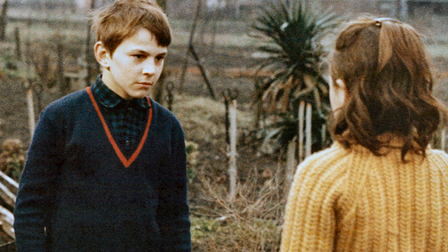
A young boy, Francois (Michel Terrazon), is placed in a home for bad children when his frequent outbursts and often psychopathic acts become too much for his mother. He is eventually re-homed and put into the care of an elderly couple, who also look after another older child, Raoul. When Francois warms to the elderly lady, his behaviour begins to become less hostile and he becomes familiar with his new surroundings. But a lifetime spent being unwanted has left it's mark on Francois, and he constantly remains unpredictable. Francois kills a cat, throws a knife at his new 'brother', and repeatedly steals from the other children. He is a horrific creation, and every parent's nightmare.

Pialat paints an interesting picture of France at the time. Without sledgehammering it home, he and the film depicts a time where a creeping poverty was lurking among the edges of suburbia. Perhaps this was one of the factors for Francois' parents being physically and mentally unable to keep the child, too distracted with their own situation that they don't have the time to get to the root of the problem. Or perhaps Francois is just a mischievous little bastard, and his inability to settle with one family before pushing them over the edge is his fault. L'Enfance Nue also has a surprisingly reserved depiction of the social services. They are seen simply doing their job, and repeatedly re-housing Francois every time he is rejected by a new foster family. This is where the genius lies in this film. Instead of using the film as a medium to send a social message (a la Ken Loach), Pialat sits back, points his camera, and tells a story. It is both complex and simple, but you would have to make your own mind up about that.

Much like Jean-Pierre Leaud in The 400 Blows, Michel Terrazon is fantastic in the lead role, brimming with menace and an unpredictability. Although the comparisons seem obvious, it would be wholly unfair to carry on comparing this to Truffaut's film, as L'Enfance Nue is a fantastic film in it's own right. Like most of his films, this is considered somewhat autobiographical to Pialat, but how much is unclear. His filmmaking techniques seem similar to the attitudes of the title character - this film is in your face and hard-hitting. You can almost hear the director yelling 'if you don't like it, then fuck you!'. A very, very good film, and I shall be seeking out more Pialat because of it. A remarkable debut.


Directed by: Maurice Pialat
Starring: Michel Terrazon, Linda Gutemberg, Raoul Billerey
Country: France

Rating: *****

Tom Gillespie


Naked Childhood (1968) on IMDb

LinkWithin

Related Posts Plugin for WordPress, Blogger...