Showing posts with label 1988. Show all posts

Monday, 15 October 2018

Review #1,407: 'Poltergeist III' (1988)

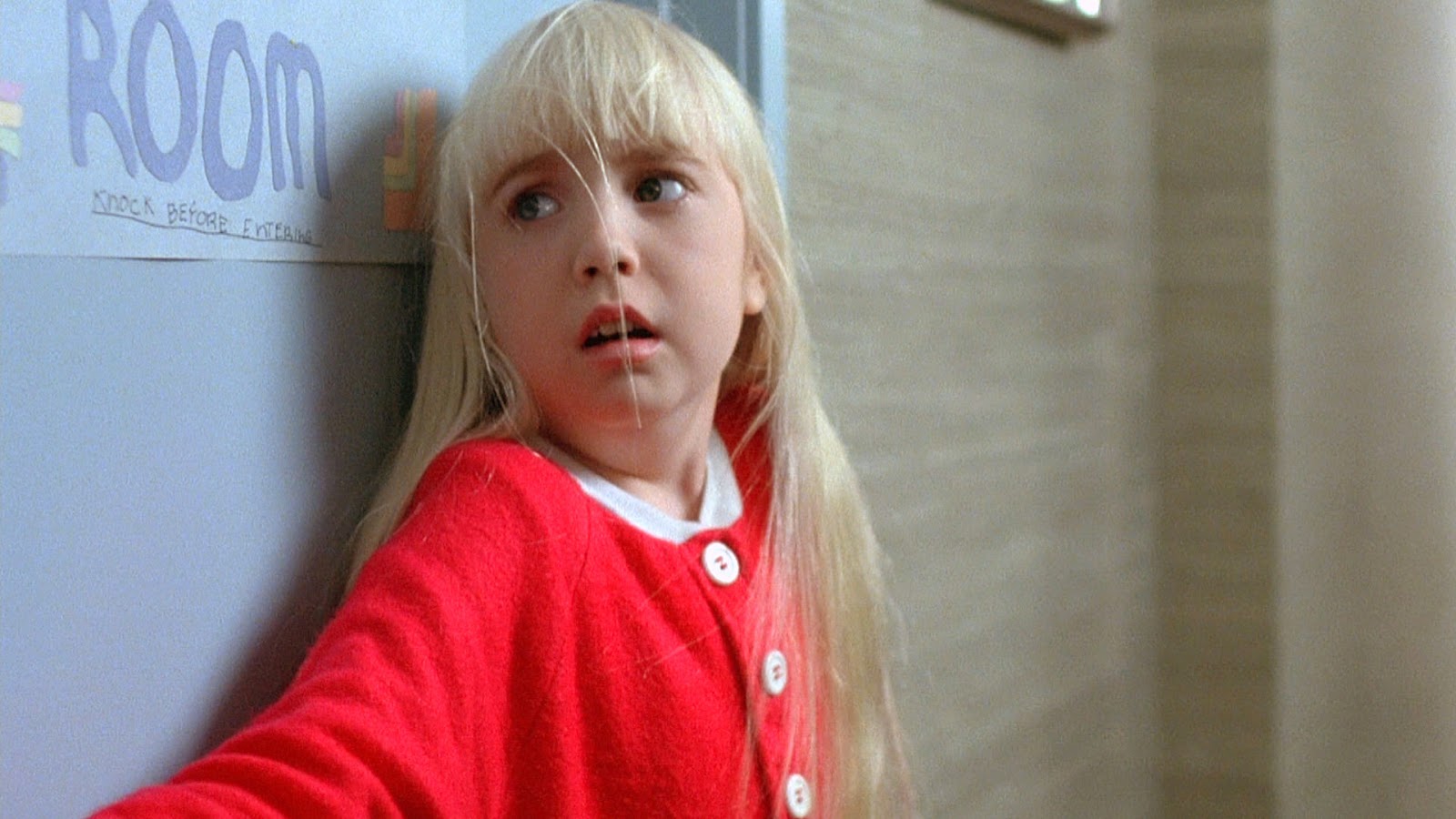
The promotion and subsequent release of Poltergeist III was overshadowed by the death of 12 year-old star and face of the franchise Heather O'Rourke, from cardiac arrest and septic shock brought on by a misdiagnosed intestinal stenosis. The studio, who understandably wanted to avoid any claims that they may be looking to take advantage of such a devastating tragedy, kept advertising to a minimum, although they had previously pressured director Gary Sherman into completing the film against his wishes. Poltergeist III was a critical and commercial flop, putting an end to the franchise that should have really stopped with Tobe Hooper's original. A lack of promotion cannot be blamed entirely though, as the rushed final edit is an incoherent mess with precious few links to the mythology established in the first two entries. They should have known they were in trouble when original stars JoBeth Williams and Craig T. Nelson turned down the chance to return.

In an attempt to freshen up the series, the action is moved from a suburban home to a luxury skyscraper: A 100-story colossus complete with its own mall and art gallery. In charge of the tower is Bruce Gardner (Tom Skerritt), the new husband of Patricia (Nancy Allen) - the sister of JoBeth William's character. As well as having to adapt to newly married life, Pat is also having to deal with her daughter from a previous marriage, Donna (Lara Flynn Boyle), so the last thing she needs is the arrival of spooky Carol Anne (O'Rourke), who seems to bring trouble with her wherever she goes. I don't recall an explanation given for why the Freeling family would suddenly send the daughter they almost lost twice to an auntie they've never mentioned, but the script by Sherman and Brian Taggert isn't concerned with making too much sense. It's happy to simply drag out the franchise as far as it will go and ignore what made the previous films so popular with audiences. The Freelings always fought off the supernatural forces at play with their unbreakable family bond, but Poltergeist III sidesteps establishing this newly family unit in favour of lazy jump shocks.

The Gardner's don't seem particularly adept at taking care of a traumatised 12 year-old either, happily leaving her in the care of their irresponsible teenage daughter and enlisting her in a special school, where sceptical psychiatrist Dr. Seaton (Richard Fire) believes the spooky events experienced by Carol Anne and the people around her are brought on by some kind of mass hypnosis. This leaves plenty of time for Carol Anne to be harassed by Reverend Kane (Nathan Davis, replacing the late Julian Beck), who still wants her to lead them all into the light. The film quickly dissolves away into a series of set-pieces plucked at random from Cinema's Big Book of Characters in Peril, involving falling through ice and killer cars revving in the underground car park. Without the family bond so purposefully developed over the course of the last two films, these moments lack any dramatic weight. Sherman would prefer to have the characters yell each other's names repeatedly at the expense of actual dialogue, and in one case is happy to toss away one supporting character without any explanation at all. On the positive side, there are some fantastic 'in camera' effects deployed as the spirits use mirrors to communicate with the living world, and the presence of Zelda Rubinstein and Tom Skerritt's moustache is always a pleasure.


Directed by: Gary Sherman
Starring: Tom Skerritt, Nancy Allen, Heather O'Rourke, Zelda Rubinstein, Lara Flynn Boyle
Country: USA

Rating: **

Tom Gillespie


Poltergeist III (1988) on IMDb

Monday, 24 September 2018

Review #1,395: 'Monkey Shines' (1988)

Only the very best directors can take a flimsy story and make the most out of it, and this is precisely the case with Monkey Shines, adapted by George A. Romero from the novel by Michael Stewart. Of course, Romero is best known for Night of the Living Dead and it's spectacularly gory follow-up Dawn of the Dead, but Monkey Shines actually takes a surprisingly careful, reserved approach to this tale of a killer monkey, and takes the time to slowly develop the relationship between the central character and his simian helper. The film begins with Allan, played by Jason Beghe, a former track champion who clearly takes his workout routines incredibly seriously, packing his back pack with rocks and leaving the house for a morning jog with the sun barely risen. His active lifestyle is quickly cut short when he is hit by a bus, and wakes up days later as a quadriplegic.

When he returns home assisted by a mouth-operated wheelchair, his friends and family have all gathered to welcome him but nothing will ever be the same again. His shallow girlfriend Linda (Janine Turner), who fears her life will now be dominated by looking after her partner, has shacked up with Allan's unbearably smug surgeon Dr. Wiseman (Stanley Tucci with a head of hair), and his scientist best friend Geoffrey Fisher (John Pankow) is a junkie who shows up late for the welcome party. But Fisher, who has been experimenting on Capuchins by injecting them with human brain tissue, may have the solution to Allan's problems. After consulting with Melanie Parker (Kate McNeil) - an expert in assigning quadriplegics with monkey helpers - Fisher supplies Allan with his star pupil, 'Ella' (who is actually voiced by Frank Welker). The two hit it off immediately, and the bond between them becomes so strong that Ella can seemingly predict Allan's needs before he even asks (or points his laser pen).

Ella doesn't solve all of Allan's problems however, and Allan still vents his frustration at his uncaring nurse and her annoying bird, as well as his overbearing mother (Joyce Van Patten), who insists on sticking her nose in where it's not wanted. What follows would sound preposterous on paper, but Romero keeps the story engrossing and oddly believable by refusing to give into excess. The delightful exploding heads and exposed innards of his zombie movies simply wouldn't work here, although the film does offer a violent and shocking ending. This is on a similar low key to Romero's vampire masterpiece Martin, and the director's keen eye for character building leaves us fully invested in the man-and-monkey relationship, despite the bloody trail left in their wake. There's a truly great 90 minute film here, but Monkey Shines runs at just shy of two hours, occasionally losing focus to shift the action to Fisher's strained relationship with his boss (Stephen Root) or Allan's mother's insistence on moving in, both sub-plots that don't really lead anywhere and stretch the film out longer than it needs to be. But with Romero's passing just last year, Monkey Shines is a great reminder that the horror icon didn't only deliver in the zombie genre.


Directed by: George A. Romero
Starring: Jason Beghe, John Pankow, Kate McNeil, Joyce Van Patten, Christine Forrest, Stephen Root, Stanley Tucci, Janine Turner
Country: USA

Rating: ****

Tom Gillespie


Monkey Shines (1988) on IMDb

Wednesday, 8 November 2017

Review #1,259: 'Cohen & Tate' (1988)

With a momentary glance at the poster, Cohen & Tate appears to be somewhere in the realm of those buddy cop thrillers that proved so popular in the 1980s, with tough-guy poses and its two central characters named right there in the title accompanied by an ampersand. At least that's the impression I got. In fact, Eric Red's directorial debut is anything but. Part road movie and part tense thriller - and occasionally struggling when switching between the two - Cohen & Tate is a menacing, violent and often plain mental neo-noir, with a chilling performance by Roy Scheider at its centre. Often veering into territory marked by the Coen Brothers, Red, who also wrote the script, demands that you spend 90 minutes with two bickering, cold-blooded killers as the life of a child hangs in the balance. And it proves to be a pretty riveting experience, even though it requires you to suspend your disbelief for the duration.

We open at a farm house, where a seemingly all-American family are in hiding for unexplained reasons. FBI agents surround the house, but that doesn't stop hit-men Cohen (Scheider) and Tate (Adam Baldwin) from breaking in and murdering everyone in sight except the 9 year-old son, Travis (Harley Cross). Instead, they whisk him away in their car to deliver him to their bosses. What they have in store for him is unknown, as the eponymous anti-heroes are as much in the dark as we are. Yet they have made a terrible blunder: On the radio they learn that the father has survived and has already given descriptions of the killers to the police. The hot-headed Tate wants to ice the child right there and then, but the wiser, more level-headed Cohen insists on finishing the job as planned. Sensing distrust between the two men, Travis takes the opportunity to turn them against each other and plan his escape.

The film plays out from there as a series of vignettes, usually involving the increasingly volatile Tate going off the rails and threatening to kill young Travis. These screaming outbursts are repeated so often that it becomes unintentionally comical, similar in many ways to Bill Paxton's over-the-top character in Near Dark, which was also written by Red. Scheider, however, subtly oozes menace. He may be the more balanced of the two, but it's easy to believe that he's capable of executing a child. The mean-spirited tone works in favour of the film, which ultimately delivers its thrills most effectively when things turn really nasty. The majority of the action takes place in the claustrophobic confines of the car, and the film's main strength is the sharp and often amusing dialogue between the titular bad men. It's ridiculous and messy, but it's damn good fun, any film in which a character eats a box of matches to prove how crazy they are is a winner in my book.


Directed by: Eric Red
Starring: Roy Scheider, Adam Baldwin, Harley Cross, Cooper Huckabee
Country: USA

Rating: ****

Tom Gillespie


Cohen and Tate (1988) on IMDb

Tuesday, 8 August 2017

Review #1,231: 'Miracle Mile' (1988)

Back in 1980's and early 90's, the threat of nuclear war still played on many people's minds. With the umpteenth Cold War kicked off by the rise to power of Mikhail Gorbachev in the USSR, an arms race commenced between the Soviets and the US under president Ronald Reagan, until the Soviet Union eventually collapsed in 1991. Miracle Mile takes these fears and ponders what the knowledge of an incoming nuclear strike and imminent death would do to a person while everybody goes about their business none the wiser. By leaving it until the very end to confirm whether or not World War III has officially commenced, or if it's all in the mind of its increasingly paranoid and desperate protagonist, Miracle Mile is a tense and often funny end-of-the-world (or not) thriller.

The film begins with a meeting between two singletons, trombone player Harry (Anthony Edwards) and coffee shop waitress Julie (Mare Winningham). It's love at first sight and they agree to meet up again later after Julie finishes her shift to grab a bite to eat. Harry oversleeps however, and by the time he makes it to the coffee shop, Julie is nowhere to be found. As he nervously waits outside, the phone rings in the nearby telephone booth. The man on the other line, who believes he is calling his father, informs Harry that an irreversible nuclear strike has been set in motion, and the U.S. has approximately one hour before complete annihilation. The man is cut short by machine gun fire, before another voice tells Harry to forget everything he has heard. After a bit of further investigation, the outlandish claim start to ring true. Deciding he would rather spend his last moments with the woman he loves, Harry begins his search, always clinging to the belief that they can somehow escape with their lives.

With much of the action dedicated to Harry's panicked dash across a sleeping Los Angeles, where he encounters many offbeat characters played by the likes of Mykelti Williamson, Denise Crosby, Eddie Bunker and Brian Thompson, Miracle Mile brought to mind the enthralling aimlessness of Martin Scorsese's After Hours, and the eerie emptiness of a nighttime city of Paul Thomas Anderson's Magnolia. There's real tension in the events leading up to the possible apocalypse, and even more so when word begins to spread and downtown turns into sheer chaos and lawlessness. At the film's centre is the romance between Harry and Julie, and there's a sweetness to the irony of meeting your true love on the day the world will be reduced to rubble. It's played nicely by the two leads, with Edwards reminding us that he is a solid character actor deserving of more movie roles. A true forgotten gem that leaves you wondering if you would rather be given the chance to make the most of your last moments on Earth, or remain blissfully ignorant.


Directed by: Steve De Jarnatt
Starring: Anthony Edwards, Mare Winningham, Mykelti Williamson, John Agar, Lou Hancock
Country: USA

Rating: ****

Tom Gillespie


Miracle Mile (1988) on IMDb

Monday, 20 March 2017

Review #1,170: 'Amsterdamned' (1988)

In Amsterdam's Red Light District, a young prostitute catches a taxi home and is almost raped by the driver, but she manages to fight him off and flee before any harm comes to her. Sadly for her, there's also a murderous lunatic on the loose, who stabs the poor lady to death and drags her bloody corpse into the nearby canal. Her body is discovered in gruesome fashion as her lifeless body is displayed on a bridge, only be smeared across the top of a boat filled with screaming tourists. As the body count rises, gruff detective Eric Visser (Huub Stapel) is assigned to the case, but this killer proves particularly difficult to catch. As well as possessing a high level of intelligence, the masked psychopath also uses the many canals running throughout the city for shelter. With pressure building from his bosses, he must work fast before the killer strikes again.

Almost like a warped advert for tourists, Amsterdamned portrays the great city in all its beauty. We see everything the city has to offer; the canals, the Rembrandt paintings, the breweries, and of course, the Red Light District. If it didn't include the many brutal murders, this could have been made by the tourist board. The city provides the backdrop for a string of stylishly-executed slayings, including a beheading by moonlight and a knife through a dinghy you won't soon forget. It also finds the time (and the budget) for a terrific, outlandish speed boat chase between the killer and Visser (put together by the brilliantly-named Dickey Beer), which pulls out all the stops and puts many films with much bigger budgets completely to shame. Infused with a giallo-esque sensibility, director Dick Maas makes an entire city feel somehow claustrophobic.

At almost two hours, Amsterdamned also long outstays its welcome, padding the film out with unnecessary sub-plots that seem to either disappear (Visser's relationship with his teenage daughter is given a lot of focus of early on, but then the film seems to forget about her completely) or fizzle out into nothing. While these moments are often filled with amusing dialogue (the strange sense of humour will likely have you laughing at loud on occasion), they also deliver long stretches of boredom. However, with its silly title and by-the-numbers premise, Amsterdamned is far better than it has any right to be, and will certainly surprise anyone going in expecting a routine slasher picture. Trimmed of some fat, this could have been something to write home about, but this is still an entertaining and creative little Euro-horror.


Directed by: Dick Maas
Starring: Huub Stapel, Monique van de Ven, Serge-Henri Valcke, Hidde Maas
Country: Netherlands

Rating: ***

Tom Gillespie


Amsterdamned (1988) on IMDb

Sunday, 5 March 2017

Review #1,163: 'Brain Damage' (1988)

Largely ignored on its original release but subsequently gathering a loyal cult following over the years, Brain Damage will no doubt appease fans of director Frank Henenlotter's other darkly humorous and outrageously gory works Basket Case (1982) and Frankenhooker (1990). Bringing his trademark sense of humour and mixing it up with lashings of tongue-in-cheek blood-letting, Brain Damage also strives to deliver a message, and is admirable for the anti-drug theme running throughout. With America in the midst of an AIDS and crack panic at the time, Henenlotter paints a very bleak picture of a New York City in crisis, as a parasitic killer searches for unwitting victims.

Average Joe Brian (Rick Hearst) wakes up one morning feeling disorientated, finding his bed sheets soaked through with blood. He doesn't seem to be cut, but when he looks in the mirror he finds a strange parasitic creature on his person. Looking like a turd with eyes and big teeth, it also has a name, Aylmer, and speaks in a dignified foreign accent (voiced by John Zacherle). Injecting Brian through the back of the neck with a blue liquid that gives the unsuspecting goofball a drug-like sense of euphoria, Brian gets hooked on the stuff, and Aylmer exploits his addiction for food. Only Aylmer has a taste for human brains, and so Brian must spend his sober hours searching for human victims. Alienating himself from his girlfriend Barbara (Jennifer Lowry), Brian also faces the threat of the symbiote's former owners, who have been going cold turkey ever since it fled.

Cut to pieces on its original home video release but later restored, it isn't difficult to see why the ratings board demanded the removal of certain scenes. A wonderfully wince-inducing scene in which Brian pulls his own brain out of his ear for what seems like an eternity found itself on the cutting-room floor, as did the uncomfortable scene where a woman is eaten alive while appearing to be performing fellatio in an unnecessarily sexualised moment of pure exploitation that left me genuinely horrified, and not in a good way. The story and characters are engaging enough to keep the film interesting, while the obvious lack of budget means that the acting is sub-par and the special effects are often laughable, if not charming. The main strength is Brain Damage's depiction of a drug addict going to increasingly desperate measures in order to procure his fix, and Hearst is surprisingly good in the role. Fans of Henenlotter should keep their eyes peeled for the appearance of a certain man with a basket.


Directed by: Frank Henenlotter
Starring: Rick Hearst, John Zacherle, Jennifer Lowry, Gordon MacDonald
Country: USA

Rating: ***

Tom Gillespie


Brain Damage (1988) on IMDb

Thursday, 16 June 2016

Review #1,034: 'Mississippi Burning' (1988)

The main question looming over the head of Alan Parker's Mississippi Burning is whether or not the film has a moral responsibility to tell its true-life tale of racial hatred and murder in Civil Rights Act-era Mississippi exactly how it happened, or if artistic license grants the creators of the film the right to tell an entertaining story that maintains a powerful message of social injustice and equal rights. I am of the opinion that any film can change events for the sake of a digestible narrative, as long as the facts aren't muddied for the sake of fitting a films own agenda. Like countless old World War II movies that softened the horrors of war or fabricated tales of heroism, a film isn't required to be a moving Wikipedia page as long as its heart is in the right place.

Mississippi Burning opens with the brutal slaying of three Civil Rights activists - two white men and one black  - by members of the Ku Klux Klan, in an event that would capture the attention of the entire nation back in 1964. Two federal agents are sent in to investigate, Agent Rupert Anderson (Gene Hackman), a former Mississippi sheriff well accustomed to the attitudes of the small-town police forces in the state, and determined liberal Alan Ward (Willem Dafoe). Upon arrival, it doesn't take long for the agents to suspect widespread corruption within the police ranks and a possible cover-up. Anderson takes a hands-on approach of mingling with the locals and delivering thinly-veiled threats, while Ward respects rules and rank, bringing in over a hundred new agents to tackle the ever-increasing conspiracy.

The idea to tell this story, which is one of the key events that led to the signing of the Civil Rights Act, through the eyes of two white men would be instantly scoffed at nowadays throughout social media, and perhaps rightly so. It is most importantly a story of the suffering of African-Americans, and of their bravery and spirit in taking a stand against it. Yet while Mississippi Burning takes a procedural, buddy-cop movie approach, it highlights how ultimately powerless the agents investigating the case are. Anyone familiar with the story will know that the men responsible for the murders were eventually brought to justice, but this is only one case in a country brimming with racial tension as social integration is introduced. It would take people such as the activists murdered in the film and the many Civil Rights demonstrations carried out in defiance that would ultimately lead to changes.

At its best, the film is successful in making you feel extremely angry. As various African-Americans are lynched or attacked leaving a church by gangs carrying weapons, you, along with the bemused Agent Ward, question how such hate for another race can manifest itself within such a large portion of a community. With the FBI becoming increasingly frustrated at the lack of co-operation from the residents of the town, the film somewhat indulgently gives us a scene of Anderson having an off-the-record word with suspected Klan members, particularly Deputy Pell (Brad Dourif) and hot-head redneck Frank (Michael Rooker). It's a punch-the-air moment of badassery, and one of many such scenes that allow the film to be entertaining as well as thought-provoking. It's far from perfect of course, with a shoe-horned romance between Anderson and Pell's suffering wife (Frances McDormand) in particular feeling wholly unnecessary, but this is a powerful and beautifully-made piece featuring one of Hackman's best performances.


Directed by: Alan Parker
Starring: Gene Hackman, Willem Dafoe, Frances McDormand, Brad Dourif, R. Lee Ermey, Gailard Sartain, Stephen Tobolowsky, Michael Rooker
Country: USA

Rating: ****

Tom Gillespie


Mississippi Burning (1988) on IMDb

Tuesday, 22 December 2015

Review #955: 'Hellbound: Hellraiser II' (1988)

Starting almost immediately after the climax of the first movie, Hellbound: Hellraiser II catches up with Kirsty Cotton (Ashley Lawrence), now being held in a mental institution after the horrors she witnessed. Her stories of a magical puzzle box and the gateway to hell are dismissed as fairytales by her doctors and the police, all of whom believe her to be insane, apart from the shady Dr. Channard (Kenneth Cranham). Along with Channard's sympathetic assistant Kyle MacRae (William Hope), Kirsty discovers than Channard has be studying the world of the Cenobites for years, and is using a child in his institution with a skill for puzzles to open the Lament Configuration. Using the bloodied mattress stolen from the bloodbath at Kirsty's home, Channard inadvertently allows the re-birth of the demented Julia Cotton (Clare Higgins).

Hellbound is a collection of decent ideas clumped together without much thought for coherency. The first Hellraiser had a sketchy mythology and left many things unexplained, but it compensated for this by conjuring a gripping and nightmarish tone throughout. Instead, Hellbound moves along at a frantic pace from one set-piece to another, without offering any kind of insight into just how a bloody mattress could work as a gateway through which Julia could escape the confines of hell, or why a child prodigy is required to open a box solves easily by Kirsty the first time around. With little character development or time to reflect on the events that occur, the film is a bit of a mess.

Visually, it's quite stunning. We get to see more of the Cenobite world as Kirsty enters into hell and bumps into her old foe Uncle Frank (Sean Chapman), and although the sets occasionally appear a bit on the dodgy side, and with special effects and make-up encouraging more laughter than genuine terror, it manages to deliver some memorable imagery and wince-inducing gore when it is called for. Ultimately though, I found Hellbound to be a bit of a headache, and even the extended appearances of Pinhead (Doug Bradley) and his minions could not distract my attention enough to make me forgive the many narrative flaws. Perhaps it's because I love the first film so much, or maybe it's down to Clive Barker stepping out of the director's chair and being replaced by Tony Randel. Still, it's a damn masterpiece compared to the sequels that followed.


Directed by: Tony Randel
Starring: Ashley Laurence, Clare Higgins, Kenneth Cranham, Sean Chapman, Doug Bradley
Country: UK/USA

Rating: **

Tom Gillespie


Hellbound: Hellraiser II (1988) on IMDb

Wednesday, 4 November 2015

Review #940: 'Critters 2' (1988)

The first Critters (1986) movie was one of the best in an abundance of Gremlins rip-off's to come out following the release of Joe Dante's classic in 1984. It was amusing, entertaining, satisfyingly bloody and whizzed by in a fast-paced 90 minute running time. The titular Critters or, to give them their proper name, Crites, were also a memorable creation -  tiny balls of fur with nasty teeth and the ability to shoot poisoned darts from their back. They are cuddly enough to be oddly cute but with a face only a mother could love. The surprisingly modest box-office takings established Critters as a franchise, and the sequel arrived just two years later.

Unsurprisingly, Critters 2 is little more than a re-hash of the first movie, with the terrorising creatures attacking the same town again and coming up against their arch-nemesis Brad (Scott Grimes), who apparently had his ear pieced and grew a mullet between films. Brad's celebrity status in the town catches the eye of the slight-older Megan (Liane Curtis), but Brad just wants his friend Charlie (Don Keith Opper) back. Still teamed up with bounty hunter Ug (Terrence Mann) somewhere in space, Charlie's spaceship detects Crite activity back on Earth, and so they return to destroy them. Soon enough, the Crites have bred beyond count and are munching on everything in sight.

The biggest disappointment with Critters 2 is the sheer lack of imagination. The first movie had enough wit and self-awareness to create something bolder, the like of which was done in Gremlins 2: The New Batch (1990) and its bat-shit crazy, anything-goes climax. The creatures too, are easily propped behind a variety of counters so their puppeteers can operate them with ease, while the first movie at least demonstrated some creative puppet work. The humour is goofier and more obvious, and the climactic set-piece involving a giant ball of combined critters attacking a garage packed with fast-food, just fails to hit the mark. It's certainly an easy watch, but there's little here to excite.


Directed by: Mick Garris
Starring: Scott Grimes, Don Keith Opper, Terrence Mann, Liane Curtis
Country: USA

Rating: **

Tom Gillespie


Critters 2 (1988) on IMDb

Friday, 17 April 2015

Review #857: 'Friday the 13th Part VII: The New Blood' (1988)

With the idea of Jason Voorhees as a supernatural presence firmly established in the previous film, Friday the 13th Part VII introduces a new foe for the masked brute in the form of Tina Shepard (Lar Park-Lincoln), a young girl with telekinetic abilities. The character of Tommy Jarvis, who has been played by a multitude of actors such as Corey Feldman and Thom Mathews in previous instalments, sadly doesn't return, so Jason once again 'meets his match'. The telekinesis angle, however, is the only change to the formula. So, for a sixth time, we get to watch the same film all over again for a tedious 90 minutes.

After watching her father drown when her then-unknown abilities causes the dock he is stood on to collapse into the water, Tina returns to Camp Crystal Lake with her mother (Susan Blu) and Dr. Crews (Weekend at Bernie's (1989) Terry Kiser) years later to undergo psychiatric treatment. Crews claims to be helping Tina overcome her emotional abilities and uncontrollable powers, but his questionable methods raise her suspicions. Naturally, a bunch of horny teenagers arrive to party, only to be on the receiving end of Jason's (Kane Hodder) wrath after he is accidentally resurrected from the lake he was left in by Tommy Jarvis at the end of the previous film.

While the sixth movie, Jason Lives (1986), was probably the most entertaining entry into the series thanks to its tongue-in-cheek humour and inventive bloodshed, Part VII plays it straight but manages to be neither scary or particularly gory. The geek, rich bitch, jock and virgin stereotypes are all here as expected, and watching them get bumped off one-by-one is usually the only bit of enjoyment to be squeezed out of this franchise. But here, the pay-off is never satisfying enough. Newcomer Hodder (who would go on to be the first to play Jason more than once) certainly has the physical presence, but his Jason is more clinical and less fun (although the sleeping bag death is a corker). If you have seen any other entry into the series, then you've pretty much seen this one too.


Directed by: John Carl Buechler
Starring: Lar Park-Lincoln, Kevin Spirtas, Terry Kiser, Kane Hodder
Country: USA

Rating: **

Tom Gillespie


Friday the 13th Part VII: The New Blood (1988) on IMDb

Wednesday, 3 December 2014

Review #810: 'Maniac Cop' (1988)

William Lustig's Maniac Cop plays like a B-movie fan's wet dream. It has Lustig - director of the wonderfully grim Maniac (1980) - at the helm, and Larry Cohen, legendary writer/director of such gems as It's Alive (1974), Q: The Winged Serpent (1982) and The Stuff (1985), on scriptwriting duties. In front of the camera it has Tom Atkins, Bruce Campbell, William Smith, Richard Roundtree and Robert Z'Dar - all together in the same movie! I almost feel like I should complain that Michael Moriarty wasn't invited to join the cast. Due to the stellar talent involved, I feel like Maniac Cop is almost a let-down. Contrivances and bad writing can usually be forgiven in movies like this, but it's difficult not to expect that little bit more. Still, this doesn't stop the film from being a great deal of fun.

When a man dressed as a police officer breaks the neck of a woman fleeing from rapists, investigating police lieutenant McCrae (Atkins) is told to keep eye-witness accounts of a cop committing the act hush-hush. This prompts McCrae to leak the information to a journalist, only for a media frenzy to cause the public to turn on genuine police officers trying to uphold the law. A woman suspects her husband Jack Forrest (Campbell) to be the killer, and when she is murdered moments after witnessing him in bed with another woman, Jack is arrested as the prime suspect. McCrae, however, believes Jack to be innocent and digs deeper into the story of a hero cop long believed to be dead.

Too much just doesn't add up in Maniac Cop. Like Jason in the Friday the 13th franchise, the Maniac Cop has superhuman strength and a sense of invincibility. Where Jason can be chalked down to some sort of supernatural influence, no explanation is giving here, failing to fit in with the back-story provided for the killer. The scenes of police procedural - something Cohen is normally very accomplished at writing - are muddled, with Jack still being held even after McCrae and Jack's lover and fellow cop Theresa (Laurene Landon) are attacked by the Maniac Cop while Jack is held in custody, and any real female police officers will no doubt be offended to Theresa's wailing reaction while being threatened.

I could carry on bashing the film, but I won't, as I actually had a pretty good time watching it. Like most movies with Cohen involved, Maniac Cop is very funny. Campbell is effortlessly hilarious, even in a relatively straight role, and the script is witty when it's not taking liberties with the plot. Lustig, who went on to direct two sequels, also provides some decently staged action scenes. The film is also surprisingly brutal in it's violence and gore, so gore-hounds will not doubt finish the film feeling satisfied. And it's due to these positives that I cannot be too harsh on Maniac Cop, as even though it's little more than a decent slasher flick, I certainly kept me entertained.


Directed by: William Lustig
Starring: Tom Atkins, Bruce Campbell, Laurene Landon, Richard Roundtree, William Smith, Robert Z'Dar
Country: USA

Rating: ***

Tom Gillespie


Maniac Cop (1988) on IMDb

Tuesday, 11 February 2014

Review #710: 'Hell Comes to Frogtown' (1988)

In one of his first feature film appearances, former wrestler Roddy Piper plays Sam Hell, a highly fertile man in a post-apocalyptic world that has rendered most of its adult population infertile due to a devastating nuclear war. This being the late 1980's, and with Hell Comes To Frogtown being unashamedly B-movie ridiculousness, every long-legged female character wants to jump his bones, and do so wearing not very much at all. It is misogynistic, very, very silly (which I'm sure one would assume from the title) and Piper won't be receiving any Lifetime Achievement Awards from the Academy, but it is occasionally a lot of fun, and features one of most memorable titles in the B-movie canon.

With male population numbers heavily reduced due to nuclear war, women now rule the Earth. After a group of warrior-nurses led by the bespectacled Spangle (Sandahl Bergman) capture nomad Sam Hell, they see their chance to do their part in helping re-populate the Earth due to Sam's high fertility rate. But when a group of fertile women are captured by a gang of rapey amphibian mutants who have been affected by the radiation, Sam is employed as a mercenary along with the tough-but-sexy Centinella (Cec Verrell) to enter a place known as 'Frogtown' in order to steal them back.

Somehow, Hell Comes To Frogtown has managed to spawn three sequels, the latest being made in 2002. The years have made the film a cult favourite, and admittedly, for all it's many flaws and amateur direction, the idea of women piecing together the remnants of civilisation is quite an intriguing one. Of course, the plot isn't really why you would watch a film involving rubber-suited monsters and scantily-clad women, and ultimately, Frogtown suffers from long moments of tedium that plague low-budget films of its ilk. But there are still moments to enjoy in the 90 minutes of endless gun-fights and goofy Roddy Piper quotes, namely in Piper's obvious amusement at the film he is starring in. Best enjoyed with beer in hand.


Directed by: Donald G. Jackson, R.J. Kizer
Starring: Roddy Piper, Sandahl Bergman, Cec Verrell, William Smith
Country: USA

Rating: ***

Tom Gillespie


Hell Comes to Frogtown (1988) on IMDb

Monday, 4 March 2013

Review #588: 'Return of the Living Dead Part II' (1988)

If you're a fan of the cult horror film Return of the Living Dead (1985), then chances are you've watched this lazy sequel, only to be left wondering where the last 90 minutes of your life have gone. The plot surrounds another lost toxic barrel, containing the chemical gas that will awake the living dead. An obnoxious child witnesses the birth of the zombies after the gas is accidentally released, and the town is soon overrun by seemingly indestructible, brain-eating zombies. A couple of gravediggers robbing the dead are caught up in the midst of the zombie outbreak, and with the boy and his family, try desperately to survive the onslaught.

If the plot sounds extremely dull and familiar, it's because it is. The first film was a very amusing, and often quite clever little movie, bursting with ideas and scenes of pure lunacy brought to life by a cast who look like they're genuinely having fun. Part II obviously knows this, and rather than trying to expand on the originals quirky charm and develop the universe, director Ken Wiederhorn, who ended his relatively short career in television, chose to simply re-hash the first, involving similar scenes and situations, and even bringing back some of the actors. What the film becomes is almost pure comedy, aiming at a teenage audience (although the humour is for infants), and lacking the fun horror and gore from the first. There's nothing that even comes close to the limbless female zombie demanding "braaaiinnnss!" from the first.

What we do get is a wise-cracking severed head with the voice of a finger-snapping black woman, a little boy hero who I was praying to be brutally murdered, and a zombie dressed as Michael Jackson doing the Thriller dance (yes, really). It's such a desperate, pathetic attempt to humour an audience that was most likely getting into each other's pants in the back row, and I fail to see how this would amuse anyone apart from those who are entertained by jangling keys. Even James Karen and Thom Mathews,  who were very funny in the first, look uncomfortable with the crap they are given to work with. It's just one boring, cringe-inducing 90 minutes, made worse by the fact that this is a missed opportunity, given the quirky charm of the first. One fellow IMDb reviewer put it better than I can, so I quote - "not funny, not campy, not scary, not good."


Directed by: Ken Wiederhorn
Starring: Michael Kenworthy, Thor Van Lingen, James Karen, Thom Mathews
Country: USA

Rating: *

Tom Gillespie


Return of the Living Dead Part II (1988) on IMDb

Wednesday, 14 November 2012

Review #534: 'Bloodsport' (1988)

After the son of Japanese martial arts master Tanaka (Roy Chiao) dies, American Frank Dux (Jean-Claude Van Damme) pleads to him to be trained in the art of Ninjutsu. In a show of gratitude and a way to honour his master, Dux travels to Asia to compete in the Kumite, an illegal, underground combat competition that invites the finest fighters in the world to compete every five years. There, he befriends tubby Vale Tudo fighter Jackson (Donald Gibb), but finds himself pursued by two ACID officers Helmer (Norman Burton) and Rawlins (Forest Whitaker), who want to bring him back to America to face punishment by the army.

After appearing in roles such as Spectator in First Dance Sequence and Gay Karate Man, Van Damme took his first starring role here after his proper début in No Retreat, No Surrender (1986). His inexperience shows as he puts in a rather horrific, wooden performance, managing to convince the supporting characters of the fact that his character is America, but certainly not the audience watching the film. But he wasn't hired for his acting talent, but for his frequently astonishing fighting ability. He has never looked in finer shape, as he displays his trademark ability for high kicks and bollocks-stretching splits. And this is something that works for the film as a whole, as nobody really cares about the story, we just want to see some decent fighting.

What is so endearing about the film is the way it harks back to the 1970's kung-fu movies from China and Hong Kong, notably the formidable output from the Shaw Brothers Studio and tournament movie Enter the Dragon (1973). There are many silly and frankly inexplicable moments, especially in the intrusive romance between Dux and reporter Janice Kent (Leah Ayres), a pointless and contradictory character (clearly the movie was in need of a leggy blonde). This is a bad movie, but it managed to deliver much more than I was expecting - plenty of blood, sweat, homo-eroticism, the colossal Bolo Yeung, and more slow-motion "aaaayyyyeeeeessssss!" than I could count.


Directed by: Newt Arnold
Starring: Jean-Claude Van Damme, Donald Gibb, Leah Ayres, Norman Burton, Forest Whitaker, Bolo Yeung
Country: USA

Rating: ***

Tom Gillespie


Bloodsport (1988) on IMDb

Sunday, 14 October 2012

Review #512: 'They Live' (1988)

A nameless drifter known simply as 'Nada' (former WWF wrestler Roddy Piper) wanders into Los Angeles and finds construction work to get him by. He befriends Frank (Keith David), who takes him to a homeless community, where the impoverished do what they can to help themselves and each other. Nada notices that at a nearby church, a group of freedom fighters, including a man who hacks into TV stations to deliver a message about society being enslaved, are stocking something in massive quantities. When the police destroy the community, Nada escapes after stealing one of the boxes, only to discover they are stacked with sunglasses which, when worn, allows Nada to see the truth - the planet has been overthrown by an elite alien race that are using advertising and mass media to deliver subliminal messages to the consumerist public.

Using numerous sources, including the work of H.P. Lovecraft and the short story 'Eight O'Clock in the Morning' by Ray Nelson, as his inspiration, director John Carpenter coined the idea for They Live after becoming sickened by the media's aim to simply take your money. It's a quite fascinating concept, as Nada wanders the streets littered with signs dictating messages such as 'Obey', 'Marry and Reproduce' and 'Keep Sleeping', to keep the human race zombified and hooked on consuming. Admittedly, it's a rather graceless and unsubtle execution, but They Live has its tongue so far in its cheek that its popping out the other side, and its mise-en-scene rooted in comic book aesthetic. When Nada wanders into a bank rocking a shotgun, spying the numerous alien suits, and proclaims "I have come here to chew bubble gum and kick ass... and I'm all out of bubble gum!", you'll know it's not exactly a film to take too seriously.

The film is littered with memorable scenes and moments that have cemented its status amongst the cult favourites of its era, and most memorable is the five minute fight between Nada and Frank, as the former tries to get the latter to try the sunglasses, with Frank refusing given Nada's previous killing spree. It's a ridiculous episode, re-starting numerous times when you think its all over, but it's very funny, and actually impressively choreographed. The casting of 'Rowdy' Roddy Piper as the lead only increases the curiosity I had with this film, and although he's never going to win any Oscars, his lethargic and stoic approach suits his character, and makes himself a memorable hero (even with his sociopathic yet casual approach to mass murder). 

But beneath all the silliness, there is something very clever here, and has a relevant message that is even more powerful today. The coming together of various mediums into something we carry in our pocket, means the advertising elite are now always on our person - our phones seem to run our lives, with millions noting down their every move on social networking sites. Anyway, I digress, but it's these intriguing themes that make it such a shame that the film is so eager not to take itself too seriously, it resorts to ham-fisted (yet very funny) action scenes and cheesy one-liners every time it's in danger of becoming satirical. Yet, I suppose, it's the ridiculousness of the film that makes it so memorable, and it is undoubtedly a fun and colourful comic-book sci-fi/horror.


Directed by: John Carpenter
Country: USA

Rating: ***

Tom Gillespie


They Live (1988) on IMDb

Sunday, 29 January 2012

Review #323: 'The Lair of the White Worm' (1988)

The recently late Ken Russell is arguably Britain's greatest cult auteur. Although his works are very rarely seen in Great Movie lists (or even Great British Movie lists), I cannot think of any British director whose work is so distinctly and definitively their own. He has juggled genres - period piece (Women in Love (1969)), horror (The Devils (1971), Gothic (1986)), science-fiction (Altered States (1980)), musical (Tommy (1975)) - yet his fingerprints are all over them. It seems death has brought him legendary status, as his work has seen a recent resurgence, namely by British critic Mark Kermode, who described his work as "every bit as flamboyant as Fellini." He had a trademark obsession with religion (or the criticism of it) and sexual imagery, And although I've only seen a handful of his films, these themes have seemingly never been more prominent than in The Lair of the White Worm.

Based on the novel by Bram Stoker, it tells the story of an ancient mythical legend, the slain white 'worm', in a rural Derbyshire village. Archaeologist Angus Flint (Peter Capaldi) unearths the large skull that appears to be of a giant snake outside the Bed & Breakfast ran by two sisters, Mary (Sammi Davis) and Eve (Catherine Oxenberg). James d'Ampton (Hugh Grant) tells him the story of the d'Ampton Worm, a giant snake that was apparently slain by one his ancestors. When Lady Sylvia Marsh (Amanda Donohoe) hears rumours of this skull, she steals it and spits venom onto a religious picture. She later kidnaps Eve in order to sacrifice her to re-awaken the White Worm, while James investigates the strange events happening around the village.

Imagine Hammer handing the novel of The Lair of the White Worm to Russ Meyer and asking him to take some acid and make it into a film, and you'll have an idea into what this film is like. On many levels it does not work - it is utterly ridiculous, outrageously camp, and features some dodgy effects and model-work. Yet Russell has his tongue firmly in his cheek, and often I expected the actors to wink into the camera after delivering their double-entendre lines. And for this reason, I was completely powerless in enjoying the film. The actors completely buy into it, namely an extremely sexy Amanda Donohoe, whom Russell places into some outlandishly vampiric and dominatrix-esque costumes. It is also unbelievably (yet satisfyingly) offensive to Christians and the religious. Most people will hate this film, but fans of B-movies and camp trash will lap it up, as did I.


Directed by: Ken Russell
Starring: Amanda Donohoe, Hugh Grant, Catherine Oxenberg, Peter Capaldi, Sammi Davis
Country: UK

Rating: ****

Tom Gillespie


The Lair of the White Worm (1988) on IMDb

Saturday, 11 June 2011

Review #122: 'A Short Film About Killing' (1988)

The film centres around the lives of three main characters. The first is Piotr (Krzysztof Globisz), a smart and confident young lawyer who is celebrating just passing his bar exam. Jacek (Miroslaw Baka), is a young misfit who spends his time gaining pleasure from causing other people's misfortune. And Waldemar (Jan Tesarz) is an overweight, cruel-looking taxi driver who drives around being generally unpleasant. In a seemingly random act, Jacek catches a ride in Wademar's taxi and then proceeds to murder him in cold blood for apparently no reason. After being arrested, Piotr is assigned to Jacek's defence and must face the possibility of seeing his client face the death penalty.

Expanded from Krzysztof Kieslowski's TV series Dekalog, it focuses on 'Thou Shalt Not Kill' of the Ten Commandments. In Dekalog, each episode focuses on one of the Commandments. It shows the ugliness of murder and death in general, and asks if any killing is necessary. The murder of Waldemar is messy, and Kieslowski isn't afraid to show it. It isn't like the murders you usually see in films, which are quick and final - here it is awkward, difficult, bloody and nasty. But the climax is equally as horrible to watch, and there lies the genius of this film.

There's no question as to where Kieslowski's opinions lie. This is a film against capital punishment. Piotr makes a stand against it in one of his first scenes, and must face it head-on with his first client. In a powerful scene, the arrested Jacek talks in his sell to Piotr about the tragedy of his childhood, and you find that you're asking yourself if this person truly deserves to die, even given his crimes.  The whole film is a very simple idea played out with such a ferocious complexity, with some beautifully grim cinematography that really adds to the almost apocalyptic atmosphere.


Directed by: Krzysztof Kieslowski
Starring: Miroslaw Baka, Krzysztof Globisz, Jan Tersarz
Country: Poland

Rating: *****

Tom Gillespie


A Short Film About Killing (1988) on IMDb

LinkWithin

Related Posts Plugin for WordPress, Blogger...