Showing posts with label Sport. Show all posts

Thursday, 16 May 2019

Review #1,480: 'Fighting with My Family' (2019)

Wrestling movies don't come along very often, at least not those that take the sport seriously. Perhaps the idea of adults dressing up in ridiculously skimpy costumes and acting out a pre-choreographed fight is theatrical enough already, so a leap to the big screen would be ultimately redundant, or maybe the sport is simply too niche to guarantee a healthy return on a studios investment. But ever since The Wrestler put Mickey Rourke through the ringer, there has been a newfound respect for wrestling and the athletes who push their bodies to the very limit, particularly from those who have never sat down to watch a WWE event in their lives. Fighting with My Family continues this trend, loosely retelling the story of Saraya-Jade Bevis , aka Paige, who emerged from a working-class wrestling family in Norwich, England to become a WWE champion.

The film begins in 2002, with wrestling-mad 10 year-old Zak Knight getting pumped for the start of a WWF pay-per-view event before his younger sister Saraya turns over the channel to watch her favourite show, Charmed. Fast-forward a decade, and the two siblings have embraced their parents' passion for wrestling and have adopted ring names of their own. Zak (Jack Lowden) has become 'Zodiac Zak' and Saraya (Florence Pugh) is now 'Britani Knight', and they perform regularly at their wrestling club. The dream of dad Ricky (Nick Frost) and mum Julia (Lena Headey) is for their kids to make the transition to the big leagues, and tapes are regularly sent off to promoters in the hope of catching their eye. They finally receive a call from WWE trainer Hutch Morgan (Vince Vaughn) and receive an invitation for try-outs, but after a gruelling audition, only Saraya, now using the stage name Paige, is selected.

As Zak is sent into a spiral of anger and depression, Paige struggles to work out who she is in Florida's sun-drenched world of golden-skinned models. Somewhat an outsider even back home (outside of the close-knit wrestling community), she feels isolated, mentally unprepared for the rigorous workout schedules and the standards required for the big-time. Fighting with My Family often flirts with cliche, but this is a sports movie after all. It works by developing characters we can relate to and truly root for, regardless of how ridiculous you may find the whole wrestling craze. This is down to the combined efforts of writer/director Stephen Merchant, who seems like the unlikeliest candidate to helm a wrestling picture, and the cast, who are all entirely believable.

Pugh in particular finds the right balance of inner vulnerability and the outer toughness Hutch no doubt signed her up for, and Merchant helps bring out these traits with the right balance of comedy, drama and sentiment. Frost is also perfectly cast, showing once again that he's a terrific actor in his own right and not just Simon Pegg's sidekick. For wrestling fans, there are plenty of cameos to spot, with Dwayne 'The Rock' Johnson showing up for an extended cameo that may feel like a gimmick until you learn of his role in Paige's real-life story. Above all, Fighting with My Family is a heartfelt tale that celebrates embracing the inner weirdo and the sport that welcomes such misfits with open arms - if you're tough enough.


Directed by: Stephen Merchant
Starring: Florence Pugh, Jack Lowden, Lena Headey, Nick Frost, Vince Vaughn, Dwayne Johnson
Country: UK/USA

Rating: ****

Tom Gillespie


Fighting with My Family (2019) on IMDb

Monday, 11 March 2019

Review #1,457: 'Creed II' (2018)

One of the many surprise pleasures of Ryan Coogler's Creed was not only its ability to find much life in what was a tired, decades-sprawling franchise, but the way it managed to add emotional weight to the events of Rocky IV, a crowd-pleasing fan-favourite that remains the cheesiest and most ridiculous entry into the series to date. While the death of Carl Weathers' Apollo Creed was shocking and unexpected, it was followed by an air-punching victory for the Italian Stallion underdog during which he also won the Cold War for the U.S., all backed to the most 80s of soundtracks. By following the early career of one of Apollo's bastard children Adonis (Michael B. Jordan), Creed added an unexpected gravity to the consequences of the former's reckless lifestyle, mixing family tragedy into what was otherwise a traditional sports movie.

With Adonis now having dealt with his personal demons over his father's neglect and untimely death, Steven Caple Jr.'s follow-up Creed II faces its own battle in keeping the young fighter's story interesting, as well as delivering an exciting boxing movie without bowing down to cliches. Having lost the fight but won the night at the climax of the previous film, Adonis has gone on to win the Heavyweight Championship and achieve global stardom with trusted old dog Rocky Balboa (Sylvester Stallone) at his side. He proposes to his girlfriend Bianca (Tessa Thompson), who is concerned that her own hearing loss may be passed down to their unborn child, and with few fighters talented enough to pose Adonis a real threat, he agonises over building a legacy worthy of his father and trainer. Ripples start to appear in his close relationships and personal drive, which only work against him when a figure from Rocky's past re-emerges with a challenge that could not only lose Creed the title, but end his career entirely.

That man is Ivan Drago (Dolph Lundgren), who over the years has worked tirelessly to mould his son Viktor (Florian Munteanu) into one of the most most formidable bruisers on the planet. The film begins with them exiled in Ukraine after the embarrassment of Ivan's defeat in Rocky IV, and their relationship is actually the film's most interesting aspect. Ivan hopes that by making his son the world champion his country will welcome him back, but their bond is fractured and strained as a result. It's a thread that should have been explored in more depth, since it's infinitely more interesting than Adonis awkwardly practising his proposal speech. But the melodrama is backed up with a lot of heart, and Stallone's Balboa is again the thread that ties it all together. Dealing with his own family issues on top of dreading the thought of watching another Creed die in his prime at the hands of a Drago, Stallone is magnificent, capable of delivering chills as his voice is heard for the first time off-camera. It's a step down from the electricity of Creed, but it was always going to be. For what is essentially a remake of Rocky IV, the fact that Creed II manages to be emotional, exciting and joyous despite embracing genre cliches is a monumental achievement in itself.


Directed by: Steven Caple Jr.
Starring: Michael B. Jordan, Sylvester Stallone, Tessa Thompson, Phylicia Rashad, Dolph Lundgren, Florian Munteanu, Russell Hornsby, Wood Harris
Country: USA

Rating: ****

Tom Gillespie


Creed II (2018) on IMDb

Monday, 17 September 2018

Review #1,393: 'A Prayer Before Dawn' (2017)

Opening with a shot of the muscly, pale-skinned and heaving back of our protagonist, Jean-Stephane Sauvaire's A Prayer Before Dawn - his first feature since the eye-opening Johnny Mad Dog in 2008 - begins and ends with British newcomer Joe Cole, and the talented young actor dominates every scene in between. Best known for his role in Peaky Blinders, Cole delivers a performance of pure ferocity, and if there's any justice, this will do for him what the likes of Bronson and Starred Up did, respectively, for then up-and-comers Tom Hardy and Jack O'Connell. Based on Billy Moore's brutal memoirs of his time served in one of Thailand's most unrelenting penitentiaries, the film tracks his journey from the only Westerner in his cell with a target on his back to Muay Thai champion. While it may dabble in the tropes of the prison and boxing genres, it never really relaxes into either, making for an unsettling and visceral two hours.

Rather than opting for a comfortable, straight-forward narrative, Sauvaire prefers to capture the sweaty, overbearing atmosphere of Moore's new lodgings, heightening the sound design so every breath sounds like it's coming from your own head, and every punch rattles your brain. David Ungaro's cinematography makes the most of the tight, damp spaces, as the inmate's bodies pile over each other like sardines in their overcrowded cells. The film feels almost like an invasion of your personal space, and the fact that Billy sticks out like a sore thumb only increases the feeling that danger lurks around every corner. Billy's physicality and willingness to fight may save him from regular beatings and even earn him a level of respect amongst his heavily-tattooed, dead-eyed cell-mates, but he is still forced to watch the gang-rape of a young newcomer to remind the Westerner of his place. Although the story leads up to a climactic fight, it avoids cliche by offering no sense of build-up. Billy simply must fight in order to survive the night and battle his own pent-up demons.

Without a main character to carry your interest, A Prayer Before Dawn may be too much to bear. But Billy, whose reasons for being in Thailand in the first place and dealing the drugs that landed him in the slammer aren't explored, is a true force. Never asking for your sympathy, Billy struggles with heroin addiction - fed to him by a prison guard played by Only God Forgives' Vithaya Pansringarm - and is more than willing to beat somebody half to death to earn his fix. The rage that drives him comes from deep within, and his anger and self-destruction carries us along with him. Even when he is finally allowed to train in the gym, thanks for a routine cigarette bribe, his tendency to self-sabotage sees him almost screw up everything he's worked for. Billy also finds solace in a ladyboy named Fame (Pornchanok Mabklang), who is in prison for murdering her father and is kept in a separate part of the prison for obvious reasons. They form a bond through shared feelings of misplacement, and these scenes offer a reprieve from the unrelenting harshness of Billy's everyday routine. It's a tough watch, but there's always much to admire in a film that can leave you so mentally and physically exhausted.


Directed by: Jean-Stéphane Sauvaire
Starring: Joe Cole, Pornchanok Mabklang, Vithaya Pansringarm, Panya Yimmumphai
Country: UK/France/China/Cambodia/USA

Rating: ****

Tom Gillespie


A Prayer Before Dawn (2017) on IMDb

Tuesday, 24 April 2018

Review #1,328: 'Grand Prix' (1966)

The early 1960s saw the beginning of a rivalry between two competing films set amongst the world of Formula One. Lee H. Katzin's Day of the Champion, starring Steve McQueen, was to focus on a particularly gruelling 24-hour race, France's Le Mans, while John Frankenheimer would shoot Grand Prix, a luxurious ensemble piece boasting a handful of the industry's biggest names, on 70mm Cinerama, in what would be one of the final films to showcase the technique before it became defunct. It was a race to hit the cinema screens first, with both movies experiencing issues during production. Day of the Champion would later be re-titled Le Mans, and wouldn't see a release until 1971, a whopping five years late. Grand Prix emerged as the winner, winning multiple Academy Awards in the technical department and boasting racing scenes that haven't been matched since.

While Le Mans' focus was solely on the racing, Grand Prix has larger ambitions. On top of a number of extended racing scenes, the story also gets bogged down by various melodramatic sub-plots involving a few of the drivers and their romantic engagements. Our main heroes are Jean-Pierre Sarti (Yves Montand), a French multiple champion reaching the end of a decorated career; Pete Aron (James Garner), an American looking to salvage his career after he signs up with Yamura Motors; Nino Barlini (Antonio Sabato), an arrogant but promising rookie who plays second fiddle to Sarti; and Scott Stoddard (Brian Bedford), a British driver looking to get back behind the wheel following a horrific crash. Away from the track, their personal lives resemble a soap opera. Aron grows close to Pat (Jessica Walter), Stoddard's estranged wife, while the married Sarti embarks on an affair with American journalist Louise Frederickson (Eva Marie Saint).

This is the sort of lavish, star-studded production that was so common in the 1960s, offering a new familiar face in what feels like every scene. There's also an international flavour to the impressive cast, with the likes of Adolfo Celi, Toshiro Mifune and Claude Dauphin popping up, to name but a few. The hysterical dramatics drag the running time to just shy of three hours - complete with intermission - and Grand Prix ultimately succeeds on the strength of its racing scenes alone. Strapping a camera on top, on the side, and seemingly everywhere but underneath the vehicle, Frankenheimer thrusts you straight to the head of the action. Also employing split-screens, this is one of the most dazzlingly stylish films of its day. Despite not being a Formula One fan in the slightest, I found the time spend on the track exhilarating. The growls of the engines combined with the angles of the camera place you front and centre, almost as if you were right there behind the wheel. As a pure thrill ride, it's one of the very best, it's just a shame that we have to sit through 90 minutes of melodramatics in between.


Directed by: John Frankenheimer
Starring: Yves Montand, James Garner, Eva Marie Saint, Brian Bedford, Jessica Walter, Toshirô Mifune, Antonio Sabato, Adolfo Celi
Country: USA

Rating: ***

Tom Gillespie


Grand Prix (1966) on IMDb

Tuesday, 13 March 2018

Review #1,314: 'I, Tonya' (2017)

What I know about the world of ice-skating wouldn't fill the back of a postage stamp. I'm familiar with Torvill and Dean's famous gold-medal winning routine at the 1984 Winter Olympics, but that's probably because I'm British and have seen their performance repeated during near enough every Olympic event since. Craig Gillespie's I, Tonya doesn't care if you like ice skating or not, because as soon as its troubled protagonist Tonya Harding (Margot Robbie) hits the ice to the likes of Cliff Richard's Devil Woman and ZZ Top's Sleeping Bag, you'll be too caught up in the action, which are comparable to Baby Driver's car chase scenes, to care. But of course, if you know anything about Tonya Harding at all, you'll know this could never be just about ice skating.

One of my biggest gripes with biopics is the issue of historical accuracy and artistic license. Often a film can resemble a moving Wikipedia page as a result, and the other times it can be accused of glorifying its subject. Sometimes it works and sometimes it doesn't. I, Tonya plays with this idea by admitting its based on questionable statements, and so tries to film it all to let the audience decide for themselves. Tonya, her mother LaVona (Allison Janney), her abusive husband Jeff (Sebastian Stan), security guard Shawn (Paul Walter Hauser), and a handful of others who were caught up in the whole Nancy Kerrigan debacle, all give their testimonies to camera as the action jumps back and forth in time. Characters sometimes break the fourth wall to outright deny what we're seeing is true, and this playful, fast-moving approach is what gives I, Tonya its zing. It reminded me of Adam McKay's excellent The Big Short, which also featured Robbie talking to camera.

Saying that, the film clearly has more sympathy for Tonya than it does for the abusers and low-lives around her. Born into a white-trash community with a sharp-tongued, bully of a mother looking after her, Tonya felt compelled to skate from a very young age. Trainer Diane Rawlinson (Julianne Nicholson) doesn't train girls of her age, but soon changes her mind after meeting LaVona and seeing the 4 year-old come alive on the ice. At 15, she is one of the best skaters in the U.S., and one of a few who can pull off a triple axel jump. She is the only one to brave it in competition as well, but despite her abilities, the judges refuse to warm to her unconventional music and clothing choices, and general 'white trash' reputation. Against her mother's wishes, she starts to date Jeff, who quickly becomes abusive whenever Tonya speaks up. She pushes on anyway, trying to reinvent herself in order to meet the expectations of a snobby sport.

Of course, the action builds up to the attack on rival skater Nancy Kerrigan, an incident that shocked the sporting world and is still surrounded by controversy. As for Tonya's level of involvement, that's for you to decide. Gillespie's film could be accused of ignoring one of the victims caught up in the story, but to have focused more attention on Kerrigan could have taken the action away from Tonya, whose film this is. As for the performances, they are stellar across the board. It's a shame Margot Robbie wasn't up against such a formidable opponent in Frances McDormand for this year's Academy Awards, as her transformation here would have surely seen her take home a golden statue most other years. Janney and Stan are excellent too, with both managing to squeeze some sympathy out of their loathsome schemers, and Hauser appears to have wondered in from another movie until you see the real-life footage of Shawn at the end credits. I, Tonya is an intelligent, unconventional, highly entertaining and darkly funny re-telling of a difficult subject matter, with a knockout performance at its centre.


Directed by: Craig Gillespie
Starring: Margot Robbie, Sebastian Stan, Allison Janney, Julianne Nicholson, Paul Walter Hauser, Bobby Cannavale
Country: USA

Rating: ****

Tom Gillespie


I, Tonya (2017) on IMDb

Saturday, 9 December 2017

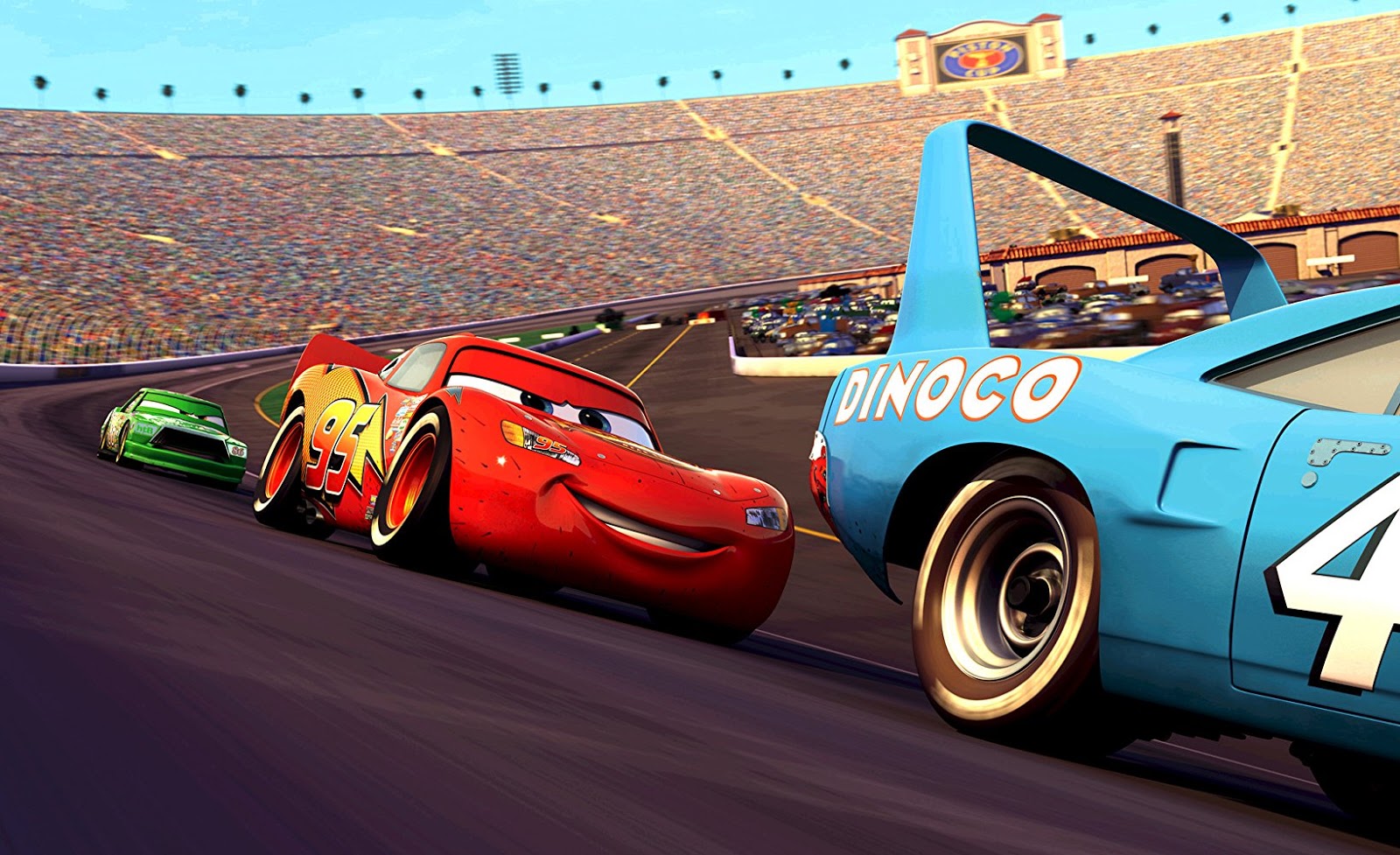
Review #1,276: 'Cars 3' (2017)

From a purely merchandising point of view, Pixar's Cars franchise is nothing short of a masterstroke. Even if the films, spin-offs, and straight-to-DVD shorts aren't up to scratch - and they aren't - children will be sure to ask mummy and daddy for the latest sleek toy, no matter how obscure the character. In response, the Cars movies have added numerous forgettable new characters with each film, adding to their extensive range of collectables in the process. It's a cynical approach, but merchandise has always been Disney's bread-and-butter in their quest to seemingly own everything. As a result, Cars 2 was a huge disappointment; a half-arsed sequel to a movie that had already left many underwhelmed, which took the central story off on a random tangent and promoted the annoying sidekick to the central hero. Still, it made lots of money, so a trilogy-closer was inevitable.

Thankfully, Pixar and director Brian Fee have scrapped the spy thriller angle altogether, and relegated buck-toothed tow truck Mater (Larry the Cable Guy) back to the role of comic relief dished out in small doses. The focus is back on Lightning McQueen (Owen Wilson) and his antics on the race track, so Cars 3 is, if anything, a massive improvement on its predecessor. McQueen is now in the twilight of his career; a seven-time Piston Cup champion and bona fide racing legend, enjoying the on-track banter with his closest rivals. However, he is given a wake-up call when newcomer Jackson Storm (Armie Hammer), employing a fancy chassis, the latest in car technology, and an extensive knowledge of statistics, beats McQueen easily. Soon enough, his fellow veterans start retiring in droves, and those who don't are quickly laid off by their sponsors to make way for the new guys hot off the assembly line (or are they born?).

It's a bland and uninspiring story of the new out-muscling the old, but there are still things to enjoy in Cars 3. They've finally enlisted a female racer in the form of energetic personal trainer Cruz Ramirez (Cristela Alonzo), who treats McQueen like a car ready to fall apart at any second, and it also offers a fitting resolution to Doc's story, who was splendidly voiced by Paul Newman before he sadly passed, as McQueen seeks out a new mentor. Yet, the beautiful and detailed animation, combined with the welcome return to the grit of the race track, cannot save Cars 3 from mediocrity. It's essentially an existential exploration of midlife crisis, chocked full of childish humour and wrapped up in a sports movie formula, so it's difficult to work out just who the target audience is. It wisely makes a point of dodging genre cliches with an interesting climax, but the lack of character investment (McQueen has always been the blandest of Pixar's heroes) means that this doesn't pay off as well as it should. Like its racers, the Cars franchise seems to be stuck in an eternal loop without anywhere to go.


Directed by: Brian Fee
Voices: Owen Wilson, Cristela Alonzo, Chris Cooper, Nathan Fillion, Larry the Cable Guy, Armie Hammer, Tony Shalhoub, Bonnie Hunt
Country: USA

Rating: ***

Tom Gillespie


Cars 3 (2017) on IMDb

Monday, 20 November 2017

Review #1,265: 'Cars 2' (2011)

Pixar's Cars is now remembered as one of the great studio's rare misfires; a formulaic animated movie that had far more to offer to the children in the audience than to the adults paying for them to be there (although I think it's one of their most misunderstood movies and well worth a re-visit). Despite this, it was a box-office smash and a dream in terms of merchandising. A few years ago, Pixar may have thought twice about extending the story of Lightning McQueen (Owen Wilson) and the town of Radiator Springs without having something new to say, but ever since Disney took over, they've taken a more relaxed attitude towards bending to audience demand and churning out an underdeveloped and unworthy sequel. The result is Cars 2, a mess of a movie with an absence of any real laughs that feels like a straight-to-DVD short stretched out over 106 minutes.

Now a four-time Piston Cup champion, the world-famous Lightning McQueen returns to Radiator Springs to see his old friends, much to the delight of best chum Mater (Larry the Cable Guy). However, formula champion Francesco Bernoulli (John Turturro) challenges McQueen to join him in the World Grand Prix, an event created by Sir Miles Axelrod (Eddie Izzard) to advertise his new fuel Allinol. McQueen, along with Mater, Luigi (Tony Shalhoub), Guido (Guido Quaroni), Fillmore (Lloyd Sherr) and Sarge (Paul Dooley), heads to Tokyo, where Mater's buffoonish behaviour starts to grate on the racing star. Meanwhile, weapons designer Professor Zundapp (Thomas Kretschmann) and his cronies are taking out cars using an electromagnetic pulse in an attempt to scupper Axelrod's plans and secure oil profits. This catches the attention of international super-spy Finn McMissile (Michael Caine) and his partner Holley Shiftwell (Emily Mortimer), who mistake Mater for a fellow spy and hire the clueless tow truck to help with their mission.

This may sound like a bold move for a franchise built on low-key themes of friendship and humility around a traditional fish-out-of-water story, and Cars 2 fleetingly captures the imagination as McMissile swings onto an enemy oil rig, gadgets at the ready. But this is no longer Lightning McQueen's story. Instead, they push Mater, the comic relief best served in tiny doses, front and centre. Not only do his shenanigans increasingly annoy, they are also painfully unfunny. Many of the memorable supporting cast from the first movie are either heavily sidelined or given the boot altogether, and the story is so disjointed that it's difficult to keep up with the endless roster of forgettable, newly-introduced characters. Kids will love it though, and that's all that really matters when it comes to box-office receipts. There's enough colour, slapstick and racing action to keep them  on their seats, and the animation again is truly wonderful. While this may get a pass if released by Dreamworks, mediocrity never used to be on Pixar's radar, and the high standards are still expected. One need only look at their Toy Story trilogy to see how inspired their sequels can be, which makes the middling antics of Cars 2 all the more crushing.


Directed by: John Lasseter
Voices: Owen Wilson, Larry the Cable Guy, Michael Caine, Emily Mortimer, Eddie Izzard, John Turturro, Thomas Kretschmann, Bonnie Hunt
Country: USA

Rating: **

Tom Gillespie


Cars 2 (2011) on IMDb

Thursday, 2 November 2017

Review #1,266: 'Cars' (2006)

Ever since Pixar first wowed cinema-going audiences across the globe with their feature-length debut Toy Story, the company has become the standard for cinematic excellence. Not only for their constantly groundbreaking animation and ability to entertain both children and adults alike, but for the quality of their scripts and the amount of genuine heart that pours out of them. Yet for every WALL-E, The Incredibles or Inside Out there's always a Monsters University, A Bug's Life or Brave. These films still get a pass because, after all, "it's only a kid's movie," but the disappointment is all the more crushing with the knowledge of Pixar's capabilities. Cars is firmly in the latter category, falling into the traps of a familiar plot and a script that isn't quite up to scratch.

Cars' reputation has been damaged ever further in the decade since its release, and this is no doubt thanks to the lazy and bitter-tasting sequels and spin-offs, something the company has churned out at an increasing rate ever since Disney took over. I must admit that I didn't think much of Cars back in 2005. It lacked excitement and a character to really root for, and the story of a cocky upstart learning learning a valuable lesson to change their outlook on the world can be seen in countless other children's movies. However, on my second viewing I found moments of tenderness between the cracks, an old-fashioned romanticism to really warm the heart. The movie is about more than a young race car named Lightning McQueen (voiced by Owen Wilson) and his quest to escape the forgotten town of Radiator Spings to reach the Piston Cup. It's also about the changing face of America and the way its capitalist nature is leaving the little guys behind.

One aspect of Cars that was never criticised was its cutting-edge animation, and the way it brought the loud, dangerous world of racing and the country's glorious landscapes to beautiful life. It is still utterly glorious to look at, whether it be a wide shot of a darkening horizon or a close-up of buck-toothed tow truck Mater (Larry the Cable Guy). The small town off Route 66 is full of other colourful archetypes, voiced by the likes of Paul Newman, Bonnie Hunt, Tony Shalhoub, Cheech Marin and George Carlin. The problems I had with the film the first time around are still present - the climax should be a lump-in-the-throat moment but is oddly devoid of emotion, and the film offers no surprises at all - but they just didn't seem to bother me as much. The hefty running-time (just shy of 2 hours) also whizzed by, despite the lack of genuine laugh-out-loud moments. So forget Cars 2, Planes and those awful-looking straight-to-DVD spin-offs you ignore in Tesco, and give Cars another chance.


Directed by: John Lasseter
Voices: Owen Wilson, Paul Newman, Bonnie Hunt, Larry the Cable Guy, Cheech Marin, Tony Shalhoub, George Carlin, Michael Keaton
Country: USA

Rating: ****

Tom Gillespie


Cars (2006) on IMDb

Friday, 11 March 2016

Review #993: 'Creed' (2015)

Following the better-than-expected intended closure to the Rocky franchise, Rocky Balboa (2006). series star, writer and occasional director Sylvester Stallone was talked into moving the story forward. Stallone clearly has a lot of love for his characters - his revisiting of John Rambo in 2008 and his homage to the genre that made him a star, The Expendables, clearly confirm this - so whether it was this or the energy and potential of Fruitvale Station (2013) director Ryan Coogler that persuaded him to don the trilby and rubber ball once again is a mystery. Thankfully he did though, as Stallone gives a career best performance as the ageing, sickly icon, despite being relegated to a supporting character.

Creed instead focuses on, as the title obviously suggests, the son of former world champion and Rocky Balboa's arch-nemesis-turned-best-friend Apollo Creed. Adonis (Michael B. Jordan) was illegitimate; the product of Apollo's wandering eye, and when we first meet him he's causing a ruckus at an orphanage. Boxing is in his blood, and he's taken in by Apollo's sympathetic widow, who doesn't want to see Adonis suffer the same fate as her ex-husband. Unsatisfied with taking trips to Mexico to fight illegal bouts when he's not working his dull day job, Adonis decides to relocate to Philadelphia, where he plans to convince the one man who rose from nothing to become world champion to train him, Rocky Balboa.

Rocky is naturally apprehensive at first, but Adonis' determination and charm eventually convince him, but you get the sense that he secretly longs to be back in the action once again. Rocky essentially takes over Mickey's role, played by Burgess Meredith in previous instalments, as he tries to mould Adonis into a worthy successor to his father. The overbearing similarities to the first Rocky film from 1979 is Creed's major negative - it is essentially the same film only with dirt bikes and better camerawork - but Coogler stamps his own style onto the film too, putting his own spin on familiar scenes. It also treads dangerously close to cliche, as Adonis is offered a title fight after one professional match and courts the lovely R & B singer in the apartment below (Tessa Thompson).

Yet Creed is sufficiently stirring enough to mute the flaws, with the boxing scenes captured with style and electricity (one long-take is particularly impressive), and enough genuine emotion on show to engage you with the characters. The relationship between Rocky and the brash Adonis is extremely well-written, with Stallone performing with a subtlety seen in his best work (the original Rocky and Cop Land (1997)), and he was truly robbed of an Oscar here. Only the stoniest of hearts could fail to be moved by the scenes of Rocky at his most physically and emotionally vulnerable, even if you didn't grow up with the original films. While its far from perfect, Creed is a worthy addition to the Rocky universe, with Coogler again demonstrating why he's a director to watch and Jordan proving that even Fantastic Four will not damage his rise to stardom.


Directed by: Ryan Coogler
Starring: Michael B. Jordan, Sylvester Stallone, Tessa Thompson, Phylicia Rashad
Country: USA

Rating: ****

Tom Gillespie


Creed (2015) on IMDb

Monday, 5 October 2015

Review #926: 'One Day in September' (1999)

Kevin Macdonald's Oscar-winning documentary One Day in September tells the story of the 1972 Munich Olympics, an event that turned quickly from an attempt by Germany to show the world that it had moved on from the events of World War II, welcoming athletes and fans of all races from all countries, to one of the most notorious incidents of terrorism in recent history. It's an enormously thrilling and informative documentary, and Macdonald covers the event in meticulous detail, but it also plays out like a music video, with hit songs playing over footage of bloodied dead bodies and little attention given to the background of the Israeli-Palestinian conflict.

The film opens with an Olympic promotional video which the Germans no doubt hoped would help banish the world's memories of concentration camps and mass genocide, in favour of a more welcoming, laid-back Germany. Though documentaries on the whole are supposed to be objective, it's clear that Macdonald holds disdain for the German authorities, who bungled the entire operation from start to finish. Rather than a tight security force, the Olympic committee opted instead for a dressed-down and unarmed group of workers who strolled the Olympic village with no idea of the horrors to come. With heavy news coverage of the incident from journalists around the world, the terrorists were able to watch as volunteers armed themselves for a rescue operation on the TV in their room, and thankfully warned the authorities of this before the inevitable blood-bath occurred.

While the idea of efficiency is something that would normally go hand-in-hand with Germany, the only thing efficient about the whole saga was the quickly-handled release of three captured terrorists, who escaped custody when some Palestinians hijacked a plane and demanded their release. In a film chocked full of startling revelations, the most damning is the reveal that the Germany authorities arranged the entire thing. Questions were raised after it was discovered that the plane contained only a small number of passengers, of which none were women and children. Of all the incidents they should hang their in shame for, simply wanting to wash their hands of the whole ordeal at the expense of justice is unforgivable. Macdonald doesn't just rely on conspiracy theories either, with first-hand accounts from police, ranking members of the army, journalists, family members of the victims, and most startlingly, Jamal Al-Gashey, the only surviving member of the Black September group to take part in the events at Munich.

It was a tragedy from start to finish, and along with the bumbling behaviour of the Germans, was doomed to disaster from the very start. Macdonald builds up this sense of inevitability, and the horror climaxes with ABC anchor Jim McKay's live report after it emerged that their worst fears have finally been realised, and that the Israeli athletes held for less than 24 hours were "all gone,". Had Macdonald offered some background into the origins of Black September and the tensions between the Israelis and Palestinians, this may have been a masterpiece, Also, the massacre at the closing stages would have been the all more heartbreaking were it not for Macdonald's rock and roll style and gratuitous imagery. Still, this is powerful, well-researched stuff, and should be watched by anyone interested in this avoidable act of horror as the definitive account of that one day in September.


Directed by: Kevin Macdonald
Narrator: Michael Douglas
Country: Switzerland/Germany/UK

Rating: ****

Tom Gillespie


One Day in September (1999) on IMDb

Saturday, 27 June 2015

Review #885: 'Tyson' (2008)

'Iron' Mike Tyson is a man mainly defined by his media portrayals and the various controversial incidents that plagued his boxing career and his life post-retirement, such as biting Evander Holyfield's ear during a hot-tempered slugging session, and his conviction for the rape of Desiree Washington. James Toback's documentary makes no attempt to give both sides of the story, but instead focuses the camera on Tyson himself, slumped in a chair at his home, and let him tell his own story. It becomes clear from the get-go that the youngest heavyweight champion in boxing history is a man plagued by demons, stemming from his troubled childhood.

Early on, Tyson describes an incident where he was beaten up by a larger bully and was unable to fight back, and another that saw one his pigeons killed in front of him for no reason at all. This childhood trauma could have left him shaken, but it instead turned him into a man terrified at the thought of humiliation, and determined that it never happens again. After some petty crime landed him in prison, he began to fight, and his potential prowess saw him eventually in the hands of Cus D'Amato, a man Tyson clearly loved and respected with every fibre of his being. D'Amato helped turn Tyson into a beast of a man, lightning-fast and ferociously strong, capable of beating an opponent before he even stepped into the ring.

After he won the belt, Tyson's life became hedonistic; full of drugs, orgies and violence. He describes achieving worldwide stardom at the age of 20 as a blessing and a curse, and the people - or "leeches" - who immediately surrounded him as leading him down a dark path (he calls Don King a "reptilian motherfucker,"). He also calls himself a leech for letting himself get sucked in, and frequently recognises his own flaws. Speaking with his famous high-pitched lisp, he comes across as a humble man; his monologues are mumbled and full of mispronunciations, but occasionally eloquent. His lust for women, mental instability, violent temperament and fear of fear itself explains his actions, but Tyson never attempts to use them as an excuse. We don't need another side of the story, as he dresses himself down better than anyone else can, helping Tyson to become a very human portrayal of a man often thought of as a monster.


Directed by: James Toback
Starring: Mike Tyson
Country: USA/France

Rating: ****

Tom Gillespie


Tyson (2008) on IMDb

Thursday, 7 May 2015

Review #866: 'Pit Stop' (1969)

Following work on a couple of Francis Ford Coppola films, directing a couple of cheapie's for Roger Corman, and the delayed but supremely stylish Spider Baby (made in 1964 but unreleased until 1968), man-of-many-talents Jack Hill turned his attention to figure eight racing for Pit Stop, aka The Winner. The subject repulsed the director, but Corman insisted and, during his research, Hill became fascinated by the attitudes of the death-wish men behind the wheels. So, although the topic is pure exploitation, Pit Stop is character-driven, following the exploits of the stoic Rick Bowman (a brooding Richard Davalos) and his increasing obsession with the thrill of the win and the dance with death in every race. As racing promoter Grant Willard (Brian Donlevy) says, a suicide is born every minute.

Shot in grainy black-and-white, Hill employs European, guerilla-esque tactics to film the movie as effectively as possible, squeezing as much out of its obvious budget limitations as possible. It helps achieve a neo-noir atmosphere, heightening the gloom yet amping up the style. Modern racing films tend to be sleek and shiny, but Pit Stop is pure grit. The racing scenes, which consist mostly of footage of real figure eight racing, are insanely entertaining, with every crash, flip and slide unhindered by editing, special effects or stunt work. It puts movies like The Fast and The Furious (2001) to shame, as although said franchise is entertaining in its own right, as a movie depicting the sheer thrill of the race, Pit Stop puts it to shame.

The performances are effective too. Davalos proves to be a charismatic "I play by my own rules"-type, hesitant at first, but eventually unable to resist the lure of the competition. Donlevy, Hammer's Quatermass, delivers reliable support, but the screen is inevitably chewed up and spat out by Hill regular Sid Haig as outlandish racing champion Hawk, putting his usual obnoxious redneck shtick to effective use. This being a Corman production, it often resigns itself to underdog genre tropes, but Hill's direction and screenplay means that there is always something more existential and cynical lurking beneath the surface. It may be one of Hill's lesser known works when compared to his exploitation classics Coffy (1973), Foxy Brown (1974) and Switchblade Sisters (1975), but it is certainly one of his best.


Directed by: Jack Hill
Starring: Richard Davalos, Brian Donlevy, Sid Haig, Ellen Burstyn
Country: USA

Rating: ****

Tom Gillespie


Pit Stop (1969) on IMDb

Monday, 2 March 2015

Review #839: 'Foxcatcher' (2014)

When it comes to depicting a real figure caught up in real events, the one aspect that movie's struggle with is really getting to the heart of it's character. Commonly, these characters are larger than life, and it takes a truly talented actor to bring them to life and an intelligent script to dig beneath their skin. Director Bennett Miller seem to have the magic touch. His three features have all been based on true-life stories. Philip Seymour Hoffman brought Truman Capote to life in Capote (2005), to the point where you believed the strange voice coming out of him wasn't a mere impersonation, but an embodiment. His second feature, Moneyball (2011) was a solid depiction of underdog coach Billy Bean (Brad Pitt), who changed baseball forever with his use of statistical analysis.

He's done it again with Foxcatcher, the shocking true tale of one man's madness amidst the quest for Olympic gold. Like with Moneyball, we are taken behind the scenes (or beyond the mat) of the sporting world, and the screen is flooded with the same damp, autumn colours as it was in Capote. It is melancholic but unsettling, as if slowly pumping up a balloon and waiting for it to burst. We first meet Olympic gold medallist Mark Schultz (Channing Tatum), scraping twenty bucks together by appearing in his brother's absence at a school to teach kids the values required to achieve a gold medal. He goes home and eats microwave noodles, and then it's back to the practice mat in preparation for the next tournament.

His luck seems on the rise when he is contacted by the mysterious John du Pont (Steve Carell), the head of a vastly wealthy dynasty who lives at his huge, beautiful Foxcatcher Farm. Curious, Mark goes to meet him and learns of du Pont's plans to make his farm the breeding ground of American wrestling. He instantly signs up, and Mark is given his own cabin and top-notch training facility. He is also given lots of cocaine, and soon submits to du Pont, at one point seen crouching in front of du Pont on his porch, like a well-trained guard dog. But du Pont is not satisfied with Mark alone - he wants his brother Dave (Mark Ruffalo), also an gold medallist - at Foxcatcher too. Only Dave has settled with his wife (Sienna Miller) and children in the suburbs and, as Mark points out, can't be bought. Du Pont cannot process this.

If you don't know the bizarre news story that came out of this arrangement, then it's best not to know. The film's foreboding is creeping. The introduction of John du Pont doesn't portray him as the strange, uncharismatic, and increasingly deranged man that he was; instead we see him at a distance, muttering pleasantries and looking down that huge nose of his. He doesn't convince as a wrestling coach, but Mark laps up the attention and luxury like any young man in his position would. When Dave eventually arrives, he sees du Pont for what he is - a man-child who inherited wealth, buying tanks to add to his military paraphernalia and living in fear of his reclusive mother (played by Vanessa Redgrave), wishing himself a leader of men without possessing any of the necessary skills required to be so. Only at this point, Mark has seen it too, but he also resents the success of his brother.

Miller and screenwriters E. Max Frye and Dan Futterman take all of this and makes it an analogy of modern America, where wealth inherited rather than earned still looms large over a country sworn to pursuing the dream and democracy. The performances are terrific. Carell and Ruffalo earned the Oscar nominations, but Tatum more than holds his own. In a scene just after a lost bout, Mark paces his room like a cage animal, suddenly bursting with rage and destroying a mirror with his head. Considering this was improvised on the spot by a dedicated Tatum, it really takes the breath away. Like the recent work of David Fincher, I believe that in the years to come, Foxcatcher will be studied as a window into our times and will be viewed as one of the finest American films of it's era.


Directed by: Bennett Miller
Starring: Steve Carell, Channing Tatum, Mark Ruffalo, Sienna Miller, Vanessa Redgrave
Country: USA

Rating: *****

Tom Gillespie


Foxcatcher (2014) on IMDb

Sunday, 19 January 2014

Review #703: 'Rush' (2013)

As Asif Kapadia's gripping and extremely moving 2010 documentary Senna proved, cinema audiences have a thirst for the larger-than-life characters that inhabit the Formula One track. The sport itself is frightfully dull (although I'm sure plenty will disagree with that), but the sportsmen willing to lay down their life for a kick and a trophy are infinitely more fascinating, especially in the days of lax safety rules. The sport nowadays is little more than advertising on wheels, but when the likes of James Hunt and Niki Lauda battled it out on the track, epic rivalries were created, and no matter how talented these men were at driving these "coffins on wheels", every race could spell out death.

Rush portrays the clash of two opposing personalities. The long-haired, dashing Englishman James Hunt (Chris Hemsworth) was all about the adrenaline, embracing the post-race parties and lying with the many women that would throw themselves at him. He was reckless, willing to risk his life and others in order to win, but, as described in the film, there was no better driver in the world in terms of raw talent. His rival, Austrian Niki Lauda (Daniel Bruhl), was focused, clinical, and even helped design the cars he would drive. He was the early-night type, 'rat-faced' and cold. In every sense, he's the perfect villain.

But where Rush succeeds the most is challenging our early conceptions of these two characters. There's little fun to be had with Lauda, but played by Bruhl, he evolves into the underdog of the movie, perhaps the only one that actually gives a damn about his own life and the life of his opponents. This, naturally, leads to tragedy and a particularly wince-inducing scene in which Lauda requires having his lungs vacuumed, but it's at this point that we realise just what these two drivers mean to each other. As Lauda watches Hunt claw back some points in the 1976 Formula One season, it becomes clear that these two need each other to survive. Their hatred of one another only serves to fuel the flames, and leads to Lauda's defiant early return to the driver's seat, scarred and bandaged.

Fast cars, beautiful women and exotic locations hardly sounds like a recognisable workload for Ron Howard, one of the most play-it-easy directors out there. His past films have been unjustifiably successful, critically and commercially, never stamping a recognisable directorial trait onto his work. Yet here, although the bright sheen of the 70's initially takes some getting used to, he has managed to create a world that is very much alive, using snappy editing, a pumping soundtrack and some growling sound design to re-create this world for petrol-heads. But he doesn't neglect his characters, and evokes the great work done on Frost/Nixon (2008), which was also a study of two giant, clashing personalities coming together on the world stage.

Rush is an exhilarating experience, able to distinguish each race from the next and literally putting us in the driver's seat with the use of digital cameras. Although it occasionally drifts into formulaic territory with the introduction of the 'wives' (played by Oivia Wilde and Alexandra Maria Lara, respectively), Howard cleverly uses this as an insight into Hunt and Lauda's personalities. Hemsworth is very good in his first 'proper' post-Thor role, but it is Bruhl that you take away from the film. How he gets you to initially loath him, only to be cheering him on at the climax is the work of a great actor, and it's a crime that he has been snubbed by the Academy this year. Hopefully this will inspire a host of decent sports movies, as Rush proves that you can mix character study and even existential musings with the thrill of sport.


Directed by: Ron Howard
Starring: Daniel Brühl, Chris Hemsworth, Olivia Wilde, Alexandra Maria Lara
Country: USA/Germany/UK

Rating: ****

Tom Gillespie


Rush (2013) on IMDb

Wednesday, 14 November 2012

Review #534: 'Bloodsport' (1988)

After the son of Japanese martial arts master Tanaka (Roy Chiao) dies, American Frank Dux (Jean-Claude Van Damme) pleads to him to be trained in the art of Ninjutsu. In a show of gratitude and a way to honour his master, Dux travels to Asia to compete in the Kumite, an illegal, underground combat competition that invites the finest fighters in the world to compete every five years. There, he befriends tubby Vale Tudo fighter Jackson (Donald Gibb), but finds himself pursued by two ACID officers Helmer (Norman Burton) and Rawlins (Forest Whitaker), who want to bring him back to America to face punishment by the army.

After appearing in roles such as Spectator in First Dance Sequence and Gay Karate Man, Van Damme took his first starring role here after his proper début in No Retreat, No Surrender (1986). His inexperience shows as he puts in a rather horrific, wooden performance, managing to convince the supporting characters of the fact that his character is America, but certainly not the audience watching the film. But he wasn't hired for his acting talent, but for his frequently astonishing fighting ability. He has never looked in finer shape, as he displays his trademark ability for high kicks and bollocks-stretching splits. And this is something that works for the film as a whole, as nobody really cares about the story, we just want to see some decent fighting.

What is so endearing about the film is the way it harks back to the 1970's kung-fu movies from China and Hong Kong, notably the formidable output from the Shaw Brothers Studio and tournament movie Enter the Dragon (1973). There are many silly and frankly inexplicable moments, especially in the intrusive romance between Dux and reporter Janice Kent (Leah Ayres), a pointless and contradictory character (clearly the movie was in need of a leggy blonde). This is a bad movie, but it managed to deliver much more than I was expecting - plenty of blood, sweat, homo-eroticism, the colossal Bolo Yeung, and more slow-motion "aaaayyyyeeeeessssss!" than I could count.


Directed by: Newt Arnold
Starring: Jean-Claude Van Damme, Donald Gibb, Leah Ayres, Norman Burton, Forest Whitaker, Bolo Yeung
Country: USA

Rating: ***

Tom Gillespie


Bloodsport (1988) on IMDb

Saturday, 7 April 2012

Review #377: 'Moneyball' (2011)

Being a football fan (that's 'soccer' to any Americans reading), it has been an increasingly frustrating past decade or so seeing the sport turn into a greedy, money-orientated business. The gap between the rich super-clubs, and the smaller teams that have been forced into becoming 'feeder clubs', is becoming larger and larger with every progressing season. The takeover of Manchester City a few seasons ago by Arab oil tycoon and politician Sheikh Mansour bin Zayed Al Nayhan saw the club spend over £150 million in one transfer window, and now sit second in the league as a result, with a host of superstar playboys littering their team-sheet. This transformation from sport of the working classes to a capitalist business is the focus of Moneyball, but the sport is baseball, America's equivalent to football.

It tells the true story of failed baseball player Billy Beane (Brad Pitt), who is now General Manager of Oakland Athletics, a team who are struggling to keep up with the pace of the New York Mets, a rich club who have just nabbed three of Oakland's key players. Disillusioned with the financial distance between the clubs, he approaches Peter Brand (Jonah Hill), a Yale-graduated economics analyst who seems to have made a breakthrough studying statistics rather than player valuation. Brand suggests three out-of-favour has-beens and rejects to replace one of the superstars they lost, to which Beane obliges. Oakland become the laughing stock of the sport, until they go on a winning run which will soon break all baseball records.

Like I said, I am a football fan, and I love to watch the game. But my love of the game is hampered by feelings of self-loathing as I watch these over-paid primadonnas whine and dive their way around the pitch, while earning more in a week than I will in twenty years for kicking a piece of leather around a pitch for 90 minutes. Billy Beans shares this view. He says 'it's impossible not to be romantic about baseball', but he has watched the sport he loves become merely dollar signs in the eyes of suit-wearing tycoons who treat it as something to play with in their spare time. Beane does not want to simply win a trophy, a ring, or a record, he wants to change the way the game is run.

Pitt became involved in the production way back in 2007, and became almost a labour-of-love for the actor. He also produces as well as giving an impressive performance. It's alarming how he has transformed himself from a mere pretty boy of the 1990's, into a passionate actor and producer, starring in excellent films such as Babel (2006), The Assassination of Jesse James by the Coward Robert Ford (2007) and Inglourious Basterds (2009). He received an Oscar nomination for this film, as it's fully deserved, portraying Beane as a mixture of determination, eagerness and concern, as well short-tempered rage. Jonah Hill is also excellent, following his creepy performance in Cyrus (2010) as the dutiful, super-intelligent Brand (he also received an Oscar nomination).

Moneyball is a welcome passion project that goes as far as translating the love of a sport that escapes us Brits. Although there is very little focus on the playing of the sport itself, it makes it clear why the sport is loved so much and is seen in such a romantic light. It does for baseball what the underrated Friday Night Lights (2004) does for American football. The script by superscribes Steven Zaillian and Aaron Sorkin is suitably fast-paced and complex, giving the film a weight and a darkness that made The Social Network (2010) so good (in Sorkin's case). Informative, insightful, and occasionally gripping, UK audiences should not shy away from this film due to the sport, and instead embrace a film that tackles larger issues of greed and class division.


Directed by: Bennett Miller
Starring: Brad Pitt, Jonah Hill, Philip Seymour Hoffman, Robin Wright
Country: USA

Rating: ****

Tom Gillespie


Moneyball (2011) on IMDb

Tuesday, 3 January 2012

Review #293: 'Warrior' (2011)

Former U.S. Marine Tommy Riordan (Tom Hardy) returns to the home of his estranged father Paddy (Nick Nolte), to find him sober and a Christian. Tommy left home with his now late mother after suffering years of abuse from the alcoholic Paddy, and now Tommy wants to fight in the upcoming mix-martial arts tournament called Sparta, and enlists his father to train him. Meanwhile, Tommy's brother Brendan (Joel Edgerton) is a physics teacher who faces losing his family home to the bank. He also fights mixed martial arts, and when the school board finds out he has been fighting in some small back-alley tournaments, the school suspend him without pay. Brendan must convince his wife to let him fight in Sparta, and must face meeting his brother who hasn't talked to him in years, and his father, who he despises.

Warrior is another successful entry into the recent revisionist sports dramas such as The Wrestler (2008) and The Fighter (2010), that take David-and-Goliath themes and spin them with an almost docu-drama approach, while sticking to the traditions (some could say clichés) of the genre. Here, director Gavin O'Connor (who made the pretty crappy Pride and Glory (2008)) uses a hand-held camera and a muted blue colour palette to also explore family themes such as unconditional love, forgiveness and redemption. Familiar themes, I agree, but thanks to some confident directing and stellar acting from the three leads, Warrior is one of those rare sports films where you truly grow to root for the characters and get caught up in their plight. It also contains some great fight scenes that are surprisingly brutal given its 12A certificate.

Naturally, if either of the brothers want to win, they must face the prospect of fighting each other (and if you've seen the trailer, you'll know if that happens or not). Whereas the likes of Rocky (1976) had one clear hero to cheer on, here there's two, and I found myself caring equally about both. As Tommy, Hardy gives a performance of ferocious intensity. He becomes an unwitting national hero when one of his earlier fights goes viral on Youtube, and finds he has the backing of the Marine Corps. Tommy is angry, and this is reflecting in his fighting style. He storms into the ring, smashes his opponents with a few punches, and storms back out. It's no surprise Christopher Nolan wanted him to play Bane in the upcoming The Dark Knight Rises. Brendan is calmer, and his trainer adopts a patient and tactical fighting style to suit Brendan's age. He even enters the ring to the sound of Beethoven. The two performances are equally good, but they are both overshadowed by Nolte, a man so consumed with regret and sadness that is drives him back to drink in one especially powerful scene. Nolte is great here, and I'm sure he'll be up for the Best Supporting Actor Oscar come March.

For those wanting action, there's plenty of it. When the Sparta tournament comes around, there's barely a moment spent outside the ring. They come thick and fast, and are impressively captured by O'Connor's camera. This may be the film's biggest problem, as the emotional core of the film's relies on the conflict between the three leads, especially between Tommy and Paddy. There is some sort of closure in one very good scene, but it is never shown again after that so the story fizzles out while we are consumed by the fighting. But what fighting it is, and when the action is this good, it's hard to be too concerned by the slight neglect of it's main theme. It under-performance at the box office, but I'm sure it will pick up the dedicated fan base that it deserves in the years to come.


Directed by: Gavin O'Connor
Starring: Joel Edgerton, Tom Hardy, Nick Nolte, Jennifer Morrison
Country: USA

Rating: ****

Tom Gillespie


Warrior (2011) on IMDb

LinkWithin

Related Posts Plugin for WordPress, Blogger...