Showing posts with label Hong Kong. Show all posts

Sunday, 12 May 2019

Review #1,478: 'Assassin's Creed' (2016)

Despite numerous critical and commercial failures over the last quarter of a century, Hollywood just cannot turn away from trying to capitalise on an industry that continues to out to out-gross them. Video game adaptations have been a thing ever since Nintendo tried and catastrophically failed to bring to life the colourful world of Mario and Luigi with 1993's Super Mario Bros., and it's become a running joke ever since that there has never been, and will unlikely ever be, a decent console-to-big-screen adaptation. But the $1 billion-plus success of Capcom's Resident Evil franchise lingers in the minds of many a studio head, so pretty much every year a new cast and crew are put together to develop a game series with a promise to break the trend. 

While the likes of Prince of Persia and Rampage are perfectly serviceable fluff, they are way overshadowed by the unbearable awfulness of a Lara Croft: Tomb Raider, or a Max Payne, or whatever hot turd Uwe Boll is serving up that month. We have gone through the disappointment too many times to believe it when a director promises to stick to the source material, but eyebrows were raised when it came to the inevitable movie adaptation of Ubisoft's hugely successful Assassin's Creed series, which plunged you into a centuries-old battle between the Knights Templar and a shadowy group known as the Assassins. Not only was Justin Kurzel, director of the truly unsettling Australian drama Snowtown and Shakespeare epic Macbeth, to helm the film, but Michael Fassbender and Marion Cotillard, two of the most respected actors in the business, were also signed up for the leads. Could this be the movie to finally bridge the two mediums and match the success of its source material?

The short answer is no, but by no means is Assassin's Creed a complete disaster. Its main problem is that it depicts two worlds from two different periods in time, but forgets to make them both interesting. We have the Inquisition-era Madrid, where hooded assassins move stealthily through the crowd armed with daggers and their wits, as they attempt to bring down those in power who seek peace in the land through control. The Assassins also long for peace, but peace gained through freedom, and they don't want a McGuffin known as the Apple of Eden, which somehow possesses the power to block humanity's free will, falling into their hands. This war has raged on for centuries, and in the modern era - a glum grey world full of murky corridors and empty rooms - the Templar continue their search for the Apple, employing a new technology that allows people to travel into the memories of their ancestors, to track down the allusive object through the centuries. 

We spend the bulk of the time in the present day, as convicted criminal Cal Lynch (Fassbender) is saved from the electric chair by Sofia (Cotillard) and spends much of his time brooding in his cell over the murder of his mother. I get the feeling that writers Michael Lesslie, Adam Cooper and Bill Collage want to keep you in the dark about who the good guys are here, but as soon as Jeremy Irons arrives with his black turtleneck sweater, you pretty much know how this is going to play out. The plot is an odd mixture of overly complicated and incredibly stupid, and much of the screentime is spent having these characters explain it to each other and the audience, or at least those in the crowd who have never played the game (like myself). When Cal finally straps up and enter the body of his ancestor Aguilar de Nerha, the movie springs into life, although this bleached-out world of questionable special effects and wannabe-Indiana Jones action may have seemed all the more exiting by the sheer dreariness of the alternative. 


Directed by: Justin Kurzel
Country: USA/France/UK/Hong Kong/Taiwan/Malta

Rating: **

Tom Gillespie


Assassin's Creed (2016) on IMDb

Tuesday, 14 August 2018

Review #1,376: 'Mission: Impossible - Rogue Nation' (2015)

One of the aspects of the Mission: Impossible franchise that really helps separate it from the conveyor belt of action/spy/thriller movies that hit our cinema screens and streaming services every year is the idea of introducing a new director for each new entry. Such an approach helps prevent fatigue from Tom Cruise's Ethan Hunt and whatever team he assembles, and gives each film its own feel without disrupting the flow of the series. Brian De Palma riddled his movie with unbearable moments of tension, while John Woo favoured slow-motion gunplay. J.J. Abrams introduced a darker tone to the proceedings, only for Brad Bird to lighten the tone while packing more of a physical punch. They aren't all great, but you can at least recognise a style. Christopher McQuarrie was the choice to envision part five, and with him he brings a bland, by-the-numbers style that infected his previous movie, the Tom Cruise vehicle Jack Reacher.

What also has helped this series to survive over the years are set-pieces built around real stunts and genuine danger. In this regard, Rogue Nation doesn't disappoint, although it clearly blows its load far too early. If you've seen the trailer, you'll know the film's signature jaw-dropping moment involves Tom Cruise clinging to the side of a plane as it takes off, the ground behind him shrinking rapidly with each passing second. Simon Pegg's Benji Dunn frantically bashes an iPad while Jeremy Renner's returning William Brandt barks panicked directions over loud-speaker, and it's all edited to guarantee maximum thrills. In fact, the entire first half of the film manages to maintain this exciting pace, delivering a high speed motorcycle chase and a stealthy mission in the Vienna Opera House. Plot has never been the strong suit of this franchise, and things grind to a halt when McQuarrie decides to slow things down for the finale. A plot involving the kidnapping of 'the British Prime Minister' (played by Tom Hollander) and a shadowy organisation called The Syndicate are plot devices straight out of James Bond, and it often feels like Rogue Nation is simply trying to be America's version of Britain's most popular fictional spy.

McQuarrie does have some aces hidden up his sleeve however, and the biggest of these is Rebecca Ferguson as Ilsa Faust, a fellow spy working within the Syndicate for her own dubious reasons. While her character shares no chemistry with her lead co-star, she makes a fantastic impression in the action stakes as she repeatedly crosses paths with Hunt, and hordes of bad guys, in the field. Cruise does share great chemistry with Simon Pegg however, and although the Shaun of the Dead star is little more than comic relief and the guy who can push a few buttons on his laptop and open any door in the world, his screen time with Cruise helps to humanise Hunt, which is important in a universe looking to turn its hero into an unstoppable super agent. It's a perfectly passable two hours, but will likely fade from memory mere seconds after the credits have rolled. Unlike the lit fuse during the opening credits, Rogue Nation fails to explode into life, fizzling out when the film starts to think that this series can be anything more than a bunch of people chasing a McGuffin and having to retrieve a few things in spectacular fashion along the way. Woo's effort remains the worst in the series, but Rogue Nation lacks an identity. While the first hour is certainly fun, it often feels like McQuarrie is auditioning for a different franchise altogether.


Directed by: Christopher McQuarrie
Starring: Tom Cruise, Jeremy Renner, Simon Pegg, Rebecca Ferguson, Ving Rhames, Sean Harris, Alec Baldwin, Tom Hollander
Country: China/Hong Kong/USA

Rating: ***

Tom Gillespie


Mission: Impossible - Rogue Nation (2015) on IMDb

Saturday, 28 July 2018

Review #1,370: 'Iron Monkey' (1993)

When Ang Lee's Crouching Tiger, Hidden Dragon was released back in 2000, it was hailed as the arrival of a new form of martial arts picture. The use of wirework and trampoline techniques combined with the natural fighting styles of the actors was actually nothing knew, and wuxia had in fact been around for decades. Nevertheless, the success of Crouching Tiger saw the re-release of many Hong Kong classics: titles that would be instantly recognisable to the initiated, but were fresh ground for those swept up in the martial arts explosion (which was arguably cranked up even further after Tarantino's Kill Bill films). One such title was Iron Monkey, an early 90s Golden Harvest production featuring an early performance from Donnie Yen. While it isn't quite as polished as Ang Lee's hit, Iron Monkey puts its fighting scenes to shame, delivering a rollicking 90 minutes of action and fun that I could have quite happily watched again straight after it had ended.

The name Wong Fei-hung may be unrecognisable to Westerners, but it is a name as popular as Robin Hood within Chinese folklore. He was a famous martial artist and physician, and his exploits have seen him become the subject of over a hundred movies and television shows, the most famous of which is Hark Tsui's Once Upon a Time in China, which starred Jet Li as Fei-hung. With Li wanting to call it a day on the role after Part III was released in 1993, attention turned to a prequel, and Iron Monkey was born. Fei-hung here is a 12 year old, and played immaculately by Sze-Man Tsang, a girl. Most of the attention is given to his father, Wong Kei-Ying (Yen), who arrives in town with his son in tow just as the governor's guards are rounding up anybody who looks suspicious. The corrupt governor is looking for Iron Monkey, a skilled martial artist who is causing a nuisance around town. Under the threat of execution, Kei-Ying agrees to track down Iron Monkey in return for his son's freedom, but quickly learns that there is more to his mysterious foe that initially thought.

The Iron Monkey is local physician Yang Tianchun (Rongguang Yu) who, along with the beautiful Miss Orchid (Jean Wang), battles to overthrow corruption and the mistreatment of the people. The plot is as thin as the wires launching the actors into a variety of graceful getaways, but director Woo-Ping Yuen grabs the attention with a non-stop wheel of dazzling action scenes. The speed with which Yen and Yu jab and spin beggars belief, dusting off faceless henchman with a spectacular array of inventive moves, all of which we get to learn as the characters are fond of announcing the title of each form of punishment upon delivery. Best of all is Tsang, who not only convinces as a boy (I didn't realise until I read up about the film after it had finished), but proves to be just as effective as her older colleagues in showing off her skills. As the bad guys get increasingly tougher, Iron Monkey becomes more ridiculous, but this is counter-balanced by a fine vein of humour throughout. It saves its best for last, as our heroes team up against the big bad on top of wooden poles wedged into the ground as a huge fire rages below them. They balance of vertical sticks, horizontal sticks, and at one point, they are on top of each other on one wobbly pole. It's breathtaking stuff, and proves that Hong Kong cinema had this action stuff worked out long before Hollywood caught on.


Directed by: Woo-Ping Yuen
Starring: Donnie Yen, Rongguang Yu, Jean Wang, Sze-Man Tsang, Shun-Yee Yuen
Country: Hong Kong

Rating: *****

Tom Gillespie


Iron Monkey (1993) on IMDb

Tuesday, 15 May 2018

Review #1,336: 'The Hitman's Bodyguard' (2017)

The production companies behind The Hitman's Bodyguard, a buddy comedy starring Ryan Reynolds and Samuel L. Jackson, tried their very best to achieve an R-rating. That is, to throw in every swear word under the sun and puncture this otherwise generic and old-fashioned action flick with bone-crunching violence and CGI blood-spurting. But this is no Shane Black movie. Directed by The Expendables 3's Patrick Hughes and with a script by relative newcomer Tom O'Connor, The Hitman's Bodyguard fails to find the correct balance between humour, action and tone to warrant comparison to the likes of The Last Boy Scout or, more recently, The Nice Guys. The film simply lets the actors do what they are known best for and hopes for a positive outcome.

It begins by introducing UK-based security expert Michael Bryce (Reynolds), who prides himself on a triple-A rating and the fact that none of the rich types who employ his services have died under his protection. But his luxurious life and untarnished reputation comes to a grinding halt when a Japanese arms dealer receives a bullet through the brain. A couple of years later, Bryce has been demoted to protecting scumbags like the cocaine-snorting businessman Mr. Seifert (Richard E. Grant). He sees an opportunity to redeem himself when Interpol agent and ex-girlfriend Amelia Roussel (Elodie Yung) tasks him with transporting notorious hitman Darius Kincaid (Jackson) from Manchester to Amsterdam so he can testify in court. Only the man he is testifying against, Belarusian dictator Vladislav Dukhovich (a sleepwalking Gary Oldman), uses all of his power to disrupt their passage.

The two lead stars, regardless of how much fun it's looks like they're having, fail to inject much life into The Hitman's Bodyguard. Reynolds does his deadpan motormouth thing (Bryce is basically Deadpool without the costume or ability to regenerate limbs) and Jackson gets to scream "motherfucker!" a hell of a lot, but this simply isn't enough to justify the lack of any real jokes. There's the odd well-earned snigger, but you have to get through a lot of shouting to reach them, with Salma Hayek receiving the most thankless task as Kilcaid's sweary incarcerated wife. The action also fails to deliver. Although a boat chase through Amsterdam's canals is just preposterous enough to fleetingly entertain, the fights lack physicality and the gun-play is deprived of invention, with little real threat from the endless waves of Dukhovich's leather jacket-wearing goons. When a film feels the need to insert a fart joke, you know you're in trouble.


Directed by: Patrick Hughes
Starring: Ryan Reynolds, Samuel L. Jackson, Gary Oldman, Elodie Yung, Salma Hayek, Joaquim de Almeida, Richard E. Grant
Country: USA/Hong Kong/Bulgaria/Netherlands

Rating: **

Tom Gillespie


The Hitman's Bodyguard (2017) on IMDb

Monday, 22 January 2018

Review #1,295: 'Blade Runner' (1982)

Ridley Scott's Blade Runner has had such a profound affect on the science-fiction genre across every medium that we are still seeing imitators today. If the opening shot of the dark, futuristic landscape of 2019 Los Angeles seems at all familiar, it's either because you've witnessed this cinematic masterpiece before, or seen an ill-fated attempt to recreate this grim, claustrophobic future elsewhere. Blade Runner's classic status now seems almost ironic, given the film's disastrous reception upon its original release, and the countless different versions released since. Among others, there was the original 'workprint prototype', the U.S. theatrical cut, the international theatrical cut, the broadcast version, and The Director's Cut. I think most would agree with me when I say the 'Final Cut' is the definitive version, trimmed of Harrison Ford's rambling narration and the tacked-on happy ending that borrowed unused footage from Stanley Kubrick's The Shining.

In the future, the Tyrell Corporation has manufactured bioengineered humans known as Replicants, commonly used for slave labour off-Earth. Granted the intelligence of their makers, the Replicants tend to start questioning their purpose, often resulting in mutiny and violence. To counter this, Tyrell has limited their lifespan to four years in the hope that they will die before such thoughts can even enter their mind. However, four Replicants (Rutger Hauer's leader Roy Batty, Daryl Hannah's Pris, Brion James' Leon and Joanna Cassidy's Zhora) have rebelled against their masters and made it back to Earth. It is the job of 'Blade Runner' Rick Deckard (Ford) to hunt the foursome down and 'retire' them before they can cause any real damage. Deckard questions the morality of his job, especially when he meets Tyrell's latest creation, the stunning Rachael (Sean Young), a Replicant who isn't aware of what she is.

Blade Runner is simply astonishing on a number of levels. When Vangelis' score - a majestic combination of the classical and synthesised - kicks in early on, Scott's film becomes an experience on a whole other plain. The production design, which is a noir-ish hybrid of choking, rainy streets and golden interiors blackened by shadows, had never been seen before and hasn't been so effectively moulded since. This feels like a wholly tangible future, lived-in and almost familiar, and although we may not have flying cars, super-beings crafted by science or Atari as a thriving corporation, the future depicted in Blade Runner isn't much different to the world we live in today. The sets, special effects, music and editing are all combined by Scott to create a world we can almost touch. The fleeting moments of violence, something the film was criticised for on its original release, are fast, shocking and ugly. There's a scene in which a death occurs in slow-motion through various panes of glass which is almost beautiful to behold, but even this plays out with an air of tragedy. The line between good and bad is certainly blurred here.

I haven't read Do Androids Dream of Electric Sheep? by Philip K. Dick, but common opinion is that Blade Runner eclipses its source and then some. It's the stuff of dreams for science-fiction aficionados, going way beyond its thriller premise to touch on some big philosophical questions and ponder the very definition of being human. Hauer's masterful portrayal of Batty ends with a monologue improvised by the actor, and his speech is one the most memorable and quoted pieces of dialogue in cinema history for good reason. It is moving and stirring and will catch you off guard, forcing you to reflect on everything you have just seen for days after. Ford is impressive too, downplaying the goofy charisma of Han Solo and Indiana Jones and growing into the beaten-down, conflicted bounty hunter. But the real star here is Ridley Scott himself, who has never made a finer film, crafting a landscape that would go on to be the go-to aesthetic for dystopian futures. It would take either a stupid or unnervingly brave director to make a follow-up, but if any director has the ability to expand this universe into something even more spectacular, it's Denis Villeneuve.


Directed by: Ridley Scott
Starring: Harrison Ford, Rutger Hauer, Sean Young, Edward James Olmos, Daryl Hannah, M. Emmet Walsh, William Sanderson, Brion James
Country: USA/Hong Kong

Rating: *****

Tom Gillespie


Blade Runner (1982) on IMDb

Sunday, 29 October 2017

Review #1,265: 'Ghost in the Shell' (2017)

Hollywood remakes of beloved foreign-language movies are rarely a welcome idea, but Ghost in the Shell seemed particularly doomed from the get-go. Alongside the cries from fans claiming the industry has officially run out of ideas, and from those who hold the original close to their heart and fail to see any other purpose in a remake other than to allow the fat cats to count the green, the announcement of Caucasian Scarlett Johnansson's casting in a role originally voiced by an Asian actor generated all-too familiar claims of 'whitewashing'. Tempers were only inflamed when it was rumoured that Johnasson's appearance was to be digitally-tweaked to make her appear more Eastern-looking, an idea that was quickly abandoned. Predictably, Ghost in the Shell arrived in cinemas back in March to underwhelming box-office.

As a result, I approached Rupert Sanders' 2017 re-do with a sense of trepidation and caution, knowing full well that it would lack the philosophical musings of the Masaume Shirow manga the story originated from, and the big questions raised by Mamoru Oshii's landmark anime adaptation. After all, this is a blockbuster wannabe starring one of the most in-demand actresses around, so of course the makers will feel the need to dumb everything down to suit a mainstream audience (even though Christopher Nolan has proven more than once that a film can be complex and intelligent and still rake in the cash). It is perhaps thanks to my low expectations that I found much to enjoy with Ghost in the Shell. Like the 'shells' depicted in the film, it's certainly hollow and jittery, but as a piece of entertainment, I was never bored, and the visuals offer plenty of colour and detail to distract from the straightforward plot.

Taking inspiration from everything from Shirow's manga, Oshii's 1995 movie and its 2004 sequel, and the hugely popular spin-off series, certain scenes will certainly feel familiar while the story of a shady corporation turning human beings into weapons against their will feels like it could be lifted from most Blade Runner-inspired science-fiction movies of the past couple of decades. Major (Johansson) is the first cyborg to employ a fully mechanised body with the mind, or 'ghost', of a human. Her employer, Hanka CEO Cutter (Peter Ferdinando), decides to use her in the fight against cyber-terrorism, which has become a real problem since the majority of the population have now been cybernetically enhanced. She works at Section 9 with her gruff partner Batou (a bleach-blonde Pilou Asbaek) and boss Aramaki ('Beat' Takeshi Kitano), and they are forced into action when Hanka finds itself under attack from a mysterious hacker named Kuze (Michael Pitt).

Oshii's 1995 incarnation tackled big themes such as humanity and identity, offering explosive moments of action to allow some relief from the head-scratching central plot. The result was one of the best animes of all time. Sanders' Ghost in the Shell has much smaller ambitions, and feels very much like a product of the post-Matrix world we now live in, even though the Wachowskis were mainly inspired by Oshii's film. It works only as spectacle, and this world of spider-legged geisha robots and giant animated advertisements really does catch the eye. The action, while hardly breaking down barriers, has a physicality behind it, and the punches and bullets land with a force that really pushes its 12A certificate to the very limits. As the lead, Johansson has proved time and time again that she is accomplished with the physical demands of such a role, and she gives Major a hunched, stompy awkwardness, despite the blandness of the character. It will never justify its existence to the die-hard fans of the original, but Ghost in the Shell 2017 offers enough visual panache and energy to engage those curious enough to check it out.


Directed by: Rupert Sanders
Starring: Scarlett Johansson, Pilou Asbæk, Takeshi Kitano, Juliette Binoche, Michael Pitt
Country: UK/China/India/Hong Kong/USA

Rating: ***

Tom Gillespie


Ghost in the Shell (2017) on IMDb

Friday, 8 September 2017

Review #1,244: 'Wonder Woman' (2017)

It's incredibly sad to read about how many milestones Wonder Woman touches on, especially in this day and age where a high-profile Twitter user must consider every message they post to the world in fear of being racist, sexist, homophobic, or just plain insensitive. Despite the influx of superhero movies since Marvel kicked off their Cinematic Universe in 2008 with Iron Man, and despite the abundance of long-standing and hugely popular female superheroes existing in the comics, and despite audiences calling out for a female-led superhero film ever since Scarlett Johansson donned the leathers as Black Widow in Iron Man 2, studios have failed to deliver one in 12 years. Perhaps the studios were scared they would have another Elektra on their hands, but that movie failed because it was terrible, and was a spin-off from the also-terrible Daredevil.

The DC Extended Universe, in the face of the critical mauling they received last year with the double-whammy of Batman v Superman and Suicide Squad, can only be applauded for taking the much-overdue 'risk' of launching a female-led franchise with Wonder Woman, a movie that not only represents so much in terms of moving cinema out of a stone-age mentality and into the modern world, but surpasses all expectations in a time of superhero overkill. Wonder Woman is, above all, charming, funny and exciting, and will hopefully help steer the DCEU back on track after an incredibly wobbly start. Making her introduction in Batman v Superman and emerging as one of the few positive things to be said about Zack Snyder's overblown and poorly-constructed smack-down, Wonder Woman begins in the present day but flashes back to the time glimpsed in the black-and-white photograph sent to her by Ben Affleck's Batman, when World War I was in full flow and her heart was won by a spy named Steve.

The young Diana grows up on the island of Themyscira, a beautiful hidden paradise created by Zeus to be a home for the Amazons, a tribe of fierce female warriors tasked with protecting the world from the Greek God's evil, warmongering brother Ares. Diana's mother, Queen Hippolyta (Connie Nielsen), attempts to shield her from the horrors of war and forbids her to practice combat, while her auntie Anitope (Robin Wright) realises her potential and trains her in secret. Zeus left the islanders a gift, a weapon called the 'Godkiller', which will prove decisive when the battle with Ares finally stirs. Cue the arrival of Steve Trevor (Chris Pine), an Allied spy who stumbles on the island while fleeing the Germans. He brings death and war with him, and the Amazons want to kill him before Diana intervenes, revealing he saved her life. The tribe want nothing to do with a war waged by man, but Diana suspects Ares may be puppet-master behind the conflict that has taken millions of lives. Against her mother's wishes, she travels with Steve to London, where he reveals to his superiors German plans to release a devastating new mustard gas created by General Ludendroff (Danny Huston) and Spanish chemist Dr. Maru (Elena Anaya).

The word 'man' carries a special significance, and director Patty Jenkins carefully weaves this idea into the film without rubbing it in your face. As well as the violent, dangerous 'world of men' lurking across the waters, there is also No Man's Land, the stretch of mud and rubble separating the two warring fronts. This is a place that no man can hope to survive, and this sets up the triumphant moment seen in the trailers in which Diana deflects machine-gun fire with her bracelets and shield before taking out anybody daft enough to stand in her way. This scene is made all the more powerful by Gal Gadot, who puts in a terrific performance despite her lack of acting experience and puts all the doubters to rest, proving to be just as savvy with comedy as the action. The fact that we care so much about her also means that the CGI-heavy climax, which seems to be trend with DC, can almost be forgiven. Thanks to well-written character development and some charming chemistry between Gadot and the ever-brilliant Chris Pine, there is a real emotional investment that was lacking in DC's previous misfires. In terms of origin stories, this doesn't rewrite the rule-book, but the importance and significance of Wonder Woman should not be underestimated.


Directed by: Patty Jenkins
Starring: Gal Gadot, Chris Pine, Connie Nielsen, Robin Wright, Danny Huston, David Thewlis, Elena Anaya
Country: USA/China/Hong Kong/UK/Italy/Canada/New Zealand

Rating: ****

Tom Gillespie


Wonder Woman (2017) on IMDb

Friday, 9 June 2017

Review #1,208: 'John Wick: Chapter 2' (2017)

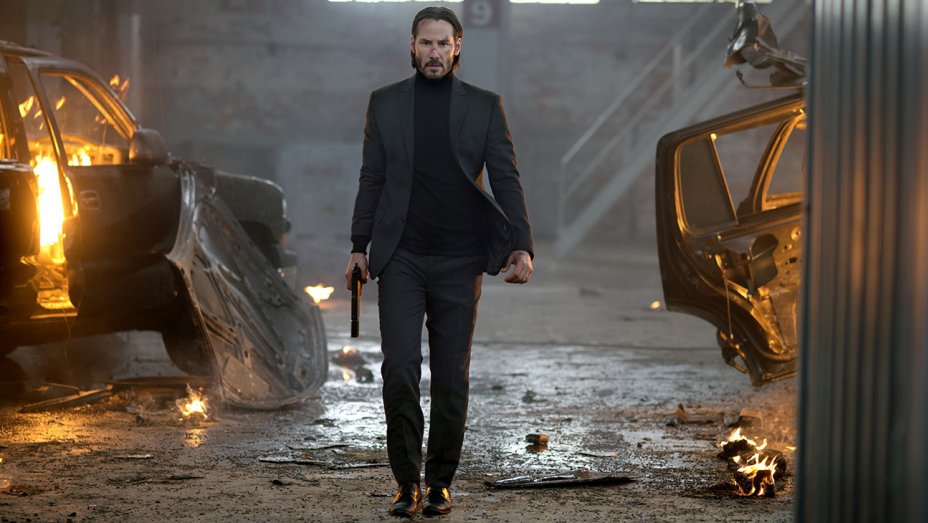
John Wick was the sleeper hit of 2014, elegantly combining kinetic fist and gun fights, fluid camerawork, and an effective, stoic performance from its lead, Keanu Reeves. There was a beauty in its simplicity: a former assassin grieving over the recent death of his wife gets done over by a small gang of scumbag Russian mobsters, who proceed to beat him to a pulp and kill his dog, and who are soon running for their lives as the slick-suited killing machine routinely takes them out one by one. Animal lovers can breathe easy as no dogs die in this sequel, although the anti-hero has found himself a new four-legged sidekick. The film's surprising success, as well as the shady underground universe it only hinted at, had action fans salivating at the thought of a follow-up.

Fans will be pleased that stuntman-turned-director Chad Stahelski is back at the helm, as is writer Derek Kolstad, who, although obeying the expected rule of sequels by making everything bigger and louder, both ensure that everything that set our pulses racing the first time around is present and suitably breathtaking. Opening with what can only be described as a ballet of fisticuffs and impressive stunt driving, we are instantly on familiar grounds. Having done everything but retrieve his 1969 Ford Mustang Mach 1 as he took his vengeance on anybody stupid enough to stand in his way, Wick lays siege to a dingy chop shop ran by Russian Abram Tarasov (Peter Storemare), the brother of Viggo from the first film. With pal Aurelio (John Leguizamo) restoring the classic vehicle, Wick can finally move on with his life. Only clearly somebody hasn't informed him that he's in a sequel. Soon enough, old colleague Santino (Riccardo Scamarcio) is at his door insisting on a favour.

Wick politely refuses, but Santino lays down a marker which symbolises an unbreakable oath. Although they kill mercilessly for a living, these contract killers have a code and a set of rules they must obey under penalty of death. Having left the game, Wick isn't having any of it, but the quick destruction of his home soon has him jetting off to Rome to carry out the job. His target: Santino's sister Gianna (Claudia Gerini), who was chosen by their father to take his place at the high seat of international crime bosses. The organisation of the underground assassins only hinted at previously really opens up in Rome. Met by the boss Julius (Franco Nero), Wick is soon getting fitted for expensive suits and choosing his arsenal with the assistance of Sommerlier (Peter Serafinowicz) for his so-called 'impossible task'. A smooth operation wouldn't make for a particularly exciting time, so Wick quickly finds himself under threat from bodyguard and colleague Cassian (Common), and Santino himself, who wants to leave no loose ends.

John Wick: Chapter 2 could have easily gotten ahead of itself. By opening up what was such a personal and emotional revenge mission last time into a continent-hopping world of hotel safe-houses and spies masquerading as the homeless, this could have become very silly very quickly. Instead, the film hypnotises you by making the action even more bombastic, and infinitely more violent (if you liked The Joker's death-by-pencil in The Dark Knight, just wait for this one). Even when events take strain credibility to the max by introducing the 'Bowery King' (Laurence Fishburne, in a nice reunion with Reeves), a man in charge of a huge network of tramp hitmen, and revealing that a startling number of the general public are in fact one text away from slitting your throat, you'll be too busy admiring the balletic carnage to roll your eyes. The bad guy may be even less interesting than the already-bland big boss from the previous movie and it's lost that element of surprise, but I was ready for part 3 the second the credits started to roll.


Directed by: Chad Stahelski
Starring: Keanu Reeves, Riccardo Scamarcio, Ian McShane, Ruby Rose, Common, Laurence Fishburne, Claudia Gerini, Lance Reddick
Country: USA/Hong Kong/Italy/Canada

Rating: ****

Tom Gillespie


John Wick: Chapter 2 (2017) on IMDb

Monday, 22 May 2017

Review #1,199: 'In the Mood for Love' (2000)

The second of an unofficial trilogy by Chinese director Wong-Kar Wai which started with Days of Being Wild (1990) and concluded with 2046 (2004), it would be difficult to describe and appreciate In the Mood for Love without using the words beautiful, sumptuous and erotic. For a film trying to capture the pure eroticism and sweeping romance of the meeting between lost souls, there is precious little dialogue or conventional narrative, with Wong instead choosing to tell this story through gorgeous visuals and, to steal a word from the film's English-language title, an overbearing sense of mood. Continuing with the semi-improvised, free-flowing approach that brought him international success with the likes of Chungking Express (1994) and Happy Together (1997), In the Mood for Love is an achingly romantic experience, and may just be his finest work.

Set mostly around a cramped apartment block in 1962 Hong Kong, the central 'love' story is between Mr. Chow (Tony Chiu-Wai Leung) and Mrs. Chan (Maggie Cheung), who, along with their spouses, rent a room in neighbouring flats. They regularly eat alone at night as their other halves call to say they are working overtime, and they both suspect infidelity. eventually coming to the conclusion that Mrs. Chow and Mr. Chan are indeed having an affair. Despite the ever-presence of the pleasant Mrs. Suen (Rebecca Pan) and her mahjong-playing friends, the couple feel isolated and alone, often venturing out to the nearby noodle stand to purchase a meal for one. The two start to bond through imagining and even re-enacting how their spouses met and courted each other, while insisting their own blossoming relationship remains platonic. But feelings are developed and suppressed, with things intensifying when they begin work on a martial arts serial, renting a hotel room to escape the gossiping of neighbours.

The era in which the film is set not only gives the opportunity for some exquisite costume design (Mrs. Chan's colourful dresses radiate sensuality), but also offers the chance to reflect on a more conservative, socially-conforming time. While the couple refuse to allow their friendship to boil over into romance, there are still whispers and raised eyebrows. With this kind of secrecy and restraint forced upon them, they are made to pass each other on the street with barely an acknowledgement, and this is where Wong's style becomes the substance. Sexual tension is captured by the brush of a hand, a sideways glance, and even the dipping of meat in hot sauce. In the film's most effective scene, they pass each other on a stairwell, barely daring to offer the other a glance, just as the rain starts to lash down to bring them together under shelter. Where most films will have their characters lay their romantic cards on the table, Wong says so much more with repressing as much as possible, climaxing in a haunting final scene set amongst the ruined temples Angkor Wat in Cambodia.


Directed by: Kar-Wai Wong
Starring: Maggie Cheung, Tony Chiu-Wai Leung, Ping Lam Siu, Rebecca Pan
Country: Hong Kong/China

Rating: *****

Tom Gillespie


In the Mood for Love (2000) on IMDb

Friday, 28 April 2017

Review #1,188: 'La La Land' (2016)

There was a time I remember, sometime during the mid-to-late '90s, when the idea of watching a musical was laughable. It was a silly trend that was once popular with the movie-going audience back when cinema was relatively primitive, which saw a kitschy revival in the '70s and '80s with the likes of Grease (1978) and Xanadu (1980), but died a death when the rapid evolution of CGI made anything possible on screen. Then came Moulin Rouge! and its use of modernised classic tunes in 2001, and movie-goers have been in love with the genre again ever since. Its popularity shows no sign of stopping either, and writer/director Damien Chazelle, who made a big impression in 2014 with the excellent Whiplash, has sculpted one of the best musicals of recent times with the Oscar-nominated La La Land, a film that manages to feel both traditional and contemporary.

The film combines two elements clearly dear to Chazelle: The lavish musicals of the 1950s (and to a lesser degree the '40s), and pure jazz. The two wandering souls at the story's centre dream of leaving their mark in their respected fields, but both are in love with the past in industries always looking forward. Actress Mia (Emma Stone) spends time between humiliating and soul-crushing auditions serving coffee near a studio lot, where she occasionally crosses paths with a glamorous star as the rest of the room whisper excitedly. Musician Sebastian (Ryan Gosling) cannot resist ignoring the festive playlist at his restaurant haunt in favour of some improvisation on the piano - much to the annoyance of his boss Bill (J.K. Simmons) - while he dreams of opening his own traditional jazz bar. Sebastian is quick-tempered, neurotic, and plain rude, but Mia pursues him anyway. They fall in love, and express their feelings through impromptu song-and-dance routines.

Chazelle knows the genre inside out, and seems to favour the lavish MGM musicals and the glamorous physicality of the era's stars such as Gene Kelly, Fred Astaire and Ginger Rogers. Opening with a near one-shot song-and-dance routine, beautifully photographed by Linus Sandgren, it goes on to deliver many dazzling and classical numbers, which are often glorious to behold and backed by a soundtrack of memorable tunes that manage to stay in your head for days afterwards. They are performed admirably by the central pair, who have real chemistry. One of the few saving graces of the Amazing Spider-Man films was the chemistry between Stone and Andrew Garfield, and here she sizzles with Gosling. It's the movie's main strength. Rather than merely go through the motions and familiar tropes, you really want them to be together. You can truly feel their happiness every time they see each other.

La La Land stutters when exploring deeper, more complex themes. The second act sees the two achieve some degree of success, with Mia developing a one-woman show and Sebastian joining up with a fellow musician played by John Legend in a band making waves in the world of jazz. Will Mia ultimately degrade herself in order to make it in a brutal industry that may not deserve her, and how can Sebastian, a hardcore old-schooler, be happy in a flashy group looking to move the genre forward? It seems like a poor excuse to simply tear the couple apart to experience their inevitable rough patch, and doesn't really fully explore the characters' emotional quandaries. But this slight lag doesn't last for very long, and the final moments are simply perfect. One of the great things about Whiplash was that final, heart-pounding moment of physical and spiritual triumph, and La La Land wraps up the story with grace and genuine tugs on the heartstrings. proving itself to be much more than a mere homage.


Directed by: Damien Chazelle
Starring: Ryan Gosling, Emma Stone, John Legend, J.K. Simmons, Rosemarie DeWitt
Country: USA/Hong Kong

Rating: ****

Tom Gillespie


La La Land (2016) on IMDb

Saturday, 28 January 2017

Review #1,145: 'Deepwater Horizon' (2016)

Reuniting with his Lone Survivor (2013) leading man Mark Wahlberg and telling another true-life tale of down-to-earth, blue-collar guys caught up in a horrendous, avoidable situation, Peter Berg tackles the events leading up to and during the explosion of the titular Deepwater Horizon Mobile Drilling Unit and the subsequent offshore oil spill in the Gulf of Mexico in 2010. Berg opts to tell the story in the mould of a classic disaster movie, introducing the various characters that are inevitably destined to be caught up in the chaos, before delivering the movie's big set-piece; a massive, devastating explosion of fire and oil, dramatically and realistically brought to life by the 85%-to-scale set. While it makes for an entertaining and exciting picture (hardly necessities for a true-life tragedy), it misses the opportunity to explore the bigger picture.

Returning to Deepwater Horizon after shore leave, engineer Mike Williams (Wahlberg) arrives at the floating rig to find that not all the workers are happy or comfortable with the actions of the company men. Mike and respected supervisor Mr. Jimmy (Kurt Russell) are shocked to learn that the men responsible for conducting a pressure test have been sent home early under the orders of BP man Vidrine (John Malkovich), without carrying out the routine safety inspections. A lot of the dialogue is naturalistic but muffled, meaning that the necessary exposition required to understand the workings of the rig and the reasons for the pending disaster can confuse. One of the opening scenes sees Mike explain his job to his young daughter who is preparing for a class talk. She seemed to get it but I didn't, but it's clear enough that something isn't quite right.

Berg's decision to keep the CGI trickery to an absolute minimum certainly pays off, and allows cinematographer Enrique Chediak to capture the sheer scale of the event to full effect. While there are some invisible special effects at work, the whole ordeal feels entirely real, bolstered by some terrifying, Oscar-nominated sound editing. Yet in aiming to deliver an action movie so focused on the immediacy of the event and the swift actions of those on board, it loses sight of the bigger picture at play. Namely, the unforgivable misconduct and irresponsibility of BP, who endangered the life of every man and woman on board in fear of being behind schedule, and the resulting oil spill which devastated wildlife and could be seen from space. For me at least, that sounds like a more interesting and engrossing movie. Still, Berg's picture is well made, handsomely performed, and, most importantly, doesn't feel superficial.


Directed by: Peter Berg
Starring: Mark Wahlberg, Kurt Russell, Gina Rodriguez, John Malkovich, Dylan O'Brien, Kate Hudson
Country: Hong Kong/USA

Rating: ***

Tom Gillespie


Deepwater Horizon (2016) on IMDb

Thursday, 10 November 2016

Review #1,111: 'Teenage Mutant Ninja Turtles: Out of the Shadows' (2016)

The heroes in a half-shell return once again to anger children of the late 80's/early 90's who continue to voice their displeasure as the pop culture icons of their youth are turned into soulless, CGI monstrosities with the sickly, music video aesthetic of producer Michael Bay. This time, it would initially appear that Bay and his cronies have learned from their mistakes by introducing characters from the beloved animated TV series, which at least acknowledges the fans the franchise originally catered to. But this is Michael Bay, who is so satisfied with his own brand of consumerist, money-grubbing blockbusters that he would never do anything as gracious as actually try to make a half-decent movie.

A year after their battle with the evil Shredder (here recast as Brian Tee), the Teenage Mutant Ninja Turtles, Leonardo (Pete Ploszek), Raphael (Alan Ritchson), Donatello (Jeremy Howard) and Michelangelo (Noel Fisher), are still living in the sewers, hiding from a public who are unaware of their part in saving the world. Annoying introduced with title cards that label them as 'Raph' and 'Mikey' etc. - which raises the question of just how capable the film-makers believe their target audience are of remembering names with more than two syllables - the turtles are once again indistinguishable from one another apart from the one personality trait that here wholly defines them. They are more central to the plot than last time, but they prove to be as equally off-putting as their human counterparts.

The plot revolves around Shredder escaping from prison and employing genius scientist Baxter Stockman (Tyler Perry) to assist him in opening a portal to another dimension, where the mutant brain Krang (Brad Garrett) is plotting to take over the world. Journalist April O'Neil (Megan Fox, doing little else other than changing from one sexy outfit to the next, sometimes in the same scene) catches wind of the plan and approaches the Turtles for their help. Only former cameraman Vernon Fenwick (Will Arnett, visibly regretting ever agreeing to take the role) has taken all the credit for the Turtles heroics and is living the life of a celebrity, so the pizza-loving foursome must reveal their existence to a horrified public and suspicious police chief Rebecca Vincent (Laura Linney).

Other than a sub-plot involving Leonardo honing his leadership skills, Out of the Shadows spends most of its time explaining its nonsensical plot and pacing towards the inevitable thingamjig-beaming-into-the-sky climax. Despite claiming to be directed by Dave Green, this is pure Bay, and anyone who despises the shallow output of the film-maker once compared to Hitler by Megan Fox will find nothing at all to appreciate here. It's the same pornographic, vacuous vision seen in all of the Transformers movies, featuring the same stock meat-head types Bay was so in love with in the likes of Pain & Gain (2013) and 13 Hours (2016), and peppered with soul-crushing product placement. It wouldn't be so bad if it was even occasionally entertaining in a switch-your-brain-off kind of way, but it isn't, it just made me want to jam an ice-pick into my ear.


Directed by: Dave Green
Starring: Megan Fox, Will Arnett, Pete Ploszek, Alan Ritchson, Jeremy Howard, Noel Fisher, Laura Linney, Stephen Amell, Tyler Perry, Brian Tee
Country: USA/Hong Kong/China/Canada

Rating: *

Tom Gillespie


Teenage Mutant Ninja Turtles: Out of the Shadows (2016) on IMDb

Sunday, 2 February 2014

Review #709: 'Hard Boiled' (1992)

Before he was whisked off to Hollywood where his talent seemed to stagnate and eventually fade into obscurity, John Woo conquered the world of action cinema with bullet-ridden delights such as A Better Tomorrow (1986) and The Killer (1989). His Hollywood career would consist of sub-standard genre movies such as the Jean-Claude Van Damme vehicle Hard Target (1993) and blockbuster pap like Mission: Impossible II (2000). But he had one more balletic, hyper-kinetic Eastern thriller left in him before he left Hong Kong, and with Hard Boiled, he not only topped his previous films, but made one of the finest action movies in history; a non-stop orgy of explosions, slow-motion, and homoerotic undertones of brotherhood and honour.

After accidentally killing an undercover police officer in a bloody shoot-out, loose-canon cop Tequila (Chow Yun-Fat) vows to get revenge on the gangsters involved. Meanwhile, Triad boss Uncle Hoi (Hoi-Shan Kwan) has unwittingly employed undercover cop Alan (Tony Leung Chiu Wai) as a hitman, using him to bump off a gang member who has been secretly working for rival boss Johnny Wong (Anthony Wong Chau-Sang). Impressed with Alan's skills, Wong tries to recruit him, causing him to turn on his former employer in an effort to move up in the criminal underworld. Learning of Alan's undercover role, Tequila seeks him out so that they may take down Wong together. But the shooting of a police informant leads the two cops to the hospital, where Wong keeps his secret stash of weaponry.

The film ticks off the genre cliché's at a rapid rate, even playing it dead serious in the quiet moments between the carnage. But all the wailing saxophone music and loose-fitting shirts that were so prevalent in the 1990's make the film even more likeable, and a nice little time capsule for an era that seems not so far gone yet is shockingly over 20 years ago. It would be silly to dwell on the simplistic story, as it only really plays the role of McGuffin so that John Woo may deliver two hours of ludicrous, heart-pounding action-porn. The extended climax is a barrage of slow-motion gun-fire, leading to a shockingly high body count, but Woo squeezes everything he can out of the hospital setting, naturally leaving it in ruins. It's a exhausting and cheesy two hours, featuring some of the best action scenes ever filmed, yet it soberly reminds you of what could have been if Woo had resisted the glamour of Hollywood and stayed in Hong Kong.


Directed by: John Woo
Starring: Chow Yun-Fat, Tony Leung Chiu Wai, Teresa Mo, Anthony Wong Chau-Sang
Country: Hong Kong

Rating: ****

Tom Gillespie


Hard Boiled (1992) on IMDb

Saturday, 12 October 2013

Review #662: 'The Departed' (2006)

I saw Hong Kong crime thriller Infernal Affairs (2002) a couple of years before Martin Scorsese's Hollywood remake The Departed. I remember little of it now, but I do remember finding it to be an ingenious idea and a gripping little movie, albeit a little overrated. Scorsese obviously saw potential in the idea, as The Departed is admittedly bloated, but packed-to-the-gills with eccentric criminals, sweary 'cwops', and CGI blood, expanding the story and characters and executed in that uber-stylish way that the director is so well known for. I'll avoid comparisons to Infernal Affairs as the two share very little in common apart from basic story, and Scorsese makes this film very much his own.

Colin Sullivan (Matt Damon) is enlisted into mob boss Frank Costello's (Jack Nicholson) crime-ring at a young age, and is raised to be an informant in the Massachusetts State Police. New police academy graduate William Costigan (Leonardo DiCaprio), a rough-and-ready type from a colourful family, is forced into going undercover in Costello's gang by Captain Queenan (Martin Sheen) and Sergeant Dignam (Mark Wahlberg). When a rat is exposed on both sides, the two must search desperately for the other before they are unwillingly revealed. Unbeknownst to the both of them, they also share a girl in psychiatrist Madolyn (Vera Farmiga). 

If you go into this film expecting a gritty and realistic urban crime thriller, you will be disappointed. Although the subject matter is grim and it certainly doesn't pull its punches when it comes to violence, this is a shiny movie with explosions of bloodshed akin to the comic-book aesthetic of manga, and asks you to suspend your beliefs for the duration. I mean, Costello is a known maniac with no fear of dispatching his own, yet Costigan becomes his right-hand man within months even though he is known to be ex-police? There are plenty of plot-holes that I could mention but won't bother, as they are there for the purpose of telling an entertaining story.

This is Scorsese as unhinged as he's been in years, letting the story just unravel regardless of just how mental it becomes. Nicholson, an actor I cannot believe had never worked with Scorsese before, gets frequently mentioned as stealing the show. He certainly steals his scenes, and grabs the opportunity to improvise with both hands, waving a severed hand in a bag around in one scene, and inexplicably covered with blood in another. Costello wouldn't last a minute in real-life, he's just too obvious and psychopathic, but in this world he thrives, and is a memorable Nicholson creation. But it's actually Wahlberg that steals the show, getting lines such as "if you had an idea of what we do, we would not be good at what we do now would we? We would be cunts. Are you calling us cunts?". It's a testament to his performance that he has probably 10 minutes of screen time and received an Oscar nomination.

DiCaprio and Damon fill their roles admirably, the former being the incarnation of anxiety and the latter proving surprisingly slimy given his history of generally wholesome characters. But its the ensemble that really shines in this array of ridiculous and cartoon characters. By the end, questions of identity and who is really important to the story get blurred with a climax of endless bloodshed. The prize of Best Picture and Best Director now seem somewhat silly, and surely a sympathy vote for Martin Scorsese who has made at least ten other movies more deserving of rewarding his talent. But this is a crazy ride, and one that remains gripping and surprising throughout, bolstered by a smart script and a hell of a cast.


Directed by: Martin Scorsese
Country: USA/Hong Kong

Rating: ****

Tom Gillespie


The Departed (2006) on IMDb

Monday, 5 November 2012

Review #524: 'No Retreat, No Surrender' (1986)

After the success of The Karate Kid (1984), the martial arts film became a staple of Western mainstream cinema. Of course, the West was first properly introduced to this Eastern form of action cinema in 1973 through Bruce Lee, but the trend in American action cinema really kicked off (pun intended) after 1984. (It was of course exacerbated by the 1980's visual and political fad for hard, large bodies in action films - Stallone, Schwarzenegger, Lundgren et al.) Hong Kong actor and director, Corey Yuen, takes elements from The Karate Kid, throws in (and hugely insults) Bruce Lee ideologies and techniques - through the spectre of the master, - and produces an incompetent film that fails in both of it's sub-genre tagging of an action film with drama.

The film opens in a karate dojo in Los Angeles, where a "crime syndicate" intrude on a lesson which is held by Tom Stillwell (Timothy D. Baker). Who knows why this crime organisation would antagonise a karate establishment, but they drive the family, not only from their training space, but entire city: The Stillwell's move to Seattle - conveniently the resting place of Bruce Lee, as the young Jason Stillwell (Kurt McKinney) is a devoted fan. With the gift of a broken leg, procured from the syndicates henchman, Ivan (an obvious reference to the previous years Drago in Rocky IV (1985), both Russian hardbodies, and played here by "newcomer" Jean-Claude Van Damme), Tom's son, Jason, is free to train in the garage, and quickly makes friends with the neighbourhood black stereotype, R. J. (J. W. Fails) - introduced carrying a ghetto-blaster (very 1986 - and "black"). The both of them become the target for the local angry fat guy, who is again stereotypically introduced with a cake in his mouth - like his fatness didn't act as its own visual signifier.

After being humiliated in a Seattle dojo, Jason faces his martial arts incompetence by imploring rather loudly at the grave of Bruce Lee. Not only does the film think it has the right to get a tenth rate actor to spew garbage dialogue at the concept of Lee, but the film makers film these scenes in front of his actual gravestone. Having cried in front of Lee's grave, his training with the spirit (the ghost) of Lee. This is insulting on so many levels, but Tai Chung Kim who plays Sensei Lee tries quasi-admirably under the circumstances. Nothing much really happens between the bookended crime syndicate scenes (they only appear in the first and last scenes of the film). There's the ubiquitous training montage; a disco involving break dancing; a pathetic and infantile love interest, and a minute amount of fighting - a really small amount.

Jean-Claude Van Damme's Russian fighter and his criminal gang's leaders reappear at the end of the film to challenge the Seattle-based karate dojo to a fight in the ring. Van Damme's Ivan against all three. Of course he beats them easily. Luckily, Jason, newly trained by the ghost of Bruce Lee, is in the audience, and ready to fight him. No Retreat, No Surrender manages to insult and bore its viewers in a multitude of ways. Everything about the film is incompetent. The acting is appalling, there is little to no dramatic tension or narrative complexity, and the characters are simplistic stereotypes of action/martial arts cinema. The big threat of the film, that crime gang that I guess is supposed to offer the characters tension and cohesion, only appear at each end of the film. Even the one thing that this type of film is supposed to offer, fighting, only really occurs at the end (with a few rubbish bits from beginning to end), but this doesn't really present anything interesting choreographically, and is easily outdone in thrill and action, even by mediocre fight films such as Bloodsport (1988).


Directed by: Corey Yuen
Starring: Kurt McKinney, Jean-Claude Van Damme, J.W. Fails
Country: USA/Hong Kong

Rating: *

Marc Ivamy


No Retreat, No Surrender (1986) on IMDb

Monday, 2 April 2012

Review #365: 'Master of the Flying Guillotine' (1976)

A staple of the exploitation circuit, the martial arts movie played a fundamental role in the 1970's as a prime form of action cinema. It not only had its own stand-alone sub-genre, but was also essential to even the blaxploitation market. In the west the Kung-Fu movie was enlivened by Bruce Lee, and particularly Enter the Dragon (1973), and despite his early death, left a legacy that turned this obscure form of action cinema into a western phenomenon that is still highly evident today. Unlike Bruce Lee's usually modern-set movies, the tradition of period films found their way onto the exploitation market, and Master of the Flying Guillotine sits within this context. Set in the 18th century, this film follows on from Yu Wang's 1971 The One-Armed Boxer, and centres on a mission to avenge the killings that the one-armed boxer (Yu Wang) committed in the previous film by Fung Sheng Wu Chi (Kang Chin), the blind master of the titular weapon (an infamous tool that has the ability to severe a human head with very little effort). 

There is very little in the way of narrative in the film, and focuses its attentions of the fight choreography, which is at times spectacular. A particular favourite is the Yoga expert, who has the ability to extend his arms in battle, leading to some hilarious sequences. It's a testament to Chinese cinema, that the film makers were able to use humour even within fight sequences (something that Hollywood action cinema rarely does (and really didn't do until the 1980's), something that Jackie Chan took to new levels in the late 1970's and 1980's. There are a few times where the fighting becomes a bit repetitive, but I guess that will happen, considering that about 95% of the screen time is spent of fight sequences.

Whilst there are many funny sequences, and the fighting looks amazing, there was something that just didn't feel right about it as I viewed, and couldn't immediately put my finger on it. Growing up in the 1980's, the Kung-Fu genre was an important part of growing. Not only were there great action sequences, but they're incredibly fun to watch, but seeing this in my adult life highlighted a function that was missing with this film: The English dub! I saw Guillotine in its original language (Mandarin), but was struck at how much funnier they are when over-dubbed into English. But besides this rather trivial complaint, Master of the Flying Guillotine is a hoot.


Directed by: Yu Wang
Starring: Yu Wang, Kang Chin, Chung-Erh Lung
Country: Taiwan/Hong Kong

Rating: ***

Marc Ivamy


Master of the Flying Guillotine (1976) on IMDb

LinkWithin

Related Posts Plugin for WordPress, Blogger...