Kill the Messenger, director Michael Cuesta's re-telling of journalist Gary Webb's expose of the CIA's illegal funding of Nicaraguan Contra rebels and its links to the crack epidemic sweeping across the country, has all the ingredients for a gripping, fact-based drama centred around a story everybody should know more about (at the time, people were distracted by Bill Clinton's White House antics involving Monica Lewinsky). Seminal movies such as All the President's Men and Zodiac portrayed the dangers that come with investigative journalism and managed keep a real-life story suspenseful despite many knowing the outcome already. Kill the Messenger sadly doesn't achieve much of this, and although the movie is competently made and solidly acted, it struggles to hold the attention it should demand by playing things frustratingly formal.
Jeremy Renner stars as Webb, the goateed, informally-dressed San Jose Mercury News reporter who carries more than a whiff of anti-establishment about him. While investigating the government seizure of drug dealer's property, even when they've been found innocent, he is handed court papers which seem to reveal that a major drug runner is actually a CIA operative. It's a revelation that will change Webb's life, and he is soon on the government's radar when he follows leads to kingpin Rick Ross (Michael Kenneth Williams) and eventually to Managua to meet with cartel boss Norwin Meneses (Andy Garcia). Everything he uncovers seems to suggest that the CIA, committing high treason in the process, is indirectly funding the wave of crack decimating entire neighbourhoods throughout the U.S. Webb reports his findings in a three-part series entitled Dark Alliance, which quickly becomes one of the internet's first viral hits, before the CIA decide to turn his world upside down.
In many ways, the story of a little guy being cruelly picked apart by higher powers is comparable to the one told in The Insider. Yet Michael Mann's masterpiece also demonstrated that a film can be grounded in fact and procedural while keeping the audience engrossed in the story it's telling. Kill the Messenger wisely reserves a large chunk of the running time for what Webb went through after breaking the story, but much of this is bogged down in cliched domestic squabbles, with Rosemarie DeWitt finding herself criminally underwritten as the nagging wife whose feelings drastically change from one scene to the next. However, it has its moments, especially when showing how Webb was surgically discredited while his bosses (played by Mary Elizabeth Winstead and Oliver Platt) slowly distanced themselves from the negative attention. Renner manages to carry the film despite not being given a whole lot to do apart from exchanging a few "I'm right, you're wrong," arguments with his colleagues. The real-life story alone is shocking enough to make the film worth a watch, but there's a emptiness at its core.
Wounded machismo and domestic disintegration are the order of the day in Swedish director Ruben Ostlund's comedy drama Force Majeure. Holidaying together at a fancy ski resort in the French Alps, the family at the centre of the story are presented as the pinnacle of bliss and success. Mum Ebba (Lisa Loven Kongsli) and Dad Tomas (Johannes Kuhnke) and both good-looking and financially comfortable, and along with their children Vera (Clara Wettergren) and Harry (Vincent Wettergren), make for a Kodak-cute unit, highlighted in the opening scene where they are badgered into posing for a few snaps by a tourist photographer. Tomas is taking a break from his busy work-life, and Ebba is happy to have her husband by her side for a week. As they ski, nap and dine together, frequent explosions - creating 'controlled avalanches' - boom in the distance, suggesting that something troubling is looming.
On their second day. the family relax in a cafe when an avalanche starts to rush in the distance. What begins as curiosity and excitement soon turns to terror as it appears that the giant wall of snow is heading straight for them. They are engulfed in mist, but are relieved to discover that the avalanche came to a halt some way off. As the fog clears, Ebba still embraces her children, while Tomas is nowhere to be seen, although he has remembered to save his iPhone. It would seem that the husband and father isn't quite the man they thought he was, and this sets off an incredibly uncomfortable yet shrewdly funny breakdown of the photogenic unit over an increasingly long week away. At first, Tomas refuses to admit any wrongdoing, but is pecked away at by his wife and eventually confronted in two particularly uncomfortable scenes over dinner and drinks. Even his buddy Mats (Game of Thrones' Kristofer Hivju) struggles to defend his cowardly actions.
Shot with a Michael Haneke-esque eye for emotional violence and domestic unravelling, Force Majeure is often far more awkward than the work of Ricky Gervais, thanks to Ostlund's ear for witty, realistic dialogue and some committed performances from the leads. Tomas' fall from hard-working patriarch to emasculated cry-baby is both brutal and utterly hilarious. Ostlund clearly doesn't like the privileged bourgeois, and has fun picking them apart. The most wince-inducing scenes are somewhat relieved by the comedic timing of Hivju, who inspires humour by merely reacting to the horror playing out in front of him, siding with his friend as his much-younger girlfriend Fanni (Fanni Metelius) comforts Ebba. The gender divide is drawn in the snow, and thanks for a conversation between Mats and Fanni where the latter throws hypotheticals at her recently-divorced fella, this is perhaps the worst film in the history of film to watch with your partner. While it could have benefited from a running-time trim, Force Majeure leaves you with the disturbing idea that you may never truly know the people closest to you.
Mark Waters' Vampire Academy, based on the hugely successful series of young-adult novels by author Richelle Mead, spends so much of its 100-plus minute running time trying to explain itself and attempting to conjure the same level of mass hysteria that surrounded the likes of the Twilight and Harry Potter books, that it isolates nigh-on everybody apart from those already completely in love with the source material. It's an uncomfortable hybrid of the aforementioned Twilight (sexy vampires!) and Harry Potter (a secret school for magical types!), yet makes Stephanie Meyer and J.K. Rowling's work seem like Dostoyevsky in comparison.
Rose Hathaway (Zoey Deutch) and Lissa Dragomir (Lucy Fry) have run away from St. Vladimir's Academy, trying desperately to live like real humans do. Rose is a Dhampir, a half-vampire, half-human hybrid who has dedicated her life to protecting Lissa, a royal Moroi (peace-loving vampire), and the two share a psychic connection which allows Rose to occasional eavesdrop on Lissa. A year after fleeing the school, they are re-captured by 'dreamy' Russian Dhampir Dimitri (Danila Kozlovsky), who whisks them both back into the care of headmistress Kirova (Olga Kurylenko), but not before battling off some red-eyed Strigoi (evil vampire). Once back, Lissa is the victim of a series of attacks, including dead animals being left for her to find, and threats scrawled on her wall written in blood.
It's the slightest of plots, yet Vampire Academy still somehow manages to feel over-stuffed. While Rose struggles to explain the entire universe as well as several characters' back-stories via her own brand of sarcastic narration ripped shamelessly from Juno (2007), there's little time to catch up with what is actually going on and no time at all to care. Even for a film that feels like it was based on a teenagers' work of clumsily sculpted fan-fiction (although I haven't read the book), the complete absence of wit and social observation comes as a shock given the film boasts the talents of Daniel Waters, who wrote the wonderfully dark Heathers (1988), and his brother Mark, director of the surprisingly hilarious Mean Girls (2004). Any plans for a franchise were quickly and thankfully scrapped when the film bombed upon release, and it's not difficult to see why. The whole experience is stilted and awkward, and Deutch is unbearably annoying throughout.
Not content with taking one beloved 80's cartoon (Transformers) and draining it of all personality and the sort of charm that made it so appealing to begin with, Michael Bay - here on production duties - has now made a Teenage Mutant Ninja Turtles movie simply because he could. In his hands, the title seems less the quirky advert for the cartoons bat-shit crazy mythology than a series of series of keywords input by the type of audience it's attempting to attract. It retains enough of the back-story originally created by Kevin Eastman and Peter Laird to justify calling itself a Turtles movie, but ultimately panders to a teenage audience too young to know any better.
Young New York reporter April O'Neil (Megan Fox) is becoming frustrated at her stations insistence that she cover tedious news stories while a terrorist organisation named the Foot Clan instigate a crime wave throughout the city. During a couple of close encounters with the Clan, in which she happens to be at the right place at the right time, April spies a quartet of huge vigilantes who save the day before disappearing into the night. One night, she follows the trail and discovers that the vigilantes are four 6-foot anthropomorphic ninja turtles named Leonardo (Pete Ploszek with Johnny Knoxville's voice), Raphael (Alan Ritchson), Donatello (Jeremy Howard) and Michelangelo (Noel Fisher).
William Fichtner plays a corrupt CEO named Eric Stacks, whose big plan is to infect the city with a virus only he and his company have the vaccine for. It's a wonder why Stacks wasn't just written as the big bad rather than having him report to Shredder (Tohoru Masamune), a huge Japanese warrior with an impressive set of kitchen knives. Yet since Marvel established the potential for universe building and the money to be made from it, an increasingly common blockbuster trait is sacrificing a stand-alone story for the sake of establishing a franchise. With Ninja Turtles, we get a half-baked plot that simply teases how exciting things could get, without really delivering in the movie we are actually watching. Only a shell-surf down a snowy mountain that leaves the law of physics in its wake really excites.
The film isn't quite as awful as I'm perhaps making it out to be, but it's let down by being so shockingly mediocre. The main positives are the turtles themselves. While being underused (Leonardo barely gets a look in), they are stunningly rendered. Far more grotesque creations than those of the cartoon, they are almost completely life-like, all bulging muscles and tatty clothes. Unlike the indistinguishable hunks of metal of Transformers, you can also actually tell them apart (although their character development doesn't reach beyond 'leader', 'hard-ass', 'tech-genius' and 'loose-cannon'). In between the CGI fist-fights is when the film really suffers. Bay's influence can be felt throughout, no more than the cutesy fast-talk bickering between April and her horny partner Vernon (Will Arnett) who share zero chemistry and are lumbered with some cringe-worth one-liners. Despite all of this, the world-building obviously worked, with the sequel due to arrive later this year.
Following in the footsteps of fellow hit book franchises Harry Potter and Twilight (and arguably The Hobbit), the final entry into The Hunger Games series splits the final book in two, no doubt causing the producers to rub their hands together at the idea of doubling their profits while arguing that the decision was ultimately a creative one. While it would be cruel to state that the result is half a complete movie, Mockingjay Part 1 doesn't feel finished because, well, it isn't. So we get a build-up without a satisfying climax, while the action remains suitably thrilling and Jennifer Lawrence again demonstrates why she is the most powerful actress in the world right now.
The Hunger Games - which pitted a member of each of the lower-class districts against each other in a fight to the death - are now over, and full-scale rebellion is under way. Katniss Evergreen (Lawrence) has been whisked off to District 13, where freedom fighters are holed up as they plan to finally overthrow wealthy dictator President Snow (Donald Sutherland). Under the leadership of rebel leader President Alma Coin (Julianne Moore), Katniss is groomed by former Hunger Games Gamekeeper Plutarch Heavensbee (Philip Seymour Hoffman) to be the face of the rebellion and places her in propaganda videos, only Katniss can't act for shit. In the hope of drumming up support, Katniss is sent out into the field with a group of film-makers to witness the destruction inflicted on her people in her absence.
My main gripe with the Hunger Games movies (I haven't read the books) are that the 'good guys' we are meant to root for are little more than a collection of one-dimensional generic heartthrobs. Noticeably lacking charisma are Katniss's two love interests, Gale Hawthorne (Liam Hemsworth), now a soldier in the rebellion, and Peeta Mellark (Josh Hutcherson), survivor of two rounds of the games and now a prisoner of Snow. Out of the young actors on show, it's only Lawrence who manages to sell her character, evoking sympathy as she is forced in front of the camera as a tool of war to spout ridiculous speeches that she struggles to deliver with any earnestness. On the other side, Snow is placing Peeta in front of the camera as he interviewed by TV host Caesar Flickerman (Stanley Tucci) pleading with the rebels to put down their weapons and end the fighting.
The focus on the artistry of propaganda from both sides is one of the most intriguing aspects of the film. Like the themes of class divide and capitalism from the first movie, the way the adult themes are weaved into an action movie made mainly for young adults works well, helping to give the story a gravitas rarely seen in blockbusters franchises. Sadly, scene-stealers Woody Harrelson and Elizabeth Banks are given very little to do as the story struggles to fit them in, but the introduction of Moore as the straight-talking Coin adds class and Sutherland positively purrs his way through his role as the big bad, a character deserving of more development and screen-time. The film is dedicated to Philip Seymour Hoffman, who tragically died during filming, and it's humbling to see the great actor deliver a masterclass when the role doesn't even call for it. As half of a finished movie, Mockingjay Part 1 is as entertaining as it is frustratingly unsatisfying.
Ever wondered what The Matrix's bullet-stopping Neo (Keanu Reeves) would be like in the real world? He would probably be like John Wick, the eponymous former assassin of co-directors Chad Stahelski and the uncredited David Leitch's refreshing action movie, which puts coherency back into set-pieces and polishes its simplistic premise with buckets of style. There's a key scene in the middle of the movie where Wick sledge-hammers his way through the concrete floor of his basement to reveal a hoard of buried weapons. He is literally digging up his past, and is symbolic of the films refusal to have its protagonist brood over heavy themes and its willingness to simply let him get down to business.
That business, unfortunately for a gang of Russian mobsters, is of a highly skilled assassin. Mourning the recent death of the woman he left his life of crime behind for, John Wick receives a puppy, who his wife arranged to be sent to him upon her death, At a gas station, the cocky Iosef (Alfie Allen) - the son of a mob boss - spots Wick's '69 Mustang, and when Wick refuses to sell, Iosef and his cronies break into his house, kill his dog, and leave him battered and bloodied. Iosef's father Viggo (Michael Nyqvist) finds out and begins to contemplate the inevitable - Wick's warpath of revenge and the death of his son. Taking residence at a hotel that caters for men of his ilk, Wick finds himself waste-deep in the life he thought he had left behind.
There's a lot of joy to be had with the boldness of John Wick. Operatic, overblown and featuring a scene of Viggo muttering a tale of the boogeyman to himself in a room lit by a roaring fireplace, it transcends its straight-to-DVD plot with some outlandish and truly thrilling set-pieces. Free of shaky-cam and rapid editing, Wick shoots, stabs and strangles his way through an endless Russian hoard, and allows a flowing camera to capture his ass-kickery. Reeves is at his best when he says little, and he's virtually silent here, delivering a performance of endearing sullenness. It is by no means a great film - it's hampered by genre conventions and a wafer-thin plot - but you certainly get what you came in for.
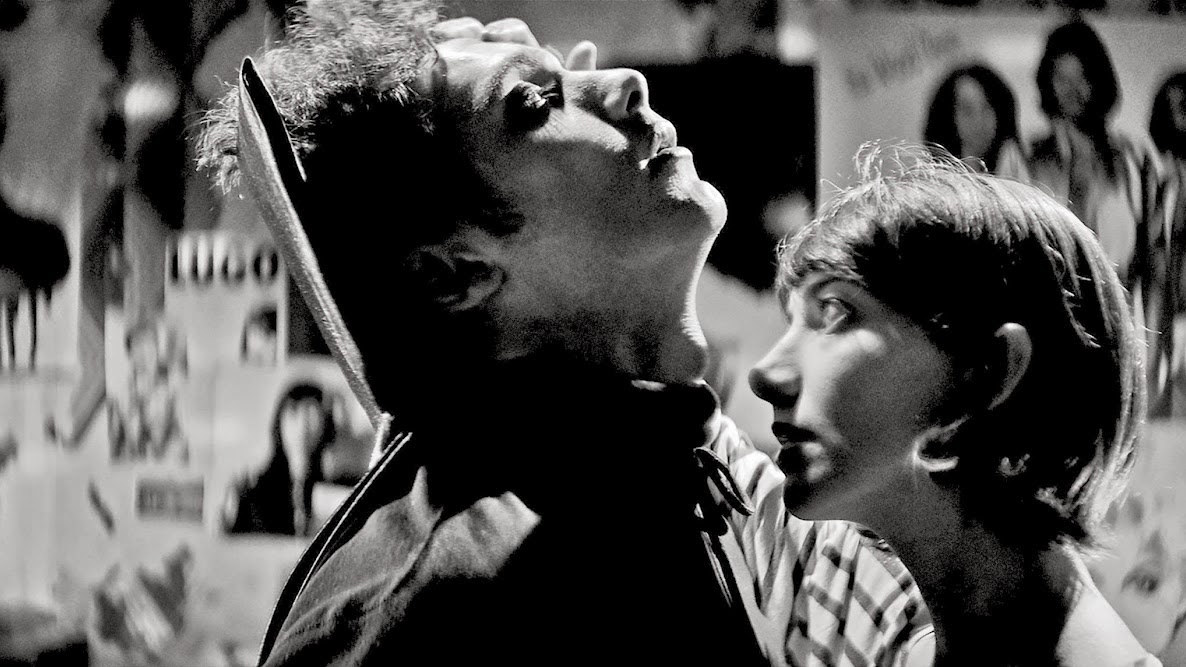
As the never-ending vampire craze marches on, film-makers from around the globe continue to try and dissect our fascination with the seductive undead and their nocturnal habits. British-American-Iranian director Ana Lily Amirpour's unusual vampire flick tip its hat to 1950's Americana, and its setting, the Iranian town Bad City, is like something from a spaghetti western. Part love story, part gothic horror, and part exercise in style over substance, A Girl Walks Home Alone at Night is a beautiful work of art, but like its blood-sucking heroine, doesn't seem to know quite what it is.
Manual labourer Arash (Arash Marandi) spends his life either looking after his heroin-addled father Hossein (Marshall Manesh) or caring for his recently-purchased 1950's car. When Hossein fails to pay his debts to local drug dealer and pimp Saeed (Dominic Rains), Arash's car is taken as collateral. Saeed snorts and bullies his way through life, but soon catches the attention of a mysterious new arrival, a skateboarding vampire wearing a chador. The Girl (Sheila Vand) starts to stalk the streets at night, preying upon men committing evil acts, and even threatens a young boy when he shows early signs of becoming a bad person. As Arash stumbles home one night from a party dressed as Count Dracula, he catches the girl's eye, and they start a curious romance.
With gorgeous black-and-white cinematography and a haunting score, A Girl Walks Home Alone at Night is a treat for all of the senses. The Girl glides on her skateboard masked by her chador like a curious and vengeful spectre of the night, and her night-time haunts are captured beautifully by cinematographer Lyle Vincent. But with its relentless efforts to be cool and iconic - the film has a distinctive hipster vibe - the artfulness of the early scenes gives way to something akin to an extended music video. The soundtrack is certainly decent, but Amirpour often lingers too long on the two would-be lovers as they touch and gaze at each other like two members of different species. Still, on this evidence alone, Amirpour is a director to watch, and how often does an Iranian vampire western come along?
With The Inbetweeners Movie (2011) storming to box-office and critical success, it was never going to be the last time we saw Will (Simon Bird), Jay (James Buckley), Neil (Blake Harrison) and Simon (Joe Thomas) on the big screen. You would expect the sequel to make things bigger and better, but while number 2 certainly feels more 'film-y' than its predecessor, things are kept relatively low-key here. While it thankfully resists any urge to throw in a wild plot and favours something more grounded (the boys are so loveable because they're relatable), it basically repeats the same story as their disastrous holiday to Crete. The destination this time around is Australia.
With Will experiencing unhappiness at University (his house-mates demonstrate their attitudes towards him with a brilliantly worked gag), Simon struggling to deal with his bunny-boiling girlfriend Lucy (Tamla Kari), and Neil doing very little at all, the three decide to join Jay back-packing in Australia. Jay claims to be a top nightclub DJ, living in a mansion with supermodels who wake him every morning with a blow job. He is actually working as a toilet attendant, and is staying in a tent outside his uncle's house. Simon is convinced by old school friend Katie (Emily Berrington) to join her and her backpacking mates to see the 'real side of Australia', naturally with a detour to a water park, and the four tag along where embarrassment and uncomfortable sexual adventures await them.
While Australia is vast and beautiful, we see very little of it here, favouring youth hostels and tourist hotspots that, if anything, makes it look like were watching a feature-length episode on E4. The cast is made up is mainly Britons, and the only main Australian character we meet is Jay's 'shrimp on the barbie' stereotype uncle. The female characters also are resigned to roles of tease and psychopathic harpy, as opposed to the well-rounded female foursome we met in the first movie. Although there's a couple of hilarious set-pieces - shit in the face is always a winner - this just isn't as funny as it should be, with more focus on pushing the boundaries of gross-out humour rather than developing the odd relationship between these best friends who have very little in common. Series creators Damon Beesley and Iain Morris and the main cast have all said that this is it for The Inbeweeners, but I'm sure, despite the mediocrity this time around, they'll be back on our screens at some point in the future.
When Israeli cousins Menahem Golan and Yoram Globus took over The Cannon Group in 1979, cinema had little idea what it was in for. With the company in a dyer financial situation, Golan and Globus began churning out pictures of questionable quality at an unnerving rate, making a small profit with the odd micro-hit that quickly added up. Soon enough, the exploitation pioneers were buying up cinema chains, paying movie stars ludicrous amounts of money, taking over Cannes, and releasing some of the most diabolical and insane movies of 1980's. Electric Boogaloo tells the rapid rise and even faster implosion of the notorious studio, with the people both in front of and behind the camera telling their own anecdotes of the madcap antics that seemed to engulf their every production.
Director Mark Hartley has made a career in documenting exploitation cinema with Not Quite Hollywood (2008) and Machete Maidens Unleashed! (2010), and Electric Boogaloo is undoubtedly his most fun. Packed with clips of such cinematic disasters as Enter the Ninja (1981), Hercules (1983), Breakin' 2: Electric Boogaloo (1984) and Superman IV: The Quest for Peace (1987), the film lambastes Cannon as much as it adores their persistence, levelling the field by also showing us their more interesting efforts - the likes of Lifeforce (1985) and The Texas Chainsaw Massacre 2 (1986), both directed by Tobe Hooper - and the films that were surprisingly great, such as Runaway Train (1985) and Barfly (1987). But this isn't just a collection of clips from some of the most outlandish films ever made, Hartley ensures that the film is highly informative about the 'creative' minds behind the company and the reasons for its inevitable fall from grace.
Amongst the interviewees are John G. Avildsen, Franco Nero, Dolph Lundgren, Robert Forster, Bo Derek and Alex Winter, all telling stories that will have you laughing as well as questioning just how the Israeli's got away with it for so long. Some of it is brutal, with Golan especially coming across as an ego-maniacal tyrant with little care for the safety of his crew and no understanding of the American audience he was targeting. Yet it's all told with a nostalgic fondness, celebrating the fact that these were little guys who actually made it, and doing it all on their own terms. They were, after all, responsible for Chuck Norris's career and the prolonging of Charles Bronson's (although it's questionable as to whether or not that's a good thing), and were eager to give great but fading directors such as Jean-Luc Godard, John Cassavetes and Franco Zeffirelli another shot with complete artistic control. It's a strange story - Golan and Globus clearly adored cinema but didn't seem to understand it - but this is a success story like no other, and insomniacs with little to do at night but watch TV have a lot to thank them for.
Two time Palme d'Or winners and brothers Jean-Pierre and Luc Dardenne have had an almost overwhelming critical success with their back catalogue, scooping up enough awards to fill their living room and receiving enough nominations to make them major players in European cinema. Their films tend to focus on the everyday struggles of existence, telling low-key stories against the backdrop of their native Belgium, making some kind of sociological or political commentary at the same time. Yet despite their success, the Dardenne's have remained in the shadows without the seemingly inevitable emigration to Hollywood. Although they have finally bagged an A-lister in Marion Cotillard, Two Days, One Night is much of the same, a simple yet heart-wrenching tale that paints a picture of life in our economically unbalanced times.
Young mother Sandra (Cotillard) is preparing to re-enter the workplace after battling with depression following an unspoken trauma, when she receives a phone call from her boss who informs her that her workmates have voted to receive their bonus, rather than Sandra being allowed to keep her job. Along with a friend, Sandra convinces her boss to have another vote when she suspects that her colleague may have been influenced, and along with her devoted husband Manu (Fabrizio Rongione), must spend the weekend trying to convince her sixteen co-workers that they should forgo their promised bonus so she can go on supporting her family.
This is undoubtedly Cotillard's film. Despite her superstar status and unworldly beauty, her portrayal of a depressive is entirely convincing. Constantly popping pills, she begins the film in bed, lacking the motivation to even answer her phone. Her most human moment comes in the scene where she turns up the car radio and sings along, much to Manu's surprise and delight as he savours this brief moment of elation. It's a scene that could have seemed like something from a Hollywood rom-com, but thanks to Cotillard's performance and the Dardennes unfussy direction, it manages to deliver an emotional wallop. As Sandra drags herself from one worker to the next, the film becomes slightly repetitive, but achieves feelings of discomfort and sadness in the viewer as we witness Sandra's dignity slipping away. Slightly depressing but oddly optimistic, Two Days, One Night packs an emotional punch and will leave you questioning how Cotillard didn't run away with the Oscar.
The alleged attack on Sony by North Korean cyber-hackers in protest over The Interview's depiction of their divine ruler, Kim Jong-un, did nothing but wonders for the film. Scandalising a film does little more than promote it to a wider audience, so directors Evan Goldberg and Seth Green must have been rubbing their hands together when Sony hit the panic button. It raised questions over the futility of censorship and led to a wonderful middle-finger salute on IMDb, with the average user rating bumped to a perfect 10 before it had even been released. Now that the furore has died down, The Interview can be seen for what it is: a scattershot comedy that raises a few laughs but ultimately lacks the balls required to make a decent satire.
TV producer Aaron Rapaport (Rogen) starts to question his body of work after receiving a dressing down from a former school friend, who is now working on the highly respected 60 Minutes. Aaron works on Skylark Tonight, a glossy chat-show in which his friend Dave Skylark (James Franco) interviews various celebrities about a variety of shallow topics (when rumours break that Matthew McConaughey has been caught having sex with a goat, Dave demands that they get the goat). Dave hears a rumour that North Korean leader Kim Jong-un (Randall Park), who is threatening the U.S. with a nuclear attack, is a big fan of the show, so Aaron sees this as the perfect opportunity to cover some serious news and travels to rural China in the hope of arranging a historic interview.
When the two are approached by CIA Agent Lacey (Lizzy Caplan) to assassinate the chubby dictator, an air-tight plan is set in motion that only these two idiots could possibly screw up. A hand plaster containing a deadly ricin strip is all that it will take, but as seen when Dave lets loose a sneeze during a rehearsal, things most likely won't go to plan. The scene is set for comedy set-pieces aplenty, but the film only occasionally hits its mark. Whether this is down to the growing trend of using improvisation for laughs, the over-reliance on dick jokes, or the inclusion of yet another manifestation of the familiar Seth Rogen persona, The Interview rarely rises above amusing. Personally, I find James Franco's crazy-eyed lunacy both hilarious and quite intense at times, but here even the most hardcore Franco fans may have their patience stretched by his over-acting.
Yet, when it's good, it's very good. When Dave is waltzed away for a night of drinking, womanising, bromanctic heart-to-heart's, and listening to Katy Perry in a huge tank, Franco and Park have great chemistry and Park clearly has a fun time with his character, to the point that it becomes difficult to hate Kim even though it becomes clear that he is a master manipulator. It's a perfectly enjoyable experience for the most part, but is too blighted by haphazard plotting and toothless satire to be the film that Goldberg and Rogen are really capable of. Perhaps some more time spent on the script and less time making it up as they went along would have tightened their grip, and some real courage and ambition may have put it in the same league one of cinema's greatest on-the-nose satires, Charlie Chaplin's The Great Dictator (1940), which left a certain floppy-haired anti-Semite seething
Following in the footsteps of Raymond Chandler and the Coen brothers' Chandler homage The Big Lebowski (1998), Paul Thomas Anderson's adaptation of Thomas Pynchon's 2009 novel of the same name, Inherent Vice, has its permanently perplexed gumshoe trying to navigate his way through a labyrinthine plot that never really makes sense. Joaquin Phoenix's mutton-chopped 'Doc' Sportello is rarely too far away from his next joint in a hungover 1970's, where free love and hippydom is starting to fade and Richard Nixon reigns in the White House. The plot plays second fiddle to the hazy atmosphere and distinct sense of place, so if you find yourself constantly scratching your head as the story 'unfolds', it really doesn't matter.
If Paul Thomas Anderson's work is noticeably divided by 2007's masterpiece There Will Be Blood, when his work seemed to transform from absorbing, oddball ensembles (and even an Adam Sandler comedy) into sweeping, completely hypnotic works of art, Inherent Vice is a curious combination of the two era's. While never spilling over into full-blown comedy, the film makes frequent use of slapstick and moments of surreal absurdity, all delivered with perfect comic timing by its extremely talented cast. However, there's something else going on; a bigger picture that Anderson never really grasps (and doesn't really need to), and an eeriness that may or may not be fuelled by Doc's drug-induced paranoia and bewilderment.
The story kicks off when Doc is visited by old flame Shasta Hepworth (Katherine Waterston), who informs Doc of her affair with real estate developer Mickey Z. Wolfmann (Eric Roberts) and a possible plot to kidnap and commit him to a mental asylum. Doc's investigations force him into constant conflict with former colleague Lt. Detective 'Bigfoot' Bjornsen (Josh Brolin), a buzzcut-donning hippy-hater, who assists Doc with the news that Wolfmann has disappeared without a trace. Doc is also tasked with locating two others - a member of the Aryan Brotherhood who owes money to Black Guerilla Family member Tariq (Michael Kenneth Williams), and missing husband Coy (Owen Wilson), whose wife Hope (Jena Malone) has been informed of his death. The cases all may be linked by a mysterious boat known as the Golden Fang.
The head-scratching antics and doped-up conversations can cause extreme brain fatigue at times, so this is far from Anderson's best work. But Inherent Vice is still distinctly the work of Anderson, who wraps the film in an unpredictable and unsettling atmosphere at times, with the favouring of close-up's, a technique adopted in The Master (2012), heightening the deliriousness of the experience. The real find here is undoubtedly Waterston, whose twist on the femme fatale is played with a free-spirited seductiveness that would drive most men crazy. Phoenix is predictably convincing as the permanently red-eyed and well-meaning private dick, and Brolin overshadows anyone in the same room as him with his intense and idiosyncratic stiff, demanding waffles in bawled Spanish and deep-throating a popsicle much to Doc's disgust. Anyone expecting to be satisfied come the climax may be disappointed, and, like The Master, it can be difficult to love at times, but Inherent Vice is a one-of-a-kind experience; constantly baffling, funny, frustrating and beautiful.
Manners. Maketh. Man. So says the dapperly-dressed secret agent Harry Hart (Colin Firth), right before he bars all exits and proceeds to glass, stab and maim an assortment of goons in that most British of locales, the pub. Kingsman, the latest film from Layer Cake (2004) and X-Men: First Class (2011) director Matthew Vaughn, and his second collaboration with comic-book writer Mark Millar (after 2010's Kick-Ass), is both completely preposterous and ridiculously entertaining, simultaneously mocking and paying homage to the traditional idea of Britishness in an ever-changing society, and no doubt infuriating many a Daily Mail reader in the process.
Harry Hart, a Harry Palmer-like gent, is a Kingsman; a highly secretive and unaligned ring of spies and agents who dress sharply and certainly know their manners. After an operation to rescue Professor Arnold (Mark Hamill) from a possible kidnapping plot sees one Kingsman agent disposed of in a particularly gruesome fashion, Harry is tasked with finding a replacement to fill the spot. The son of a former agent who saved Harry's life years previously, Eggsy (Taron Egerton), is now growing up in a council flat with his layabout mother and abusive stepfather. After a joyride lands him in the police station, Eggsy calls the number on the back of a Kingsman medal given to him by Harry when he was a child, and he is bailed.
Harry enters Eggsy into the trials to become a Kingsman agent along with a bunch of upper-class toffs who refer to Eggsy as a 'pleb'. The group of youngsters must perform a series of tasks under the watchful eye of Merlin (Mark Strong), involving escaping from a flooded room and shooting a dog in the head. Meanwhile, Harry investigates links from recent strange events to internet billionaire Richmond Valentine (Samuel L. Jackson), a flamboyant man with a lisp and a fondness for wearing caps indoors. whose upcoming deal to offer SIM cards with free calls and internet to everybody for free reeks of conspiracy and may be related to an incident involving an exploding head.
When Harry and Valentine have their inevitable face-to-face sit-down moment, the two munch on Big Macs at Valentine's hideously decorated mansion while discussing the joys of the ludicrous Bond movies of old, when things weren't taken so seriously. Kingsman is an obvious Bond pastiche, with deadly gadgets, a henchman wielding an unconventional weapon (in this case - knives for feet), and an outrageous villain. It even comes as a surprise when Firth fails to raise an eyebrow while delivering a double entendre. It shows that these kinds of movies can still be fun without the shadow of uber-seriousness seen in the Daniel Craig Bond's and the recent Bourne movies lurking overhead, while telling the people who will be inevitably offended by the spurts of shocking violence to get a grip and remember that it's only a movie.
However, it did little to prepare me for the movie's key set-piece, which involves a church in Kentucky inhabited by a group of bigoted, right-wing religious types - and Harry - indulge in what can only be described as a pub-brawl massacre. I have never witnessed a scene that would usually be portrayed as a tragedy executed with such glee, with Lynyrd Skynyrd's Free Bird blaring out while men and women are stabbed, shot, bludgeoned, set on fire and, in one particularly grisly moment, get slammed into a wall so hard it snaps their spine in two. It seems to go on and on, but it's an absolutely thrilling moment stocked full of cartoon violence, and will no doubt making some viewers expecting a light and funny experience wholly uncomfortable in the process.
It's sadly not all great. Eggsy's recruitment and training is formulaic and none of the tasks are particularly original or clever. This period of the film also keeps Eggsy and Harry apart for most of it, when their few scenes crackle with chemistry. But ultimately, Kingsman is an intriguing experience. bending to generic tropes while seemingly playing by its own rules. Firth displays a comedic willingness rarely seen and Egerton, who has popped up from nowhere, is a real find as the swaggering Eggsy, a baseball-cap wearing yoof who calls people 'bruv', who in most actors hands would have come across as extremely annoying. Kingsman dabbles in enough extreme violence to cause most viewers to question what they really enjoy seeing on screen, and it's a throwback with a modern twist, celebrating the days when movies could be fun, inexplicable and inconsequential, Just don't watch it with your nan.
There have been precious few movies focusing on the Troubles in Northern Ireland - the conflict between the Nationalists and Loyalists that spread itself sporadically over four decades. The one film that comes immediately to mind is Paul Greengrass's deeply upsetting and infuriating Bloody Sunday (2002), and '71 shares much in common aesthetically. The grainy shaky-cam is omnipresent, and the violence is quick, ugly and brutal. Yet while Greengrass opted to let the true-life story tell itself and avoided making any overt political statements (though it's understandably clear where his sympathy lies), '71 makes a point of showing the many factions fighting and politicking with each other - often scheming within their own parties.
New army recruit Gary Hook (Jack O'Connell) says goodbye to his younger brother, who resides in care, before his battalion is shipped off to a particularly volatile area of Belfast in 1971. Whilst providing back-up during a neighbourhood search for firearms, Gary is separated from his squad after a crowd gathers and tempers start to ignite. Left beaten and bloodied after seeing one of his friends shot dead at close range by a group of Catholic Nationalists, Gary flees and must navigate his way through the streets armed only with a knife. As news of his disappearance spreads throughout the Loyalists, Nationalists and a shady MRF unit led by the creepy Captain Browning (Sean Harris), Gary finds his life in mortal danger from all sides, but finds help in the unlikeliest of places.
'71 is faced with the dangerous possibility of forging fictional entertainment out of a terrible, and relatively recent event, and coming out of it all looking rather insensitive. However, director Yann Demange, making an incredibly mature debut feature, is wise enough to cover the Troubles from all sides. Apart from a select few - including father and daughter Eamon and Brigid (played by Richard Dormer and Charlie Murphy) who take pity on Gary and tend to his many wounds - nobody comes out of it all looking particularly good. Every side has their own agenda, and it usually results in violence. And amidst all the chaos there's Gary, a young lad bewildered by his new surroundings and too inexperienced to properly handle the situation, finding himself become a political pawn as he fights for his life.
As a nail-biter, it's positively riveting. There's a moment that will make you jump out of your seat, but the action is never exploitative. When our leading man finds himself on his knees with a gun to the back of his head, his body convulses with shock and fear, elevating him from your typical movie hero to a real human being. O'Connell, though his character doesn't have much time between attempted assassinations and screaming in pain to say much, continues to impress following his breakthrough in 2013 with Starred Up. It's an extremely physical performance, and O'Connell is shockingly good at looking in genuine pain. Although it sometimes goes a bit overboard - the burning cars at the end of every street and the ever-present roaming aggressors make it seem like an Irish Dawn of the Dead meets Escape from New York - '71 will leave you exhausted, exhilarated and possibly more educated.
Benedict Cumberbatch seems to be making a career out of playing troubled and flawed geniuses, following his huge success as Sherlock Holmes in the TV series Sherlock and the upcoming - and hugely exciting - Dr. Strange in Marvel's upcoming film based on the sorcerer supreme. His finest work so far is in The Imitation Game as code-breaker Alan Turing, the unsung war hero who helped crack the apparently unbreakable Enigma machine used by the Germans during World War II, helping to save millions of lives in the process and shaving years off the war.
Turing was recognised as a prodigy from an extremely young age, and his cerebral superiority isolated him from others. He travels to Beltchley Park, where Commander Denniston (Charles Dance) interviews him as part of a recruitment process to form a cryptology team headed by chess champion Hugh Alexander (Matthew Goode), tasked to break the Enigma code. Turing gets the job through sheer intellectual brilliance, but not through his condescending personality, which instantly puts him at odds with the rigid and impatient Denniston. When he joins the team, which also consists of John Cairncross (Allen Leech) and Peter Hilton (Matthew Beard), he wastes no time in voicing his desire to work alone and dismisses the input of the others as simple time-wasting.
Director Morten Tyldum and writer Graham Moore have not created a work of any great intelligence or subtlety here, and The Imitation Game plays very much by the standard biopic rule book. No great care goes into helping us understand the inner workings of the Enigma itself, or the work done by Turing and his fellow code-breakers, and the film very much relies on great acting and a fast pace. The scenes with Turing, Alexander et al hard at work has them with sleeves rolled-up and chewing pencils whilst staring at boards. We don't quite know what they're doing, but we are certainly urging them to achieve their goal, and, of course, this being a film about Turing, there's only so much of his work that can be squeezed into two hours.
The Imitation Game also helps make the story relevant to the modern day. At the beginning of the film, set after the war, Turing is burgled and his flippant dismissal of the investigating Detective Nock (Rory Kinnear) puts him under suspicion. He is arrested for participating in lurid acts with a man, a crime punishable by up to two years in prison back then. It all ties in nicely with the recent official apology from Gordon Brown, then-prime minister in 2009, and his official pardon by the Queen in 2014. Flashbacks of Turing's early childhood at a boarding school and his relationship with close friend Christopher Morcom (Jack Bannon) are peppered throughout. They help gain an understanding of Turing's love of cryptology and his emerging sexuality, and these scenes are finely played by the young Alex Lawther and do in no way hinder the flow of the film.
But the film's trump card is undoubtedly Cumberbatch. Although his delivery at times can border on stage-y, he has a great weight to his voice. His face exudes such intelligence and charisma that you just want to pick it apart to see what's under there. Keira Knightley too, who I haven't even mentioned yet, is a surprise revelation as Joan Clarke, a fellow prodigy puzzle-solver who, being a woman, had to be hidden away as regulations didn't permit women positions of worthy status. She is fierce and full of life, the polar opposite to the withdrawn and work-focused Turing. Yet the two develop an intriguing and entirely convincing platonic love affair, leading to their short-lived engagement in 1941. It's covered with a thin layer of gloss and a longer running time with more careful story development would have been beneficial, but The Imitation Game is consistently thrilling and engaging, bolstered by a great ensemble.
For a film primarily focused on the relationship between teacher and student at a prestigious music school, Whiplash actually feels like one of the best American thrillers in years. Yes, it is about one young man's struggle for absolute greatness in his field and poses questions about how hard one should push themselves to achieve artistic integrity, but it is the verbal sparring between lead Miles Teller and the scene-stealing J.K. Simmons, and the sight of Teller pounding his drums to dizzying effect while his palms gush with blood, that really causes the heart to race.
Andrew Neiman (Teller) is a first-year jazz drummer attending Shaffer Conservatory, playing as an alternative to core drummer Ryan Connolly (Austin Stowell). When his class is paid a visit by notorious conductor Terence Fletcher (Simmons), Andrew is given a brief moment to shine and is bumped up to Fletcher's class with immediate effect. He again plays as alternative, this time to core Carl Tanner (Nate Lang), and believes he's bound for greatness until he is asked to perform 'Whiplash', a particularly tricky - and extremely fast - jazz number. When Andrew struggles to keep to Fletcher's tempo, he has a chair hurled at him and is emasculated in front of the class. And so begins a tirade of mental abuse as Andrew strives for his master's acceptance.
J.K. Simmons quite rightly won the Best Supporting Actor at this year's Oscar's for his terrifying portrayal of a passionate yet sadistic man. His drive is his desire to a find a new Charlie 'Bird' Parker, who, as the legend tells it, had a drum symbol hurled at his head during a disastrous early career performance. Rather than being deterred, Bird practised his arse off and, of course, the rest is history. Fletcher beats down on his students, shattering them with verbal assaults as they try to prove themselves worthy. Only Fletcher doesn't seem to have a limit; they are not on his tempo, as he repeatedly tells them. He wears black t-shirts, has muscly arms, and a giant, zig-zagging vein pulses on his forehead. He is a formidable presence, highly charismatic and, in the end, almost sympathetic.
Teller is impressive too. A drummer in real life from a young age, he appears in every scene of the film, and pours his blood and sweat (literally) into the extremely physical musical performances. His showdowns with Fletcher provide the spine of the film, but the intimate moments with Andrew alone, pounding his drums as his face twists and turns, that provide the brain. Is the sacrifice truly worth it? We see Andrew push his body to dangerous limits, isolate himself from his family and his concerned father (played by Paul Reiser), and call for an early day on a brief relationship with a girl from his local cinema (Melissa Benoist). Just when the plot seems to be steering into conventional territory at the finale, director Damien Chazelle provides one of the most satisfying climaxes in recent memory. It's a dizzying orgy of cuts, close-up's and sheer style, which is as toe-tapping as it is awe-inspiring.
Taken 3's poster contains what is one of the most reassuring taglines in cinema history - "It all ends here". After voicing doubts over the series' continuity in 2012 following Taken 2, Liam Neeson was convinced by producer Luc Besson and writer Robert Mark Kamen to return to the role of former covert operative Bryan Mills, the overbearing father with skills of a particular kind, once more. The film-makers seem to have learnt their lesson following the previous instalment - which did little more than repeat the events of the first film only with roles reversed - and have changed the formula. Yet, although nobody is 'taken' this time around and Mills faces his foes on home soil, due to sheer bad writing and poor direction, this is quite possibly the worst of the lot.
After discovering she is pregnant, Kim (Maggie Grace) is visited by her father Bryan, who brings an early birthday present. Knowing her father has a gift for overreacting and extreme dramatics, she decides to keep the news a secret. Later, Bryan receives a visit from his ex-wife Lenore (Famke Janssen), who confesses that her marriage to Stuart (Dougray Scott, replacing Xander Berkeley from the first film) is on the rocks, and that she occasionally fantasises about being with Bryan. They decide not to act upon their feelings until Lenore's marital situation is resolved. Bryan is later asked by Stuart to back off as he tries to save his marriage, to which Bryan awkwardly agrees. But after receiving a text from Lenore asking to meet up for bagels, Bryan returns home to (spoilers!) find his ex-wife murdered, and the police closing in around him.
Taking a leaf out of the Fast and the Furious franchise's book, Taken 3 emphasises the themes of the importance and the fragility of family, and even brings Bryan's ex-CIA friends, played by series regulars Leland Orser, David Warshofsky and Jon Gries, to the fore to give the film a heist-y feel. But this requires a subtler brand of film-making, something that Olivier Megaton, director of Transporter 3 (2008) and Colombiana (2011), does not possess the talent to pull off. Everything is played out with all the complexity and grace of a soap opera, as Bryan plods along in a plot that doesn't seem to know where it's going, while the inept police on his trail are routinely battered and out-manoeuvred and lead investigator Franck Dotzler (Forest Whitaker) watches in awe like a child seeing Father Christmas.
As the police never prove to be much of a threat at all, there's no real urgency or suspense to Bryan's innocent-man-on-the-run shtick, and no hint at any form of meaningful relationship forming between he and Dotzler. In fact, this may be the redundant role of Whitaker's career. The dodgy racial stereotypes are present again as ex-Spetsnaz agent Oleg Malankov (Sam Spruell) is thrown into the mix. We know he's Russian because he has ugly tattoo's, wears a gold chain around his neck with an open collar, and sits in hot tubs with each arm around a sexy lady. Megaton hasn't learnt his lesson from Taken 2, so the action scenes are again incoherent and blurred, inducing sea-sickness rather than thrills. There's very little to recommend about this movie at all, apart from perhaps (again) Neeson's performance. Hopefully Taken 3 has killed the franchise for good, and Neeson can move onto projects more befitting his own particular set of skills.

 Jeremy Renner stars as Webb, the goateed, informally-dressed San Jose Mercury News reporter who carries more than a whiff of anti-establishment about him. While investigating the government seizure of drug dealer's property, even when they've been found innocent, he is handed court papers which seem to reveal that a major drug runner is actually a CIA operative. It's a revelation that will change Webb's life, and he is soon on the government's radar when he follows leads to kingpin Rick Ross (Michael Kenneth Williams) and eventually to Managua to meet with cartel boss Norwin Meneses (Andy Garcia). Everything he uncovers seems to suggest that the CIA, committing high treason in the process, is indirectly funding the wave of crack decimating entire neighbourhoods throughout the U.S. Webb reports his findings in a three-part series entitled Dark Alliance, which quickly becomes one of the internet's first viral hits, before the CIA decide to turn his world upside down.