Showing posts with label Thriller. Show all posts

Friday, 19 April 2019

Review #1,470: 'Glass' (2019)

When M. Night Shyamalan's Split came out three years ago, I doubt anybody was expecting what appeared to be a relatively low-key kidnap thriller to eventually reveal itself as a supervillain origin story of sorts, as well as a sequel to the director's finest film, Unbreakable, released a whopping 16 years previous. Despite its flaws, Split was a success with audiences, and it seemed that Shyamalan's reputation - relegated to near-joke status following a string of utter stinkers like Lady in the Water, The Happening and The Last Airbender - was starting to claw its way back to the dizzy heights of his early career, when he was dubbed the next Steven Spielberg after scaring audiences with The Sixth Sense and, to a lesser degree, Signs. Shyamalan doesn't do middle-of-the-road. He's either at the top of his game or testing our patience, but Glass, the inevitable third instalment of this 19-years-in-the-making trilogy, may be the first time he's dabbled with both extremes.

Kevin Wendell Crumb (James McAvoy), the abusive victim whose 23 other personalities serve to protect him, is still at large. His activities have led to the press dubbing him 'The Horde', and he is currently holed up with four young cheerleaders, the next potential victims of his cannibalistic hunger and his most feared personality of all, the hulking 'Beast'. Meanwhile, super-strong David Dunn (Bruce Willis) juggles his time between running a security business with his son Joseph (an all-grown-up Spencer Treat Clark), and fighting crime.

On top of being damn near indestructible, David - named 'The Overseer' by fans of his work - can also sniff out crime by mere touch, and a chance encounter with Crumb leads him to an abandoned warehouse, where the girls wait bound and terrified. The two superhumans slug it out, but before one can outmatch the other, they are set on by a SWAT team directed by the unnervingly mild-mannered psychologist Dr. Ellie Staple (Sarah Paulson). She specialises in cases in which the patient believes they are a comic-book character, and takes David and Kevin to a grungy institution where an old friend awaits them.

The old friend, of course, is Samuel L. Jackon's Elijah Price, aka Mr. Glass, named after the rare brittle-bone disease from which he suffers. Split is still fresh in the memory, but if - like me - you haven't seen Unbreakable since it was released 19 years ago, it may take a while to fill in the blanks, because Shyamalan isn't willing to refresh your memory. Glass was an intriguing (and surprising) foe for David last time around, but would a man who is simply more intelligent than most really be lumped into the same category as a man who can survive a train crash and another who can scale bare walls? Nevertheless, the actors are all on top form, with Willis' gruff, underplayed performance finding a nice balance with McAvoy's manic character-switching, and when he isn't being laboured with exposition, Jackson has fun as the guy who is always one step ahead.

The strength of the performances makes it seem as though all of the movie's budget went into paying the actors to up their game, as it's difficult to judge where else it was spent. The first two-thirds builds an intriguing atmosphere, despite spending too much time pondering the question of what it would be like if superheroes really existed (doesn't every superhero film tackle this in one form or another?). Shyamalan blows it in the last act, delivering an underwhelming showdown that will leave audiences wondering what the hell the writer/director was thinking. It won't have many calling for more from this unexpected cinematic universe, but it's certainly worth a gamble.


Directed by: M. Night Shyamalan
Starring: James McAvoy, Bruce Willis, Samuel L. Jackson, Anya Taylor-Joy, Sarah Paulson, Spencer Treat Clark, Charlayne Woodard
Country: USA

Rating: ***

Tom Gillespie


Glass (2019) on IMDb

Wednesday, 20 March 2019

Review #1,461: 'So Sweet... So Perverse' (1969)

The giallo may have been pioneered by the great Mario Bava and spectacularly refined by Dario Argento, but Umberto Lenzi was developing the techniques and stylings we now know and love from the mid-1960s. Before he became known for schlocky horror trash like Eaten Alive!, Nightmare City and Cannibal Ferox, Lenzi was toying with rich socialites and exploring pulpy, dime-store stories that often involved ridiculous, labyrinthine plots, psychedelic interiors, and beautiful, untrustworthy women. These are all ingredients of the giallo, and some of these early Lenzi efforts hint at a director with an eye for kitschy visuals, something that certainly doesn't come to mind when you watch a native tribesman scalp a poor traveller in the despicable Cannibal Ferox. These eye-catching visuals are certainly present in his 1969 film So Sweet... So Perverse, but there isn't much else to hold the attention in this plodding soap opera.

Handsome, jet-setting socialite Jean Reynaud (Jean-Louis Trintignant) enjoys a lavish lifestyle of cocktail parties and shooting ranges, but he has grown bored and frustrated with the lack of passion in his marriage to the beautiful Danielle (Erika Blanc). To counter this, Jean sleeps with anybody who happens to catch his eye, including his friend Helene (Helga Line), and his head is turned by the woman who has just moved upstairs, Nicole (Carroll Baker). When he hears screams coming from above, he rushes to Nicole's aid, learning that she is stuck in an abusive sexual relationship with her husband Klaus (Horst Frank). As they spend more time together, the couple inevitably fall in love, yet whenever they escape for a weekend, Klaus always manages to track them down. After a night of passion, Nicole reveals that she and Klaus have actually been paid a hefty sum to lure in and eventually kill Jean, but that the one doing the hiring has not yet revealed themselves.

With such a cool-sounding title (yet another famous trait of the gialli), there is nothing sweet and little perverse about the film itself. Argento eventually set a high standard for story-telling and the slow-building of tension within a vital set-piece, and the likes of Lucio Fulci and Sergio Martino added gory violence and a graceful style into the mix, but So Sweet... So Perverse is frustratingly tame, failing to ignite much interest in the plot or generate any excitement when events take a more sinister tone. Where Lenzi ultimately excels is in the glossy cinematography and dazzling interiors, which are garish enough to amusingly satirise the world of these detached characters and their materialistic lifestyles. Images of sun-drenched locations, expensive suits and beautiful, provocative women add a sleazy glamour and seductive glaze to the film, a hedonistic way-of-life Lenzi is happy to indulge as he shrewdly condemns it. It isn't quite enough to prevent So Sweet... So Perverse from becoming little more than a curious cinematic artefact, that ultimately paved the way for better directors to come along and take this new genre by the scruff.


Directed by: Umberto Lenzi
Starring: Carroll Baker, Jean-Louis Trintignant, Erika Blanc, Horst Frank, Helga Liné
Country: Italy/France/West Germany

Rating: **

Tom Gillespie


So Sweet... So Perverse (1969) on IMDb

Sunday, 17 February 2019

Review #1,451: 'Sympathy for Mr. Vengeance' (2002)

Sympathy for Mr. Vengeance kicks off Korean director Chan-wook Park's unofficial 'Vengeance' trilogy, which continues with standout Oldboy, before concluding with the stylish Lady Vengeance. While the violence may seem like it's taken straight out of a movie by Quentin Tarantino or Eli Roth, Sympathy doesn't over-simplify this complex tale of revenge like, say, Kill Bill does, nor does it seem out of place as the intricate narrative spins further out of control and its characters resort to increasingly desperate measures. Park opted for a pulpier approach with the jaw-dropping Oldboy and a more lyrical, hyper-stylised aesthetic with Lady Vengeance, and while this may be down to dropping cinematographer Byeong-il Kim, the quiet realist bent of this trilogy-opener makes it the most accessible, and by far the most thought-provoking entry.

Deaf-mute factory worker Ryu (Ha-kyun Shin) has just been fired from his job. With his sister (Ji-Eun Lim) in desperate need of a kidney transplant and willing donors in short supply, Ryu takes all of his savings to a black market organ dealer gang who not only fail to deliver, but steal one of Ryu's kidneys too. With a donor now found by the hospital but no money to pay for it, Ryu and his radical anarchist girlfriend Yeong-mi (Doona Bae) concoct a plan to kidnap the daughter of rich company president Dong-Jin Park (Kang-ho Song). All seems to be going according to plan until Ryu's sister catches wind of the plot and kills herself, and things unravel quickly from there. Events lead Park to take matters into his own hands, stopping at nothing until he gets his hands on the couple brazen enough to take his daughter. But Ryu, who is down a sister and a kidney, is also on his own revenge mission to find and kill those responsible for setting him off on such a bloody and irredeemable path.

While most revenge thrillers attempt to hold a mirror to its hero and the carnage in their wake, the line between good and bad is drawn pretty clearly. Sympathy for Mr. Vengeance attempts to muddy these lines as much as possible, to the point where any of the characters here could easily be fill the bad guy role in other movies. Ryu and Park are both fundamentally 'good', but are driven to gruesome extremes by emotions too complex to fit neatly into one category or the other. The violence here is shocking. Mostly its warranted, but sometimes the film veers into exploitative territory. An extended torture scene is cruel, and a moment depicting a group of masturbating teens is simply off-putting, although I feel it is meant to be comedic. But the extreme Asian films of the early 2000s were always trying to out-do whatever came before, and Park never allows the violence to become a gimmick or overshadow the themes at play. In the end, you'll be empathising with everybody while questioning their actions, and while it may not reach the dizzying, electrifying heights of Oldboy, Sympathy for Mr. Vengeance makes for an engaging and fresh take on the ugly, cyclical nature of revenge.


Directed by: Chan-wook Park
Starring: Kang-ho Song, Ha-kyun Shin, Doona Bae, Ji-Eun Lim, Bo-bae Han
Country: South Korea

Rating: ****

Tom Gillespie


Sympathy for Mr. Vengeance (2002) on IMDb

Wednesday, 13 February 2019

Review #1,449: 'Bird Box' (2018)

Perhaps it's because the dystopian survival horror has been done to death of late, or maybe it's because John Krasinski's vastly superior and similarly themed A Quiet Place is still fresh in the mind, but there's something strangely hollow about Netflix's latest smash-hit and water-cooler conversation starter. Bird Box became the inspiration for a series of dangerous YouTube stunts that resulted in the social media platform issuing a warning to anyone thinking about taking part in the 'Bird Box Challenge', but sadly, given the film's potential, this is perhaps all it will be remembered for in the years to come. All the pieces are in place for a tense 90 minutes, but Oscar-winning director Susanne Bier's film plays out over a mostly dull 2-and-a-bit hours, with little more than two memorable set-pieces and a strong central performance from Sandra Bullock to hold it all together.

Like an uneasy blend A Quiet Place and The Happening, the planet has been overrun by a mysterious force that causes people to go insane and commit suicide. While the family of Krasinski's memorable horror were forbidden to make any sounds, the players in Bird Box aren't permitted to see. Just one glance at the unknown creatures stalking the streets will cause their eyes to turn a murky purple and instantly seek a way of ending their own life, and when we first meet Malorie (Bullock), she is about to embark on a dangerous journey down river with two children in the hope of locating a sanctuary they heard about over a walkie-talkie. Flash back five years, and the pregnant Malorie witnesses the collapse of society first-hand, as a routine car ride back from the hospital turns into a mindless bloodbath. She escapes into the home of shouty misanthrope Douglas (John Malkovich), and is forced to hole up with a bunch of genre archetypes (played by Trevante Rhodes, Jacki Weaver, Rosa Salazar, BD Wong and Lil Rel Howery, amongst others).

With the doors locked and the windows covered up, it seems like Malorie and her new friends have it made. But for reasons never entirely explained, the creatures don't drive everybody to suicide. If you're crazy, you are instead driven to expose those lucky enough to be hiding out to the mysterious force. It might be an attempt to keep things cryptic, or it may be sheer laziness, but the rules of the game remain frustratingly unexplained. These creatures - who we never see - sometimes announce their presence with a gust of wind, and sometimes not. One person infected will immediately jump out of a window, but another will take minutes to turn, allowing them time to say something meaningful before they croak. The monsters clearly possess the power to move objects, so why don't they at least try to enter homes? We are left to fit the pieces together ourselves, but very little adds up. The likes of Night of the Living Dead and Assault on Precinct 13 sustained a bristly atmosphere by making us care about the characters, but reliable actors like Rhodes and Malkovich are never allowed to be anything more than 'love interest' or 'annoying right-wing nut'. It isn't all bad - one set-piece involving a short car ride to get supplies with only a SatNav computer screen to guide them is wrought with tension - but in the wake of A Quiet Place, which understood the mechanics behind what makes an effective survival horror, Bird Box feels like a missed opportunity.


Directed by: Susanne Bier
Starring: Sandra Bullock, Trevante Rhodes, John Malkovich, Sarah Paulson, Jacki Weaver, Rosa Salazar, BD Wong, Tom Hollander
Country: USA

Rating: **

Tom Gillespie


Bird Box (2018) on IMDb

Monday, 4 February 2019

Review #1,446: 'Widows' (2018)

When 12 Years a Slave took home the Best Picture Academy Award back in 2013, many of us expected director Steve McQueen to go even bigger and more ambitious with his next project. After all, his previous films Hunger and Shame were hardly lacking in scope and weight. It's taken five years to finally arrive, but McQueen's new film Widows, adapted from the 1983 ITV drama series of the same name, takes his work into a whole new territory: the genre movie. Yes, Widows seemingly follows the traditions of the great heist movies of old, with Michael Mann's Thief and Heat coming immediately to mind, taking a crack team and handing them a near-impossible task which they must plan with expert precision if they ever hope to pull it off. It would seem that, on paper at least, McQueen has taken it down a notch, but by taking on such a familiar story, the writer/director has given himself an even greater task.

Widows opens with the immediate aftermath of a heist gone awry. We watch from inside a speeding van as the wounded gang make their getaway, with their gun-toting victims and the police giving chase. The twist is that they all perish in a warehouse explosion, with the stolen $2 million going up in flames with them. The gang's widows are the ones left feeling the aftershocks: not only are they left grieving for their husbands, but the guy they stole from - alderman campaigner and community leader Jamal Manning (Brian Tyree Henry) - wants his money back. Veronica (Viola Davis) takes the reigns when she finds her husband's notebook, which contains a detailed plan for a heist worth $5 million. Two of the other widows - Alice (Elizabeth Debicki) and Linda (Michelle Rodrgiguez) - have their own financial problems, so they agree to take on the job when Veronica comes a-knocking. They really have no choice. It's either find the money, or Jamal's psychopathic brother Jatemme (a frightening Daniel Kaluuya) will kill them and take everything they own anyway.

McQueen's task here is to deconstruct a slice of popcorn cinema and add the kind of punch and social commentary that made his previous work so great. He does so effortlessly, carefully developing each of the leads and making their story believable, later drafting in a fourth member in the form of Belle (Cynthia Erivo), a single mother working multiple jobs to pay the rent. McQueen and co-writer Gillian Flynn (Gone Girl) keep the action fast-paced and brutal, so the 130-minute running time breezes by. If there's a complaint to be had, it's that the film is too short and often feels crammed with too many characters and side-stories. Thrown into the mix is Jamal's campaign opposition Jack Mulligan (Colin Farrell), who has had past dealings with Veronica's husband Harry (Liam Neeson) but has come to the realisation that the political manoeuvring of his elderly father (Robert Duvall) is no longer feasible. Like the series it was based on, Widows may have worked better unravelling over the course of a few episodes. But this may have prevented McQueen from reminding us why he is one of the most important directors working today, as he takes the time to deliver a jaw-dropping shot from the side of a car that shows how quickly a city landscape can shift from dire poverty to luxurious wealth, and a run-in with some trigger-happy police that will remain with you long after the credits have rolled.


Directed by: Steve McQueen
Starring: Viola Davis, Elizabeth Debicki, Michelle Rodriguez, Cynthia Erivo, Colin Farrell, Brian Tyree Henry, Daniel Kaluuya, Liam Neeson, Carrie Coon
Country: UK/USA

Rating: ****

Tom Gillespie


Widows (2018) on IMDb

Monday, 21 January 2019

Review #1,441: 'Bad Times at the El Royale' (2018)

Bad Times at the El Royale, the latest offering from former Buffy the Vampire Slayer, Alias and Lost scribe Drew Goddard, was shrouded in secrecy before its release. The trailer promised a dazzling ensemble, a noir-ish crime aesthetic, and a hotel setting where the characters would likely spend the whole film double-crossing each other or figuring out what the hell is going on. This mystery hinted at something more, even something special, but Bad Times is little more than a sporadically fun throwback to the dialogue-heavy crime capers of the 1990s, which were mostly inspired by Quentin Tarantino's Reservoir Dogs, even though Hollywood had walked on similar terrain going back decades. It reminded me of Ben Wheatley's recent Free Fire, which pitted various groups against each other in a singular location. And just like Wheatley's disappointment, Bad Times tricks you into believing you're on the road to a shocking revelation, before underwhelming as it struggles to live up to its promise.

Inspired by the Cal Neva Lodge & Casino, the El Royale is a kitchy and somewhat shady hotel located on the border between California and Nevada in 1969. A line separating the two states is proudly displayed within, with each side offering different draws. Catholic priest Father Daniel Flynn (Jeff Bridges) is already there when the film begins, apparently staring into space as our next player arrives, singer Darlene Sweet (Cynthia Erivo), a member of a Supremes-esque group on her way to Vegas to make it as a solo act. As the two strike up a conversation and enter their home for the night, slick-haired salesman Laramie Seymour Sullivan (Jon Hamm) is also there, waiting patiently at the reception for a room he is intent on reserving. We are soon joined by the fourth member of this mysterious group, no-nonsense hippy chick Emily Summerspring (Dakota Johnson), who proudly signs the register with a 'Fuck You'.  Eventually they are given their rooms for the night by the nervous Miles Miller (Lewis Pullman), who appears to be the hotel's only employee. As day becomes night, backstories and true intentions unfold before the arrival of unpredictable cult leader Billy Lee (Chris Hemsworth).

Telling the same story from multiple perspectives was a fad that thankfully burnt itself out by the early 2000s as audiences grew aware that they were being forced to watch the same thing over and over again with little to no pay-off. Goddard does his best to mix things up and keep the unravelling story intriguing enough to hold our attention for the most part, but at two hours and twenty minutes, there's a lot of needless padding to unnecessarily wade through for what is ultimately a routine crime thriller. The film creates a major problem for itself in the opening scene by delivering a well-staged set-piece that concludes with an explosion of violence, something the rest of the film never really feels like topping. If you've ever seen Goddard's Daredevil on Netflix, you'll be lamenting the lack of dizzying camera-work and knuckle-bruising action. What ultimately saves Bad Times is the cast, who are all eager to make their mark when given the opportunity from some one-on-one time. Particularly Bridges, who seems to wander in from another film to deliver a heart-breaking monologue that reveals more information about his past, as well as his current state of affairs, and Hemsworth, who repeats his Ghostbusters trick by stealing the entire film with only a modest amount of screen time. Bad Times doesn't justify its hefty running-time, but you'll likely be left remembering its good parts.


Directed by: Drew Goddard
Starring: Jeff Bridges, Cynthia Erivo, Dakota Johnson, Jon Hamm, Chris Hemsworth, Cailee Spaeny, Lewis Pullman
Country: USA

Rating: ***

Tom Gillespie


Bad Times at the El Royale (2018) on IMDb

Friday, 18 January 2019

Review #1,440: 'Eye of the Needle' (1981)

Ken Follett's novel Eye of the Needle was a huge hit for the Welsh author when it was first published in 1978, mixing spy thrills and an unlikely romance as the Allies were preparing for D-Day during World War II. The film adaptation, which followed just three years later, simplifies Follet's text to fit a more comfortable three-act structure, and to deliver a more exciting thriller to audiences who were, at the time, being hit with spy movies left, right and centre. Eye of the Needle isn't your typical adventure yarn however, placing a dead-eyed Nazi spy at the centre of the story and throwing him into the arms of a lonely wife. The result is a thrilling, if often contrived film that is happy to toss logic out of the window as long as it offers the chance for another tense stand-off. The plot eventually lays the outcome of the entire war at the feet of the two leads alone on a remote Scottish island, and somehow gets away with it.

It's London, 1940, and an easy-going Brit named Henry Faber (Donald Sutherland) chats with a friend as young men around them head off to war. Nobody yet knows it, but this charming Englishman poses a greater threat to the Allies' war effort than any enemy overseas, as he is actually Heinrich Faber, a Nazi spy known as 'the Needle' who is transmitting information back to his superiors in the Fatherland. When his nice old landlady accidentally catches him speaking German into a radio, Faber brutally stabs her in the belly with a stiletto, the weapon of choice that earned him his nickname. Fast forward four years later, and British Intelligence are finally on to him, and must track him down before he reveals their country's biggest secret to the enemy. Faber has obtained photographs of an airfield full of fake plywood planes, designed to convince Hitler and his spies that the invasion will arrive in Calais, and not the beaches of Normandy, giving the Nazis a chance to end the war swiftly and brutally. However, on his journey back home, Faber's boat is smashed onto the rocks by high wind, washing him up on the nearby Storm Island, which has a population of 4.

The early scenes are juxtaposed with the happy wedding of Lucy (Kate Nelligan) and David (Christopher Cazenove), a young couple whose special day comes to an abrupt end when they crash their car on the way to their honeymoon. The accident results in David having his legs amputated, causing him to grow bitter and angry, choosing to spend most nights getting drunk with the alcoholic lighthouse keeper as his wife looks after their son and longs for affection. It's here that the two stories meet, with Faber washing up on the island and playing the role of mysterious stranger. There's an erotic scene between Faber and Lucy that is now dated and rather awkward, but mostly their dangerous romance is developed with care. They are stripped down as two lost souls both physically and mentally trapped, and the two leads are terrific. Faber is still dedicated to the cause however, and, as he coldly dispatches anyone that stands in his way, director Richard Marquand never lets us forget his evil nature. Yet the way the plot is forced into place to allow these strangers to cross paths is clunky to say the least. It seems strange that Faber couldn't simply radio the information back to Germany before he sets out to deliver the physical evidence, and seemingly clever characters do incredibly stupid things to allow themselves to be stuck with the needle. It's worth seeing for the fantastic central performances and the down-and-dirty atmosphere, but Eye of the Needle doesn't do quite enough to stand out in the plethora of spy movies from the same era.


Directed by: Richard Marquand
Starring: Donald Sutherland, Kate Nelligan, Ian Bannen, Christopher Cazenove
Country: UK

Rating: ***

Tom Gillespie


Eye of the Needle (1981) on IMDb

Thursday, 27 December 2018

Review #1,433: 'Dead End Drive-In' (1986)

After the global success of low-budget exploitation flick Mad Max, the Australian film industry underwent a revolution, built mainly around fast cars, a rebellious attitude, and a satirical look at the 'dangerous' youth of the day, all within a post-apocalyptic, near-future setting. One of the directors at the forefront of the Ozploitation movement was Brian Trenchard-Smith, the man behind such cult classics as Turkey ShootBMX Bandits and The Man from Hong Kong. The director referred to his best work, Dead End Drive-In, as a mixture of Mad Max and Luis Bunuel's The Exterminating Angel, and although he was clearly over-reaching by comparing his film to two established classics, there's much more going on here than punk teenagers, souped-up classic cars and boobs. Yes, Dead End Drive-In is just as concerned with social and economic commentary as it is with loud music, B-movies and vehicles smashing into each other.

In the near-future, society has crumbled amidst economic collapse, and small gangs of mohawked ne'er-do-wells scour the cities for car parts. With manufacturing at an all-time low, cars are now a commodity so criminals cruise the streets looking for accidents in the hope of swiping rare parts for profit or to pimp out their own method of transportation, while rival salvage companies battle it out for scraps. Workout junkie Crabs (Ned Manning) has little trouble getting his hands on an impressive ride - his burly older brother possesses a 1956 Chevy - and he manages to persuade his sibling to loan him the chick-magnet for a date with his girlfriend Carmen (Natalie McCurry). A night at the flea-pit local cinema followed by a night of steamy passion is clearly on Crabs' mind, but this particular drive-in has a little secret. Surrounded by high fences and S-roads that don't permit walking, the drive-in is actually a concentration camp that keeps its inhabitants - horny, trouble-making teenagers - prisoner. While the residents of the graffiti-laden hellhole appear content with their responsibility-free existence of booze, drugs and sex, Crabs does everything he can to persuade the creepy owner (Peter Whitford) to help him escape.

Described as a sort-of offbeat Mad Max clone upon its release, the comparisons to George Miller's grindhouse favourite seem a little lazy. While both films share a fetish for automobiles and a concern for the economic climate, the only other similarities are the accents and a grungy aesthetic. Dead End Drive-In doesn't litter the story with action scenes, and although it is book-ended by some impressive stunt-work, the film takes it down a gear during the middle section to explore the madness of Crabs' situation. The idea of a makeshift concentration camp for the apparently disenchanted youth is interesting enough, but the crazy idea that the prisoners within the walls are in fact happy to stay lend the film a unique and rather pleasantly maddening tone. If you've ever been stuck within a dream where nobody can understand you, you'll empathise with Crabs' plight, despite his unfortunate nickname. While the dip in pacing may infuriate exploitation fans hoping to see leather-clad warriors of the apocalypse battling it out on jacked-up vehicles, it only increased my curiosity, and while Trenchard-Smith doesn't explore its themes with enough care to make the film truly resonate, Dead End Drive-In is one of the more thought-provoking and off-kilter efforts from the age of Ozploitation.


Directed by: Brian Trenchard-Smith
Starring: Ned Manning, Natalie McCurry, Peter Whitford, Wilbur Wilde
Country: Australia

Rating: ****

Tom Gillespie


Dead End Drive-In (1986) on IMDb

Wednesday, 12 December 2018

Review #1,428: 'The Predator' (2018)

Despite its unwavering popularity through the decades, the Predator franchise has failed to find its feet ever since it took off in 1987 with Arnold Schwarzenegger and Carl Weathers battling an alien foe in the jungles of South America. It's sequel, Predator 2, was an overblown mess, and it took twenty years for the threequel, Predators, to arrive and instantly be forgotten. The thirty years that have passed ever since John McTiernan's original seemed to have been one constant effort to steer the series back on course, so it must have seemed like a no-brainer to hire Shane Black, who played one of Arnie's unit first time around, to reignite some interest in the rasta-haired intergalactic travellers. After all, directors with their own sense of style and vision are rarely hired for big-budget blockbusters, and perhaps Black could inject the same level of wit and zip as he did with the likes of Kiss Kiss Bang Bang and The Nice Guys.

It pains me to say this, but how tragically wrong they were. This effort to reboot a dying franchise fails on almost every level, from the recycled plot and cast of stock characters, to the forced humour that never so much as raises a giggle, despite the actors' attempts to convince you that they're all having a good time. From the get-go, Black hits us with gun-toting action and CGI blood-spraying, and does so at an alarming rate. One can only wonder if Black had hoped we would be too distracted by the carnage and endless exposition to realise how stupid the film actually is, but it's hard not to notice when the main character begins the film by mailing alien tech back to his family from Mexico under the government's nose. Former army sniper turned mercenary Quinn McKenna (Boyd Holdbrook) is busy on a retrieval mission when he witnesses an alien craft crash to Earth. His crew are wiped out, but Quinn manages to flee with an alien helmet which he sends to his estranged wife Emily (Yvonne Strahovski) and autistic son Rory (Jacob Tremblay). While Quinn is interrogated by the government, the Predator is taken to the lab for experimentation. Yes, you've already guessed what happens next.

As the Predator wreaks havoc and more arrive for the fight, Quinn is thrown in with a bunch of military prisoners, who all are crazy in their own way. They consist of Trevante Rhodes, Augusto Aguilera, Thomas Jane, Keegan-Michael Key and Alfie Allen, and provide most of the film's 'humour'. They are supposed to be lovable but really aren't, but Quinn evidently trusts them enough to leave them alone with an unconscious Olivia Munn. Had they been given a personality, or some actual funny lines of dialogue, the gang may have helped cover up many of The Predator's flaws, but the film has the same uncomfortably conflicted feel of Black's Iron Man 3, which struggled to juggle the director's independent sensibilities with the restrictions of a franchise. It's flashy, colourful and rarely pauses for breath, but doesn't have a style of its own. People are thrown into huge objects to get up like nothing has happened, there's military tough-guy speak, and somebody at one point even yells "get to the chopper!". It's a bunch of thrown-together Easter eggs and action beats you've seen a million times before. I doubt this is the last we've seen of the extraterrestrial trophy-hunter, but it's certainly time to lay him down to rest for a while


Directed by: Shane Black
Starring: Boyd Holbrook, Trevante Rhodes, Jacob Tremblay, Olivia Munn, Sterling K. Brown, Keegan-Michael Key, Thomas Jane, Augusto Aguilera
Country: USA/Canada

Rating: **

Tom Gillespie


The Predator (2018) on IMDb

Thursday, 22 November 2018

Review #1,423: 'Mission: Impossible - Fallout' (2018)

Over the course of twenty-odd years, Tom Cruise has clung to the side of an aeroplane as it soared into the sky, had a knife held millimetres away from his eyeball, and ran down the side of the world's tallest building, all for the sake of the Mission: Impossible series, a franchise that no-one would have dreamt would still be packing cinema screens two decades later when it began back in 1996. Cruise's enthusiasm for putting himself at genuine risk of death has seen these movies continuously trying to outdo each other, and the sixth in the series, Christopher McQuarrie's Fallout, is not only the most ambitious in scale and clinical in its execution, but may also just be one of the finest action pictures ever made. I never believed the sight of Cruise running across the outside of the 119th floor of Dubai's Burj Khalifa would ever be topped, but Fallout delivers not one but two superior set-pieces, and that's not even mentioning the rooftop-hopping that saw Cruise break his leg and carry on with the scene. 

Ethan Hunt and his Impossible Mission Force team are tasked this time with intercepting three plutonium cores in Berlin before they fall into the hands on an organisation called The Apostles, a terrorist group made up of survivors from The Syndicate. Joined by Luther (Ving Rhames) and Benji (Simon Pegg), the team fail in their mission when Hunt refuses to let one his own die. As the terrorists make off with the plutonium to sell to a mysterious buyer called John Lark, Hunt receives a dressing-down from CIA director Erika Sloane (Angela Bassett), who is furious at their failure to secure the weapons of mass destruction. She forces Hunt to take on CIA operative August Walker (Henry Cavill) as a shadow, and the odd couple head off to Paris to track down Alanna (Vanessa Kirby), an arms dealer they believe has connections to Lark. Double-crosses and high-speed chases ensue, as well as Tom Cruise's trademark run, as all paths start to lead back to Solomon Lane (Sean Harris), the formidable villain from last time.

Christopher McQuarrie is the only director to have returned for a second stab at the Mission: Impossible gig, and the choice seems odd given how lacklustre Rogue Nation proved to be. But whatever he failed to grasp last time around he confidently nails here. McQuarrie and Cruise pull out all the stops, executing everything from a terrifying night-time sky-dive to a helicopter chase that sees Cruise plummet from the chopper's rails to the cargo swinging 40 feet below like veteran masters of the genre. The sheer risk and danger of some of the stunts pulled off here is gobsmacking, and Cruise can now comfortably sit alongside the likes of Jackie Chan as one of the greatest action stars ever. Cruise isn't the only star of course: Cavill particularly impresses as the deadpan slugger with a moustache so impressive it manage to cock up Justice League's re-shoots. Rhames and Pegg, who are both given larger roles than usual, can now banter like colleagues who have worked with each other for four movies, and reliable support is given by the likes of Rebecca Ferguson, Alec Baldwin and Michelle Monaghan. At two and a half hours, it can be argued that there's at least one climax too many, but I doubt anyone will be checking their watches. 


Directed by: Christopher McQuarrie
Country: USA/China/France/Norway

Rating: ****

Tom Gillespie


Mission: Impossible - Fallout (2018) on IMDb

Monday, 5 November 2018

Review #1,416: 'Mandy' (2018)

Horror fans were foaming at the mouth as soon as the first trailer dropped for Panos Cosmatos' Mandy - a hallucinogenic mash-up of revenge thriller and psychedelic horror featuring a Nicolas Cage well and truly off the leash. And for good reason. Whilst Mandy may not have much to offer in terms of plot and actual meaning, as a purely sensory experience, this 80's heavy metal album come-to-life will get certainly get a rise out of you, whether you're on the film's side or not. The story concerns lumberjack Red Miller (Cage) and his artist girlfriend Mandy (Andrea Riseborough), who live in peaceful solitude in a cabin in the woods. They talk of their favourite planets and never leaving their isolated home, but their happy existence is soon to be pulled away from them. Nearby, a cult led by failed musician Jeremiah Sand (Linus Roache) happen to be passing through, and once the Manson-like prophet lays his eyes on Mandy, he simply must have her.

Sand trusts his second-in-command Brother Swan (Ned Dennehy) to kidnap Mandy and bring her to him, and he does so by summoning a band of leather-draped demons who look like they've stumbled off the set of the latest Hellraiser film. They tie Mandy up and force-feed her LSD in preparation for Jeremiah's grand seduction, which includes playing her his terrible music and flashing his naked torso. When Mandy doesn't play ball, they punish her insolence in front of the bound Red, who watches in horror as his one true love is snatched away forever. They leave Red for dead, only the gruff lumberjack manages to escape to plan his bloody revenge. Handed a small arsenal of brutal weapons by his friend Caruthers (Bill Duke), Red aims to take out the bikers first, before moving on to the hippy freaks. What unfolds is a sequence of battles played out almost like a computer game, as Red cuts, chops and snaps his way up to the main target. This is the kind of film in which an early sighting of a chainsaw is of a promise of its reappearance later down the line (and it'll be way better than you expected).

If you've ever slipped on some headphones, blasted out some classic heavy metal, and dropped a shit-ton of LSD, then you'll have likely experienced something similar to Mandy. Backed by a magnificently industrial score by the late Johan Johannsson, Mandy is a trip from start to finish. The first hour moves at a crawl, moving its characters into place and easing us into this strange world of scorched red skies and masked hitmen in gimp suits, before unleashing a second hour of hardcore violence and Nic Cage at his most Nic Cage-iest. The scene in which Cage breaks down in a bathroom drinking whatever vodka he doesn't pour into his gaping wounds while not wearing trousers would usually be the stuff of unintentional comedy gold, but it's actually damn fine acting, closer to Face/Off crazy than Dog Eat Dog crazy. Little makes sense and the characters spit hokey dialogue like something out of the fantasy novels Mandy loves so much, but the whole experience is so cerebral and in-your-face that it's difficult not to get swept up into the madness. It will divide most down the middle, between those who will find the pace and intensity off-putting and those who will appreciate the VHS-murkiness of it all. Personally, I'm somewhere in between. At two hours, it's too long, but there's a breathtaking 100-minute movie in there somewhere.


Directed by: Panos Cosmatos
Starring: Nicolas Cage, Andrea Riseborough, Linus Roache, Ned Dennehy, Richard Brake, Bill Duke
Country: USA/Belgium/UK

Rating: ***

Tom Gillespie


Mandy (2018) on IMDb

Sunday, 4 November 2018

Review #1,415: 'Crimson Peak' (2015)

If you were to task both critics and general audiences with naming their favourite active directors, I would place a bet on Guillermo del Toro being the first name on the lips of many. The Mexican monster-lover has the unique ability to juggle both passion projects that clearly mean a lot to the filmmaker, and large-scale blockbusters to appease the studios, and this one-for-me, one-for-you approach has allowed to him to bring to the screen some incredibly personal stories which would have otherwise been left to linger in the director's imagination. So for every The Devil's Backbone, we got a Hellboy, and for every Pan's Labyrinth, we got a Pacific Rim. 2015's Crimson Peak was del Toro's first attempt at blending these two styles. Movie lovers could admire the breathtaking visuals and attention to detail, while the general audience could enjoy a juicy gothic mystery featuring some of the industry's most attractive stars. The result is a very mixed bag.

In turn-of-the-century New York, heiress Edith Cushing (Mia Wasikowska) dreams of becoming an author, but finds herself dissuaded at every turn by the men holding the power. Her father, wealthy businessman Carter (Jim Beaver), is visited by English travelling salesman Thomas Sharpe (Tom Hiddleston), who is seeking investment for his clay-mining machinery. The dashing bachelor is shut down by Carter, but catches the eye of Edith, and two begin a romantic affair. When Carter dies, Edith marries Thomas and travels to his home Allerdale Hall in Cumberland, a decaying mansion dubbed 'Crimson Peak' due to the red clay oozing up from the ground. Joining them will be Thomas' ice-cold sister Lucille (Jessica Chastain), who seems to harbour a resentment for her brother's new wife. But Crimson Peak has stories to tell, and Edith's unexplained connection to the spirit world means that she is frequently visited by hideous tormented ghosts carrying warnings. Back in the U.S., former suitor Dr. McMichael (Charlie Hunnam) is conducting his own research into the Sharpes and their shady history.

Del Toro has always excelled at building tangible worlds which seem to live and breath alongside the characters, and the rotting interiors of Allerdale Hall is one of the director's greatest achievements. Lush with exquisite detail, the house pulses with menace, tormenting Edith with locked doors and taps that spurt red before running clear. There's even a hole in the ceiling that allows snow to gather at the bottom of the main staircase, and the splashes of bold colour evoke the likes of Mario Bava, Dario Argento and Hammer. It's a feast for the senses, and it's just enough to distract from the mediocrity of the main story and the inclusion of CGI spectres. The mystery unravels quite beautifully, but the problem is that you'll already be two or three steps ahead. Nothing that happens in Crimson Peak will come as a surprise, especially after you've quickly realised that anyone with an English accent can't be trusted. The film loses its physicality somewhat when attempting to deliver the scares, as twisted ghosts crawl and squeal their way towards Edith. Computer-generated apparitions will never be scary, and Crimson Peak packs way more impact when catching you off guard with moments of extreme violence that will make you wince and cry out without averting your gaze. Rank this somewhere above Pacific Rim and below Hellboy II.


Directed by: Guillermo del Toro
Starring: Mia Wasikowska, Tom Hiddleston, Jessica Chastain, Charlie Hunnam, Jim Beaver, Burn Gorman
Country: Canada/USA

Rating: ***

Tom Gillespie


Crimson Peak (2015) on IMDb

Monday, 29 October 2018

Review #1,412: 'Predator 2' (1990)

John McTiernan's Predator introduced a new horror icon. With its flowing dreadlocks, formidable size, arsenal of deadly, otherworldly weapons, and a face that can only be described as "one ugly motherfucker," the Predator quickly garnered a legion of fans, who were all the more titillated by the idea that the creature could in fact exist in the same universe as the xenomorphs from the Alien franchise. It hardly had the critics salivating, but Predator quickly became a cult classic, and is now considered one of the finest action films of the 80's. The follow-up, released three years later, is considerably less impressive. Stephen Hopkins' Predator isn't a bad film by any stretch of the imagination, but is about as middle-of-the-road as sequels come. It's sufficiently action-packed and certainly violent enough to appease the horror crowd, but ultimately this is a re-hash of the first film with the action transported from the jungles of South America to the urban jungle of a near-future Los Angeles.

It's 1997, and L.A. has become a playground for violent gangs. Shoot-outs occur in the streets in broad daylight, and the warring Colombian and Jamaican gangs don't hesitate to take down as many cops as they can. Lieutenant Mike Harrigan (Danny Glover) is perhaps the city's best hope: a plays-by-his-own-rules type who will always lead the charge into the gunfire. When a group of Colombian thugs turn up massacred by something of considerable size and strength, Harrigan makes it his personal mission to take down this mysterious hostile. The Predator is back in town on safari, and it seems that both gang members and the police are on its hit list. Harrigan and his crew - Danny Archuleta (Ruben Blades), Leona Cantrell (Maria Conchita Alonso) and Jerry Lambert (Bill Paxton) - know that something is amiss when they discover an alien artefact hidden among the carnage, and especially when secretive F.B.I. agent Peter Keyes (Gary Busey) starts sniffing around. As the bodies of his friends and enemies start to pile up, Harrigan will stop at nothing to take the extraterrestrial down, but how can he outwit a foe that has him outgunned and outsmarted?

The lack of any kind of new story means that Predator 2 lives and dies by its action. Thankfully, there is plenty of it, and it's about as gory as they come. Spines are torn from their body, hearts are ripped out of chests, and in a particularly disturbing moment, the Predator buffs the skull of his latest victim to display in its trophy room. No matter how predictable the story becomes or how ridiculous the dialogue is, nobody could claim that Predator 2 is boring. But action doesn't equal tension, and this sequel misses the mystery of the first film, when the threat was always lurking out of sight, watching his clueless target stagger about in harsh terrain. Here, the Predator jumps straight into the mix, hacking, shooting and impaling anyone in its way. It also misses the presence of Arnold Schwarzenegger and his occasional tongue-in-cheek quips. The Governator was no Laurence Olivier, but his presence is undeniable. As watchable as Glover is, who here is more akin to Lethal Weapon's Riggs than his very own Murtaugh, he ain't no Arnie. It also doesn't help that he is one of the stupidest cops ever to grace the screen.  It's lazy and forgettable, but dumb and fun.


Directed by: Stephen Hopkins
Starring: Danny Glover, Gary Busey, Kevin Peter Hall, Maria Conchita Alonso, Rubén Blades, Bill Paxton, Robert Davi, Adam Baldwin
Country: USA

Rating: ***

Tom Gillespie


Predator 2 (1990) on IMDb

Sunday, 21 October 2018

Review #1,408: '22 July' (2018)

British writer and director Paul Greengrass has spent half of his whole career documenting real life tragedies with equal amounts of verve and respect. The likes of Bloody Sunday, United 93 and Captain Phillips were equally difficult to watch and to look away from, paying tribute to those caught up the real-life events, who are likely still living with the traumatic memories, yet delivering an emotional, visceral cinematic experience at the same time. The two styles should contradict each other, but they really don't, and it's what makes Greengrass a special film-maker. But even he couldn't escape the controversy that came with his latest film, 22 July, a re-telling of the 2011 terrorist attack on Norway's Utoya island, an event still fresh in the minds of anybody old enough to remember the news reports. Is the film simply too soon? And does a Brit even have the right to try and make sense of a Norwegian tragedy?

22 July arrives mere months after Erik Poppe's Utoya: July 22, a Norwegian production that placed a fictionalised character at the centre of the massacre as it unfolds in real-time using one long take. Poppe's movie was even more controversial, raising questions about the ethics of applying such cinematic flair to an event that still feels like an open wound to many. Greengrass is more concerned with the aftermath: how Norway reacted as a country and how the actions of Anders Behring Breivik are still felt throughout the world. The massacre itself, which took the lives of 69 people attending a Labour Party youth camp, is mercifully short, but undeniably horrifying. One attendee in particular stands out: the bright, articulate and well-liked Viljar (Jonas Strand Gravli). We first meet him delivering a short speech about the ethnic diversity of his own town, speaking out in favour of everything Breivik hates. At the same time Breivik, played with a haunting steeliness by Anders Danielsen Lie, has posted his online manifesto and is fitting a home-made bomb to a van outside the Prime Minister's office. Whilst on his journey to Utoya, Breivik had already murdered 8 people.

Viljar survives the attack but is left blind in one eye and with bullet fragments lodged dangerously close to his brain. While Breivik is processed through the courts, Viljar provides a much-needed ground-level view. Through Viljar, 22 July also finds its emotional beats, as his physical and emotional recovery builds towards a final confrontation in court, where Breivik is also granted the opportunity to say his piece. The system may have given Breivik some time in the spotlight, Greengrass certainly doesn't, at least not in the way the delusional, self-styled "leader of men" no doubt envisioned. It commends both due process and Norway's refusal to allow events to descend into a circus. As a result, Breivik is systematically broken down and disarmed, and if the film is ultimately about our truly dark times, some satisfaction can be gained by watching a monster stripped of his delusions of grandeur. Greengrass trips up with his decision to shoot the film in accented English, going half in the right direction by casting unknown Norwegian actors but stopping short of full immersion. For such an otherwise authentic document, it's a baffling decision, but 22 July is still brave, powerful film-making that reminds us with genuine concern of what little has changed since that day seven years ago.


Directed by: Paul Greengrass
Starring: Anders Danielsen Lie, Jonas Strand Gravli, Jon Ă˜igarden, Maria Bock, Thorbjørn Harr
Country: Norway/Iceland/USA

Rating: ****

Tom Gillespie


22 July (2018) on IMDb

Monday, 15 October 2018

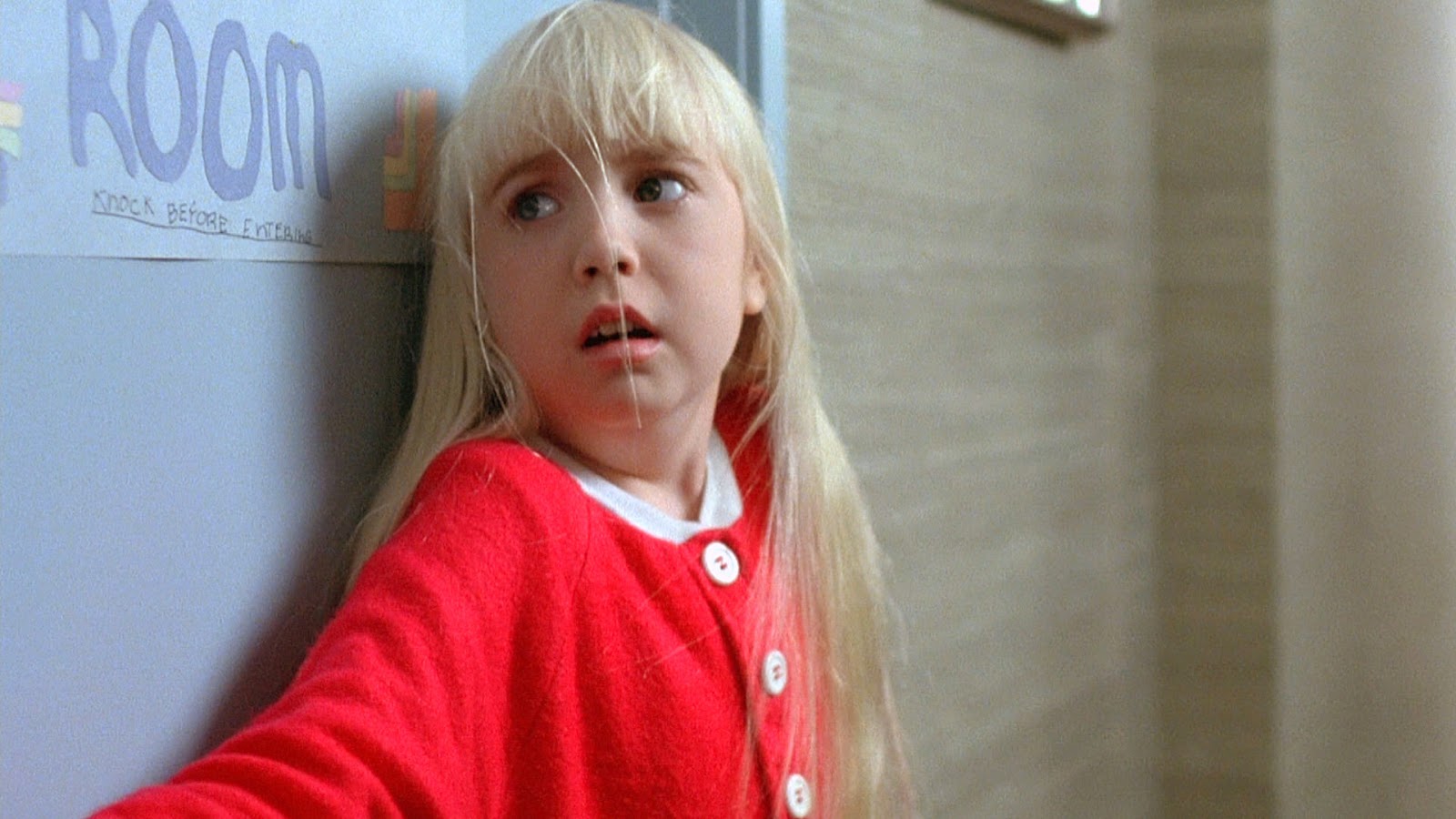
Review #1,407: 'Poltergeist III' (1988)

The promotion and subsequent release of Poltergeist III was overshadowed by the death of 12 year-old star and face of the franchise Heather O'Rourke, from cardiac arrest and septic shock brought on by a misdiagnosed intestinal stenosis. The studio, who understandably wanted to avoid any claims that they may be looking to take advantage of such a devastating tragedy, kept advertising to a minimum, although they had previously pressured director Gary Sherman into completing the film against his wishes. Poltergeist III was a critical and commercial flop, putting an end to the franchise that should have really stopped with Tobe Hooper's original. A lack of promotion cannot be blamed entirely though, as the rushed final edit is an incoherent mess with precious few links to the mythology established in the first two entries. They should have known they were in trouble when original stars JoBeth Williams and Craig T. Nelson turned down the chance to return.

In an attempt to freshen up the series, the action is moved from a suburban home to a luxury skyscraper: A 100-story colossus complete with its own mall and art gallery. In charge of the tower is Bruce Gardner (Tom Skerritt), the new husband of Patricia (Nancy Allen) - the sister of JoBeth William's character. As well as having to adapt to newly married life, Pat is also having to deal with her daughter from a previous marriage, Donna (Lara Flynn Boyle), so the last thing she needs is the arrival of spooky Carol Anne (O'Rourke), who seems to bring trouble with her wherever she goes. I don't recall an explanation given for why the Freeling family would suddenly send the daughter they almost lost twice to an auntie they've never mentioned, but the script by Sherman and Brian Taggert isn't concerned with making too much sense. It's happy to simply drag out the franchise as far as it will go and ignore what made the previous films so popular with audiences. The Freelings always fought off the supernatural forces at play with their unbreakable family bond, but Poltergeist III sidesteps establishing this newly family unit in favour of lazy jump shocks.

The Gardner's don't seem particularly adept at taking care of a traumatised 12 year-old either, happily leaving her in the care of their irresponsible teenage daughter and enlisting her in a special school, where sceptical psychiatrist Dr. Seaton (Richard Fire) believes the spooky events experienced by Carol Anne and the people around her are brought on by some kind of mass hypnosis. This leaves plenty of time for Carol Anne to be harassed by Reverend Kane (Nathan Davis, replacing the late Julian Beck), who still wants her to lead them all into the light. The film quickly dissolves away into a series of set-pieces plucked at random from Cinema's Big Book of Characters in Peril, involving falling through ice and killer cars revving in the underground car park. Without the family bond so purposefully developed over the course of the last two films, these moments lack any dramatic weight. Sherman would prefer to have the characters yell each other's names repeatedly at the expense of actual dialogue, and in one case is happy to toss away one supporting character without any explanation at all. On the positive side, there are some fantastic 'in camera' effects deployed as the spirits use mirrors to communicate with the living world, and the presence of Zelda Rubinstein and Tom Skerritt's moustache is always a pleasure.


Directed by: Gary Sherman
Starring: Tom Skerritt, Nancy Allen, Heather O'Rourke, Zelda Rubinstein, Lara Flynn Boyle
Country: USA

Rating: **

Tom Gillespie


Poltergeist III (1988) on IMDb

Saturday, 13 October 2018

Review #1,406: 'Upgrade' (2018)

Leigh Whannell's Upgrade feels like the type of film made for Netflix; a sort of mid-level science-fiction story constructed around one intriguing idea, and bulked up with elements from other, better genre movies. It's also the type of film I would consider for a few seconds whilst flicking through my Netflix queue, before opting for something else with a more compelling premise. Set in the very-near future, the film's main hook comes from a game-changing microchip that, when surgically planted in a willing - or unwilling host - allows body and foreign body to communicate with each other. Of course, it doesn't stop there. The implant can also turn down your nerve endings so you don't feel pain, and - with the host's permission - can fully operate your body and turn you into a hand-to-hand master. This comes in handy for grease monkey Grey Trace (Logan Marshall-Green) when the plot demands he seeks revenge on some baddies.

As well as possessing one of cinema's all-time most ridiculous names, Grey spends his time fixing classic muscle cars and drinking beer. This near-future is complete with iHomes and self-driving cars, but Grey is far more comfortable getting his hands dirty. His wife Asha (Melanie Vallejo), on the other hand, works for one of the big tech companies and has fully embraced this new digital, hands-free world. Opposites do attract however, and Grey invites his wife along to the isolated home of tech genius Eron Keen (Harrison Gilbertson), his most high-profile customer. Eron, who is clearly inspired by Elon Musk, is withdrawn, strange and undeniably brilliant, and also eager to show off his latest invention: a microchip he dubs "a new, better brain." On the journey home, their car experiences a catastrophic error, sending the couple down dark streets before crashing and overturning. Injured, they are then preyed upon a gang of masked criminals, who murder Asha and cripple Grey. Waking up paralysed from the neck down and understandably angry, Grey is offered a solution when Eron makes a rare public appearance at the hospital.

If all of this sounds familiar, it's because you've seen it before in countless other movies. Upgrade's greatest achievement is that it doesn't make you wish you were watching something else, and instead pulls you along into its world. This is mainly down to some spectacular action scenes, which combine well-choreographed hand-to-hand fighting with some nifty camerawork, which bends and turns along with Grey as he dishes out violence with a look of both confusion and excitement splashed cross his face. There's something hilarious about a body acting independently of the face, and Whannell wisely chooses to play up these moments. Marshall-Green is often unfairly referred to as a bargain-bin Tom Hardy (who is currently dealing with his own parasitic second personality in Venom), and while he fails to convince as a leading man, he's clearly enjoying himself. Produced by Blumhouse Productions, who churn out huge hits with incredibly modest budgets, Upgrade is infused with a grainy, B-movie aesthetic that give it an exploitation vibe and slightly grimy feel. I mean that as a compliment, and it's a shame that the excitement generated by the outrageous action scenes couldn't be replicated in the generic beats of the main story.


Directed by: Leigh Whannell
Starring: Logan Marshall-Green, Melanie Vallejo, Harrison Gilbertson, Betty Gabriel, Benedict Hardie
Country: Australia

Rating: ***

Tom Gillespie


Upgrade (2018) on IMDb

LinkWithin

Related Posts Plugin for WordPress, Blogger...