Showing posts with label 2005. Show all posts

Saturday, 21 October 2017

Review #1,261: 'Brokeback Mountain' (2005)

It may now be 12 years old, but Ang Lee's Brokeback Mountain, based on the short story by Annie Proulx, is still more relevant than ever. At the time of its release, the debate around gay marriage was raging, and continued to do so in the subsequent years. Thankfully, same-sex marriage is now practised in many countries across the world, although it would still be deemed a crime and a sin elsewhere. But anyone who thinks that the themes explored in the film only relate to a relationship between two gay men or women have profoundly missed the point. The story applies to the love between any two people which may be considered taboo, or just plain wrong in society's eyes, whether this be for religious, political or sexual reasons, and this is something that will continue to be a talking point for many years to come.

Ennis Del Mar (Heath Ledger) and Jack Twist (Jake Gyllenhaal) are two down-on-their-luck young cowboys in 1963 Wyoming. They arrive at Brokeback Mountain looking for work, and are hired by the bigoted Joe Aguirre (Randy Quaid) to herd sheep over the summer months. The work is hard and dangerous, and the pair spend most nights winding down passing a bottle of whiskey. After one particularly heavy night of drinking, Jack makes a move on Ennis and the two make passionate, almost violent love. Aware of society's attitudes towards gay men, the two agree that their relationship must be kept secret and their feelings locked away, and they part ways determined to forget the experience. They both marry (their wives are played by Michelle Williams and Anne Hathaway) and have children in the following years, but neither can forget the time spend together on the mountain.

Ang Lee's primary focus has always been on character. Even his worst film, the superhero misfire Hulk, spent far more (most would say too much) time concentrating on the human side of its lead instead his angry, green alter-ego. Following Ennis and Jack over the course of a couple of decades, we experience Ennis' inner turmoil and Jack's complete frustration, with the latter's anger stemming from both society's refusal to let them be who they want to be, and Ennis' dismissing of Jack's idea to buy a ranch with him so they can live out their days together. Jack is more accepting of his own sexuality, occasionally attempting pick-ups in bars and often forced to pay prostitutes in dingy alleys. Haunted by an experience with his father as a child, Ennis is in a constant battle with himself. Angry at the discrimination he would face were he display his true emotions in public, and possibly disgusted at himself for possessing such feelings, he stoically drinks and smokes his nights away after his marriage falls apart.

The script, by Larry McMurty and Diana Ossana, refuses to over-simplify the characters and force labels on them. It isn't entirely clearly whether the two men are homosexual, bisexual or even heterosexual, as their relationship is built on something far more transcendent. It's one of the many reasons why the film shouldn't be remembered as that 'gay cowboy movie'. Ledger and Gyllenhaal are both terrific, and received Academy Award nominations for their efforts. Ledger is undoubtedly the standout as the buttoned-up, tight-lipped tough guy repressing a range of emotions he doesn't full understand behind his incredibly sad eyes. Tragically, he wouldn't completely shake off his pretty boy image until three years later - the year of his death - after The Dark Knight. It is a film that will no doubt resonate with most people whose feelings fall outside of what society considers the 'norm', and will continue to do so for many years to come. On top of that, Brokeback Mountain is simply a beautiful piece of cinema, with one of the most heart-breaking final scenes ever filmed.


Directed by: Ang Lee
Starring: Heath Ledger, Jake Gyllenhaal, Michelle Williams, Anne Hathaway, Randy Quaid
Country: USA/Canada

Rating: *****

Tom Gillespie


Brokeback Mountain (2005) on IMDb

Thursday, 22 June 2017

Review #1,213: 'Star Wars: Episode III - Revenge of the Sith' (2005)

For the third time in six years, I left the cinema back in 2005 after a screening of the eagerly anticipated conclusion to George Lucas' Star Wars prequel trilogy with a smile on my face, and satisfied with a decent addition to the franchise canon. Yet again, as time went by, I felt my opinion towards the film rapidly decline after subsequent viewings. I decided to re-visit the Star Wars series again in the hope of finding some unique charm to the prequels, be it nostalgia or just my general love for the universe I frequently visited as a child. Yet there is little fun to be had with Episodes I-III, and the films now seem more rigid, humourless and just plain boring as they ever did. Revenge of the Sith does offer some slight relief however, and ends the trilogy on a minor high thanks mainly to a darkness Lucas had promised previously but failed to deliver.

The plot is more convoluted than ever, jumping ahead three years from the events of Attack of the Clones and having to explain the events in between. The galaxy is now in a state of civil war, and Jedi Knights Obi-Wan Kenobi (Ewan McGregor) and Anakin Skywalker (Hayden Christensen) are on a mission to rescue the kidnapped Supreme Chancellor Palpatine (Ian McDiarmid) from the wheezing Separatist leader General Grievous (voiced by Matthew Wood). With the Chancellor now safe to spread his mischief throughout the Republic while Jedi Masters Yoda (Frank Oz) and Mace Windu (Samuel L. Jackson) remain powerless and clueless to his influence, Anakin reunites with his secret wife Padme (Natalie Portman), who reveals herself to be pregnant. Elsewhere in the galaxy, Obi-Wan heads out to confront Grievous, while Yoda travels to a distant planet to prepare for an invasion.

Much of the build-up of the previous two movies focused on Anakin becoming the iconic villain Darth Vader, and the events which drove him down such a dark path. With Jake Lloyd and Hayden Christensen tasked with handling such a complex character arc, combined with the consistently awful scripts, it's been an unconvincing journey to say the least. With so much time spent previously navigating through murky sub-plots and distracting diversions such as the development of a secret clone army, Anakin hasn't really been given the opportunity to do much other than mope around like a typical teenager and get a bit snarky with authority. Near enough the second half of the movie is primarily focused on Palpatine's influence over the brooding Jedi, so it feels a rushed sprint to fit everything in rather than the slow-build the character really needs. Naturally, there must also be an explanation as to why the Emperor is so disfigured and why Anakin has the need to wear a mask, and of course we must see Luke and Leia come into the world.

However, despite how flimsy Anakin's sudden turn to the Dark Side may be, there are some moments during his brief reign of terror that made the hairs on the back of my neck stand up. Hats off to Lucas, as he does allow the youngster to carry out some truly heinous acts that help to understand how he became so feared by his enemies. The visuals are also quite splendid, bursting with colour and imagination, and once again Ewan McGregor tries his very best to make the script work while trying to keep up his Alec Guinness impersonation. Aside from this, Episode III is still plagued with all the problems that came before: tedious conversations, risible dialogue, awkward comedy, bad acting, and so on. Yet it scrapes a pass, as it does with most Star Wars fans, simply for not being completely terrible. It says a lot for a trilogy when a film of this quality is dubbed 'the good one'.


Directed by: George Lucas
Starring: Ewan McGregor, Natalie Portman, Hayden Christensen, Ian McDiarmid, Frank Oz, Samuel L. Jackson, Christopher Lee
Country: USA

Rating: ***

Tom Gillespie


Star Wars: Episode III - Revenge of the Sith (2005) on IMDb

Wednesday, 15 March 2017

Review #1,169: 'Unknown White Male' (2005)

What if you could wake up one morning and re-boot your brain, rid yourself of all the emotional baggage built up throughout the years and sever relationships with those who you perhaps feel are holding you back or influencing you in a negative way? If you could somehow throw away 30 years of your memory, would this change the person you are, and perhaps even shape you into a less cynical and all-round nicer person? This is the question pondered by first-time filmmaker Rupert Murray in his documentary Unknown White Male, a film that follows his good friend Doug Bruce following a sudden attack of amnesia which left him wandering the streets of New York without knowledge of who he is and where he was.

In 2003, Doug woke up on a subway train in Coney Island with only a backpack full of seemingly random objects and a scrawled telephone number to offer any clue to his identity. Stumbling into a police station, he rang the number and spoke to a lady who had no idea who he was. Moved onto a psychiatric hospital, it felt like Doug would never be allowed to leave until the daughter of the lady on the phone recognised him as an old boyfriend and quickly picked him up. Despite being able to remember certain facts such as the names of a few cities in Australia, everything was gone, and suddenly his friends and family became strangers. Murray joins him as he pieces the puzzle together, reuniting with his loved ones who accept the new Doug with open arms. When he was once 'cynical' with 'an edge', he now has a more optimistic, untainted view on life.

There's a lot riding on whether or not you actually believe the story being told, as although I would like to believe that it's true personally, there are some faintly questionable moments. Is it sheer luck that Doug was a photographer who decided to capture his first week with memory loss on film, or that one of his best friends was a budding documentary filmmaker? Perhaps. Regardless, Unknown White Male is a clumsily put-together and amateurish piece of work which places you in the company of a bunch of people who aren't particularly likeable. With the loose approach taken, it would have worked better as a short, but as a full-length feature, it would have been improved with more scientific background into the rare condition and expert analysis. There are moments that work well, such as Doug's amazement at the crowd gathering outside Buckingham Palace to witness the changing of the guard, but the sheer sloppiness of the film makes it a wasted opportunity to tell a fascinating story.


Directed by: Rupert Murray
Starring: Doug Bruce
Country: USA/UK

Rating: **

Tom Gillespie


Unknown White Male (2005) on IMDb

Friday, 30 December 2016

Review #1,132: 'The Proposition' (2005)

Visceral, unrelenting and poetic, John Hillcoat's masterful and incredibly underrated western filters the work of Sergio Leone and Sam Peckinpah through the distinctive bleakness of the Australian outback in the 1880s. It's a yellow-tinged place, drenched in sweat, stench and flies, where white men are still trying to 'civilise' the wild lands and rid it off the Aboriginal people, and outlaws roam the plains causing destruction wherever they go. Written by musician Nick Cave, The Proposition tells a story of race, class, justice and family in a country as unforgiving and harsh as the men who inhabit it.

Following the bloody massacre of the Hopkins family, Captain Stanley (Ray Winstone), a copper given the task of bringing law and order to the land, corners outlaw Charlie Burns (Guy Pearce), a member of the notorious Burns gang. With Charlie is his younger, simple-minded brother Mikey (Richard Wilson), but neither of the men are who Stanley is really searching for. The big prize is the oldest brother Arthur (Danny Huston), a beast of a man with a reputation so fierce that the natives have dubbed the 'Dog Man'. So Stanley makes Charlie a proposition: find and kill his older brother in exchange for a pardon, or Mikey gets hanged on Christmas Day.

This all occurs in the opening scene, and what follows is a tale of two men questioning their own brand of honour, and a journey into the heart of a country where law and order simply don't apply. It soon becomes clear why Stanley has taken to such desperate measures to rid the world of Arthur Burns: he wants to make the land safe for his wife Martha (Emily Watson), who was also friends with the butchered Hopkins clan. Charlie rides off into the wilderness, where hostilities await him at every turns, be it wild Aborigines, bounty hunter Jellon Lamb (John Hurt), or the blistering heat, relentless dust clouds and swarms of flies that come with the territory. For long periods, not much happens at all, but the score by Cave and Warren Ellis injects a melancholic and haunting atmosphere into these quieter moments.

It's a delicate balance between beauty and horror, and the film does not flinch when it comes to violence. From the opening montage of grisly photographs to the exploding head that will undoubtedly catch you off guard, Cave is eager to establish that this is a world built upon violence and atrocity. The Burns gang seem evil for evil's sake; a product of their environment (Hurt's character calls it a 'godforsaken hole'), and The Proposition is one of a few Australian films to journey into the country's heart of darkness, making it a good companion piece to Wake in Fright (1971). The cast are outstanding, in particular Winstone, who gives Stanley a much-needed humanity, and Pearce, who say little but emotes real pain behind those red eyes and rotting teeth. It may be too much to stomach for some people and too slow for others, but there's also a poetic beauty to savour for those who can stomach the brutality.


Directed by: John Hillcoat
Starring: Ray Winstone, Guy Pearce, Danny Huston, Emily Watson, David Wenham, John Hurt
Country: Australia/UK

Rating: *****

Tom Gillespie


The Proposition (2005) on IMDb

Monday, 5 December 2016

Review #1,123: 'Hellraiser: Hellworld' (2005)

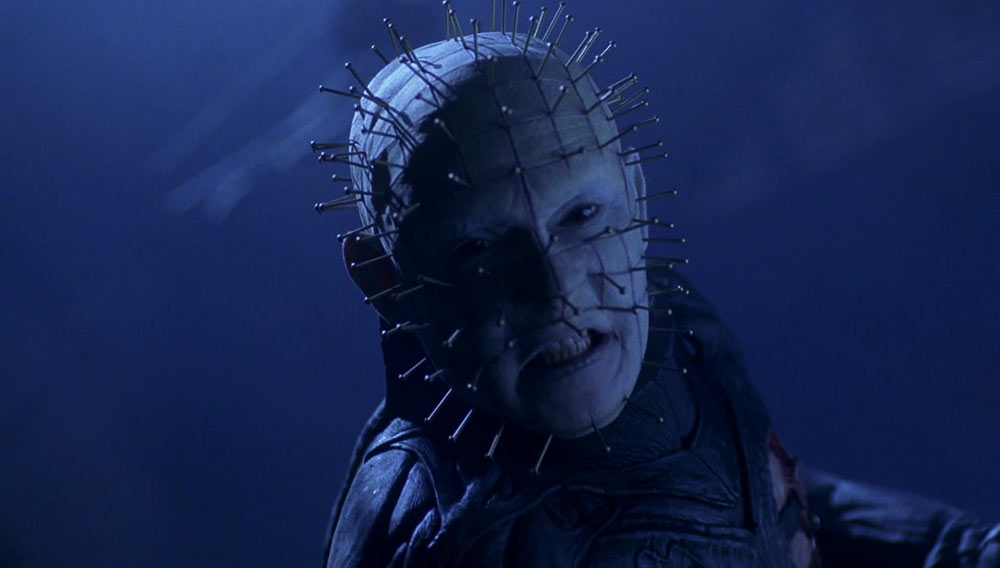
Due to the release of Hellraiser: Deader - the previous instalment in the increasingly dismal Clive Barker franchise - being delayed for two years before finally crawling straight to DVD, 2005 saw not one, but two follow-ups to the classic original and its stream of sequels. Hellrasier: Hellworld is director Rick Bota's third and, thankfully, final entry, and he bows out with his most atrocious Hellraiser film yet, having succeeded in turning the world of Cenobites, sadism and the quest for the ultimate pleasure into a running joke of slasher cliches, with an obligatory, blink-and-you'll-miss-it cameo by Pinhead (Doug Bradley) to loosely tie into Barker's mythology and allowing production company Dimension to retain the rights to the series in the process.

Two years after they buried a close friend who became obsessed with playing online game Hellworld (based on Hellraiser) and committed suicide, five friends - Chelsea (Katheryn Winnick), Jake (Christopher Jacot), Derrick (Khary Payton), Mike (Henry Cavill) and Allison (Anna Tolputt) - receive an invitation to attend a private Hellworld party held at an old mansion. The group are warmly welcomed by the host (played by Lance Henriksen) and are taken on a tour of the mansion's lower levels, which include a former asylum and convent. After initially taking the extremeness of the party with a pinch of salt, the group start to experience strange events, such as becoming invisible to everybody around them, and the appearance of Pinhead and his Cenobites.

Boasting a more recognisable cast than Rick Bota's previous entries, Hellworld still manages to fall flat on just about every level. With the action moving into the digital era with the shoddy-looking website the characters seem so enamoured with, the action is rooted firmly in the mid-90's, and is shot with the same bland, TV movie aesthetic that dogged many forgotten, bottom-shelf horror features during the decade. You would think that the presence of Henriksen, who is something of a cult legend in the B-movie circuit, would liven things up, but he looks half-asleep during his handful of scenes. Only Winnick, now enjoying success with TV drama Vikings, appears to be an actual actor, with future Man of Steel Henry Cavill mugging his way to the most annoying performance of the lot. There is nothing at all to recommend about Hellworld, with Bradley subsequently bailing the role that made him a horror icon. 


Directed by: Rick Bota
Country: USA/Romania

Rating: *

Tom Gillespie


Hellraiser: Hellworld (2005) on IMDb

Tuesday, 25 October 2016

Review #1,104: 'Hellraiser: Deader' (2005)

Like Hellseeker (2002) before it, Deader, the seventh entry into Clive Barker's Hellraiser franchise, takes an unrelated spec script and shoe-horns in a couple of fleeting appearances from Doug Bradley's Pinhead to try and justify its inclusion of 'Hellraiser' in the title. Say what you will about the first two sequels (I thought they were pretty bad), but they at least felt like they were set in the same universe as the wonderfully disturbing 1987 original. Returning director Rick Bota delivers yet another straight-to-video, poorly-acted stinker that looks as if it was directed by a group of goth kids making their first student film.

This time, the plot revolves around investigative reporter Amy Klein (Kari Wuhrer), a feisty and dedicated type who always goes the extra mile to get to the heart of the stories she covers. We first meet her writing a story in a dingy crack house before she is shipped off to Budapest (where production is cheap) to investigate a mysterious group named the 'Deaders'. Based on footage recorded on a VHS tape, the Deaders are led by Winter (Paul Rhys), a man with the ability to bring people back to life. Her sleuthing leads to a corpse holding the Lament Configuration, which when opened unleashes Pinhead. The Cenobite warns Amy that Winter is operating outside of his control, and that he is a descendent of the toymaker who created the puzzle box. Is it all a dream, or are there supernatural forces at work?

As to whether what you are watching is in fact a dream or not won't be a question you'll linger on for long. Like Dean Winters' character in Hellseeker, Amy ends many scenes by suddenly jerking out of a nightmare. It's a cheap, tiresome tactic which quickly removes any tension the film may have had otherwise. The idea of seeking the ultimate pleasure and, of course, the dangers that come with it, is a key theme running throughout the series, but this is all but gone in favour of a lightweight tale of an emo cult playing with resurrection. There's also a startling lack of gore. Regardless of how bad the preceding sequels are, you could always rely on a gruesome scene or two to keep you awake, so Deader's main issue is that it's a complete bore. Frighteningly, this is one of two Hellraiser films released in 2005.


Directed by: Rick Bota
Starring: Kari Wuhrer, Paul Rhys, Marc Warren, Doug Bradley
Country: USA/Romania

Rating: *

Tom Gillespie


Hellraiser: Deader (2005) on IMDb

Friday, 16 October 2015

Review #930: 'Munich' (2005)

Steven Spielberg's Munich questions the value of compromising your own ideals in the name of retaliation, whether 'doing what your enemies do' is a necessary stance or the beginning of a downwards spiral towards violence and bloodshed of which there is no end, and ultimately, no point. There are ancient political and religious rivalries in Ireland, South Africa and, especially, Israel; countries that have been torn apart by civil unrest. There seems no reasonable solution apart from forgiving and forgetting, but this doesn't seem to be an option. In the wake of the terrorist attack at the 1972 Munch Olympics, Israeli prime minister Golda Meir (Lynn Cohen) decides that lawful justice will not suffice for the murder of 11 Israeli athletes and team members.

A crack team is put together to carry out a series of carefully planned assassinations of alleged members of the Black September group. The group's leader is Avner (Eric Bana), a Mossad agent and soon-to-be father who is briefed of his task by the shadowy go-between Ephraim (Geoffrey Rush). The rest of the team is Carl (Ciaran Hinds), a clean-up man, Robert (Mathieu Kassovitz), an expert bomb-maker, Steve (Daniel Craig), a South African weapons handler, and Hans (Hanns Zischler), a professional document forger. Their first hit takes them to Rome, where they are sold information on the whereabouts of target Wael Zwaiter (Makram Khoury) by a Frenchman named Louis (Mathieu Amalric), who claims to work for an organisation unaffiliated with any government.

Highly controversial upon its release, some extreme views questioned director Spielberg's sympathies and ultimate goal. For most people not directly linked to the various religious groups and organisations seen in the film, it should be clear that Spielberg makes a point in showing both sides as equally sympathetic and morally ambiguous. Every attack and execution is a result of one action or another, bringing into question the whole idea of revenge (the movie is based on the book Vengeance by Yuval Aviv, who Bana's character is a fictional substitution for). Israel itself plays a key role. Although we spend little time there. Munich takes us to Italy, Greece, England, Spain, Lebanon and America, but Israel's disputed lands are never far from the characters minds.

Avner is an especially haunted soul, questioning the ethics of his operation and plagued by visions of the events at the Munich Olympics, the latter of which are portrayed with a chilling authenticity at various point throughout the film. He later meets Louis' 'Papa' (Michael Lonsdale), who argues that family, over any government or religious organisation, is the only unit worth fighting for, casting Avner's mind back to his recently-born child. The ensemble cast do a very good job at carrying the weighty tones of the film on their shoulders, but it is Spielberg himself who is the most deserving of acclaim here. It is the director at his most mature and unsentimental, and as the industry's most famous Jew he has taken a huge risk by tackling an extremely sensitive issue. It upset the people on both sides, but that is precisely the point. How can anyone come out of such a bloodied conflict, of which there is no clear end in sight, with a clear conscience?


Directed by: Steven Spielberg
Starring: Eric Bana, Ciarán Hinds, Daniel Craig, Mathieu Kassovitz, Hanns Zischler, Ayelet Zurer, Geoffrey Rush, Mathieu Amalric, Michael Lonsdale
Country: France/Canada/USA

Rating: *****

Tom Gillespie


Munich (2005) on IMDb

Sunday, 20 July 2014

Review #767: 'Harry Potter and the Goblet of Fire' (2005)

As we all remember, turning 14 comes with as many strange new emotions as it does the need to rebel against everything resembling authority, and Harry Potter (Daniel Radcliffe), fresh off his experiences battling ghostly Dementors and a werewolf, faces a brand new threat - women. Goblet of Fire, with a new director in Mike Newell, continues Alfonso Cuaron's darker and and more sinister tone, pitching Harry against a whole new range of beasts and dark wizards, but it's the section around the middle of the film - where Harry and his ever-present friends Ron (Rupert Grint) and Hermione (Emma Watson) must find dates and attend formal dance the Yule Ball - that delights the most and brings the very best out of it's still-young actors.

After a Death Eater attack at the Quidditch World Cup that leaves the 'Dark Mark' - the sigil of Lord Voldemort's followers - lighting up the smoky sky, Harry returns to Hogwarts for another year. This year however, they are being joined by overseas schools Beauxbatons of France, and Durmstrang of Bulgaria, as Hogwarts is playing host to the Triwizard Tournament, a collection of dangerous feats that pitches one pupil from each school against each other for the prize. After the champions are selected - Fleur Delacour (Clemence Poesy) for Beauxbatons, Viktor Krum (Stanislav Ianevski) for Durmstrang, and Cedric Diggory (Robert Pattinson) for Hogwarts - a fourth name is spat out - Harry Potter.

Harry swears to Dumbledore (Michael Gambon) that he did not cheat and enter his own name (as he's underage), and, being bound by a magical contract, the schools have no option but to allow him to compete. New Defence Against the Dark Arts teacher 'Mad-Eye' Moody (Brendan Gleeson) - a half-crazed ex-Auror with one magical eye that is independent of his other and which can see through the back of his own head - sets about preparing Harry for the perilous tournament. He must face dragons, sea-monsters and a seemingly endless maze to find the prize, but where Harry is, the threat of Lord Voldemort's return is always lurking.

Mike Newell and returning screenwriter Steve Kloves do an excellent job in condensing a mammoth book (about twice as large as Prisoner of Azkaban) into a coherent film. For a film so rich in action and whizz-bang CGI, it thankfully doesn't neglect the drama. Harry's friendship with Ron and Hermione is stretched, with hormones and jealousy creeping into Ron's personality, and Hermione's struggle to deal with the idiot. But it's hardly melodrama, and the Yule Ball provides the most amusing set-piece in the series, and a welcome distraction from the darkness that lurks outside.

It's the point in the series where disarming spells and defensive tricks start to prove ineffective, and people begin to die. The opening scene, which depicts an elderly muggle (played by Eric Sykes) stumbling upon Peter Pettigrew (Timothy Spall) and an undeveloped Voldemort, sees the first time the dreaded killing curse is used, and therefore sets the tone. It's also bookmarked by a thrilling climax in which (spoilers!) Voldemort finally returns in the form of a noseless Ralph Fiennes, who puts in a suitably creepy performance. It doesn't beat Azkaban as the series best entry, it's far too long and sometimes rushed for that, but it's certainly the most entertaining.


Directed by: Mike Newell
Starring: Daniel Radcliffe, Rupert Grint, Emma Watson, Michael Gambon, Brendan Gleeson, Robbie Coltrane, Alan Rickman, Maggie Smith, Ralph Fiennes, David Tennant
Country: UK/USA

Rating: ****

Tom Gillespie


Harry Potter and the Goblet of Fire (2005) on IMDb

Tuesday, 22 October 2013

Review #665: 'The 40 Year-Old Virgin' (2005)

After decades of being dragged to the cinema by our better halves to watch the latest Meg Ryan or Hugh Grant pap, it was only a matter of time until men fought back in the rom-com genre. Director Judd Apatow, along with co-writer and lead star Steve Carell, went the extra mile and actually created a rom-com that is both genuinely romantic and laugh-out-loud hilarious, but one that members of both sex can actually enjoy. But amongst all the sweetness there are four guys talking like genuine guys. So, this includes lines like "you need to put the pussy on a pedestal!" and "you know how I know you're gay? You listen to Coldplay." The language is filthy, but the script is heartfelt.

Andy Stitzer (Carell) lives a simple life alone with his collection of valuable (and still boxed) action figures and his gaming chair, working in the stockroom of an electronic store. He also rides a bike to work and never socialises, leading his co-workers to naturally assume he's a serial killer. When they find themselves a man down for a poker game, David (Paul Rudd), Jay (Romany Malco) and Cal (Seth Rogen) invite Andy. After swapping freaky sex stories, it becomes clear that Andy is in fact a 40 year-old virgin, and so they make a vow to get him laid. Amongst his options are the girl from the bookshop Beth (Elizabeth Banks), who takes a liking to Andy after he takes Cal's advice, his horny boss Paula (Jane Lynch), and the spunky Trish (Catherine Keener), a woman who's just opened a store across the street.

The thing that The 40 Year-Old Virgin achieves most is how accurately it portrays its men. Sure, these are extreme versions of people we have come across before in our lives, but men generally talk crap and half-truths to each other about women, movies and computer games. The advice that David, Jay and Cal give is hardly helpful, and is based on their own half-remembered experiences that lead to the assumption that they are the ones that truly understands women. But they are all screwed up in their own way that their advice just leads to some amusing scenes, including the most famous scene of Andy having his chest waxed (which Carell really did, and he's the hairiest comedian since Robin Williams).

The film also succeeds in its honesty and its attention to detail. Andy isn't the badly-dressed, bespectacled nerd that has been seen in the likes of She's All That (1999), that once he's given a makeover, he's a hunk. He signals when he's turning his bike on an empty street and his Monday-morning what-I-did-at-the-weekend stories involve making an egg salad sandwich. He's relatable because he's real, so his quest to get his leg over becomes something ultimately more important. The supporting cast are all excellent, especially Malco, who I'm surprised hasn't gone on to bigger things, and Keener, who is surprisingly adorable after years of playing the bitch. Like many movies churned out by the Apatow machine, it's goes on for far too long, but that's easy to forgive when the film is this funny.


Directed by: Judd Apatow
Starring: Steve Carell, Catherine Keener, Paul Rudd, Romany Malco, Seth Rogen, Elizabeth Banks, Leslie Mann, Jane Lynch
Country: USA

Rating: ****

Tom Gillespie


The 40-Year-Old Virgin (2005) on IMDb

Sunday, 29 July 2012

Review #422: 'Batman Begins' (2005)

Back in 1997, when the Batman franchise was given a thorough anal-raping and given cinema AIDS by director Joel Schumacher with the preposterous Batman & Robin, fans and audiences alike were left wondering if there was any hope left for one of the darkest and most complex 'superhero' characters in the comic-book world. Come 2005, up to this point, British director Christopher Nolan was still a relative maverick, having made indie breakthrough Following (1998), the mind-bending critical hit Memento (2000), and the solid re-make Insomnia (2002). Few realised that they were about to witness a re-defining of not only comic book adaptations, but blockbusters themselves.

We first meet Bruce Wayne (Christian Bale) in a Bhutanese prison, where he is approached by the mysterious Ducard (Liam Neeson) who offers him a chance to learn to fight with the League of Shadows, a generations-old group that punishes criminality with an iron fist. As he trains, we learn about Wayne's childhood, where after falling into a well and developing a phobia of bats, witnesses his parents' murder. Returning to a Gotham believing him dead and in a state of utter tutmoil, he turns to faithful butler Alfred (Michael Caine) and Wayne Enterprises' weapons developer Lucius Fox (Morgan Freeman) to turn him into a vigilante crime-fighter and a symbol of a stance against crime. He finds his childhood friend Rachel (Katie Holmes), the assistant district attorney, caught up in a scheme ran by Dr. Jonathan Crane (Cillian Murphy) to get mob boss Falcone's (Tom Wilkinson) thugs off with insanity pleas.

Tim Burton's once-definitive Batman (1989) made the mistake of having the film's villain The Joker engulf the majority of the film, keeping Michael Keaton's Batman almost in the background. Nolan knows that this is Batman's story, and wisely keeps the focus on Bale's anger-fuelled, guilt-ridden, and honourable leading character. In the hands of Nolan, Batman's origins are given the complexity it deserves, shifting back and forward in time to reveal more pieces to his jigsaw. This is no wise-cracking, tights-wearing Batman; when we meet him, he is giving a bunch of prison thugs a thorough beating, snapped legs and all. With the hugely talented Bale in the role, his character is given the weight it deserves - this is Nolan's world, and it is violent, real, and usually pissing down with rain.

As the norm since this film's release, Nolan has managed to gather a hugely-talented ensemble cast (and mainly British). While there is no obligatory main villain that may be a problem in anybody's else's hands, Nolan has instead given us a criminal ring for Batman to fight, from Wilkinson's ruthless crime boss, to Murphy's genuinely unsettling Scarecrow, who likes to fire his hallucinogenic poison in his victims' faces before donning his 'mask' (leading some some fine trippy moments). There is also Ra's Al-Ghul (Ken Watanabe), who plans to destroy Gotham along with Neeson's Ducard by infecting Gotham's water supply. With Gary Oldman's cop Jim Gordon, and Holmes' Rachel Dawes also in the mix, it may seem dangerously over-supplied with characters, but Nolan knows fully well how to handle such a large cast, tying their stories together with fine precision.

Having seen The Dark Knight (2008) and eagerly anticipating The Dark Knight Rises (2012), this admittedly pales in comparison, being that The Dark Knight was a phenomenal leap forward in big-budget film-making and an iconic film that will no doubt be remembered as one of the best of its decade. Also, the action scenes here are quickly-edited and shaky to the point where it is hard to tell what is happening, but Nolan would step up in confidence with the film's sequel and the proceeding Inception (2010). But as superhero origin stories go, this is probably second only to Superman (1978), and a welcome kick up the arse for one of the most enticing comic-book heroes in existence.


Directed by: Christopher Nolan
Starring: Christian Bale, Michael Caine, Liam Neeson, Katie Holmes, Morgan Freeman, Gary Oldman, Cillian Murphy, Tom Wilkinson, Rutger Hauer, Ken Watanabe
Country: USA/UK

Rating: ****

Tom Gillespie


Batman Begins (2005) on IMDb

Sunday, 24 June 2012

Review #406: 'Madagascar' (2005)

At Central Park Zoo in New York, Marty the Zebra (Chris Rock) hears about the 'wild' from some tunnelling penguins whilst celebrating his tenth birthday. Longing to see the world outside the zoo, Marty runs off to see the sights of the city. Thinking he has escaped for good, Marty's friends Alex the lion (Ben Stiller), Melman the giraffe (David Schwimmer), and Gloria the hippo (Jada Pinkett Smith) go after him to bring him back. Mistaking their escape for a desperate plea for freedom, the humans at the zoo ship them off to Africa where a series of mishaps sees them washed up on the shore of Madagascar. The island is ran by lemur Julien (Sacha Baron Cohen), who labels the newcomers as their saviours after Alex unwittingly chases off a pack of hyenas. Yet with no-one there to feed him his daily steaks, Alex finds his primal instincts begin to take over.

Running at around 82 minutes, I only really watched this film as I was tired and fancied something quick, breezy and amusing to see me off the sleep. Well, it was certainly quick and breezy. Like many other Dreamworks animation films, Madagascar finds its comedy in uninspired slapstick and pop culture references, and here is its biggest problem. While the superior Pixar produces films regularly that both children and adults can thoroughly enjoy (and includes some inspired comedy to boot), I tend not to find Dreamworks output actually funny. Here, films references include the likes of American Beauty (1999), Planet of the Apes (1968) and Chariots of Fire (1981) and come across as a lazy way of not actually writing something intelligent (all the jokes have been done before, and better).

One thing that is always up to scratch with Dreamworks is the animation. It perhaps may not be as beautiful as, say, WALL-E (2008), but Shrek (2001) was a charming mix of fairy-tale and the old-fashioned, while the big, bright colours of Kung Fu Panda (2008) evolved into something far more impressive in its sequel. But in Madagascar, the characters are blocky and charmless, and the backgrounds are often still and empty. The story of a bunch of city-animals trying to make it in the wild is ripe with possibilities, but the film remains relatively un-eventful and builds up to a blink-it-or-you'll-miss-it climax. A major disappointment given the voice talent involved, and is only worth watching for Baron Cohen's semi-improvised, self-worshipping King Julien.


Directed by: Eric Darnell, Tom McGrath
Voices: Ben Stiller, Chris Rock, David Schwimmer, Jada Pinkett Smith, Sacha Baron Cohen
Country: USA

Rating: **

Tom Gillespie


Madagascar (2005) on IMDb

Sunday, 11 September 2011

Review #212: 'The Amityville Horror' (2005)

Platinum Dunes production company was formed by Michael Bay, Brad Fuller and Andrew Form in 2001, with the prime proposal of re-making, predominantly 1970's "classic" (albeit well-known) horror films. Their first was The Texas Chain-saw Massacre (2003). They messed around with Friday the 13th (2009), -as if it really needed to be done after nine sequels - and A Nightmare on Elm Street (2010), after producing a "modern" take on 1979's The Amityville Horror. I state modern only in the time of production, as the film is set in the 1970's. After all it is "based on a true story" (I will come back to this later).

The film begins, - as does it's predecessor - with a dramatically edited prologue of the "actual" event that occurred in the house in 1974, when Ronald Defeo systematically shot his parents and siblings whilst they slept in their beds. This did actually happen, and Defeo is still serving a life sentence for the horrific crime. The crime was blamed by Ronald on voices that told him to kill them. Several years later, Kathy (Melissa George) and George Lutz (Ryan Reynolds) purchase the Amityville "dream home" cheaply. They move in with Kathy's three children (from a previous marriage). This is clearly a new arrangement, as - particularly the oldest - child is suspicious of the new father figure.

Well, the film has no build-up of tension at all, as moments into occupying the house, they begin to see things. Now traditionally in the haunted house genre of horror films, ghosts are not really physically seen. However, in this movie, they are simply there! George goes "crazy" practically instantly, and the tensions within the family are automatically tumultuous. The "ghosts" of the Jody, one of the little girls killed, are seen by youngest child, Chelsea (Chloe Moretz - in pre-Hit Girl, use-of-the-word "cunt" mode), and communicates through her.

The opening sequence is endemic of these Michael Bay produced films. Snappy, flash editing; the layering of images, and particularly dirty pen-scribblings on paper. Essentially a title sequence, post-Seven (1997). It does benefit from contemporary footage of news-reels shot at the time of the Defeo murders. These "funky" openings are also quite stylist, and for production value, lends an almost artistic flare to proceedings. However, it does not save a very run-of-the-mill film, that ticks all the boxes of a remake/ghost-horror movie.

So, we come back to the "based on a true story". This is a story that I have been fascinated by from a very early age, when I saw the film, and read the Jay Anson book of the same name. The Lutz family did purchase the house, knowing that it was the scene of the Defeo crime. 28 days later they fled the property, leaving all of their belongings (never to return). They reported the strange and horrific occurrences. Well, they did to a writer, who promised a lucrative publishing deal (ghost stories were hot in the '70's). this obviously led to the money-making deal of Hollywood movie-making. So their story of haunting, Indian burial grounds, and possession, was a highly profitable for the family, who were not well-off at all. With the knowledge of the houses history, it would be easy to conjure up a ghost story in 28 days. "Fuck the possessions, eh?"

As an "after thought", there have been many families that have occupied the house, who have never reported any strange "happenings." The only reason that any of them have left, was simply due to "sightseers" who trample over the grounds, due to the popularity of the film. The grisly statement of "Get Out", becoming simply a "Get off my land".


Directed by: Andrew Douglas
Starring: Ryan Reynolds, Melissa George, Chloë Grace Moretz, Philip Baker Hall
Country: USA

Rating: **

Marc Ivamy


The Amityville Horror (2005) on IMDb

Wednesday, 15 June 2011

Review #127: 'The Devil and Daniel Johnston' (2005)

The struggle of an artist battling against his own demons has long been played out in both the movies and reality. Musicians such as Ray Charles, Johnny Cash and Jim Morrison fought against drug and alcohol addiction that led to their lives being played out on screen. They suffered for choices they made. Daniel Johnston, a cult figure and genius songwriter, battled with mental illness for most of his life. His art both benefited and suffered because of his affliction. But Johnston was helpless of his fate. His mental instability deepened as his fame grew, and it's all captured in detail in this wonderful documentary.

Daniel Johnston was always a strange child, growing up with a seemingly obsessive compulsion for art, and later for music. He was vastly creative, inspired and individual in his output. When he decided that he wanted to be a musician and be famous, he produced an album on tape, advertised his work to producers and writers, and blew everyone away. Always influenced by his muse - a girl he fell in love with at college and never saw again - his songs were tortured and heart-rendering, yet joyous and upbeat. But his increasingly unstable mental state put his career on hold. After indulging in marijuana and LSD, he was submitted to a mental hospital after attacking his friend with a lead pipe. And so began Daniel Johnston's tragic public decline, as he alienated himself from his family and friends, and intensified his obsession with God, and ultimately, the Devil.

I had never heard of Daniel Johnston's music before this film. His music is not for everyone's taste - his voice is high-pitched and unbalanced, and his techniques non-conformal and almost old-school - but no-one could deny the tortured genius behind it. Seeing him go on stage for the first time, all skinny and uncomfortable, glancing nervously at the camera every now and then, there was something awe-inspiring about him. It makes it all the heart-breaking to see him now, bloated and old, physically damaged by his mental illness. And yet his thirst for art remains.

There are plenty of bio-documentaries and music documentaries out there that are capable of blowing you away (Gimme Shelter (1970) and The Last Waltz (1978) come immediately to mind), but although this is a great music documentary, it just as brilliant as a serious portrayal of the devastating effects of mental illness. As Johnston had the nack of recording practically everything he did on tape, we get to witness almost first hand his life and breakdown. There are early tapes of him arguing with his mother, and phone calls asking him to wash the graffiti he did on the Statue of Liberty. We also hear troubled calls from his loved ones and friends, and hear the effect it was having on them. One friend states that the troubled genius's of the past, like Van Gogh, are fascinating to read about and amplifies their God-like status. But no-one living has ever had to live with them, and witness it unfold before their eyes. An excellent documentary that really gets to the heart of it's subject. And I'll definitely be hunting down Daniel Johnston's work.


Directed by: Jeff Feuerzeig
Starring: Daniel Johnston
Country: USA

Rating: *****

Tom Gillespie


The Devil and Daniel Johnston (2005) on IMDb

Sunday, 22 May 2011

Review #82: 'Hitch' (2005)

It was quite strange to watch a film such as Hitch - I usually avoid breezy rom-com's like the plague. It was only because myself and my girlfriend were tired after a train ride on holiday and the place where we were staying had a DVD player and a small selection of titles. Hitch seemed the best option (I wanted to watch Wilde (1997) but we both agreed something easier to watch would be for the best). My instincts usually tell me that film like this will be predictable, annoyingly frothy, and sentimental, although able to raise the occasional smirk. Well, my instincts were pretty much right. Hitch (Will Smith) is a date-doctor who takes on his biggest task yet - to teach how overweight corporate idiot Albert (Kevin James) to romance celebrity Allegra Cole (Amber Valletta), whom Albert has become smitten with. He is also dealing with his own love life - romancing hard-nosed columnist Sara (Eva Mendes). That's it in a nutshell really. Although thinking about it, the film isn't much more than that.

There were moments of this film I enjoyed. Will Smith makes for a likeable actor, breathing sympathy into his rather smug character, and Kevin James, best known as food-loving truck driver Doug in TV's King Of Queens, is amusing as the embarrassing and bumbling Albert. The film is stronger during the scenes when they are together, and only when Hitch begins to delve into his own romance where the film becomes frustrating and rather unconvincing. Eva Mendes' character is just annoying, and I failed to see the attraction that Hitch would have with her, apart from the obvious physical qualities. When the film looks like it's going to stretch it's legs outside of the comfortable rom-com cliche, it sits back in safety and just turns into a bore.


Directed by: Andy Tennant
Country: USA

Rating: **

Tom Gillespie


Hitch (2005) on IMDb

Wednesday, 18 May 2011

Review #74: 'The Sun' (2005)

Similar to Oliver Hischbiegel's Downfall (2004), The Sun follows Emperor Hirohito during the final days of World War II. While American soldiers invade the land after dropping the atomic bombs on Hiroshima and Nagasaki, the Emperor remains holed up in the bunker of his palace, existing in a kind of daze. He wanders the hallways, followed by his servants who hang on his every word and action, awaiting his instructions. He quietly ponders the situation and attempts to negotiate a peace treaty with his advisors, wondering what effect it will have on his legacy. General Douglas MacArthur calls for him to dine with him, and the two almost share a strange bond while discussing politics, determining the Emperor's fate and smoking cigars.

Director Aleksandr Sokurov, who was responsible for the hypnotic Russian Ark (2002) and criminally under-seen Alexandra (2007), adopts a similar style to that of the former. The digital image glides along the steel corridors of the bunker, following Hirohito's every move. The darkness and the grain of the image allowing a more grounded feel to the proceedings. This way, it feels less like a period piece based on real events, and places you more in the time. It's a similar approach to that taken by Michael Mann in the over-rated Public Enemies (2009). Though Michael Mann's almost emotionless biography of John Dillinger used it in a desperate attempt to look cool and edgy (something that Mann seems to do with every new film he does - surprising given the effortless cool of the likes of Heat (1995) and Manhunter (1986) - anyway...), here Sokurov adopts the style to create a very real atmosphere.

The almost constant soundtrack, too, adds to the atmosphere of the piece. As the Emperor slowly paces the corridors, quietly discusses matter with his board and quietly reflects on his actions, the music and camerawork gave me the overall impression of doom. Not that the film is heading that way, I felt that it more represented the internal struggle of the Emperor, where his fate is seemingly out of his hands, and his country could be facing ruin. Two of the largest cities in  the country have been obliterated by the U.S., who are now crossing their borders and invading. Being the Emperor, he is of the belief that he is a God. Is this the legacy of a God? What will his people remember him for?

I can't end the review without mentioning the computer generated sequence that breaks up the film. Dazed and delirious after being taken ill, the Emperor sits open mouthed at the edge of his bed, imagining scores of giant flying fish soaring through the air. The country below them lies in smoky ruin, and the fish begin to drop more bombs, the sounds of the fish's 'engines' groaning terribly. The fish by the way, just to put it into context, represent Hirohito's love for marine biology, which he persists in researching even as the Americans invade. It's a brave, interesting move in the film. It initially jarred with the quiet, controlled drama that unfolds before, but it becomes an interesting and unnerving experimental set-piece.

A cold, tightly-directed biography that cares less about the politics of the time, and more with the humanistic aspect of a powerful ruler in a troubled time, with a mesmerising lead performance by Issei Ogata.


Directed by: Aleksandr Sokurov
Starring: Issei Ogata, Robert Dawson, Kaori Momoi
Country: Russia/Italy/Switzerland/France

Rating: ****

Tom Gillespie


The Sun (2005) on IMDb

LinkWithin

Related Posts Plugin for WordPress, Blogger...