Showing posts with label Horror. Show all posts

Thursday, 25 April 2019

Review #1,472: 'Revenge of the Boogeyman' (1983)

If there was ever a horror film that didn't require a sequel, Ulli Lommel's cult 1980 hit The Boogeyman is it. Telling the story of two siblings who accidentally release the spirit of their mother's dead boyfriend via a magical mirror, The Boogeyman is a hokey, stupid, and instantly forgettable film, although I can understand why certain fans of the genre may hold it in higher esteem. Following its surprisingly successful limited run, Paramount Pictures were keen to hand Lommel, a bad-boy German arthouse director, a substantially larger budget for the follow-up, but the filmmaker became annoyed at their refusal to allow him to work on other projects outside the realm of horror.

Lommel eventually made Revenge of the Boogeyman, or simply Boogeyman II, out of sheer frustration, and the result was one of the most notoriously terrible movies ever made. You get the sense that the sequel is one giant middle-finger to all those pesky studio heads who were only interested in squeezing some quick cash out of a mediocre horror film that proved an unexpected hit with the horror crowd. Lommel even casts himself as a movie director tasked with adapting the events of the first film for the big screen, who also questions Hollywood's opportunistic, closed-minded approach. You could almost admire Lommel's arrogance if Revenge of the Boogeyman didn't also feel like a huge middle-finger to the audience, who are not only forced to sit through some of the most laughable and badly-constructed set-pieces ever committed to screen, but also over forty minutes of flashbacks which consist of recycled footage from the previous film.

The 'story' follows lone survivor Lacey (Suzanna Love) as she travels to Hollywood to stay with friends and recuperate after the trauma she suffered at the hands of the 'boogeyman'. After recapping her tale, she is quickly pounced on by a bunch of Hollywood types who are keen to profit on her misery. God knows why, but Lacey carries a piece of the cursed broken mirror with her wherever she goes, so it isn't long until the party guests start turning up dead. And how spectacularly they die. There's death by toothbrush, death by exhaust pipe through the mouth after being hit on the backside by a ladder, and worst of all, death by that most terrifying of household items, shaving foam. Looking as though it was shot over a weekend and patched together without any resemblance of a script, Revenge of the Boogeyman is an insult to film and filmmakers, and anyone seeking to find the most reprehensible of all the 'video nasties' need look no further. To make matters worse, Lommel went back to try and salvage the film, releasing a 'Redux' version in 2003. Apparently, somehow, it's even worse.


Directed by: Ulli Lommel
Starring: Suzanna Love, Ulli Lommel, Shannah Hall, Sholto von Douglas, Bob Rosenfarb
Country: USA

Rating: *

Tom Gillespie


Boogeyman II (1983) on IMDb


Wednesday, 10 April 2019

Review #1,468: 'Dead Snow' (2009)

When it comes to B-movie hooks, they don't come any more mouth-watering than the promise of a horde of Nazi zombies stalking a group of horny, dim-witted teenagers. The set-up mirrors that of countless slasher and zombie movies, and writer/director Tommy Wirkola is more than happy than roll with the genre tropes. Wirkola even places a chubby film buff amongst the crowd of soon-to-be Nazi chow so he can throw in a few nods and winks to an already knowing audience as they trudge through the Norwegian snow to the cabin in the woods that awaits them. But even he is too dim to recognise the obvious danger that waits in store for them, and just like the movies Dead Snow is paying homage to, you wait with eagerness for their inevitable and gory demise. Fans of classic horrors The Evil Dead and Dawn of the Dead will lap it up, but Dead Snow takes far too long to find its stride. But by the end, those lucky enough to remain breathing finally pluck up the courage to fight back with the few tools at their disposal, and the barrage of blood, guts and Nazi corpses is just enough to make it worth the wait.

The film opens with a terrified young woman being chased through the snow by a group of bloodthirsty zombies dressed in SS uniforms. The woman, who is revealed to be Sara (Ane Dahl Torp), was due to meet up with her medical student friends for a weekend of tobogganing, snow-fights and potential casual sex. Luckily for them, Sarah's friends have decided to travel separately. After an exhausting hike through the mountains, the gang finally arrive at the cabin and immediately start drinking. Although Sara's no-show plays on some of their minds, a party is thrown, and all seems fine and dandy until a mysterious traveller (Bjorn Sundquist) arrives with a history lesson guaranteed to kill their buzz. Decades ago, near the end of World War II, a band of SS officers fled the advancing Russian army and met their end in the unforgiving snowy mountains. Ever since, whispers have been heard of an undead Nazi army roaming the area, killing and eating anyone that stands in their way. They are searching for treasure stolen during the war, and the prize chest just happens to be stored underneath the cabin. Soon enough, one by one, the hapless students start to disappear.

For the bulk of its running time, Dead Snow covers very familiar terrain, paying tribute to everything from Friday the 13th to The Evil Dead, as well as more recent efforts, such as Scream, which also leaned into genre cliches and employed them as a narrative tool. Dead Snow isn't as clever nor anywhere near as accomplished as those that inspired it, and spends way too much time moving the pieces into place and establishing relationships you'll have forgotten before the credits have rolled. But when Wirkola finally loosens his top button and starts to unleash the carnage, it doesn't fail to disappoint. There's something oddly beautiful about the sight of blood splashed across snow, and Dead Snow has plenty of both. The luscious, tranquil setting is truly glorious to behold, but don't let the beauty fool you, this is a world of deadly avalanches and fascist zombies. Just like in space, nobody can hear you scream in the Oksfjord wilderness, and it may just set off a landslide that will leave you buried beneath six feet of snow. The movie's top tip: before you start to try and dig your way out, be sure to spit so you know which way is up. Dead Snow may not fully grasp the potential of the idea of Nazi brain-munchers hunting their prey, but by the time the hammers and chainsaws are broken out, you'll feel a pleasant wave of satisfaction.


Directed by: Tommy Wirkola
Starring: Vegar Hoel, Stig Frode Henriksen, Charlotte Frogner, Lasse Valdal, Evy Kasseth Røsten
Country: Norway

Rating: ***

Tom Gillespie


Dead Snow (2009) on IMDb

Monday, 8 April 2019

Review #1,467: 'SS Experiment Camp' (1976)

Much of the outrage drummed up by so-called 'moral crusaders' concerned with how violent and tasteless movies were affecting our impressionable youth during the 1980s was based primarily on how these types of film advertised themselves. The rise of VHS led to home media companies taking full advantage of highlighting how grisly and amoral the film supposedly was, and this led to the now-iconic covers of The Driller Killer, which depicted a man receiving a nasty drill to the head, and Cannibal Holocaust, which splashed the image of one of the titular flesh-eaters chowing down on some human intestines on its casing. These films were placed on the infamous 'Video Nasty' list in the UK, and the two aforementioned titles are indeed pretty nasty. Others that found themselves on the banned list - that did nothing but provide free promotion - were actually hiding a cheaply-made and laughably executed production underneath. Sergio Carrone's SS Experiment Camp, one of the lesser-seen titles on the list, is one such example.

The eponymous camp of the title is a base constructed by the Nazis during World War II to conduct shocking experiments involving attractive Jewish women and some of the Fatherland's most dashing studs. Before being entered into the programme, the women must swear their allegiance to the Fuhrer, otherwise they face torture and eventually a trip into the ovens. Those wise enough to agree to their captors' demands are led to a dorm complete with bunk beds, so the girls can chat like teenagers at a sleepover, and are watched over by a lesbian (what else?) commander. When they are eventually called into action, they must have sex with handsome German men - sometimes even underwater! - while a sympathetic Jewish doctor carries out more sinister experiments with ovary transplants. German officer Helmut (Mircha Carven) ends up falling in love with one of the inmates, and in exchange for her safety, he rather stupidly agrees to take part in a highly secretive experiment with the Colonel von Kleiben (Giorgio Cerioni). Helmut doesn't know it, but von Kleiben has recently lost his balls during the war, and is finding life without intercourse a little hard to take.

Yes, this is a movie set during one of the greatest tragedies in human history about a guy who loses his gonads and can't have sex with the woman he loves. With a video cover showing a dying woman hung upside down while a smirking Nazi officer looks grimly on, Mary Whitehouse and her cronies likely called for the film to be banned for the gruesome horrors that surely lurked beneath that poster. If they had actually taken the time to watch it, they would probably laugh as dead bodies jerk unconvincingly while dodgy-looking flames bounce in front of them, or be puzzled at why a unit of German soldiers look and act like Italian footballers cracking wise in a changing room. Tasteless? Certainly. Most of the increasingly silly torture scenes focus on the victim's jiggling breasts. Horrifying? Well, yes, but not in the way the film intended. For a film that can boast a scene in which its lead character bursts into a room and asks "what have you been doing with my balls?", SS Experiment Camp is a tedious and repetitive experience. It has some unintentional humour, but then there's 90 additional minutes of atrocious acting and awkward dialogue to wade through. The nazisploitation genre is pure trash but it can occasionally offer the odd guilty pleasure, but this is no Ilsa.


Directed by: Sergio Garrone
Starring: Mircha Carven, Paola Corazzi, Giorgio Cerioni, Giovanna Mainardi, Serafino Profumo
Country: Italy

Rating: *

Tom Gillespie


SS Experiment Love Camp (1976) on IMDb


Wednesday, 20 February 2019

Review #1,452: 'Horror Express' (1972)

With a cast list boasting the names of both Christopher Lee and Peter Cushing and a claustrophobic setting aboard a high-speed train, it would be easy to assume that Horror Express is another low-budget gothic effort from Hammer, or perhaps a portmanteau effort from Amicus. It is neither, and is in fact a joint Spanish and UK production made at a time when gothic horror was falling out of favour with audiences, who were being treated to more graphic, socially-aware films such as Night of the Living Dead, and psychological horrors from the US. Helmed on a measly budget by Spanish director Eugenio Martin (so low-budget that the shadow of the camera and cameraman is clearly present in the very first shot), Horror Express actually deserves more attention. It may not be particularly original, but it's shockingly entertaining, utterly bonkers, and provides an interesting sci-fi twist to a familiar genre piece.

Stuffy British anthropologist Sir Alexander Saxton (Lee) discovers the mummified remains of what appears to be a primitive human in a Manchurian cave. With hopes of this find-of-the-century providing some insight on the missing link in human evolution, Saxton packs the body into a wooden crate and hops onto the Trans-Siberian Express from China to Moscow. Before boarding the train however, a Chinese thief attempts to pick the crate's lock, and is found dead just moments later with his eyes completely white. The discovery also catches the eye of Saxton's friendly rival Dr. Wells (Cushing), who pays a baggage handler to cut a hole in the box so he can sneak a peek. The porter is too found dead soon after, and the crate empty. With the beast now loose aboard a moving train, it isn't long until the bodies start to pile up. Saxton and Wells are on the case, but the commotion also catches the attention of Inspector Mirov (Julio Pena), Polish countess Irina (Silvia Tortosa) and crazy Orthodox monk Father Pujardov (Robert DeNiro lookalike Alberto de Mendoza).

It's a strange but enticing mixture of Agatha Christie and The Thing from Another World. The discovery that their foe is actually a body-hopping alien capable of devouring memories and knowledge with each kill allows for some whodunnit fun to be had in between the many gory moments, and gives the film a strange sci-fi kick that, while completely ridiculous, adds something different to an otherwise straight-forward monster flick. The special effects have also aged rather well. It isn't scary, but the sight of corpses frozen in shock with their eyes rolled to the back of their heads makes for a rather creepy sight, and graphic scenes of surgical procedures means that Martin's picture has a welcome nasty edge that helps it to distance itself from Hammer's campier gore. You can pick the film apart, but Horror Express is simply outrageously entertaining and never lets up. Once the horror starts, each scene seems to want to double-down on what came before, even introducing Telly Savalas late on as an intimidating, vodka-swilling Cossack officer named Captain Kazan. A must-see for any fans of European horror from the Lee/Cushing era.


Directed by: Eugenio Martín
Starring: Christopher Lee, Peter Cushing, Alberto de Mendoza, Silvia Tortosa, Julio Peña, Telly Savalas
Country: UK/Spain

Rating: ****

Tom Gillespie


Horror Express (1972) on IMDb

Wednesday, 13 February 2019

Review #1,449: 'Bird Box' (2018)

Perhaps it's because the dystopian survival horror has been done to death of late, or maybe it's because John Krasinski's vastly superior and similarly themed A Quiet Place is still fresh in the mind, but there's something strangely hollow about Netflix's latest smash-hit and water-cooler conversation starter. Bird Box became the inspiration for a series of dangerous YouTube stunts that resulted in the social media platform issuing a warning to anyone thinking about taking part in the 'Bird Box Challenge', but sadly, given the film's potential, this is perhaps all it will be remembered for in the years to come. All the pieces are in place for a tense 90 minutes, but Oscar-winning director Susanne Bier's film plays out over a mostly dull 2-and-a-bit hours, with little more than two memorable set-pieces and a strong central performance from Sandra Bullock to hold it all together.

Like an uneasy blend A Quiet Place and The Happening, the planet has been overrun by a mysterious force that causes people to go insane and commit suicide. While the family of Krasinski's memorable horror were forbidden to make any sounds, the players in Bird Box aren't permitted to see. Just one glance at the unknown creatures stalking the streets will cause their eyes to turn a murky purple and instantly seek a way of ending their own life, and when we first meet Malorie (Bullock), she is about to embark on a dangerous journey down river with two children in the hope of locating a sanctuary they heard about over a walkie-talkie. Flash back five years, and the pregnant Malorie witnesses the collapse of society first-hand, as a routine car ride back from the hospital turns into a mindless bloodbath. She escapes into the home of shouty misanthrope Douglas (John Malkovich), and is forced to hole up with a bunch of genre archetypes (played by Trevante Rhodes, Jacki Weaver, Rosa Salazar, BD Wong and Lil Rel Howery, amongst others).

With the doors locked and the windows covered up, it seems like Malorie and her new friends have it made. But for reasons never entirely explained, the creatures don't drive everybody to suicide. If you're crazy, you are instead driven to expose those lucky enough to be hiding out to the mysterious force. It might be an attempt to keep things cryptic, or it may be sheer laziness, but the rules of the game remain frustratingly unexplained. These creatures - who we never see - sometimes announce their presence with a gust of wind, and sometimes not. One person infected will immediately jump out of a window, but another will take minutes to turn, allowing them time to say something meaningful before they croak. The monsters clearly possess the power to move objects, so why don't they at least try to enter homes? We are left to fit the pieces together ourselves, but very little adds up. The likes of Night of the Living Dead and Assault on Precinct 13 sustained a bristly atmosphere by making us care about the characters, but reliable actors like Rhodes and Malkovich are never allowed to be anything more than 'love interest' or 'annoying right-wing nut'. It isn't all bad - one set-piece involving a short car ride to get supplies with only a SatNav computer screen to guide them is wrought with tension - but in the wake of A Quiet Place, which understood the mechanics behind what makes an effective survival horror, Bird Box feels like a missed opportunity.


Directed by: Susanne Bier
Starring: Sandra Bullock, Trevante Rhodes, John Malkovich, Sarah Paulson, Jacki Weaver, Rosa Salazar, BD Wong, Tom Hollander
Country: USA

Rating: **

Tom Gillespie


Bird Box (2018) on IMDb

Sunday, 27 January 2019

Review #1,443: 'Monster (Humanoids from the Deep)' (1980)

B-movie super producer Roger Corman has been called a lot of things over the years, usually by those opposed to his special brand of gore-and-boobs exploitation which was specifically designed to get those teenage behinds in seats and the profit margin tilted just enough in his favour for the next low-budget project. But say what you will about Corman - who is still active in the business at the age of 96 - the guy certainly knew what he was doing. Having viewed an early cut of Barbara Peeters' Monster (Humanoids from the Deep), he felt that it was fat too tame to compete in a marketplace that was beginning to be dominated by slasher flicks, so brought in another director to add more sex and violence. The result is now a cult classic, but also one that feels like two films awkwardly spliced together into one.

In the small fishing village of Noyo, the salmon are disappearing from the waters and tensions are mounting between the local fishermen and the Native American community. The arrival of a canning corporation sees the tension increase even further, as the Natives will lose their fishing rights should the cannery open. Tasked with keeping the peace is Sheriff Jim Hill (Doug McClure), who can see the argument from both sides but sees his patience tested by angry fisherman Hank Slattery (Vic Morrow). The answer to everybody's problems appears to arrive in the form of Dr. Susan Drake (Ann Turkel), a beautiful biologist who announces that, through the magic of genetic engineering, the local waters will not only be replenished with more salmon than ever before, but they will be bigger, faster and tastier. As it turns out, the lack of salmon in the water is the least of the sheriff's problems. After a fishing boat mysteriously explodes, dogs turn up dead and mangled, and the local women start being sexually harassed by slimy green humanoids from the deep.

With slasher movies rapidly becoming teenagers' preferred choice in the drive-ins and fleapit cinemas usually targeted by B-movie producers, Corman turned to a variety of genre classics for inspiration. The obvious inspiration is Creature from the Black Lagoon, but you can also see Jaws, Alien, Corman's own Attack of the Crab Monsters and even It's Alive in there, and this mixture of old and contemporary lends further to this feeling that you are watching multiple films at the same time. Monster can never really decide if its a town-in-peril drama with an environmental message, or a straight-forward rubber-suited-monsters-attack-scantily-clad-teenagers horror picture. Much of the movie moves at a slow pace, setting up a narrative that ultimately proves inconsequential when the deliriously over-the-top climax arrives and the town is set upon by a small army of the rapey creatures. Admittedly, the climax is a hell of a lot of fun, but it comes so later that it fails to make up for haphazard storytelling that came before. A special mention must go to the monster costumes which, although clearly men in suits, are suitably repulsive, if far from scary.


Directed by: Barbara Peeters
Starring: Doug McClure, Ann Turkel, Vic Morrow, Cindy Weintraub, Anthony Pena
Country: USA

Rating: **

Tom Gillespie


Humanoids from the Deep (1980) on IMDb

Monday, 7 January 2019

Review #1,437: 'The House That Jack Built' (2018)

Seven years ago, Danish provocateur Lars von Trier found himself banned from the Cannes Film Festival after making a rather ill-timed joke about sympathising with Hitler during a press conference for Melancholia. For a festival that seems to inspire walk-outs and boos from audiences who have apparently never seen a film before, it was never going to be too long until von Trier wriggled his way back in. After all, for a director famous for clitoris-removal and the mocking of disabled people, the lure of free advertising from appalled cinema-goers would surely be too strong to resist. For his return, von Trier brought The House That Jack Built, a two and half hour serial killer movie that often feels like a stand-in for the director's self-satisfied smirk. Not only does the film feature animal cruelty, infanticide and open mocking of the #MeToo movement, but the anti-hero at its centre talks frequently at length about his real obsession. You guessed it: the Third Reich. This is a giant middle-finger to the Cannes board.

Jack (Matt Dillon) is a serial killer who, by the end, boasts more than 60 victims. He mainly kills women, but he also kills men and children if the subject is just right for his unique brand of 'art'. At the start of the film, he discusses his life and the nature of evil with an unseen man, played by Bruno Ganz, who we don't see until the very end. He defends his grisly past-times as artistic expression, claiming that everyone who died at his hands will be forever immortalised in his work. His story is recounted as a series of incidents, the first of which involves Uma Thurman as an impossibly stupid victim stranded by the road-side. Convincing Jack to give her a ride to a nearby garage that can fix her car jack, she almost talks the stranger into killing her, even handing him the murder weapon. When the brutal, sudden murder occurs, we almost feel a sense of relief. You can imagine von Trier stroking his chin and grinning at the thought of us feeling like she deserved it. Over the course of a decade, Jack ponders his favourite kills, taking the occasional detour to discuss architecture, literature and the work of Glenn Gould, and to repeatedly build and knock down his dream house.

For a film that understandably caused outrage at its premiere, The House That Jack Built isn't gory and full of spatter, but that isn't to say the film isn't frequently repugnant. An old lady is strangled to death for comic effect, a duckling has its leg snipped off, and worst of all, a child's corpse is contorted with wires and preserved in Jack's walk-in freezer, positioned in the background of many scenes just in case we happen to forget. Such blatant button-pushing would be forgivable, of even admirable, had this trudging vanity project been remotely convincing. Instead, its two and a half hours that feels two and a half hours, with a miscast Dillon delivering monologues on the beauty of genocide and the evolution of architecture while von Trier plans his next trick to make you feel uncomfortable. The film's best performance is delivered by Riley Keough as a young woman Jack cruelly names Simple. Jack toys with her low self-esteem before dispatching her in a horrendous manner, but there's real humanity lurking in this scene, and a real sense of dread conjured up by von Trier. The whole thing is almost saved by a climactic journey through a Hell seemingly inspired by the covers of death metal albums, which manages to be both truly eerie and cartoonishly comical. But then you remember what you had to get through to get there, and wonder how to get your 150 minutes back.


Directed by: Lars von Trier
Starring: Matt Dillon, Bruno Ganz, Uma Thurman, Siobhan Fallon Hogan, Sofie Gråbøl, Riley Keough, Jeremy Davies
Country: Denmark/France/Germany/Sweden

Rating: **

Tom Gillespie


The House That Jack Built (2018) on IMDb

Monday, 31 December 2018

Review #1,435: 'Night of the Creeps' (1986)

Fred Dekker's Night of the Creeps is only of many 80's horror movies that failed to find much of an audience upon its initial release, but has gathered a cult following over the subsequent years through scuzzy VHS tapes passed between fans and late-night showings on cable TV. It's now available on near enough every format, so you have no excuse not to check out this endearing little gem, especially if you're a fan of genre film-making and movies of the 80s in general. Dekker, who made his debut here and would go on to direct The Monster Squad and Robocop 3, is clearly a fan of horror movies and blends many of his favourite influences into the increasingly gory events. The result is a blast for fans, who'll enjoy spotting the name-drops amongst the various characters and the way it sticks closely to the rules of the genre. Yet Night of the Creeps can also feel like a bunch of your favourite movies re-arranged and plastered together to form an admittedly fun 90 minutes.

In the 1950s, an alien craft carrying slug-like creatures crashes down to Earth. At a nearby lover's lane, a boy heads out into the woods to investigate and comes across a canister, which naturally explodes in his face and unleashes the squirmy extra-terrestrials, one of which makes its way inside the unsuspecting boy orally. The girl, who is left behind in the car, meets an unfortunate demise at the hands of an escaped serial killer before a rookie cop blows the mad man away. Fast-forward to 1986, and teenager Chris Romero (Jason Lively) wants desperately to hook up with sorority girl Cynthia Cronenberg (Jill Whitlow). Backed by his best friend J.C. (Steve Marshall), the clueless twosome figure that the only way to impress Cynthia is to join a fraternity. To enter the Beta Epsilon fraternity - which is headed by Cynthia's douchebag of a boyfriend - Chris and J.C. are tasked with stealing a corpse from the nearby medical centre and placing it front of a sorority house. They break in easily enough, but what awaits them is the cryogenically frozen body of the unfortunate boy from the opening scene. Naturally, the cadaver escapes, and soon enough the town is overrun with zombies and giant slugs looking for a host.

There's a real energy and spirit to Dekker's film that is lacking from many low-budget horror movies from the same era, but what drags the movie down is a lack of any original ideas of its own. While there's fun to be had with spotting references to other (and better) films (Dick Miller even shows up for an obligatory cameo), this can often feel like a lazy way to patch up the lack of anything fresh. They also missed a trick by relegating beaten-down detective Cameron (Tom Atkins) to a supporting character. He has all the best lines and Atkins is clearly enjoying himself in the role, so you can only wonder how better the film would have been if our guide was an emotionally-scarred and wise-cracking old dog rather than a couple of sad-sack horny teenagers looking to impress a girl. That said, Night of the Creeps delivers exactly what its target audience - those still awake in the early hours - requires, and manages to round-up practically everything that is charming about low-budget 80's B-movies, even touching on the teen sex comedies made popular by the likes of Porky's. It perfectly sets itself up for a sequel before its box-office returns put a quick end to that idea, but it's never too late.


Directed by: Fred Dekker
Starring: Jason Lively, Tom Atkins, Steve Marshall, Jill Whitlow, Wally Taylor
Country: USA

Rating: ***

Tom Gillespie


Night of the Creeps (1986) on IMDb

Saturday, 29 December 2018

Review #1,434: 'The Human Centipede 3 (Final Sequence)' (2015)

When The Human Centipede was released back in 2009, it became an instant talking point with both gore-hounds giddy at the prospect of such a repugnant idea actually making its way onto our screens, and those concerned with the idea of cinema reaching the very bottom of the barrel for the last dregs of bad taste. Of course, the result was nowhere near as horrific as many had thought. While it may have featured a scene of characters passing faeces directly from bottom to mouth, the whole thing was rather amusing, if ineptly made. Director Tom Six was keen to ensure that the hype wouldn't die down for the sequel, and did so by creating one of the vilest and most humourless shockers in horror history, and undoubtedly one of worst excuses for a movie ever made. It's a relief that humour has found its way back for part three, as is the presence of the word 'final' in its title. But that's where the positives end, as this is yet another button-pushing, attention-seeking vanity-project for Six.

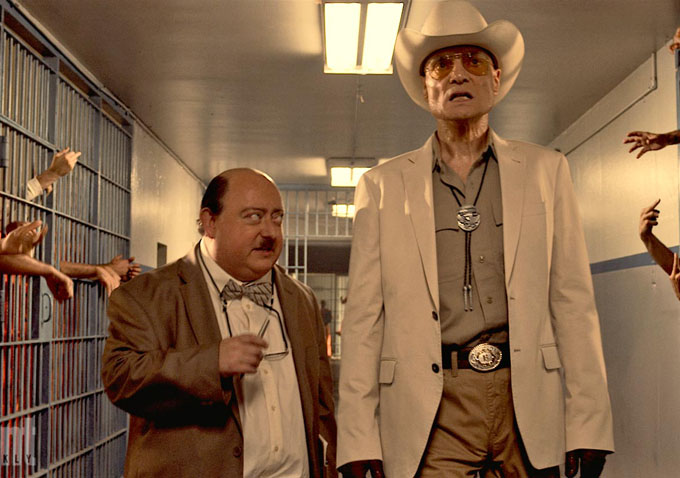
Psychopathic prison warden Bill Boss (Dieter Laser) rules over his inmates with an iron fist, punishing those that step out of line by breaking bones, removing testicles, and waterboarding with boiling water. With the violence spinning out of control, Governor Hughes (Eric Roberts) pays Boss a visit, informing the maniac that if he doesn't get a hold on things soon he will be fired and replaced. Having seen his brutal methods fail to bring the prisoners under control, Boss finally listens to his diminutive accountant Butler (Laurence R. Harvey) and his problem-solving idea. Armed with DVDs of The Human Centipede 1 and 2, Butler's scheme is to force the inmates to live out their sentences arse-to-mouth with their fellow incarcerates in one long, horrifying... well, you get the idea. With disgraced, struck-off prison doctor Jones (Clayton Rohner) on board in the hope of keeping his job, Boss and Butler even bring in Tom Six himself to discuss whether or not the director's claim of the procedure being 100% medically accurate is in fact correct.

It was admittedly an interesting move to make The Human Centipede 2 about a disturbed individual's reaction to seeing the first movie, but performing the same trick again simply reeks of narcissism, especially considering Six's decision to place himself within the narrative. While the second entry aimed to simply upset and disgust its audience with no trace of nuance, part three is all about the humour. Although rather than laughing, you'll be checking the running time to see how much you have left to endure. To Six, comedy is all about shouting, and Laser screams, rants and swears for the 100 minutes, stopping occasionally to munch on some dried clitorises imported from Africa or force his assistant Daisy (porn actress Bree Olson) to perform oral sex on him. Anyone voluntarily watching this film are here for one reason - to see the human centipede. It appears around the 85 minute mark, so there's a lot of arm-waving and general unpleasantness to get through before the big pay-off, which only appears on screen for about 5 minutes. I never thought I'd complain about the lack of poor souls being monstrously stitched together to form one grotesque digestive system, but that's The Human Centipede for you. Hopefully this series can now be laid to rest on the cinematic dung-pile.


Directed by: Tom Six
Starring: Dieter Laser, Laurence R. Harvey, Eric Roberts, Robert LaSardo, Bree Olson
Country: USA

Rating: *

Tom Gillespie


The Human Centipede III (Final Sequence) (2015) on IMDb

Thursday, 27 December 2018

Review #1,433: 'Dead End Drive-In' (1986)

After the global success of low-budget exploitation flick Mad Max, the Australian film industry underwent a revolution, built mainly around fast cars, a rebellious attitude, and a satirical look at the 'dangerous' youth of the day, all within a post-apocalyptic, near-future setting. One of the directors at the forefront of the Ozploitation movement was Brian Trenchard-Smith, the man behind such cult classics as Turkey ShootBMX Bandits and The Man from Hong Kong. The director referred to his best work, Dead End Drive-In, as a mixture of Mad Max and Luis Bunuel's The Exterminating Angel, and although he was clearly over-reaching by comparing his film to two established classics, there's much more going on here than punk teenagers, souped-up classic cars and boobs. Yes, Dead End Drive-In is just as concerned with social and economic commentary as it is with loud music, B-movies and vehicles smashing into each other.

In the near-future, society has crumbled amidst economic collapse, and small gangs of mohawked ne'er-do-wells scour the cities for car parts. With manufacturing at an all-time low, cars are now a commodity so criminals cruise the streets looking for accidents in the hope of swiping rare parts for profit or to pimp out their own method of transportation, while rival salvage companies battle it out for scraps. Workout junkie Crabs (Ned Manning) has little trouble getting his hands on an impressive ride - his burly older brother possesses a 1956 Chevy - and he manages to persuade his sibling to loan him the chick-magnet for a date with his girlfriend Carmen (Natalie McCurry). A night at the flea-pit local cinema followed by a night of steamy passion is clearly on Crabs' mind, but this particular drive-in has a little secret. Surrounded by high fences and S-roads that don't permit walking, the drive-in is actually a concentration camp that keeps its inhabitants - horny, trouble-making teenagers - prisoner. While the residents of the graffiti-laden hellhole appear content with their responsibility-free existence of booze, drugs and sex, Crabs does everything he can to persuade the creepy owner (Peter Whitford) to help him escape.

Described as a sort-of offbeat Mad Max clone upon its release, the comparisons to George Miller's grindhouse favourite seem a little lazy. While both films share a fetish for automobiles and a concern for the economic climate, the only other similarities are the accents and a grungy aesthetic. Dead End Drive-In doesn't litter the story with action scenes, and although it is book-ended by some impressive stunt-work, the film takes it down a gear during the middle section to explore the madness of Crabs' situation. The idea of a makeshift concentration camp for the apparently disenchanted youth is interesting enough, but the crazy idea that the prisoners within the walls are in fact happy to stay lend the film a unique and rather pleasantly maddening tone. If you've ever been stuck within a dream where nobody can understand you, you'll empathise with Crabs' plight, despite his unfortunate nickname. While the dip in pacing may infuriate exploitation fans hoping to see leather-clad warriors of the apocalypse battling it out on jacked-up vehicles, it only increased my curiosity, and while Trenchard-Smith doesn't explore its themes with enough care to make the film truly resonate, Dead End Drive-In is one of the more thought-provoking and off-kilter efforts from the age of Ozploitation.


Directed by: Brian Trenchard-Smith
Starring: Ned Manning, Natalie McCurry, Peter Whitford, Wilbur Wilde
Country: Australia

Rating: ****

Tom Gillespie


Dead End Drive-In (1986) on IMDb

Wednesday, 12 December 2018

Review #1,428: 'The Predator' (2018)

Despite its unwavering popularity through the decades, the Predator franchise has failed to find its feet ever since it took off in 1987 with Arnold Schwarzenegger and Carl Weathers battling an alien foe in the jungles of South America. It's sequel, Predator 2, was an overblown mess, and it took twenty years for the threequel, Predators, to arrive and instantly be forgotten. The thirty years that have passed ever since John McTiernan's original seemed to have been one constant effort to steer the series back on course, so it must have seemed like a no-brainer to hire Shane Black, who played one of Arnie's unit first time around, to reignite some interest in the rasta-haired intergalactic travellers. After all, directors with their own sense of style and vision are rarely hired for big-budget blockbusters, and perhaps Black could inject the same level of wit and zip as he did with the likes of Kiss Kiss Bang Bang and The Nice Guys.

It pains me to say this, but how tragically wrong they were. This effort to reboot a dying franchise fails on almost every level, from the recycled plot and cast of stock characters, to the forced humour that never so much as raises a giggle, despite the actors' attempts to convince you that they're all having a good time. From the get-go, Black hits us with gun-toting action and CGI blood-spraying, and does so at an alarming rate. One can only wonder if Black had hoped we would be too distracted by the carnage and endless exposition to realise how stupid the film actually is, but it's hard not to notice when the main character begins the film by mailing alien tech back to his family from Mexico under the government's nose. Former army sniper turned mercenary Quinn McKenna (Boyd Holdbrook) is busy on a retrieval mission when he witnesses an alien craft crash to Earth. His crew are wiped out, but Quinn manages to flee with an alien helmet which he sends to his estranged wife Emily (Yvonne Strahovski) and autistic son Rory (Jacob Tremblay). While Quinn is interrogated by the government, the Predator is taken to the lab for experimentation. Yes, you've already guessed what happens next.

As the Predator wreaks havoc and more arrive for the fight, Quinn is thrown in with a bunch of military prisoners, who all are crazy in their own way. They consist of Trevante Rhodes, Augusto Aguilera, Thomas Jane, Keegan-Michael Key and Alfie Allen, and provide most of the film's 'humour'. They are supposed to be lovable but really aren't, but Quinn evidently trusts them enough to leave them alone with an unconscious Olivia Munn. Had they been given a personality, or some actual funny lines of dialogue, the gang may have helped cover up many of The Predator's flaws, but the film has the same uncomfortably conflicted feel of Black's Iron Man 3, which struggled to juggle the director's independent sensibilities with the restrictions of a franchise. It's flashy, colourful and rarely pauses for breath, but doesn't have a style of its own. People are thrown into huge objects to get up like nothing has happened, there's military tough-guy speak, and somebody at one point even yells "get to the chopper!". It's a bunch of thrown-together Easter eggs and action beats you've seen a million times before. I doubt this is the last we've seen of the extraterrestrial trophy-hunter, but it's certainly time to lay him down to rest for a while


Directed by: Shane Black
Starring: Boyd Holbrook, Trevante Rhodes, Jacob Tremblay, Olivia Munn, Sterling K. Brown, Keegan-Michael Key, Thomas Jane, Augusto Aguilera
Country: USA/Canada

Rating: **

Tom Gillespie


The Predator (2018) on IMDb

Wednesday, 14 November 2018

Review #1,419: 'Gothic' (1986)

The story goes that during the summer of 1816, renowned British poet and philanderer Lord Byron invited fellow poet Percy Bysshe Shelley and his wife Mary Godwin to stay at his grand Villa Diodati in Switzerland. As the weather took a nasty turn and a storm raged outside, the threesome, along with Byron's physician Dr. John Polidori and Mary's stepsister Claire Clairmont, gathered around the fire to share ghost stories. This event allegedly spawned two incredibly influential works of literature, although they didn't come from the poets. Mary Godwin, who would become Mary Shelley, released Frankenstein, or the Modern Prometheus in 1818, and Polidori would go on to pen The Vampyre, the first published vampire story and obvious inspiration for Bram Stoker's Dracula. It's the kind of myth rooted in fact that has filmmakers licking their lips. James Whale used this gathering as a framing device for The Bride of Frankenstein, but Ken Russell took his own idea and ran with it, and the result is a strange, psychosexual horror that fails to really fit into any discernible genre.

We begin with a group of socialites gossiping amongst themselves as they spy on Lord Byron's mansion through a telescope. I supposed this is meant to be us, the viewer, as we giddily peak behind the doors of a known rascal as he awaits the arrival of some of the most soon-to-be-revered writers in Britain. Percy (Julian Sands) and Mary (Natasha Richardson) arrive, and Byron, played by Gabriel Byrne, watches them with indifference. His mistress Claire (Myriam Cyr) and physician Polidori (Timothy Spall) are already there, enjoying the freedom of Byron's home. As the drinks start to flow, Byron start to read excerpts from Phatasmagoria, a book containing many horror stories, and the group decide to have a seance around a human skull. Immediately after, Claire has a seizure and strange events start to take place. Paintings come alive, odd noises can be heard around the house, and Polidori attempts suicide after experiencing paranoid episodes. Is Byron behind it all? Are supernatural forces really at work? Or are the literary darlings simply seeing their unpublished work come to life?

I'm a huge fan of Ken Russell and his unique, easily-distracted style of film-making, but Gothic is the first film I've seen of his that didn't quite work. He seems to have a million different directions he would like to take Gothic but heads towards all of them at same time. There are dark sexual undercurrents at play, particularly with Byron and Claire's apparently violent and toxic relationship, but they are never fully developed. It seems to have aspirations to be a horror, but Russell simply isn't disciplined enough to follow the genre rule-book. This refusal to conform can often achieve greatness, but Gothic ends up as little more than a collection of slightly camp vignettes involving characters running and screaming down corridors or making spooky statements as the thunder rumbles outside. It also isn't helped by Julian Sands' uniformly terrible performance, whose interpretation of a Romantic poet is to prance around shirtless and blubber like a child. Byrne is perfect casting as the bored poet yearning for new experiences, as is Spall as the creepy, reptilian Polidori. It also looks beautiful, from the sets to the costumes, but it isn't enough to save this from being a rare miss from Russell.


Directed by: Ken Russell
Starring: Gabriel Byrne, Julian Sands, Natasha Richardson, Myriam Cyr, Timothy Spall
Country: UK

Rating: **

Tom Gillespie


Gothic (1986) on IMDb

Monday, 5 November 2018

Review #1,416: 'Mandy' (2018)

Horror fans were foaming at the mouth as soon as the first trailer dropped for Panos Cosmatos' Mandy - a hallucinogenic mash-up of revenge thriller and psychedelic horror featuring a Nicolas Cage well and truly off the leash. And for good reason. Whilst Mandy may not have much to offer in terms of plot and actual meaning, as a purely sensory experience, this 80's heavy metal album come-to-life will get certainly get a rise out of you, whether you're on the film's side or not. The story concerns lumberjack Red Miller (Cage) and his artist girlfriend Mandy (Andrea Riseborough), who live in peaceful solitude in a cabin in the woods. They talk of their favourite planets and never leaving their isolated home, but their happy existence is soon to be pulled away from them. Nearby, a cult led by failed musician Jeremiah Sand (Linus Roache) happen to be passing through, and once the Manson-like prophet lays his eyes on Mandy, he simply must have her.

Sand trusts his second-in-command Brother Swan (Ned Dennehy) to kidnap Mandy and bring her to him, and he does so by summoning a band of leather-draped demons who look like they've stumbled off the set of the latest Hellraiser film. They tie Mandy up and force-feed her LSD in preparation for Jeremiah's grand seduction, which includes playing her his terrible music and flashing his naked torso. When Mandy doesn't play ball, they punish her insolence in front of the bound Red, who watches in horror as his one true love is snatched away forever. They leave Red for dead, only the gruff lumberjack manages to escape to plan his bloody revenge. Handed a small arsenal of brutal weapons by his friend Caruthers (Bill Duke), Red aims to take out the bikers first, before moving on to the hippy freaks. What unfolds is a sequence of battles played out almost like a computer game, as Red cuts, chops and snaps his way up to the main target. This is the kind of film in which an early sighting of a chainsaw is of a promise of its reappearance later down the line (and it'll be way better than you expected).

If you've ever slipped on some headphones, blasted out some classic heavy metal, and dropped a shit-ton of LSD, then you'll have likely experienced something similar to Mandy. Backed by a magnificently industrial score by the late Johan Johannsson, Mandy is a trip from start to finish. The first hour moves at a crawl, moving its characters into place and easing us into this strange world of scorched red skies and masked hitmen in gimp suits, before unleashing a second hour of hardcore violence and Nic Cage at his most Nic Cage-iest. The scene in which Cage breaks down in a bathroom drinking whatever vodka he doesn't pour into his gaping wounds while not wearing trousers would usually be the stuff of unintentional comedy gold, but it's actually damn fine acting, closer to Face/Off crazy than Dog Eat Dog crazy. Little makes sense and the characters spit hokey dialogue like something out of the fantasy novels Mandy loves so much, but the whole experience is so cerebral and in-your-face that it's difficult not to get swept up into the madness. It will divide most down the middle, between those who will find the pace and intensity off-putting and those who will appreciate the VHS-murkiness of it all. Personally, I'm somewhere in between. At two hours, it's too long, but there's a breathtaking 100-minute movie in there somewhere.


Directed by: Panos Cosmatos
Starring: Nicolas Cage, Andrea Riseborough, Linus Roache, Ned Dennehy, Richard Brake, Bill Duke
Country: USA/Belgium/UK

Rating: ***

Tom Gillespie


Mandy (2018) on IMDb

Sunday, 4 November 2018

Review #1,415: 'Crimson Peak' (2015)

If you were to task both critics and general audiences with naming their favourite active directors, I would place a bet on Guillermo del Toro being the first name on the lips of many. The Mexican monster-lover has the unique ability to juggle both passion projects that clearly mean a lot to the filmmaker, and large-scale blockbusters to appease the studios, and this one-for-me, one-for-you approach has allowed to him to bring to the screen some incredibly personal stories which would have otherwise been left to linger in the director's imagination. So for every The Devil's Backbone, we got a Hellboy, and for every Pan's Labyrinth, we got a Pacific Rim. 2015's Crimson Peak was del Toro's first attempt at blending these two styles. Movie lovers could admire the breathtaking visuals and attention to detail, while the general audience could enjoy a juicy gothic mystery featuring some of the industry's most attractive stars. The result is a very mixed bag.

In turn-of-the-century New York, heiress Edith Cushing (Mia Wasikowska) dreams of becoming an author, but finds herself dissuaded at every turn by the men holding the power. Her father, wealthy businessman Carter (Jim Beaver), is visited by English travelling salesman Thomas Sharpe (Tom Hiddleston), who is seeking investment for his clay-mining machinery. The dashing bachelor is shut down by Carter, but catches the eye of Edith, and two begin a romantic affair. When Carter dies, Edith marries Thomas and travels to his home Allerdale Hall in Cumberland, a decaying mansion dubbed 'Crimson Peak' due to the red clay oozing up from the ground. Joining them will be Thomas' ice-cold sister Lucille (Jessica Chastain), who seems to harbour a resentment for her brother's new wife. But Crimson Peak has stories to tell, and Edith's unexplained connection to the spirit world means that she is frequently visited by hideous tormented ghosts carrying warnings. Back in the U.S., former suitor Dr. McMichael (Charlie Hunnam) is conducting his own research into the Sharpes and their shady history.

Del Toro has always excelled at building tangible worlds which seem to live and breath alongside the characters, and the rotting interiors of Allerdale Hall is one of the director's greatest achievements. Lush with exquisite detail, the house pulses with menace, tormenting Edith with locked doors and taps that spurt red before running clear. There's even a hole in the ceiling that allows snow to gather at the bottom of the main staircase, and the splashes of bold colour evoke the likes of Mario Bava, Dario Argento and Hammer. It's a feast for the senses, and it's just enough to distract from the mediocrity of the main story and the inclusion of CGI spectres. The mystery unravels quite beautifully, but the problem is that you'll already be two or three steps ahead. Nothing that happens in Crimson Peak will come as a surprise, especially after you've quickly realised that anyone with an English accent can't be trusted. The film loses its physicality somewhat when attempting to deliver the scares, as twisted ghosts crawl and squeal their way towards Edith. Computer-generated apparitions will never be scary, and Crimson Peak packs way more impact when catching you off guard with moments of extreme violence that will make you wince and cry out without averting your gaze. Rank this somewhere above Pacific Rim and below Hellboy II.


Directed by: Guillermo del Toro
Starring: Mia Wasikowska, Tom Hiddleston, Jessica Chastain, Charlie Hunnam, Jim Beaver, Burn Gorman
Country: Canada/USA

Rating: ***

Tom Gillespie


Crimson Peak (2015) on IMDb

Monday, 29 October 2018

Review #1,412: 'Predator 2' (1990)

John McTiernan's Predator introduced a new horror icon. With its flowing dreadlocks, formidable size, arsenal of deadly, otherworldly weapons, and a face that can only be described as "one ugly motherfucker," the Predator quickly garnered a legion of fans, who were all the more titillated by the idea that the creature could in fact exist in the same universe as the xenomorphs from the Alien franchise. It hardly had the critics salivating, but Predator quickly became a cult classic, and is now considered one of the finest action films of the 80's. The follow-up, released three years later, is considerably less impressive. Stephen Hopkins' Predator isn't a bad film by any stretch of the imagination, but is about as middle-of-the-road as sequels come. It's sufficiently action-packed and certainly violent enough to appease the horror crowd, but ultimately this is a re-hash of the first film with the action transported from the jungles of South America to the urban jungle of a near-future Los Angeles.

It's 1997, and L.A. has become a playground for violent gangs. Shoot-outs occur in the streets in broad daylight, and the warring Colombian and Jamaican gangs don't hesitate to take down as many cops as they can. Lieutenant Mike Harrigan (Danny Glover) is perhaps the city's best hope: a plays-by-his-own-rules type who will always lead the charge into the gunfire. When a group of Colombian thugs turn up massacred by something of considerable size and strength, Harrigan makes it his personal mission to take down this mysterious hostile. The Predator is back in town on safari, and it seems that both gang members and the police are on its hit list. Harrigan and his crew - Danny Archuleta (Ruben Blades), Leona Cantrell (Maria Conchita Alonso) and Jerry Lambert (Bill Paxton) - know that something is amiss when they discover an alien artefact hidden among the carnage, and especially when secretive F.B.I. agent Peter Keyes (Gary Busey) starts sniffing around. As the bodies of his friends and enemies start to pile up, Harrigan will stop at nothing to take the extraterrestrial down, but how can he outwit a foe that has him outgunned and outsmarted?

The lack of any kind of new story means that Predator 2 lives and dies by its action. Thankfully, there is plenty of it, and it's about as gory as they come. Spines are torn from their body, hearts are ripped out of chests, and in a particularly disturbing moment, the Predator buffs the skull of his latest victim to display in its trophy room. No matter how predictable the story becomes or how ridiculous the dialogue is, nobody could claim that Predator 2 is boring. But action doesn't equal tension, and this sequel misses the mystery of the first film, when the threat was always lurking out of sight, watching his clueless target stagger about in harsh terrain. Here, the Predator jumps straight into the mix, hacking, shooting and impaling anyone in its way. It also misses the presence of Arnold Schwarzenegger and his occasional tongue-in-cheek quips. The Governator was no Laurence Olivier, but his presence is undeniable. As watchable as Glover is, who here is more akin to Lethal Weapon's Riggs than his very own Murtaugh, he ain't no Arnie. It also doesn't help that he is one of the stupidest cops ever to grace the screen.  It's lazy and forgettable, but dumb and fun.


Directed by: Stephen Hopkins
Starring: Danny Glover, Gary Busey, Kevin Peter Hall, Maria Conchita Alonso, Rubén Blades, Bill Paxton, Robert Davi, Adam Baldwin
Country: USA

Rating: ***

Tom Gillespie


Predator 2 (1990) on IMDb

Monday, 15 October 2018

Review #1,407: 'Poltergeist III' (1988)

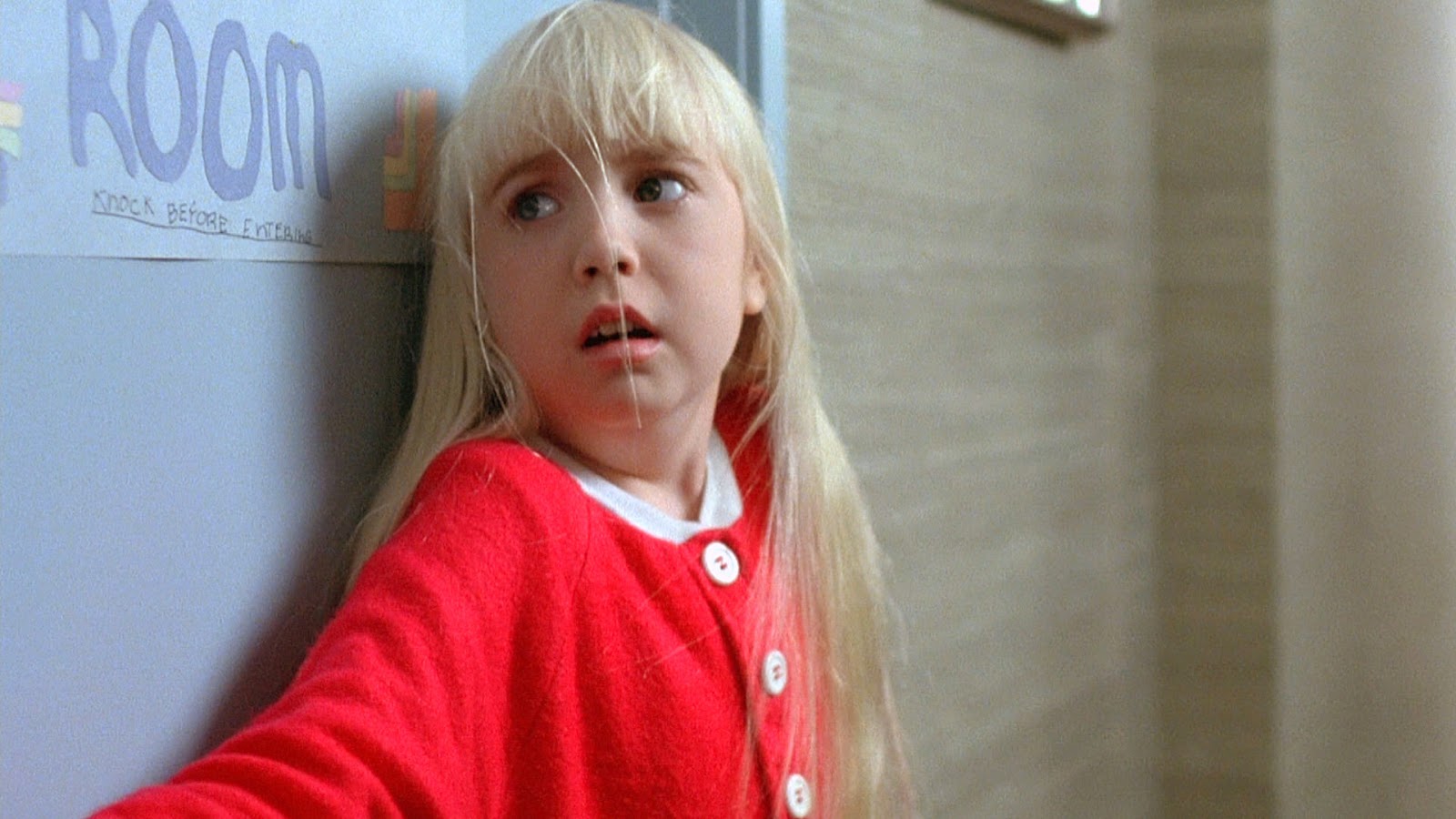
The promotion and subsequent release of Poltergeist III was overshadowed by the death of 12 year-old star and face of the franchise Heather O'Rourke, from cardiac arrest and septic shock brought on by a misdiagnosed intestinal stenosis. The studio, who understandably wanted to avoid any claims that they may be looking to take advantage of such a devastating tragedy, kept advertising to a minimum, although they had previously pressured director Gary Sherman into completing the film against his wishes. Poltergeist III was a critical and commercial flop, putting an end to the franchise that should have really stopped with Tobe Hooper's original. A lack of promotion cannot be blamed entirely though, as the rushed final edit is an incoherent mess with precious few links to the mythology established in the first two entries. They should have known they were in trouble when original stars JoBeth Williams and Craig T. Nelson turned down the chance to return.

In an attempt to freshen up the series, the action is moved from a suburban home to a luxury skyscraper: A 100-story colossus complete with its own mall and art gallery. In charge of the tower is Bruce Gardner (Tom Skerritt), the new husband of Patricia (Nancy Allen) - the sister of JoBeth William's character. As well as having to adapt to newly married life, Pat is also having to deal with her daughter from a previous marriage, Donna (Lara Flynn Boyle), so the last thing she needs is the arrival of spooky Carol Anne (O'Rourke), who seems to bring trouble with her wherever she goes. I don't recall an explanation given for why the Freeling family would suddenly send the daughter they almost lost twice to an auntie they've never mentioned, but the script by Sherman and Brian Taggert isn't concerned with making too much sense. It's happy to simply drag out the franchise as far as it will go and ignore what made the previous films so popular with audiences. The Freelings always fought off the supernatural forces at play with their unbreakable family bond, but Poltergeist III sidesteps establishing this newly family unit in favour of lazy jump shocks.

The Gardner's don't seem particularly adept at taking care of a traumatised 12 year-old either, happily leaving her in the care of their irresponsible teenage daughter and enlisting her in a special school, where sceptical psychiatrist Dr. Seaton (Richard Fire) believes the spooky events experienced by Carol Anne and the people around her are brought on by some kind of mass hypnosis. This leaves plenty of time for Carol Anne to be harassed by Reverend Kane (Nathan Davis, replacing the late Julian Beck), who still wants her to lead them all into the light. The film quickly dissolves away into a series of set-pieces plucked at random from Cinema's Big Book of Characters in Peril, involving falling through ice and killer cars revving in the underground car park. Without the family bond so purposefully developed over the course of the last two films, these moments lack any dramatic weight. Sherman would prefer to have the characters yell each other's names repeatedly at the expense of actual dialogue, and in one case is happy to toss away one supporting character without any explanation at all. On the positive side, there are some fantastic 'in camera' effects deployed as the spirits use mirrors to communicate with the living world, and the presence of Zelda Rubinstein and Tom Skerritt's moustache is always a pleasure.


Directed by: Gary Sherman
Starring: Tom Skerritt, Nancy Allen, Heather O'Rourke, Zelda Rubinstein, Lara Flynn Boyle
Country: USA

Rating: **

Tom Gillespie


Poltergeist III (1988) on IMDb

LinkWithin

Related Posts Plugin for WordPress, Blogger...