Showing posts with label Italy. Show all posts

Monday, 8 April 2019

Review #1,467: 'SS Experiment Camp' (1976)

Much of the outrage drummed up by so-called 'moral crusaders' concerned with how violent and tasteless movies were affecting our impressionable youth during the 1980s was based primarily on how these types of film advertised themselves. The rise of VHS led to home media companies taking full advantage of highlighting how grisly and amoral the film supposedly was, and this led to the now-iconic covers of The Driller Killer, which depicted a man receiving a nasty drill to the head, and Cannibal Holocaust, which splashed the image of one of the titular flesh-eaters chowing down on some human intestines on its casing. These films were placed on the infamous 'Video Nasty' list in the UK, and the two aforementioned titles are indeed pretty nasty. Others that found themselves on the banned list - that did nothing but provide free promotion - were actually hiding a cheaply-made and laughably executed production underneath. Sergio Carrone's SS Experiment Camp, one of the lesser-seen titles on the list, is one such example.

The eponymous camp of the title is a base constructed by the Nazis during World War II to conduct shocking experiments involving attractive Jewish women and some of the Fatherland's most dashing studs. Before being entered into the programme, the women must swear their allegiance to the Fuhrer, otherwise they face torture and eventually a trip into the ovens. Those wise enough to agree to their captors' demands are led to a dorm complete with bunk beds, so the girls can chat like teenagers at a sleepover, and are watched over by a lesbian (what else?) commander. When they are eventually called into action, they must have sex with handsome German men - sometimes even underwater! - while a sympathetic Jewish doctor carries out more sinister experiments with ovary transplants. German officer Helmut (Mircha Carven) ends up falling in love with one of the inmates, and in exchange for her safety, he rather stupidly agrees to take part in a highly secretive experiment with the Colonel von Kleiben (Giorgio Cerioni). Helmut doesn't know it, but von Kleiben has recently lost his balls during the war, and is finding life without intercourse a little hard to take.

Yes, this is a movie set during one of the greatest tragedies in human history about a guy who loses his gonads and can't have sex with the woman he loves. With a video cover showing a dying woman hung upside down while a smirking Nazi officer looks grimly on, Mary Whitehouse and her cronies likely called for the film to be banned for the gruesome horrors that surely lurked beneath that poster. If they had actually taken the time to watch it, they would probably laugh as dead bodies jerk unconvincingly while dodgy-looking flames bounce in front of them, or be puzzled at why a unit of German soldiers look and act like Italian footballers cracking wise in a changing room. Tasteless? Certainly. Most of the increasingly silly torture scenes focus on the victim's jiggling breasts. Horrifying? Well, yes, but not in the way the film intended. For a film that can boast a scene in which its lead character bursts into a room and asks "what have you been doing with my balls?", SS Experiment Camp is a tedious and repetitive experience. It has some unintentional humour, but then there's 90 additional minutes of atrocious acting and awkward dialogue to wade through. The nazisploitation genre is pure trash but it can occasionally offer the odd guilty pleasure, but this is no Ilsa.


Directed by: Sergio Garrone
Starring: Mircha Carven, Paola Corazzi, Giorgio Cerioni, Giovanna Mainardi, Serafino Profumo
Country: Italy

Rating: *

Tom Gillespie


SS Experiment Love Camp (1976) on IMDb


Wednesday, 20 March 2019

Review #1,461: 'So Sweet... So Perverse' (1969)

The giallo may have been pioneered by the great Mario Bava and spectacularly refined by Dario Argento, but Umberto Lenzi was developing the techniques and stylings we now know and love from the mid-1960s. Before he became known for schlocky horror trash like Eaten Alive!, Nightmare City and Cannibal Ferox, Lenzi was toying with rich socialites and exploring pulpy, dime-store stories that often involved ridiculous, labyrinthine plots, psychedelic interiors, and beautiful, untrustworthy women. These are all ingredients of the giallo, and some of these early Lenzi efforts hint at a director with an eye for kitschy visuals, something that certainly doesn't come to mind when you watch a native tribesman scalp a poor traveller in the despicable Cannibal Ferox. These eye-catching visuals are certainly present in his 1969 film So Sweet... So Perverse, but there isn't much else to hold the attention in this plodding soap opera.

Handsome, jet-setting socialite Jean Reynaud (Jean-Louis Trintignant) enjoys a lavish lifestyle of cocktail parties and shooting ranges, but he has grown bored and frustrated with the lack of passion in his marriage to the beautiful Danielle (Erika Blanc). To counter this, Jean sleeps with anybody who happens to catch his eye, including his friend Helene (Helga Line), and his head is turned by the woman who has just moved upstairs, Nicole (Carroll Baker). When he hears screams coming from above, he rushes to Nicole's aid, learning that she is stuck in an abusive sexual relationship with her husband Klaus (Horst Frank). As they spend more time together, the couple inevitably fall in love, yet whenever they escape for a weekend, Klaus always manages to track them down. After a night of passion, Nicole reveals that she and Klaus have actually been paid a hefty sum to lure in and eventually kill Jean, but that the one doing the hiring has not yet revealed themselves.

With such a cool-sounding title (yet another famous trait of the gialli), there is nothing sweet and little perverse about the film itself. Argento eventually set a high standard for story-telling and the slow-building of tension within a vital set-piece, and the likes of Lucio Fulci and Sergio Martino added gory violence and a graceful style into the mix, but So Sweet... So Perverse is frustratingly tame, failing to ignite much interest in the plot or generate any excitement when events take a more sinister tone. Where Lenzi ultimately excels is in the glossy cinematography and dazzling interiors, which are garish enough to amusingly satirise the world of these detached characters and their materialistic lifestyles. Images of sun-drenched locations, expensive suits and beautiful, provocative women add a sleazy glamour and seductive glaze to the film, a hedonistic way-of-life Lenzi is happy to indulge as he shrewdly condemns it. It isn't quite enough to prevent So Sweet... So Perverse from becoming little more than a curious cinematic artefact, that ultimately paved the way for better directors to come along and take this new genre by the scruff.


Directed by: Umberto Lenzi
Starring: Carroll Baker, Jean-Louis Trintignant, Erika Blanc, Horst Frank, Helga Liné
Country: Italy/France/West Germany

Rating: **

Tom Gillespie


So Sweet... So Perverse (1969) on IMDb

Monday, 6 August 2018

Review #1,373: 'Mission: Impossible III' (2006)

The third instalment of the Mission: Impossible franchise took a while to get off the ground. Originally trusted to director David Fincher (which would have been fascinating to see), the Fight Club director opted out when another project caught his eye, so the reigns were passed to Joe Carnaghan, who had his supporting cast ready to go before a dispute with the studio resulted in his departure also. In stepped J.J. Abrams, who faced the difficult task of reviewing the previous movies' vastly different tones in order to settle on which Ethan Hunt he wanted to bring to the screen. Quite wisely, he went for a bit of both. This was the intuitive, opportunistic Hunt from Brian De Palma's well-staged original, rather than the trigger-happy super-agent from John Woo's effort. Yet he still retains an edge, and Abrams sets out his movie's darker tone from the get-go, as we start during the third act with Hunt in precarious situation with Philip Seymour Hoffman's big bad.

Hunt (Tom Cruise) has left the IMF in favour of a normal life with his bride-to-be Julia (Michelle Monaghan). He has kept the extent of his work for the government quiet and seems to be enjoying being a regular Joe, but his head is soon turned when fellow IMF agent John Musgrave (Billy Crudup) contacts him regarding his former protegee, Lindsay Farris (Keri Russell), who has gone missing in the field while investigating an arms dealer named Owen Davian (Hoffman). Hunt accepts the job and assembles a team (consisting of the returning Ving Rhames, as well as Jonathan Rhys Meyers and Maggie Q) to track her down, but when the mission goes spectacularly wrong, the group are left to track down an item known as the 'Rabbit's Foot', a device capable of global catastrophe. With the head of the IMF (Laurence Fishburne) breathing down his neck and Davian proving himself to be a ruthless and cunning foe, Hunt and the rest of his troupe face their most difficult task yet.

He may have been third choice (although he was cherry-picked by Cruise himself), but the then up-and-coming Abrams proved to be the perfect director to steer the series back on course without upsetting the tone. He finds a perfect balance, delivering spectacular set-pieces that Cruise is, as always, keen to sink his teeth into, as well as re-establishing the team element and tasking them with missions that require a combined effort, and not just Cruise blowing away bad guys in slow-motion. De Palma's original may have been spectacular on occasion, but this third instalment is probably the best of this opening trilogy. There is also an uncomfortable atmosphere throughout, and this is mainly down to Hoffman's spectacular turn as Davian. He is a one-note big bad, and hardly physically intimidating, yet Hoffman's dead-eyed delivery oozes menace, and when he threatens the lives of those closest to our hero, we completely accept that he's capable of butchering the innocent in his pursuit for riches and power. It's hardly new territory for the action genre, but Abrams should be credited with reinvigorating a franchise still going strong 22 years after it introduced itself.


Directed by: J.J. Abrams
Starring: Tom Cruise, Philip Seymour Hoffman, Ving Rhames, Billy Crudup, Michelle Monaghan, Jonathan Rhys Meyers, Keri Russell, Maggie Q, Simon Pegg
Country: USA/Germany/China/Italy

Rating: ***

Tom Gillespie


Mission: Impossible III (2006) on IMDb

Thursday, 31 May 2018

Review #1,345: 'The Inglorious Bastards' (1978)

Not to be confused with Quentin Tarantino's deliberately misspelt men-on-a-mission movie Inglourious Basterds from 2009, Italian director Enzo G. Castellari's correctly spelt The Inglorious Bastards from 1978 is pure exploitation, featuring a number of familiar faces from the genre and plenty of humour, explosions and dick-measuring to appease fans. The World War II setting is almost an afterthought, merely an excuse to round up a collection of colourful characters in one setting and provide an endless roster of faceless bad guys to be blown away without the need of explanation. The Inglorious Bastards is one of the most fun B-movies around, boasting some impressively staged action in spite of its obvious budget constraints.

Taking its cue from The Dirty Dozen, our heroes are a rag-tag bunch of rebel soldiers whose crimes include everything from theft and desertion to murder and mutiny. They are transported to a camp near the Ardennes in France where they are to be executed, but their vehicle is soon attacked by German bombers and only a handful escape with their lives. These include Canfield (Fred Williamson), Tony (Peter Hooten), Nick (Michael Pergolani), Berle (Jackie Basehart), and the proud Lt. Yeager (Bo Svenson), who attempt to put aside their differences to make it through hostile territory to the safety of Switzerland. They may be roughnecks but they are still ready and willing to fight, proving themselves efficient at it when they tear through various bands of Nazis along the way. After they accidentally gun down a squad of Americans dressed as German troops, the bastards have no choice but to complete the fallen soldiers' mission to steal a weapon from an armoured train.

Barely ten minutes go by without a slice of action, making Castellari's movie one of the most fast-paced examples of the genre. Of course, its bloodless and mostly without any real consequence, with many of the actors firing their guns into the ground, but it's fun and exciting nonetheless. If you're looking for historical accuracy or realistic warfare then this isn't the movie for you, but if you appreciate over-the-top exploitation with a sense of humour and an overbearing sense of machismo, then there is plenty to enjoy here. Williamson and Svenson get most of the screen time, with Williamson clearly enjoying being the only black face in a relatively all-white war, but supporting players Hooten and Pergolani are most impressive as two of the most ethically-questionable members of this strained band of brothers. It isn't difficult to see why Tarantino swiped the name for his own project (even though the two films share little in common), as The Inglorious Bastards is just as entertaining as its title would suggest.


Directed by: Enzo G. Castellari
Starring: Bo Svenson, Peter Hooten, Fred Williamson, Michael Pergolani, Jackie Basehart
Country: Italy

Rating: ***

Tom Gillespie


The Inglorious Bastards (1978) on IMDb

Friday, 12 January 2018

Review #1,292: 'Neds' (2010)

After spending much of the 1990's making a name for himself as an intense character actor in the likes of Trainspotting and My Name Is Joe, Peter Mullan announced himself as a director to watch with 1998's Cousins. He followed that four years later with the powerful The Magdalene Sisters, but didn't make another film until eight years later with his most personal project to date, Neds. His tough upbringing in a rough area of Glasgow meant that his talents in front of the camera would normally be employed in tough, intimidating roles, and Mullan drew upon his experiences as a young man for Neds, a social realist drama depicting an academically promising young boy's descent into gang culture and into the footsteps of his notorious older brother.

'Neds' stands for Non-Educated Delinquents, a term I heard often during my time living in Edinburgh, and one applied to the sort of tracksuit-wearing hooligans also labelled as 'scallies' or 'chavs', depending on which area of the UK you're from. The 'ned' here is John McGill, played by Greg Forrest as a youngster growing up in 70's Glasgow who hopes to use his intelligence to make something of himself, but finds himself pulled onto the streets due to a number of factors: from his disinterested, cane-happy teachers to the pressure of living up to his brother's reputation. He grows taller and broader (to be played by Conor McCarron) and quickly makes a name for himself, participating in petty crime and street fights, and rebelling against his school education. His home isn't a happy one, and the family live under the tyrannical rule of John's father (played by Mullan). Mr. McGill isn't much to look at, but he has a presence terrifying enough to silence a room when he enters, and a tendency to come home drunk and bawl abuse at his long-suffering wife.

Mullan has a real talent for staging tense situations, with some of the events played out in Neds no doubt taken directly from real experiences. A booze-fuelled neighbourhood party quickly deteriorates into smashed windows and a mass brawl, with the thugs brandishing the ugliest of weapons designed to cause maximum harm. There's heart and humour too, and Mullan manages to keep John sympathetic throughout, despite his questionable behaviour. Despite his concentration, Mullan drags the film out longer than is needed, and a number of the climactic scenes are suited to be the film's final moment. A swerve into drug-fuelled surrealist territory is well-intended but doesn't really work when wedged into the film's ultra-realist aesthetic, and the scene feels out-of-place and unintentionally amusing. Still, this is raw, unflinching film-making from a director clearly hoping to draw attention to the plight of youngsters growing up in such grim working-class surroundings, where respect is earned through brutality and allegiances are decided by which side of the bridge you live on.


Directed by: Peter Mullan
Starring: Conor McCarron, Greg Forrest, Joe Szula, Mhairi Anderson, Peter Mullan
Country: UK/France/Italy

Rating: ****

Tom Gillespie


Neds (2010) on IMDb

Saturday, 30 September 2017

Review #1,253: 'French Cancan' (1955)

Jean Renoir is quite rightly remembered as one of the greatest directors of all time, having been responsible for the likes of La Grande Illusion and La Regle du Jeu, two movies that regularly feature highly on many 'greatest films of all time' lists. His most popular films were made in the 1930s, before the outbreak of World War II, and before he fled to Hollywood when France fell to the Nazis. After struggling to find any projects that suited him in the U.S., Renoir eventually returned to his native country where he started work on a project seemingly out of his comfort zone: a trilogy of bright and bouncing musical comedies. These films were The Golden Coach, Elena and Her Men, and, sandwiched between them, French Cancan.

French Cancan is filmed deliberately to evoke the paintings of the great Impressionist painters, including Renoir's own father, Pierre-Auguste. Set in 1980s Paris, this is the (fictional) origin of the Moulin Rouge, and, like Baz Luhrmann's spectacular Moulin Rouge! released 46 years later, the tale is told with elements of fantasy and lashings of colour. With his failing cafe about to fall in the hands of the creditors, the womanising Henri Danglard (Jean Gabin) hatches a plan whilst out one night in Montmartre with his rich colleagues and belly-dancing mistress Lola (Maria Felix). He will bring back the cancan, re-naming it the 'French Cancan' in order to sound more exotic to visiting Russian and American sailors. He eyes the beautiful Nini (Francoise Arnoul) and offers to pay for her to have dance lessons, enraging her jealous boyfriend. With chaos growing all around him, Danglard calmly tries to hold it all together in time for the big opening night.

Clearly indulging his love for theatre, Renoir really goes for broke with French Cancan, infusing the many love triangles and business arrangements going on with a bawdy, almost slapstick quality. Jean Gabin, the terrific actor Renoir employed on a number of occasions, manages to express so much by doing so little, and always with a sly grin on his face. It is a far better performance than is even required for such a character, and he offers an extra dimension to the work-horse who cares as much about putting on a dazzling, memorable show as he does for the leggy girls he employs. The titular dance at the climax is as eye-catching and fantastical as anything produced by Hollywood during the genre's Golden Age, and perhaps this was something Renoir picked up from his time there. Of the musical trilogy, French Cancan was the only hit, and it isn't difficult to see why this whimsical re-telling of the origin of one of the most iconic locations of its time struck such a chord with audiences at the time.


Directed by: Jean Renoir
Starring: Jean Gabin, Françoise Arnoul, María Félix, Anna Amendola, Jean-Roger Caussimon
Country: France/Italy

Rating: ****

Tom Gillespie


French Cancan (1955) on IMDb

Friday, 8 September 2017

Review #1,244: 'Wonder Woman' (2017)

It's incredibly sad to read about how many milestones Wonder Woman touches on, especially in this day and age where a high-profile Twitter user must consider every message they post to the world in fear of being racist, sexist, homophobic, or just plain insensitive. Despite the influx of superhero movies since Marvel kicked off their Cinematic Universe in 2008 with Iron Man, and despite the abundance of long-standing and hugely popular female superheroes existing in the comics, and despite audiences calling out for a female-led superhero film ever since Scarlett Johansson donned the leathers as Black Widow in Iron Man 2, studios have failed to deliver one in 12 years. Perhaps the studios were scared they would have another Elektra on their hands, but that movie failed because it was terrible, and was a spin-off from the also-terrible Daredevil.

The DC Extended Universe, in the face of the critical mauling they received last year with the double-whammy of Batman v Superman and Suicide Squad, can only be applauded for taking the much-overdue 'risk' of launching a female-led franchise with Wonder Woman, a movie that not only represents so much in terms of moving cinema out of a stone-age mentality and into the modern world, but surpasses all expectations in a time of superhero overkill. Wonder Woman is, above all, charming, funny and exciting, and will hopefully help steer the DCEU back on track after an incredibly wobbly start. Making her introduction in Batman v Superman and emerging as one of the few positive things to be said about Zack Snyder's overblown and poorly-constructed smack-down, Wonder Woman begins in the present day but flashes back to the time glimpsed in the black-and-white photograph sent to her by Ben Affleck's Batman, when World War I was in full flow and her heart was won by a spy named Steve.

The young Diana grows up on the island of Themyscira, a beautiful hidden paradise created by Zeus to be a home for the Amazons, a tribe of fierce female warriors tasked with protecting the world from the Greek God's evil, warmongering brother Ares. Diana's mother, Queen Hippolyta (Connie Nielsen), attempts to shield her from the horrors of war and forbids her to practice combat, while her auntie Anitope (Robin Wright) realises her potential and trains her in secret. Zeus left the islanders a gift, a weapon called the 'Godkiller', which will prove decisive when the battle with Ares finally stirs. Cue the arrival of Steve Trevor (Chris Pine), an Allied spy who stumbles on the island while fleeing the Germans. He brings death and war with him, and the Amazons want to kill him before Diana intervenes, revealing he saved her life. The tribe want nothing to do with a war waged by man, but Diana suspects Ares may be puppet-master behind the conflict that has taken millions of lives. Against her mother's wishes, she travels with Steve to London, where he reveals to his superiors German plans to release a devastating new mustard gas created by General Ludendroff (Danny Huston) and Spanish chemist Dr. Maru (Elena Anaya).

The word 'man' carries a special significance, and director Patty Jenkins carefully weaves this idea into the film without rubbing it in your face. As well as the violent, dangerous 'world of men' lurking across the waters, there is also No Man's Land, the stretch of mud and rubble separating the two warring fronts. This is a place that no man can hope to survive, and this sets up the triumphant moment seen in the trailers in which Diana deflects machine-gun fire with her bracelets and shield before taking out anybody daft enough to stand in her way. This scene is made all the more powerful by Gal Gadot, who puts in a terrific performance despite her lack of acting experience and puts all the doubters to rest, proving to be just as savvy with comedy as the action. The fact that we care so much about her also means that the CGI-heavy climax, which seems to be trend with DC, can almost be forgiven. Thanks to well-written character development and some charming chemistry between Gadot and the ever-brilliant Chris Pine, there is a real emotional investment that was lacking in DC's previous misfires. In terms of origin stories, this doesn't rewrite the rule-book, but the importance and significance of Wonder Woman should not be underestimated.


Directed by: Patty Jenkins
Starring: Gal Gadot, Chris Pine, Connie Nielsen, Robin Wright, Danny Huston, David Thewlis, Elena Anaya
Country: USA/China/Hong Kong/UK/Italy/Canada/New Zealand

Rating: ****

Tom Gillespie


Wonder Woman (2017) on IMDb

Friday, 18 August 2017

Review #1,235: 'Sleepless' (2001)

Sleepless, or to give the film its original Italian title, Non ho sonno, was a commercial success in its native country and marked the return of legendary director Dario Argento to the giallo sub-genre after a long hiatus. Essentially a slasher at heart, Sleepless does see the return of the director's popular trademarks, making this a formulaic and unsurprising serial killer movie elevated by some stylish camerawork and a thumping, energetic score. Taking place decades after Turin was left shaking following a series of killings known as 'The Dwarf Murders', it was assumed that the killer was dead after its main suspect disappeared and the crimes came to an abrupt halt. Yet when people (women) start to turn up dead in the same style as those committed back in 1983, it would seem that the one responsible is back and thirsty for more bloodshed.

A young boy, Giacomo (Stefano Dionisi), witnesses the horrific murder of his mother. The lead investigator, Moretti (Max von Sydow), promises the shell-shocked youth that he will catch the killer if it takes him the rest of his life. Fast-forward seventeen years later, and the case of The Dwarf Murders remains officially unsolved. Paying the bills by working as a waiter in restaurant, Giacomo, now living in Rome, is pulled back to Turin when his friend offers him a place to stay as the murders start to pile up. With the police clueless and familiar with the notorious murders years before, they turn to the now-retired Moretti for assistance, but his memory has deteriorated so much that he remembers little about the case. Reminded of his promise, Moretti hooks up with Giacomo in an attempt to solve the murders themselves. Is giallo novelist Vincenzo de Fabritiis, the dwarf who emerged as the prime suspect before seemingly passing away, actually alive and eager to finish the job?

With sightings of a little person made at almost every murder scene, it appears that the answer is yes. But like most of the greatest gialli, Argento's script (co-written by Franco Ferrini and Carlo Lucarelli) throws in more red-herrings than you can count and will leave you guessing until the very end. With a running time of just shy of 2 hours, Sleepless is overlong, and doesn't offer enough in the way of originality to justify the slog. It may just catch you off guard though, as Argento throws in a set-piece on an empty train with only a potential victim, a conductor and the unseen killer on board, which ranks as some of the greatest work he's ever done. With the return of Goblin on the soundtrack, the movie often feels like a return to form for the Italian filmmaker, but slasher tropes dominate while the giallo nods often feel like a side-note. This means that there is perhaps more than just a hint of misogyny, and the narrative is repetitive in nature. Still, it was the best work he had done since 1987's Opera, until he regressed again into a series of movies that varied between the mediocre to the downright terrible.


Directed by: Dario Argento
Starring: Max von Sydow, Stefano Dionisi, Chiara Caselli, Gabriele Lavia
Country: Italy

Rating: ***

Tom Gillespie


Sleepless (2001) on IMDb

Thursday, 3 August 2017

Review #1,228: 'Kill, Baby... Kill!' (1966)

Horror maestro Mario Bava always had a unique talent for producing the most extraordinary films on the slimmest of budgets. He made Danger: Diabolik, one of his greatest works, for way less than the budget handed to him by super-producer Dino de Laurentis. Kill, Baby... Kill!, also known under the less enticing title of Curse of the Dead, is no different. With the budget provided by small-time Italian production company F.U.L. Films already microscopic, the movie was almost scrapped all together when the budget dried up just days into filming. However, Bava prevailed, and somehow managed to convince the cast and crew to work for next to nothing, and in some cases, for nothing at all. Using his skill for improvisation with camera and lighting, Kill, Baby... Kill! is rich in atmosphere, even offering the odd fright, and is now considered a masterpiece by some and one of Bava's finest achievements.

After a woman mysteriously flings herself onto a set of spikes in an abandoned church, Dr. Paul Eswai (Giacomo Rossi Stuart) is called to a remote Carpathian village to perform the autopsy. He is immediately met with hostility, as the highly superstitious villagers are used to the more primitive practice of burying the body without medical examination. Already investigating the case is grizzled detective Kruger (Piero Lulli), who warns Eswai of the villagers belief in a ghostly presence around the time that places a curse on a person who always turns up dead shortly after. When Kruger goes missing while paying a visit to the secretive Baroness Graps (Giovanna Galletti), the young daughter of an innkeeper sees the ghostly apparition of a young blonde girl and believes she will be next to take her own life. Questioning everything he sees and hears, Eswai turns to village sorceress Ruth (Fabienne Dali) to try and understand these medieval practices.

While I disagree that Kill, Baby... Kill! even comes close to being Bava's best film, this is without a doubt his greatest achievement. Working with very little, Bava somehow manages to conjure up an incredibly spooky, Gothic atmosphere, with beautifully decorated interiors and stunningly framed exteriors, complement with elegant camera movements. When the action moves away from the lushness of the sets and the story starts to emerge, long periods are spent with Eswai simply wandering from one place to the next. Rossi Stuart is hardly the most charismatic actor, although he certainly isn't helped by the questionable dubbing, and his romance with Monica (Erika Blanc), a native who returns to the village to claim her inheritance, proves to be as equally plodding. Still, while this is relatively routine, formulaic stuff in terms of narrative, Bava more than makes up for it with a sumptuous colour palette, and some of the most striking imagery to be found in horror.


Directed by: Mario Bava
Starring: Giacomo Rossi Stuart, Erika Blanc, Fabienne Dali, Piero Lulli, Luciano Catenacci
Country: Italy

Rating: ***

Tom Gillespie


Kill Baby, Kill (1966) on IMDb

Tuesday, 20 June 2017

Review #1,212: 'Raw' (2016)

For her debut feature film, writer and director Julia Ducournau opted for the particularly taboo subject matter of cannibalism. It's a bold and admirable move, as if there's anything that gets audiences members up in arms and storming out of a movie theatre, it's the sight of a non-zombie human being chowing down on another of their kind. Making its way onto movie screens after a successful festival run, Raw arrives with both critical acclaim and a sense of notoriety, having apparently rendering festival-goers faint and puking in the aisles, to the point where the paramedics were called. As it usually the case with movies that have generated similar controversy, Raw really isn't that gruesome, and is in fact very careful and patient when delivering those squirm-in-your-seat moments.

The incredibly bright but socially awkward Justine (Garance Marillier) has been mollycoddled by her parents from a young age and raised a strict vegetarian. We meet her on her first day at veterinary school, following the same path as her parents before her, and that of her older sister Alexia (Ella Rumpf), who still attends. As she settles down for a quiet read at night, the dorm is invaded by older pupils who don balaclavas and proceed to trash the place, forcing Justine and her gay roommate Adrien (Rabah Nait Outfella), along with her fellow freshmen, into submissive behaviour before introducing them to a crazy rave. The rituals don't stop there, and the new starters must also spend a day drenched in animal blood and eat raw rabbit kidney. Of course, the eating of meat goes against Justine's beliefs, but she gobbles the kidney down after some guidance from her sister. This first taste of the forbidden seems to awaken something inside of the teenager, and she is soon covered in a nasty body rash and craving raw flesh.

Anyone reading the synopsis will likely assume this to be a story of a twisted college campus turning its pupils into blood-drinking monsters, but this is not the case. While the school is rather weird in its inauguration traditions, this is a far more personal story of sibling rivalry and sexual awakening. It could be labelled a feminist piece, but I believe its themes will be familiar to both sexes. Why these themes play out within a story of cannibalism, I don't quite know, but they provide the opportunity for some memorable set-pieces that reach Cronenbergian levels of body horror repulsiveness. The instinctive, almost absent-minded suck on the end of a severed finger will leave you open-mouthed, but Ducournau films the scene with such gravitas that it doesn't just disgust, but also represents the emergence of something primal and confusing within its protagonist. Marillier's youthful beauty and timid curiosity brings life to the character, and the actress puts herself through many difficult scenes that would have most actors turning their nose up at. Visceral and quite unforgettable, Raw is a very rare beast - an excellent cannibal movie.


Directed by: Julia Ducournau
Starring: Garance Marillier, Ella Rumpf, Rabah Nait Oufella, Laurent Lucas
Country: Italy/France/Belgium

Rating: ****

Tom Gillespie


Raw (2016) on IMDb

Tuesday, 13 June 2017

Review #1,210: 'Don't Torture a Duckling' (1972)

Despite having a loyal legion of fans and cementing his name as one of the pioneers of Italian splatter, the work of the so-called 'Godfather of Gore' (a title I reserve for Herschell Gordon Lewis and nobody else), Lucio Fulci, has never completely won me over. Arguably his most popular film, Zombie Flesh Eaters, left me struggling to stay awake, and the likes of The Black Cat, The New York Ripper and Warriors of the Year 2072 range from piss-poor to tedious at best, although it could be said that these are minor works in an extensive filmography. However, I adored The Beyond and City of the Living Dead, and there is something quite spectacular about his early gialli. A Lizard in a Woman's Skin was dazzling and truly weird, and Don't Torture a Duckling, made the following year, stands on its own as one of the strangest and most engrossing thrillers to be found in the genre.

In a remote Italian village, three young boys spy on couples about to engage in sex through a barn door and later torment the local idiot and peeping tom Giuseppe (Vito Passeri). Soon enough, the boys start turning up dead, murdered and discarded in the surrounding areas. Giuseppe is arrested, but is soon released when another boy is killed while the simpleton is in custody. A media circus descends on the town, while intrigued journalist Andrea (Tomas Milian) and police chief Captain Modesti (Ugo D'Alessio) search for clues. Tongues start to wag as the beautiful Patrizia (Barbara Bouchet) arrives in town with a shady past and skimpy outfits, as she is quickly viewed with suspicion. Yet with a town full of eccentrics and loners, it's difficult to figure out just who the killer is. Is it the old nut at the top of the hill, or are the murders the result of black magic performed by demented witch Maciara (Florinda Bolkan)?

The village of Accendura and its surroundings are a beautiful backdrop for the carnage and unspeakable horror playing out in the story. The ignorance of isolated small-town folks and the dangers of pitch-fork-waving mentality seems to be the main theme, something that Fulci explored later in his zombie movie City of the Living Dead. However, themes tend to take a back-seat in a film this bonkers, and Fulci has fun lining up the band of possible suspects and weaving in convoluted red-herring sub-plots to keep the audience guessing. There are many strange moments, including a scene in which Patrizia seems unnervingly comfortable displaying her naked body in front of a nervous young boy. Fulci can't resist dabbling in a bit of gore, and it's here that Don't Torture a Duckling stutters, climaxing with an unintentionally hilarious death featuring some diabolical special effects. Still, it's up there with the director's best work, and a must-see for fans of the more out-there gialli.


Directed by: Lucio Fulci
Starring: Florinda Bolkan, Barbara Bouchet, Tomas Milian, Irene Papas
Country: Italy

Rating: ****

Tom Gillespie


Don't Torture a Duckling (1972) on IMDb

Friday, 9 June 2017

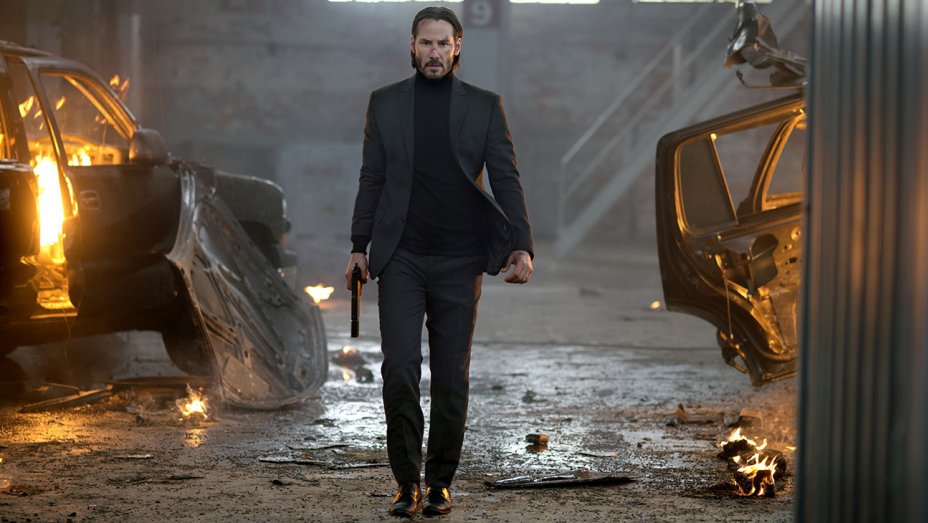
Review #1,208: 'John Wick: Chapter 2' (2017)

John Wick was the sleeper hit of 2014, elegantly combining kinetic fist and gun fights, fluid camerawork, and an effective, stoic performance from its lead, Keanu Reeves. There was a beauty in its simplicity: a former assassin grieving over the recent death of his wife gets done over by a small gang of scumbag Russian mobsters, who proceed to beat him to a pulp and kill his dog, and who are soon running for their lives as the slick-suited killing machine routinely takes them out one by one. Animal lovers can breathe easy as no dogs die in this sequel, although the anti-hero has found himself a new four-legged sidekick. The film's surprising success, as well as the shady underground universe it only hinted at, had action fans salivating at the thought of a follow-up.

Fans will be pleased that stuntman-turned-director Chad Stahelski is back at the helm, as is writer Derek Kolstad, who, although obeying the expected rule of sequels by making everything bigger and louder, both ensure that everything that set our pulses racing the first time around is present and suitably breathtaking. Opening with what can only be described as a ballet of fisticuffs and impressive stunt driving, we are instantly on familiar grounds. Having done everything but retrieve his 1969 Ford Mustang Mach 1 as he took his vengeance on anybody stupid enough to stand in his way, Wick lays siege to a dingy chop shop ran by Russian Abram Tarasov (Peter Storemare), the brother of Viggo from the first film. With pal Aurelio (John Leguizamo) restoring the classic vehicle, Wick can finally move on with his life. Only clearly somebody hasn't informed him that he's in a sequel. Soon enough, old colleague Santino (Riccardo Scamarcio) is at his door insisting on a favour.

Wick politely refuses, but Santino lays down a marker which symbolises an unbreakable oath. Although they kill mercilessly for a living, these contract killers have a code and a set of rules they must obey under penalty of death. Having left the game, Wick isn't having any of it, but the quick destruction of his home soon has him jetting off to Rome to carry out the job. His target: Santino's sister Gianna (Claudia Gerini), who was chosen by their father to take his place at the high seat of international crime bosses. The organisation of the underground assassins only hinted at previously really opens up in Rome. Met by the boss Julius (Franco Nero), Wick is soon getting fitted for expensive suits and choosing his arsenal with the assistance of Sommerlier (Peter Serafinowicz) for his so-called 'impossible task'. A smooth operation wouldn't make for a particularly exciting time, so Wick quickly finds himself under threat from bodyguard and colleague Cassian (Common), and Santino himself, who wants to leave no loose ends.

John Wick: Chapter 2 could have easily gotten ahead of itself. By opening up what was such a personal and emotional revenge mission last time into a continent-hopping world of hotel safe-houses and spies masquerading as the homeless, this could have become very silly very quickly. Instead, the film hypnotises you by making the action even more bombastic, and infinitely more violent (if you liked The Joker's death-by-pencil in The Dark Knight, just wait for this one). Even when events take strain credibility to the max by introducing the 'Bowery King' (Laurence Fishburne, in a nice reunion with Reeves), a man in charge of a huge network of tramp hitmen, and revealing that a startling number of the general public are in fact one text away from slitting your throat, you'll be too busy admiring the balletic carnage to roll your eyes. The bad guy may be even less interesting than the already-bland big boss from the previous movie and it's lost that element of surprise, but I was ready for part 3 the second the credits started to roll.


Directed by: Chad Stahelski
Starring: Keanu Reeves, Riccardo Scamarcio, Ian McShane, Ruby Rose, Common, Laurence Fishburne, Claudia Gerini, Lance Reddick
Country: USA/Hong Kong/Italy/Canada

Rating: ****

Tom Gillespie


John Wick: Chapter 2 (2017) on IMDb

Tuesday, 9 May 2017

Review #1,193: 'Troll 2' (1990)

If you are the type of sadomasochistic movie-goer who seeks out films so notoriously awful just to have a laugh or two, then chances are you are familiar with Troll 2, Claudio Fragasso's cult non-sequel classic. However, if you were to label Troll 2 as the worst movie ever made, then I would question whether or not you have actually seen it (although it was the subject of Best Worst Movie, a documentary made by the lead actor). Don't get me wrong, this is one of the most inept, poorly-constructed, and laughably performed films you could ever hope to see, but what separates it from the likes of The Beast of Yucca Flats, Santa Claus Conquers the Martians and Battlefield Earth is that it is enormous fun. I usually go into these types of films hoping for a few laughs but end up being subjected to 90 minutes of sheer tedium, but Troll 2 really is in a class of its own.

We open with kindly old man Seth (Robert Ormsby) reading his grandson Joshua (Michael Paul Stephenson) a fairytale involving goblins. The stunted creatures chase a man through the woods and force him to eat a green goo, which turns him into a plant. You see, goblins are vegetarians, so they can eat the man once he has completed the transformation. Goblins are everywhere, warns Grandpa Seth. The bedtime story is abruptly ended by the arrival of Joshua's mother Diana (Margo Prey), who causes Seth to suddenly vanish. The lovable old man has been dead for 6 months, but still appears to Joshua as a ghost. Fearing the boy is losing his marbles, the Waits family head off to the town of Nilbog as part of some kind of weird exchange program, which will see them tend crops and live off the land for a week while the Nilbogian family head into the big city in the opposite direction. On arrival, they are met with a feast covered in a strange weird goo similar to the one from the story. It seems Nilbog is the home of evil goblins posing as humans hoping to gobble them up at the earliest opportunity.

Before you think I've had a stroke, I can assure you that this is the plot of the movie. You will also see no mention of trolls, because there aren't any. Director Fragasso (under the pseudonym of Drake Floyd), who could speak little English, waltzed into town with a script written in Italian and seemingly cast the first people to audition who could string a sentence together. The dialogue was badly translated, nevertheless Fragasso insisted that the lines were spoken exactly as written on the page. Somewhat endearingly, the entire cast really give it their all, despite being lumbered with the lines such as "It's goblin spelled backwards!". Every single frame of Troll 2 lacks logic, and this is what makes the movie so charmingly hilarious and helps separate it from the horror lurking in the IMDb's Bottom 100 list, which may raise a smirk once or twice throughout their running time. Simply marvel at the complete disregard for common sense (Grandpa's Seth plan to escape the goblins is to Molotov cocktail the house while the whole family is still inside it) and stare open-mouthed at the moment when a young horndog is seduced by a corn-on-the-cob. There really is no way to describe Troll 2.


Directed by: Claudio Fragasso
Starring: Michael Paul Stephenson, George Hardy, Margo Prey, Robert Ormsby, Connie Young
Country: Italy

Rating: *

Tom Gillespie


Troll 2 (1990) on IMDb

Tuesday, 4 April 2017

Review #1,178: 'Switchblade Romance' (2003)

Following a successful run at the Toronto Film Festival, Alexandre Aja's Haute Tension - released as High Tension in most countries apart from the UK, where it was given the title of Switchblade Romance - was picked up for a wide release in the US and had to be heavily edited to achieve its desired R rating. Snipped of a few gore-soaked scenes and, in a desperate attempt to attract more English-speaking punters, was dubbed, a device which only seems acceptable in 1970s kung-fu flicks. Fans were understandably pissed off, especially die-hards of the genre, until the 'Unrated Cut' was inevitably released. Even with the director's original 'vision' restored, Switchblade Romance is still a trashy horror disguised as quasi-art-house, and one that relies on a tacked-on 'twist' ending that becomes more and more questionable after the credits have rolled.

Two young women, Marie (Cecile De France) and Alexia (Maiwenn), arrive at the latter's parents house in the French countryside for some time away from the city to work and study. After a tour of the place and dinner, Marie settles down for the night by masturbating. Her fun is interrupted by the arrival of a huge man dressed in overalls (Philippe Nahon), who proceeds to systematically butcher the entire family, including a young boy who is thankfully killed off-screen. Alexia is spared, but is bound, gagged and thrown into the back of a van, but not before Marie can join her without the killer being aware of her presence. And so begins a road trip across country, with Marie and the killer playing a deadly game of cat-and-mouse, as it appears that the psychopath has finally met his match.

Ignoring the obvious plagiarism of Dean Koontz's novel Intensity (even down the title!), Aja's movie follows the slasher tropes to a T, attempting to pass itself off a something more than a mere Texas Chain Saw wannabe by filming the action with a blood-sticky sheen. But make no mistake, this is far more interested in riffing on far better movies such as Tobe Hooper's aforementioned classic, as well as Psycho, The HitcherManiac and the film Aja would remake in 2006, The Hills Have Eyes. While the special effects are skillfully done and the movie is anchored by a strong performance by De France, there's little in the way of originality here, further evidenced by Aja's subsequent remake-laden career in Hollywood. For the most part, this is nasty, unpleasant stuff, and one that will undoubtedly satisfy gore-hounds. For those of us who expect more from horror than a few murder scenes strung together by the slimmest of plots, it will leave a bad taste in the mouth.


Directed by: Alexandre Aja
Starring: CĂ©cile De France, MaĂ¯wenn, Philippe Nahon, Franck Khalfoun
Country: France/Italy/Romania

Rating: **

Tom Gillespie


High Tension (2003) on IMDb

Sunday, 19 February 2017

Review #1,156: 'Downfall' (2004)

While there may be a multitude of movies produced in Europe and America depicting the atrocities of Adolf Hitler and the Third Reich - both to dramatic and deliberately comical effect - Germany itself is notoriously apprehensive when facing its dark, and very recent, history. Based on accounts from historians and witnesses, including Andre Heller and Othmar Schmiderer's documentary Blind Spot: Hitler's Secretary (from which scenes are used to book-end the film), Oliver Hirschbiegel's Der Untergang, or Downfall, is one of the best movies ever made about Hitler. Rather than investigating how the war veteran and struggling artist became the egotistical tyrant he is remembered as being, Downfall focuses on his final days holed up in a bunker as the war comes to a bloody end around him.

It's a testament to Bruno Ganz's performance that Hitler remains the enigmatic figure seen in Leni Riefenstahl's documentaries, even though he is descending into madness and is clearly in the early stages of Alzheimer's disease. As the Russian army closes in on Berlin and the shell blasts increase in volume through the walls, Hitler and his cabinet are faced with the crippling realisation that their vision of global ethnic cleansing and forming a Germanic empire has failed spectacularly. Often hushed, cunning and inspirational to the men who still adore him, the Fuhrer is also prone to outrageous demands and formidable tantrums. He is a paradoxical cluster, damning his people to death by demanding they still resist an enemy that has already defeated them, yet Ganz still finds humanity in there. Between scolding the Jewish race and sending units into certain death, he mourns the death of his beloved dog Blondi and forms a tender relationship with Eva Braun (Juliane Kohler). He is humanised, but never sympathetic.

Yet Downfall is not simply a document of Hitler's final days; it is much more about Germany as a whole, and how the country fell into chaos as the Reich was toppled. We gain access into the bunker through Traudl Junge (Alexandra Maria Lara), Hitler's secretary for many years. Out in the increasingly perilous streets of Berlin, Professor Schenck (Christian Berkel) does all he can to help the weak and injured while Hitler Youth assassinate old men fleeing the bombing. Many of the cabinet, including Albert Speer (Heino Ferch) and Hermann Fegelein (Thomas Kretschmann), are desperate to flee and urge their Fuhrer to do the same, while contradicting his orders in the hope of salvaging some sort of peace. Despite the scope of the story, you'll never hear Downfall being referred to as an ensemble piece or a war epic, as it retains a sense of intimacy throughout thanks to Rainer Klaussman's grainy, claustrophobic cinematography, with even the wide-open streets of Berlin feeling oddly suffocating. It's a brave, bold movie, and one that goes about its business with focus and a stern grip on the complex unfolding of events.


Directed by: Oliver Hirschbiegel
Starring: Bruno Ganz, Alexandra Maria Lara, Ulrich Matthes, Juliane Köhler, Christian Berkel, Heino Ferch, Thomas Kretschmann
Country: Germany/Austria/Italy

Rating: *****

Tom Gillespie


Downfall (2004) on IMDb

Tuesday, 27 September 2016

Review #1,092: 'Trauma' (1993)

Trauma is a particularly significant horror in that it was the first film to be made by Italian genre master Dario Argento on American soil. Following a string of eye-catching, kaleidoscopic gialli and superior supernatural tales, Argento found himself at the door of Hollywood, an industry which, at the time, was struggling to churn out much in terms of originality in the horror/thriller genre. While he had employed English-speaking actors before, such as Jennifer Connelly, David Hemmings and Karl Malden, their roles were often crudely dubbed, and Trauma offered the director a chance to reach a broader audience with his unique - if obviously Hitchcockian - blend of build-up and terror.

Disappointingly, Trauma, if anything, represents the beginning of Argento's drastic career decline. The opening is full of promise, as a familiar black-gloved killer stalks a victim before killing her in a brutal and stylish fashion, here with a device which allows the victim to be garroted with relative ease. Bolstered by a POV style and traditionally great effects work by Tom Savini, it's a scene that could have easily been taken from one of Argento's native works. However, as popular as the giallo craze was, it didn't quite reach the general American audience, and so Trauma gets watered-down and peppered with horror cliches in an attempt to cast a wider audience net. While the tropes are there - an everyman (Christopher Rydell) is forced into sleuthing while dodging the police - it does little but frustrate as you realise that somewhere, deep down, there's probably a great giallo trying to get out.

So while the film has it's odd moment, the result is an incoherent, and somehow quite boring, mess of ideas and clashing styles. Starting promisingly, the story goes on to place anorexia sufferer Aura (Asia Argento, the director's then 17 year-old daughter) in the hands of illustrator David (Rydell) after her parents are murdered by the masked killer, and it is during this period that the film does nothing but lay out a string of red herrings, as well as creepily leering at Argento's youthful beauty. The final third is an exhausting conveyor belt of anti-climaxes, before the ludicrous (and not in an entertaining way) reveal that feels like it was made by a sub-par Tobe Hooper or Wes Craven arrives. While it's nowhere near the level of atrociousness that Argento would vomit out in 2009 with Giallo, Trauma feels like it was made by a once-great visionary who had tiredly given in to the producers' voices in his ear.


Directed by: Dario Argento
Starring: Christopher Rydell, Asia Argento, Piper Laurie, Frederic Forrest, Brad Dourif
Country: Italy/USA

Rating: **

Tom Gillespie


Trauma (1993) on IMDb

Saturday, 3 September 2016

Review #1,079: 'Demons 2' (1986)

The names Argento and Bava alone are enough to cause the average gore-hound to salivate, and fans of over-the-top splattery were treated to an exercise in excess with the Argento-produced, Bava-directed Demons in 1985. While I still felt the film sucked despite the talent behind the camera (although this is Lamberto Bava, not his legendary father Mario), there was still enough bone-gnawing and blood-spraying to enjoy amidst the terrible 80's fashions and soap opera-level dialogue. For the follow-up, the horror maestros inexplicably took out the bite and accentuated the goofiness, and the result is a clumsy, camp and somewhat annoying mess of atrocious acting and even worse film-making.

The film begins with what looks to be a documentary based on the events of the first movie, with a bunch of disposable teens trespassing into an quarantined city deserted following the demon outbreak. It turns out to be a film-within-a-film, with 'reality' taking place in an apartment block as loathsome teenage brat Sally Day (Coralina Cataldi-Tassoni) locks herself in a room during a birthday party tantrum to watch the movie on her television. Thankfully, a demon quickly bursts through the screen to turn her into a poster-girl for tooth decay and drip bile through the various floors, turning many of its residents into blue-skinned monsters. Amongst the many archetypes fighting for survival, douchebag George (David Edwin Knight) must get back to his apartment to rescue his pregnant wife and badass gym instructor Hank (Bobby Rhodes) leads his group of oiled-up bodybuilders into battle.

It all sounds like a lot of fun, and it really should be. An apartment building is the perfect setting to induce feelings of claustrophobia, with a vast labyrinth of corridors and narrow vents for our heroes to fight their way out of. Instead, Bava ignores the need for any resemblance of atmosphere or tension in favour of a never-ending stream of badly executed set-pieces, where grisly attacks tend to take place away from view. There's also the matter of the ending making little sense and a scene in which an unexplained demon monster thingy that looks like a discarded prop from Troll bursts out of the chest of an infected young boy, in a special effect so bad you wonder why on Earth the film-makers left it in. Only the antics of Hank (a winning combination of Fred Williamson and Mr. Motivator) and a terrific British new wave soundtrack gloss over the abominable acting and frankly unprofessional direction.


Directed by: Lamberto Bava
Starring: David Edwin Knight, Nancy Brilli, Coralina Cataldi-Tassoni, Bobby Rhodes
Country: Italy

Rating: *

Tom Gillespie


Demons 2 (1986) on IMDb

LinkWithin

Related Posts Plugin for WordPress, Blogger...